
Experience the rich and bold flavors of a classic New Orleans staple with this savory Shrimp Étouffée. This dish features tender shrimp smothered in a thick, seasoned sauce and served over a bed of fluffy rice.
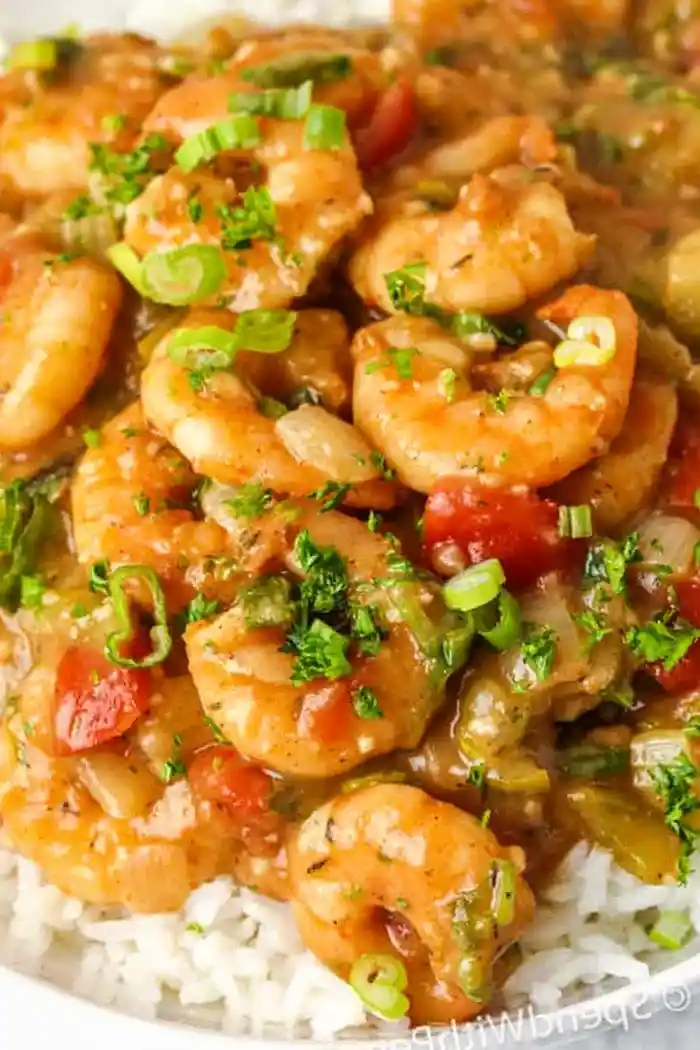
List of ingredients
- 1 ½ pounds medium shrimp (peeled and deveined) – use fresh or thawed shrimp.
- 1 tablespoon Cajun seasoning – provides the signature spicy base.
- 1 tablespoon vegetable oil – for searing the shrimp.
- ⅓ cup butter – used to create the roux.
- ⅓ cup all-purpose flour – the thickening agent for the sauce.
- 1 small onion (chopped) – a key part of the holy trinity.
- ½ green bell pepper (chopped) – adds brightness and flavor.
- 2 ribs celery (chopped) – completes the aromatic base.
- ¼ teaspoon dried thyme leaves – adds an earthy herbal note.
- 4 cloves garlic (minced) – for deep aromatic flavor.
- 3 cups shrimp stock (or chicken broth) – the primary liquid base.
- 2 cups diced fresh tomatoes – adds acidity and texture.
- 3 tablespoons Worcestershire sauce – adds savory, salty depth.
- 2 bay leaves – provides a subtle herbal aroma during simmering.
- salt and black pepper (to taste) – to balance the overall flavor.
- ¼ cup sliced green onion – for a fresh garnish.
- ¼ cup chopped fresh parsley – for a bright finish.
- ½ lemon (juiced) – adds a touch of acidity to cut the richness.
step-by-step instructions
- Sear the Shrimp: Toss shrimp with Cajun seasoning. In a skillet, heat oil over medium-high heat and add shrimp. Cook until shrimp just begins to turn pink, about 2 minutes. Remove from pan and set aside to avoid overcooking.
- Prepare the Roux: Melt butter over medium heat in a large skillet. Stir in flour and cook constantly until the mixture reaches the color of peanut butter, which usually takes 6-8 minutes.
- Sauté Aromatics: Add onions, bell pepper, celery, thyme, and garlic to the roux. Cook until the vegetables are slightly softened. Stir in the broth or stock a bit at a time, whisking constantly until the sauce is smooth.
- Simmer the Sauce: Add diced tomatoes, Worcestershire sauce, and bay leaves, then bring the mixture to a boil. Reduce the heat to low and simmer uncovered for about 20 minutes. Season with salt and black pepper to taste.
- Final Assembly: Stir in the sliced green onions, chopped parsley, lemon juice, and the seared shrimp with any accumulated juices. Cook just until the shrimp is heated through, taking care not to overcook them.
- Serving: Serve the hot étouffée immediately over a generous portion of cooked white rice.
Mastering the Roux Process
Achieving the Correct Color
The roux is the heart of this dish, and its color determines the depth of flavor. Aim for a peanut butter hue, which indicates that the flour has toasted sufficiently to remove the raw taste. If the roux is too light, the sauce will lack the characteristic nuttiness of Cajun cuisine.
Preventing Flour Clumps
To ensure a smooth sauce, add the shrimp stock or chicken broth very slowly. Stir or whisk vigorously after each small addition to fully incorporate the liquid into the fat. This gradual process prevents clumps from forming in the thick base.
Maintaining Heat Control
Keep the heat at a consistent medium level while cooking the roux. If the heat is too high, the butter can burn and the flour may scorch, resulting in a bitter taste. Constant stirring is essential to distribute heat evenly across the skillet.
Stopping the Browning Process
Adding the chopped onions, celery, and bell pepper immediately after the roux reaches the desired color stops the browning. The moisture from these vegetables lowers the temperature of the roux. This prevents the roux from turning too dark or burning.
Shrimp Preparation and Cooking
Choosing the Right Shrimp Size
Medium shrimp are ideal for this recipe as they hold their shape well during the simmering process. Larger shrimp may require slightly more searing time, while smaller shrimp can overcook very quickly. Ensure they are peeled and deveined for the best texture.
The Importance of the Initial Sear
Searing the shrimp for only two minutes ensures they develop a light crust without becoming tough. This step is only intended to color the exterior and infuse the Cajun spices. The shrimp will finish cooking in the sauce during the final stage.
Identifying Perfect Doneness
Shrimp are cooked when they curl into a ‘C’ shape and turn opaque pink. Avoid letting them curl tightly into an ‘O’ shape, as this is a sign that they have become overcooked and rubbery. Always remove them from the heat the moment they turn pink.
Using Shrimp Juices for Flavor
When returning the shrimp to the pan at the end, include any juices that collected on the plate. These juices contain concentrated Cajun seasoning and seafood flavor. This ensures that none of the seasoning is wasted and the sauce is enhanced.
Flavor Enhancements and Substitutions
Alternative Seafood Options
While shrimp is traditional, you can substitute it with other shellfish like crab meat, mussels, or crawfish. If using crab, add it toward the end of the process since it is more delicate than shrimp. Adjust the cooking time based on whether the seafood is raw or pre-cooked.
Making Homemade Seafood Stock
For a more intense flavor, simmer shrimp shells and heads in chicken broth for 20 minutes. Strain the liquid and discard the solids before using this enriched stock in the recipe. This adds a deep, briny dimension to the final sauce.
Adjusting the Heat Level
The spice level depends largely on your choice of Cajun seasoning. For a milder version, reduce the seasoning and add a pinch of paprika for color. To increase the heat, add a dash of cayenne pepper or a few drops of hot sauce.
Substituting the Holy Trinity
If you cannot find fresh bell peppers, you can use frozen diced peppers or a small amount of pimento. However, fresh celery and onion are essential for the authentic aromatic base. Ensure all vegetables are chopped to a similar size for even cooking.
Serving and Presentation Ideas
Selecting the Best Rice
Long-grain white rice is the traditional choice because it remains fluffy and absorbs the sauce well. You can also use jasmine or basmati rice for a slightly different aroma. Ensure the rice is steaming hot when the étouffée is poured over it.
Timing the Garnishes
Add the green onions and parsley at the very last moment before serving. This preserves the bright green color and the fresh, crisp flavor of the herbs. Adding them too early can cause the herbs to wilt and lose their vibrancy.
Suggested Side Pairings
Serve this dish with a side of honey-glazed carrots or steamed green beans for balance. A piece of warm, buttery cornbread is also an excellent accompaniment to soak up the remaining sauce. A light garden salad can provide a refreshing contrast to the rich roux.
Storage and Reheating Guidelines
Refrigeration Tips
Store leftover étouffée in an airtight container in the refrigerator for up to 3 to 4 days. Keep the rice stored in a separate container to prevent it from absorbing all the sauce. This helps maintain the texture of both components.
Freezing the Dish
This recipe can be frozen for up to 3 months in a freezer-safe container. Be aware that the shrimp may lose some of its tenderness after being frozen and thawed. It is best to freeze the sauce and shrimp together, leaving the rice for fresh preparation.
Best Reheating Practices
Reheat the étouffée slowly in a skillet over low heat on the stove. Adding a splash of water or broth helps loosen the sauce, which naturally thickens during cooling. Avoid using a microwave on high power, as this can easily toughen the shrimp.
Troubleshooting Common Issues
Fixing a Burnt Roux
If the roux develops black specks or smells scorched, it is best to start over. A burnt roux imparts a bitter, acrid taste to the entire dish that cannot be masked. Always keep the heat medium and stir constantly to prevent this.
Thickening a Sauce That Is Too Thin
If the sauce is too liquid after simmering, continue to simmer it uncovered for an additional 5 to 10 minutes. The uncovered method allows water to evaporate, which naturally concentrates the roux and thickens the consistency. Stir frequently to prevent the bottom from sticking.
Correcting Overcooked Shrimp
If the shrimp have become rubbery, there is no way to reverse the texture. To prevent this in the future, ensure you remove the shrimp from the pan as soon as they turn pink. Only return them to the sauce for the final minute of heating.
Frequently Asked Questions
Can I use frozen shrimp?
Yes, you can use frozen shrimp as long as they are completely thawed and patted dry. Excess moisture on the shrimp can prevent them from searing properly in the oil. Thaw them in the refrigerator overnight for the best results.
What is a substitute for Worcestershire sauce?
You can substitute Worcestershire sauce with a mixture of soy sauce and a drop of lemon juice. This provides the necessary saltiness and umami flavor. Alternatively, a small amount of fish sauce can work well for a similar savory profile.
How do I keep the shrimp tender?
The secret to tender shrimp is avoiding high heat during the final assembly. Add the shrimp to the simmering sauce just until they are warmed through. Do not let the sauce boil once the shrimp have been returned to the pan.
Is this dish very spicy?
The spice level depends on the Cajun seasoning brand you use. Most are moderately spicy, but you can control the heat by adjusting the amount of seasoning. If the dish is too spicy, adding a bit more broth or a squeeze of extra lemon can help balance the flavors.
Print
Savory Shrimp Étouffée
- Total Time: 45 minutes
- Yield: 4 servings 1x
- Diet: General
Description
Shrimp and vegetables are lightly simmered in a roux-enriched sauce with bold Cajun spices and served over rice!
Ingredients
- 1 ½ pounds medium shrimp (peeled and deveined)
- 1 tablespoon Cajun seasoning
- 1 tablespoon vegetable oil
- ⅓ cup butter
- ⅓ cup all-purpose flour
- 1 small onion (chopped)
- ½ green bell pepper (chopped)
- 2 ribs celery (chopped)
- ¼ teaspoon dried thyme leaves
- 4 cloves garlic (minced)
- 3 cups shrimp stock (or chicken broth)
- 2 cups diced fresh tomatoes
- 3 tablespoons Worcestershire sauce
- 2 bay leaves
- salt and black pepper (to taste)
- ¼ cup sliced green onion
- ¼ cup chopped fresh parsley
- ½ lemon (juiced)
Instructions
- Step: Toss shrimp with Cajun seasoning. In a skillet, heat oil over medium-high heat and add shrimp. Cook until shrimp just begins to turn pink, about 2 minutes. Remove from pan and set aside.
- Step: Melt butter over medium heat in a large skillet. Stir in flour and cook until the flour becomes the color of peanut butter, about 6-8 minutes.
- Step: Add onions, bell pepper, celery, thyme and garlic and cook until slightly softened. Stir in the broth/stock a bit at a time until smooth.
- Step: Add tomatoes, Worcestershire and bay leaves and return to a boil. Reduce heat to low and simmer uncovered about 20 minutes. Add salt & pepper to taste.
- Step: Stir in the green onions, parsley, lemon juice and shrimp with any juices. Cook just until shrimp is heated through, do not overcook.
- Step: Serve over rice.
Notes
For more flavor, shell your own shrimp. Add shells (and heads), add to chicken broth and simmer on low 20 minutes. Strain and discard shells. Use this broth in place of chicken broth. Do not overcook shrimp, cook just until pink on each side in step 1. The shrimp will finish cooking when reheating. Store leftovers in air tight container in the refrigerator for 3-4 days, or in the freezer for up to 3 months.
- Prep Time: 10 minutes
- Cook Time: 35 minutes
- Category: Dinner, Entree, Main Course, Seafood
- Method: Simmering
- Cuisine: American
Nutrition
- Serving Size: 1 serving
- Calories: 430 kcal
- Sugar: 6 g
- Sodium: 1098 mg
- Fat: 21 g
- Saturated Fat: 11 g
- Unsaturated Fat: 9 g
- Trans Fat: 1 g
- Carbohydrates: 21 g
- Fiber: 3 g
- Protein: 41 g
- Cholesterol: 315 mg