
This creamy white chicken caprese lasagna combines rich ricotta and a cheesy spinach sauce with fresh tomatoes. It is a hearty main course that can easily be adapted for gluten-free diets.
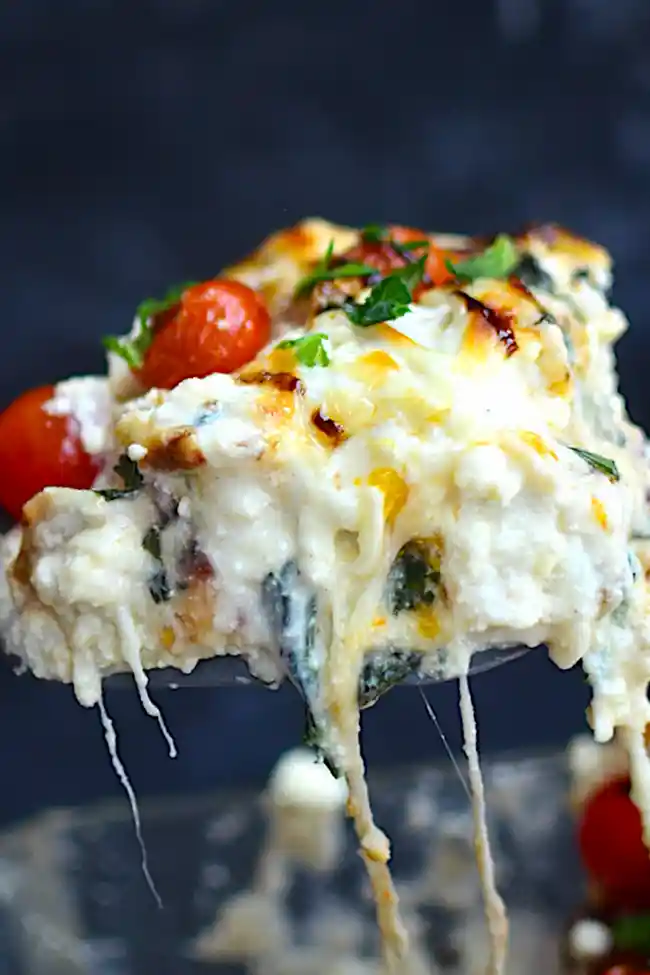
List of ingredients
- 2 lbs ricotta cheese – full fat provides the best texture.
- 1/2 cup grated parmesan cheese – adds a salty, nutty depth.
- 2 eggs – used to bind the ricotta layer.
- 1/2 teaspoon salt – for seasoning the ricotta.
- 1/4 teaspoon pepper – for seasoning the ricotta.
- 1/2 stick butter – used to create the roux for the sauce.
- 4 cloves of garlic – minced finely for aromatic flavor.
- 1/4 cup all-purpose flour – or a gluten-free all-purpose flour mix.
- 4 cups milk – whole milk is recommended for richness.
- 1 cup heavy cream – ensures a velvety sauce consistency.
- 2 1/2 cups mozzarella cheese – shredded for the sauce.
- 2 cups packed spinach – fresh leaves for added color and nutrition.
- 3/4 teaspoon salt – for the sauce seasoning.
- 1/4 teaspoon pepper – for the sauce seasoning.
- 2 tablespoons chopped fresh basil – stirred into the sauce.
- 1 1/2 cups mozzarella – shredded for the final topping.
- 1 box of oven ready lasagna noodles – gluten-free options work well here.
- 2 cooked chicken breasts – cut into bite-sized pieces.
- 20 cherry tomatoes – halved for the caprese topping.
- Fresh basil – for final garnish.
- Balsamic glaze – for drizzling over the finished dish.
step-by-step instructions
- Prepare Ricotta Filling: Combine the ricotta cheese, grated parmesan, eggs, salt, and pepper in a bowl. Mix until smooth and set aside.
- Start the Sauce Base: Melt the butter in a large pot over medium heat. Add the minced garlic and cook for 30 seconds until fragrant.
- Create the Roux: Add the flour to the butter and garlic, whisking constantly to combine into a smooth paste.
- Incorporate Liquids: Slowly add the milk, whisking continuously to prevent lumps. Stir in the heavy cream and bring the mixture to a boil while stirring.
- Finish the Sauce: Reduce heat to medium-low. Stir in the mozzarella, spinach, salt, pepper, and chopped basil. Cook until the cheese is fully melted and the spinach has wilted.
- Heat the Oven: Preheat your oven to 350ºF.
- Begin Layering: Grease a 9×13 inch pan. Spread a couple of ladles of sauce on the bottom.
- Build the Lasagna: Place a layer of noodles, followed by 1/3 of the ricotta mixture, 1/3 of the chopped chicken, and 1/3 of the sauce. Repeat this pattern: sauce, noodles, ricotta, chicken, sauce, noodles, ricotta, chicken, sauce, noodles, ricotta, chicken, sauce.
- Add Toppings: Spread the remaining 1 1/2 cups of mozzarella over the final sauce layer. Scatter the halved cherry tomatoes on top.
- Bake: Place the pan on a cookie sheet to catch overflows. Bake for 45 minutes. Cover with tin foil if the top browns too quickly.
- Rest and Garnish: Let the lasagna cool for 10-20 minutes. Garnish with fresh basil leaves and a drizzle of balsamic glaze before serving.
Sauce Preparation Techniques
Preventing Flour Lumps in the Roux
Whisk the flour into the melted butter quickly and thoroughly before adding any liquid. This ensures the starch is evenly distributed. If lumps persist, use a wire whisk to break them down before the milk is added.
Managing Milk Temperature for Smoothness
Add the milk gradually in small increments rather than pouring it all in at once. This allows the roux to absorb the liquid without separating. Constant whisking during this process is essential for a velvety finish.
Controlling the Heat During Cheese Melting
Reduce the burner to medium-low before stirring in the mozzarella and spinach. High heat can cause the cheese to separate or become oily. Low heat allows the cheese to melt slowly and incorporate into the cream sauce.
Incorporating Fresh Spinach Properly
Add the packed spinach at the very end of the sauce process. The residual heat of the sauce is usually enough to wilt the leaves without overcooking them. This preserves the bright green color and nutritional value.
Layering and Assembly Advice
Handling Oven-Ready Noodles
Ensure every noodle is completely covered by sauce, especially the edges. Oven-ready noodles rely on the moisture from the sauce to hydrate during baking. Exposed edges will remain hard and crunchy.
Distributing Protein for Consistent Bites
Spread the cubed chicken evenly across the ricotta layer. Avoid clustering the meat in the center of the pan. This ensures every serving has a balanced ratio of chicken, cheese, and pasta.
Preventing Pan Overflows
Place the baking dish on a rimmed cookie sheet before sliding it into the oven. The bubbling cheese and sauce can often spill over the sides of a 9×13 pan. This keeps your oven floor clean and prevents smoke.
Arranging Cherry Tomatoes for Visual Appeal
Place the halved cherry tomatoes cut-side up on top of the final cheese layer. This prevents the tomatoes from releasing too much moisture into the cheese. It also keeps the bright red color visible after baking.
Ingredient Substitutions and Variations
Using Low-Fat Dairy Alternatives
Substitute whole milk with 2% milk and heavy cream with half-and-half. While this reduces the calorie count, it may slightly alter the thickness of the sauce. You may need to simmer the sauce slightly longer to achieve the desired consistency.
Alternative Green Leafy Vegetables
If spinach is unavailable, chopped kale or Swiss chard can be used. Kale requires a few extra minutes of simmering in the sauce to soften. Chard should have the stems removed and finely chopped.
Different Cheese Combinations
Replace the mozzarella in the sauce with provolone or fontina for a sharper flavor. Use a blend of parmesan and pecorino romano for the ricotta layer to increase the saltiness. Ensure the substitute cheese has a similar melting point to mozzarella.
Gluten-Free Pasta Selection
Choose a high-quality brown rice or corn-based oven-ready lasagna noodle. Check that the noodles are specifically designed for baking without boiling. If using standard GF noodles, you may need to add an extra half cup of sauce to ensure they cook through.
Cooking and Baking Guidance
Monitoring Surface Browning
Check the top of the lasagna at the 30-minute mark. If the cheese is already golden brown, loosely cover the pan with aluminum foil. This allows the interior to finish cooking without burning the topping.
The Necessity of Resting the Dish
Allow the lasagna to sit for 15 to 20 minutes after removing it from the oven. This allows the layers to set and the sauce to thicken. Cutting into a hot lasagna immediately often results in the layers sliding apart.
Adjusting for Different Oven Types
Convection ovens may cook the lasagna faster than conventional ovens. Reduce the temperature by 25 degrees or check for doneness 10 minutes earlier. Ensure the rack is positioned in the center of the oven for even heat distribution.
Ensuring Internal Temperature
The center of the lasagna should be bubbling and reach an internal temperature of 165ºF. Use a meat thermometer inserted into the middle of the dish to verify. This ensures the oven-ready noodles are fully hydrated.
Serving and Presentation
Creating a Professional Balsamic Drizzle
If making your own glaze, simmer balsamic vinegar in a small saucepan over low heat. Reduce the liquid by half until it reaches a syrupy consistency. Let it cool completely before drizzling to ensure it clings to the cheese.
Selecting Fresh Basil for Garnish
Use small, whole basil leaves or a chiffonade cut for the final garnish. Add the basil only after the lasagna has come out of the oven. Heat can turn fresh basil brown and diminish its aromatic quality.
Recommended Side Dish Pairings
Serve this lasagna with a light arugula salad tossed in lemon vinaigrette. The acidity of the salad cuts through the richness of the white sauce. Garlic bread or a simple steamed broccoli side also complements the flavors.
Portioning for Clean Slices
Use a sharp knife and a wide spatula to cut the lasagna into squares. Wipe the knife between cuts to keep the edges of each slice clean. This prevents the ricotta and sauce from smearing across the piece.
Storage and Reheating Instructions
Refrigerating Leftovers Safely
Store leftover slices in airtight containers in the refrigerator. Ensure the lasagna is cooled to room temperature before sealing to prevent condensation. Leftovers will stay fresh for up to 4 days.
Freezing for Long Term Storage
Freeze the lasagna in portions wrapped in plastic wrap and foil. It can be stored in the freezer for up to 3 months. Thaw the portions in the refrigerator overnight before reheating for the best texture.
Reheating Without Drying Out
Reheat individual slices in the oven at 325ºF covered with foil. Alternatively, use a microwave with a damp paper towel over the slice. This helps maintain the moisture in the noodles and prevents the cheese from becoming rubbery.
Managing Sauce Separation During Reheat
If the sauce appears to have separated after reheating, stir a small amount of milk or cream into the slice. This re-emulsifies the fats and brings back the creamy consistency. Heat gently to avoid curdling.
Troubleshooting Common Issues
Addressing Runny Sauce
If the sauce is too thin, simmer it for an additional 5-10 minutes before layering. You can also whisk in a small amount of additional cornstarch slurry. Ensure the roux was cooked properly to avoid this issue.
Fixing Undercooked Noodles
If the noodles are still firm after 45 minutes, add a splash of water or milk around the edges of the pan. Cover tightly with foil and bake for another 10-15 minutes. This creates a steam environment that softens the pasta.
Preventing Sogginess from Tomatoes
To prevent the top from becoming watery, pat the cherry tomatoes dry with a paper towel before adding them. Avoid using overly ripe, mushy tomatoes. Placing them on top of the cheese rather than inside the layers also helps.
Correcting Over-Salted Ricotta
If the ricotta mixture tastes too salty, stir in an extra tablespoon of unsalted ricotta or a splash of heavy cream. This dilutes the salt concentration. Balance the flavor with a pinch of sugar or more parmesan.
Frequently Asked Questions
Can I use pre-cooked rotisserie chicken?
Yes, rotisserie chicken is an excellent time-saver for this recipe. Simply remove the skin and bones, then cube the meat into bite-sized pieces. Ensure the chicken is thoroughly shredded or chopped for even distribution.
What is the best balsamic glaze to buy?
Look for a glaze that lists balsamic vinegar and grape must as the primary ingredients. Avoid those with excessive artificial thickeners or corn syrup. A high-quality glaze should be thick and sweet-tart.
How do I make this dairy-free?
Substitute the butter with vegan butter, the milk with unsweetened soy or almond milk, and the cheeses with plant-based alternatives. Use a cashew-based ricotta for the best flavor profile and texture.
Can I add other vegetables to the sauce?
Finely diced mushrooms or sautéed zucchini work well in the white sauce. Ensure the vegetables are cooked and drained of excess water before adding them to the sauce. This prevents the lasagna from becoming too wet.
Print
Creamy White Chicken Caprese Lasagna
- Total Time: 1 hour 45 minutes
- Yield: 12 servings 1x
- Diet: General
Description
The most perfect white chicken lasagna. Cheesy, creamy, and full of flavor. With gluten free option too!
Ingredients
- 2 lbs ricotta cheese
- 1/2 cup grated parmesan cheese
- 2 eggs
- 1/2 teaspoon salt
- 1/4 teaspoon pepper
- 1/2 stick butter
- 4 cloves of garlic
- 1/4 cup all-purpose flour
- 4 cups milk
- 1 cup heavy cream
- 2 1/2 cups mozzarella cheese
- 2 cups packed spinach
- 3/4 teaspoon salt
- 1/4 teaspoon pepper
- 2 tablespoons chopped fresh basil
- 1 1/2 cups mozzarella
- 1 box of oven ready lasagna noodles
- 2 cooked chicken breasts, cut into bite sized pieces
- 20 halved cherry tomatoes
- Fresh basil for garnish
- Balsamic glaze
Instructions
- Combine: Combine all of the ingredients for the ricotta layer and set aside.
- Sauce: For the sauce, melt the butter in a large pot over medium heat. Add the minced garlic and continue to cook for about 30 seconds. Add the flour and whisk to combine. Add the milk, a little at a time, whisking well as you add it. Add the heavy cream. Bring to a boil, stirring the whole time.
- Finish Sauce: Reduce the heat to medium-low and add the mozzarella, spinach, salt, pepper, and basil. Continue cooking until the cheese is melted and the spinach is wilted. Set aside.
- Preheat: Preheat oven to 350ºF.
- Layer: Place a couple ladles of sauce in the bottom of a greased 9×13 inch pan. Top with a layer of noodles followed by 1/3 of the ricotta mixture followed by 1/3 of the chopped chicken followed by 1/3 of the remaining sauce mixture. Continue layering in this pattern, ending with sauce. Top with 1 1/2 cups mozzarella and then scatter on the halved cherry tomatoes.
- Bake: Bake for about 45 minutes. If the top browns before the 45 minutes are up, just cover it with a sheet of tin foil for the rest of the time.
- Serve: Allow to cool about 10-20 minutes before serving. Top with fresh basil and balsamic glaze.
Notes
For a gluten-free version, use all-purpose gluten free flour and gluten-free lasagna noodles.
- Prep Time: 1 hour
- Cook Time: 45 minutes
- Category: main course
- Method: Baking
- Cuisine: Italian, American
Nutrition
- Serving Size: 1 slice
- Calories: 680 kcal
- Sugar: 14 g
- Sodium: 1150 mg
- Fat: 42 g
- Saturated Fat: 24 g
- Unsaturated Fat: 14 g
- Trans Fat: 1 g
- Carbohydrates: 45 g
- Fiber: 4 g
- Protein: 38 g
- Cholesterol: 170 mg