
This hearty pasta salad blends tender steak with crisp asparagus and a creamy, tangy dressing. It is an efficient way to repurpose cooked steak into a filling main course or a substantial side dish.
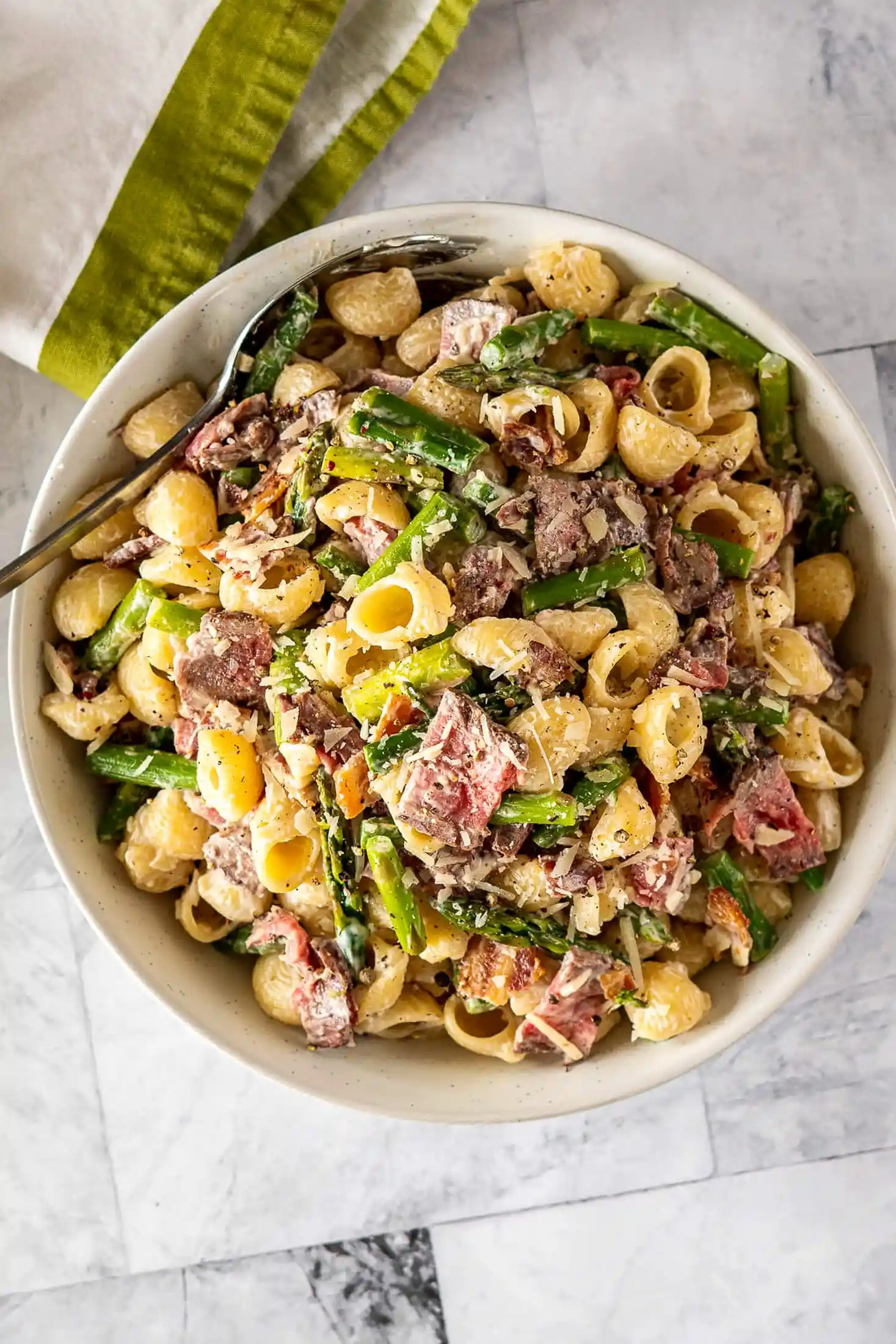
List of ingredients
- 8 oz bite-sized pasta (fusilli, or lumaconi) – provides a sturdy base for the heavy ingredients.
- 15 to 18 spears asparagus – adds a fresh, crisp texture and vibrant color.
- 1 cup well-seasoned steak (cooked and sliced thinly and chopped into bite-sized pieces) – the primary protein source.
- ½ cup cooked beef bacon (chopped) – adds a salty, smoky depth to the salad.
- ⅓ cup shredded parmigiano reggiano – provides a sharp, nutty saltiness.
- ¼ cup mayonnaise – creates a creamy and stable base for the dressing.
- ¼ cup sour cream – adds tanginess and a smoother consistency to the sauce.
- 2 teaspoons apple cider vinegar – cuts through the richness of the cream and cheese.
- Seasoning (such as Montreal Steak Spice) – used if the steak was not heavily seasoned during initial cooking.
step-by-step instructions
- Cook the pasta: Boil 8 oz of bite-sized pasta according to the package directions until it reaches an al-dente texture. Strain the pasta and immediately run it under cold water to stop the cooking process and cool it down. Set the pasta aside to dry slightly to ensure the dressing adheres better.
- Prepare the asparagus: Chop 15 to 18 spears of asparagus into sections measuring 1 to 1.5 inches. Steam the pieces for 3 to 5 minutes until they are bright green and tender but still retain a slight bite. Transfer the asparagus to a plate and allow it to cool completely to room temperature.
- Prepare the dressing: In a medium-sized mixing bowl, combine ¼ cup of sour cream, ¼ cup of mayonnaise, and 2 teaspoons of apple cider vinegar. Whisk the ingredients until the mixture is smooth and well-combined.
- Combine the base: Place the dried, cooled pasta in a large bowl. Pour the dressing over the pasta and toss until every piece is evenly coated.
- Fold in remaining ingredients: Add ⅓ cup of shredded parmigiano reggiano, ½ cup of chopped cooked beef bacon, 1 cup of chopped steak, and the cooled asparagus. Toss gently until all ingredients are distributed evenly throughout the salad.
- Final touch: Garnish the completed salad with fresh cracked black pepper. Serve the dish immediately for the best texture.
Best Practices for Preparation
Slicing Steak Across the Grain
To ensure the steak remains tender when served cold, it is essential to slice the meat across the grain. Identify the direction of the muscle fibers and cut perpendicular to them to create shorter fibers. This makes the meat much easier to chew and prevents a rubbery texture.
Achieving Perfect Al-Dente Pasta
Cooking the pasta to an al-dente stage prevents it from becoming mushy when mixed with the heavy dressing. Remove the pasta from the heat just before it is fully soft. This ensures the noodles maintain their structural integrity and provide a satisfying contrast to the tender steak.
Precise Asparagus Steaming
Steam asparagus for the shortest time possible to preserve its bright green color and nutritional value. Overcooking will lead to a dull olive color and a limp texture that disappears in the salad. Using a steamer basket over boiling water is the most effective way to maintain the snap of the vegetable.
Cooling Ingredients Properly
Allowing the pasta and asparagus to cool completely before assembly is critical. If these ingredients are added while hot, they will melt the mayonnaise and sour cream, resulting in a broken, oily dressing. Cooling ensures the sauce remains thick and clings to the components.
Ingredient Alternatives and Substitutions
Selecting Different Pasta Shapes
While lumaconi and fusilli are recommended for their ability to trap sauce, other shapes work well. Shells or rotini are excellent alternatives because their ridges and hollows hold the creamy dressing. Avoid long noodles like spaghetti, as they are more difficult to toss with chunky ingredients.
Alternative Beef Cuts for Texture
Filet mignon provides the most tenderness, but flank steak or skirt steak are great options for more flavor. When using flank or skirt steak, be extra careful to slice thinly across the grain. Sirloin can also be used if you prefer a heartier, chewier bite.
Using Beef Bacon for Saltiness
Beef bacon provides the same smoky, salty profile as traditional bacon while adhering to dietary restrictions. Ensure the beef bacon is fried until crisp to provide a textural contrast to the creamy sauce. If beef bacon is unavailable, smoked turkey bacon can serve as a leaner alternative.
Swapping Sour Cream for Greek Yogurt
For a higher protein and lower fat option, replace the sour cream with plain Greek yogurt. Greek yogurt offers a similar tanginess and thickness that mimics sour cream. This substitution maintains the creamy consistency of the dressing while slightly altering the nutritional profile.
Enhancing the Flavor Profile
Balancing Acidity with Vinegar
Apple cider vinegar provides a fruity acidity that balances the fat from the mayonnaise and beef bacon. If you prefer a sharper taste, white wine vinegar or lemon juice can be used. The acid is necessary to brighten the heavy flavors of the steak and parmesan cheese.
Choosing High-Quality Parmesan
Using authentic Parmigiano Reggiano provides a superior depth of flavor compared to generic parmesan. For the best results, grate the cheese fresh from a block to avoid the anti-clumping agents found in pre-shredded versions. Freshly grated cheese blends more seamlessly into the creamy dressing.
Adding Extra Steak Seasoning
If the steak used was not heavily seasoned during the initial cook, add steak spice directly to the dressing. Montreal steak seasoning, which typically includes coarse salt, black pepper, and garlic, works well. This ensures the meat does not taste bland once combined with the other ingredients.
Incorporating Additional Fresh Herbs
Fresh parsley or chives can be added during the final toss to introduce a fresh, herbal note. These herbs complement the richness of the steak and the earthiness of the asparagus. Finely chop the herbs to ensure they are distributed evenly throughout the salad.
Serving and Presentation Ideas
Ideal Side Dish Pairings
This salad is filling enough to be a main course, but it pairs well with light sides. A crisp green garden salad with a light vinaigrette provides a refreshing contrast. Slices of toasted sourdough or a crusty baguette can be served on the side to add a crunch.
Plating for Large Groups
When serving at a potluck or party, use a wide, shallow bowl rather than a deep one. This prevents the ingredients at the bottom from being crushed by the weight of the top layers. Use a large slotted spoon to serve, ensuring each portion gets a balanced mix of steak and vegetables.
Serving at Room Temperature
While many pasta salads are served chilled, this version is often best at slightly below room temperature. This allows the flavors of the steak and the richness of the cheese to be more pronounced. If it has been refrigerated, let it sit for 15 minutes before serving.
Storage and Freshness Guide
Air-Tight Container Selection
Store leftovers in a high-quality airtight container to prevent the pasta from absorbing odors from the refrigerator. Glass containers are preferable as they do not retain smells and provide a better seal. Press a piece of parchment paper directly onto the surface of the salad to minimize air exposure.
Managing Dressing Absorption
Over time, pasta noodles naturally absorb the moisture from the dressing, which can leave the salad feeling dry. This is a common characteristic of creamy pasta salads. To maintain the texture, store the salad in a cool environment and consume within two to three days.
Reviving Dry Leftovers
If the salad appears dry when taken out of the refrigerator, stir in a tablespoon of sour cream or a splash of milk. This re-emulsifies the dressing and restores the creamy consistency. Gently toss the salad to incorporate the extra moisture without breaking the asparagus.
Shelf Life in the Refrigerator
This salad remains safe and palatable for up to three days when stored at or below 40°F. Because it contains dairy and cooked meat, it should not be left at room temperature for more than two hours. Always ensure the container is sealed tightly to maintain food safety.
Troubleshooting Common Issues
Fixing a Watery Dressing
If the dressing seems too thin or watery, it may be due to excess moisture on the pasta or asparagus. To thicken it, whisk in an additional tablespoon of mayonnaise or finely grated parmesan cheese. Ensure all vegetables are patted dry before adding them to the bowl.
Preventing Mushy Asparagus
Mushy asparagus is usually the result of over-steaming or failing to cool the vegetable quickly. To prevent this, use the blanch-and-shock method by plunging the steamed asparagus into an ice bath. This locks in the color and stops the internal cooking process immediately.
Correcting Overly Salty Results
Between the beef bacon and the parmesan, it is possible for the salad to become too salty. If this happens, add a small amount of extra sour cream or a squeeze of fresh lemon juice. The fat in the cream and the acid in the lemon help neutralize the perception of salt.
Frequently Asked Questions
Can I use frozen asparagus?
Frozen asparagus can be used, but it often lacks the snap of fresh spears. Thaw and pat the frozen asparagus completely dry before adding it to the salad. Avoid steaming frozen asparagus for too long, as it can become mushy very quickly.
Is this salad suitable for freezing?
This salad is not suitable for freezing because of the mayonnaise and sour cream. Freezing these dairy-based ingredients causes the emulsion to break, resulting in a separated, grainy texture upon thawing. The asparagus would also lose its structure and become watery.
Which steak is best for cold salads?
Tender cuts like filet mignon or sirloin are best because they remain soft when chilled. Tougher cuts like flank steak can be used but must be sliced very thinly against the grain. Avoid using very fatty cuts like ribeye, as the cold fat can have an unpleasant mouthfeel.
How do I prevent the pasta from sticking?
Rinsing the pasta under cold water after draining removes excess surface starch that causes sticking. Once rinsed, let the pasta drain thoroughly in a colander for a few minutes. Adding the dressing immediately after the pasta has dried slightly creates a barrier that prevents clumping.
Print
Creamy Steak and Pasta Salad
- Total Time: 32 minutes
- Yield: 6 servings 1x
- Diet: General
Description
This steak + pasta salad is a fresh and delicious way to use leftover steak, featuring a tangy cream sauce, fresh asparagus, beef bacon, and parmesan.
Ingredients
- 8 oz bite-sized pasta (fusilli, or lumaconi)
- 15 to 18 spears asparagus
- 1 cup well-seasoned steak (cooked and sliced thinly and chopped into bite-sized pieces)
- ½ cup cooked beef bacon (chopped)
- ⅓ cup shredded parmigiano reggiano
- ¼ cup mayonnaise
- ¼ cup sour cream
- 2 teaspoons apple cider vinegar
Instructions
- Step: Cook 8 oz bite-sized pasta according to package directions for al-dente. Strain and run under cold water to cool. Set aside to dry.
- Step: Chop 15 to 18 spears asparagus into 1 – 1 1/2″ sections and steam for 3-5 minutes, until bright green and tender with some bite. Transfer the asparagus to a plate and set it aside to cool.
- Step: Combine ¼ cup sour cream, ¼ cup mayonnaise, and 2 teaspoons apple cider vinegar in a medium bowl.
- Step: In a large bowl, toss the pasta with the dressing.
- Step: Add ⅓ cup shredded parmigiano reggiano, ½ cup cooked beef bacon, 1 cup well-seasoned steak, and asparagus and toss until completely combined.
- Step: Garnish with fresh cracked black pepper and serve immediately.
Notes
If the steak is not seasoned, add 2 teaspoons Montreal Steak Spice to the dressing. This salad can be made ahead by preparing all components but holding the dressing until just before serving.
- Prep Time: 20 minutes
- Cook Time: 12 minutes
- Category: Salads
- Method: Steaming
- Cuisine: American
Nutrition
- Serving Size: 1 serving
- Calories: 379 kcal
- Sugar: 2 g
- Sodium: 333 mg
- Fat: 20 g
- Saturated Fat: 7 g
- Unsaturated Fat: 12 g
- Trans Fat: 0.03 g
- Carbohydrates: 31 g
- Fiber: 2 g
- Protein: 19 g
- Cholesterol: 47 mg