
This creamy pasta dish features a rich sauce made from roasted poblano peppers and fresh cilantro. It provides a velvety texture and a mild, earthy heat that pairs perfectly with al dente spaghetti.
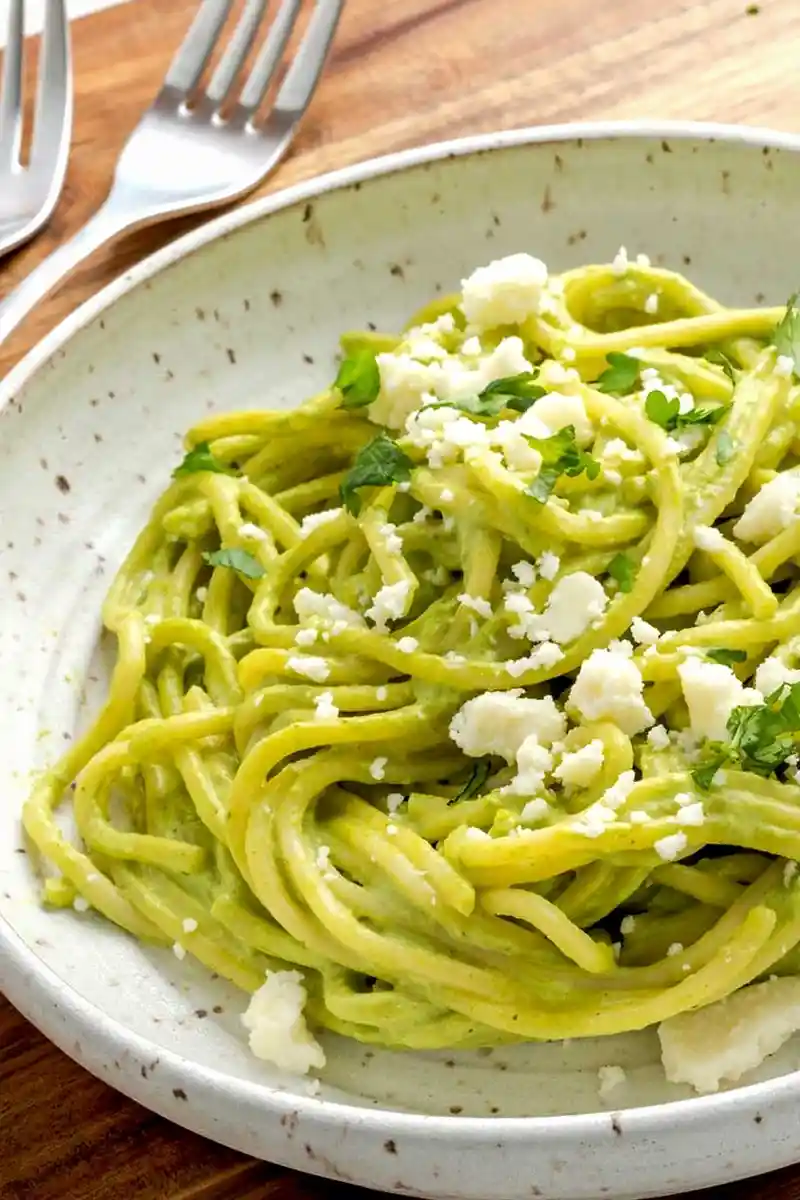
List of ingredients
- 4 poblano peppers, roasted – provides the primary green color and mild flavor.
- 1 pound dry spaghetti – the base noodle for the dish.
- 1 tablespoon olive oil – used for sautéing vegetables.
- 1 small onion, chopped (about 1/4 cup) – adds aromatic sweetness.
- 1 jalapeño pepper or serrano pepper, stemmed, seeded and chopped – adds a customizable level of heat.
- 4 garlic cloves, minced – provides a pungent, savory depth.
- 1 cup spinach leaves – adds nutrients and reinforces the green hue.
- 1 small bunch of cilantro – adds fresh, herbal notes.
- 8 ounces sour cream or crema Mexicana – creates a tangy, creamy base.
- 1 teaspoon chicken or vegetable bouillon granules or 1 bouillon cube – enhances the savory profile.
- 2/3 to 1 cup milk or half and half – used to adjust sauce consistency.
- 8 ounces cream cheese, softened and cut into small cubes – thickens the sauce for a rich finish.
- Salt and ground black pepper to taste – for final seasoning.
- Chopped cilantro, crumbled cotija cheese or queso fresco, and pepitas – optional garnishes for texture and saltiness.
step-by-step instructions
- Boil the Pasta: Bring a large pot of salted water to a boil. Add the spaghetti and cook according to the package directions until al dente.
- Save Pasta Water: Just before draining the noodles, reserve 1 cup of the starchy pasta cooking water. Drain the rest of the spaghetti.
- Sauté Aromatics: While the pasta is cooking, heat olive oil in a large skillet over medium heat. Add the chopped onion and jalapeño (or serrano) and sauté for about 3 minutes until the onion is translucent.
- Wilt the Greens: Stir in the minced garlic and baby spinach. Toss with kitchen tongs for about 2 minutes until the spinach begins to wilt, then remove the skillet from the heat.
- Blend the Sauce: Transfer the sautéed spinach mixture to a blender. Add the roasted poblano peppers, cilantro, sour cream, bouillon, and 2/3 cup of milk or half and half. Process until the mixture is smooth and creamy, adding more milk if the consistency is too thick.
- Heat the Base: Pour the blended poblano mixture into the pot used for the pasta. Heat over medium-low for 2-3 minutes, stirring constantly.
- Incorporate Cream Cheese: Add half of the cream cheese cubes and stir until completely melted. Repeat with the remaining cream cheese.
- Simmer and Season: Lower the heat and let the sauce simmer for about 4 minutes. Season with salt and black pepper according to your preference.
- Combine: Add the cooked spaghetti to the pot and toss to coat evenly. If the sauce is too thick, stir in small amounts of the reserved pasta water until the desired creaminess is achieved.
- Garnish: Serve the pasta immediately. Top with chopped cilantro, crumbled cotija or queso fresco, and pepitas for added crunch.
Comprehensive Guide to Roasting Peppers
Charring in a Dry Skillet
Heat a cast iron skillet over high heat without adding oil. Place the poblano peppers in the pan and char them on all sides until the skin is blackened. Use tongs to rotate them frequently to ensure even charring across the entire surface.
Using an Open Flame
Place the peppers directly over a gas stove burner flame. Turn them regularly with kitchen tongs until the skin is blistered and black on all sides. This method provides a distinct smoky flavor that complements the cream sauce.
Broiling in the Oven
Set your oven rack approximately 6 inches away from the broiler element. Place the peppers on a foil-lined baking sheet and broil until the tops are blackened. Turn them occasionally until all sides have reached a blistered state.
Standard Oven Roasting
Preheat your oven to 425°F. Arrange the peppers on a foil-lined baking sheet and roast for about 40 minutes. Turn the peppers occasionally to ensure the skins blacken evenly over the entire duration of the cook.
The Steaming and Peeling Process
Immediately place roasted peppers in a paper bag or a covered bowl with plastic wrap to trap the steam. Let them steam for 10 to 12 minutes, which loosens the charred skin. Gently rub off the blackened skin with a paper towel, then slice them open to remove the stems and seeds.
Sauce Customization and Substitutions
Adjusting the Heat Level
Poblano peppers are generally mild, but heat can vary. To keep the dish very mild, ensure all veins and seeds are removed from the poblanos. For more heat, use a serrano pepper instead of a jalapeño or add a pinch of red chili flakes after blending.
Modifying the Dairy Base
Whole milk provides a balanced richness, while half and half creates a denser sauce. For a decadent, restaurant-style thickness, substitute the milk with heavy cream. Avoid using non-fat milk, as it may not emulsify correctly with the cream cheese.
Substituting Poblano Peppers
If poblano peppers are unavailable, Anaheim peppers are the best substitute as they maintain a similar flavor profile. While green bell peppers can be used for color, they lack the characteristic depth and mild heat of the poblano.
Creating a Plant-Based Version
To make this recipe vegan, replace the milk with unsweetened oat or almond milk. Substitute the sour cream and cream cheese with a blend of soaked raw cashews and fresh lemon juice to mimic the tanginess. Use vegetable bouillon or nutritional yeast for the savory elements.
Alternative Herbal Notes
If you do not enjoy cilantro, fresh basil is an excellent alternative that pairs well with the cream cheese. Flat-leaf parsley can also be used to maintain the green color while providing a more neutral, peppery taste.
Protein Pairing Ideas
Adding Sautéed Chicken
Bite-sized pieces of chicken breast or thighs can be added for a full meal. Season the chicken with salt and pepper and sauté them in the skillet before cooking the onions. Remove the chicken and set it aside, then stir it back into the pasta at the end.
Incorporating Fresh Shrimp
Shrimp is a quick addition that complements the creamy sauce. Sauté the shrimp until they just turn pink, then remove them from the pan. Add the shrimp back into the sauce during the final simmering stage to prevent overcooking.
Integrating Steak Tips
Pan-seared steak tips add a hearty contrast to the velvety sauce. Sear the beef over high heat to develop a brown crust before adding the cooked steak to the finished pasta. This addition works well when serving the dish as a main course.
Serving and Presentation Suggestions
Selecting the Best Cheese
Cotija cheese is the traditional choice, providing a salty, dry crumble. Queso fresco is a milder, softer alternative that melts slightly into the sauce. For a different tang, a small amount of crumbled feta or goat cheese can be used.
Using Pepitas for Texture
Pepitas, or toasted pumpkin seeds, add a necessary crunch to an otherwise soft dish. Toast them in a dry pan for 2-3 minutes until they pop and smell nutty. Sprinkle them on top just before serving to keep them crisp.
Recommended Side Dishes
Serve this pasta alongside roasted asparagus or a Mexican street corn salad (Esquites) for a cohesive meal. If using the pasta as a side dish, it pairs exceptionally well with grilled chicken breasts or a seared steak.
Storage and Maintenance
Refrigerating Leftovers
Store any remaining pasta in an airtight container in the refrigerator for up to 3-4 days. Because the sauce is dairy-based, it is important to keep it chilled to maintain food safety and quality.
Freezing Considerations
This recipe is not recommended for freezing. The high dairy content in the cream cheese and sour cream can separate during the freezing and thawing process, resulting in a grainy or broken sauce.
Reheating Techniques
Stovetop Reheating Method
Reheat the pasta slowly over very low heat in a skillet. Add a splash of milk or vegetable broth to loosen the sauce, as the noodles will have absorbed much of the liquid while sitting in the fridge.
Microwave Reheating Tips
Heat the pasta in short intervals at 50% power to avoid overheating the dairy. Gently toss the noodles after each interval to distribute the heat evenly. Stir in a teaspoon of milk or water if the sauce appears too thick.
Troubleshooting Common Issues
Fixing a Thick Sauce
If the sauce becomes too thick after adding the cream cheese or reheating, use the reserved pasta water. The starch in the water helps the sauce emulsify and glide over the noodles without breaking.
Correcting a Bitter Taste
If the sauce tastes slightly bitter, it may be due to over-charring the peppers or using too much garlic. Balance the flavor by adding a small pinch of sugar or a squeeze of fresh lime juice to brighten the acidity.
Preventing Mushy Pasta
Always cook the spaghetti until it is just al dente, meaning it still has a slight bite. Since the pasta will continue to cook for several minutes while being tossed in the hot sauce, undercooking it slightly prevents a mushy texture.
Frequently Asked Questions
Can I use frozen spinach?
Yes, frozen spinach can be used if you thaw it completely and squeeze out all excess water. Adding wet spinach will dilute the sauce and affect the consistency of the cream base.
Which onion is best for color?
White, yellow, or brown onions are recommended to keep the sauce a vibrant green. Avoid using red or purple onions, as they can alter the final color of the blended sauce.
Is this dish very spicy?
No, this dish is generally mild because the cream cheese and sour cream neutralize the heat. The primary spice comes from the jalapeño, which can be adjusted by removing the seeds or using a milder pepper.
How do I ensure the sauce is smooth?
Use a high-powered blender and process the ingredients for at least 60 seconds. If you see small chunks of poblano skin remaining, pass the blended sauce through a fine-mesh strainer before heating it in the pot.
Can I use a different noodle?
While spaghetti is traditional, short noodles like penne or fusilli work very well. These shapes have ridges that hold onto the thick cream sauce more effectively than smooth spaghetti.
Print
Creamy Mexican Green Spaghetti
- Total Time: 35 minutes
- Yield: 8 servings 1x
- Diet: Vegetarian
Description
Green spaghetti or espagueti verde features al dente pasta with a rich and luscious roasted poblano, garlic, and fresh cilantro cream sauce.
Ingredients
- 4 poblano peppers, roasted, peeled, and seeded
- 1 pound dry spaghetti
- 1 tablespoon olive oil
- 1 small onion, chopped
- 1 jalapeño pepper or serrano pepper, stemmed, seeded and chopped
- 4 garlic cloves, minced
- 1 cup spinach leaves
- 1 small bunch of cilantro
- 8 ounces sour cream or crema Mexicana
- 1 teaspoon vegetable bouillon granules
- 2/3 to 1 cup milk or half and half
- 8 ounces cream cheese, softened and cut into small cubes
- Salt and ground black pepper to taste
- Chopped cilantro, crumbled cotija cheese or queso fresco, and pepitas for garnish
Instructions
- Step: Bring a large pot of salted water to a boil. Add the pasta and cook according to package directions, until al dente.
- Step: Just before draining, remove 1 cup of the pasta cooking water. Drain the pasta.
- Step: Heat olive oil in a large skillet over medium heat. Add the onion and the jalapeño pepper (or Serrano) and sauté until the onion becomes translucent, about 3 minutes.
- Step: Stir in the garlic and baby spinach and cook tossing with kitchen tongs until the spinach starts to wilt, about 2 minutes. Remove from the heat.
- Step: Transfer the spinach mixture to a blender. Add the roasted peppers, cilantro, sour cream, vegetable bouillon, and 2/3 cups of milk or half and half; process until smooth and creamy. Add more milk if needed.
- Step: Transfer the poblano mixture to the pot used for pasta. Heat over medium-low heat for about 2-3 minutes, stirring as needed.
- Step: Add half of the cream cheese and stir until it melts. Repeat with the remaining cream cheese. Lower the heat and simmer for about 4 minutes. Season to taste with salt and black pepper.
- Step: Add the pasta and toss to combine. Add some of the reserved pasta cooking water if needed to make the sauce creamy. Serve garnished with chopped cilantro, crumbled cheese, and pepitas.
Notes
To roast peppers: Char on a dry skillet, over an open flame, under the broiler, or in the oven at 425°F until skins are blackened. Steam in a bag for 10-12 minutes before peeling and seeding.
- Prep Time: 10 minutes
- Cook Time: 25 minutes
- Category: Main Course
- Method: Stovetop
- Cuisine: Mexican
Nutrition
- Serving Size: 1 serving
- Calories: 415 kcal
- Sugar: 7 g
- Sodium: 175 mg
- Fat: 19 g
- Saturated Fat: 9 g
- Unsaturated Fat: 6 g
- Trans Fat: 0 g
- Carbohydrates: 51 g
- Fiber: 3 g
- Protein: 11 g
- Cholesterol: 48 mg