
This aromatic dish combines tender chicken and fresh vegetables in a rich, creamy coconut curry sauce. It is a perfect balance of spice and sweetness, finished with silky rice noodles for a satisfying meal.
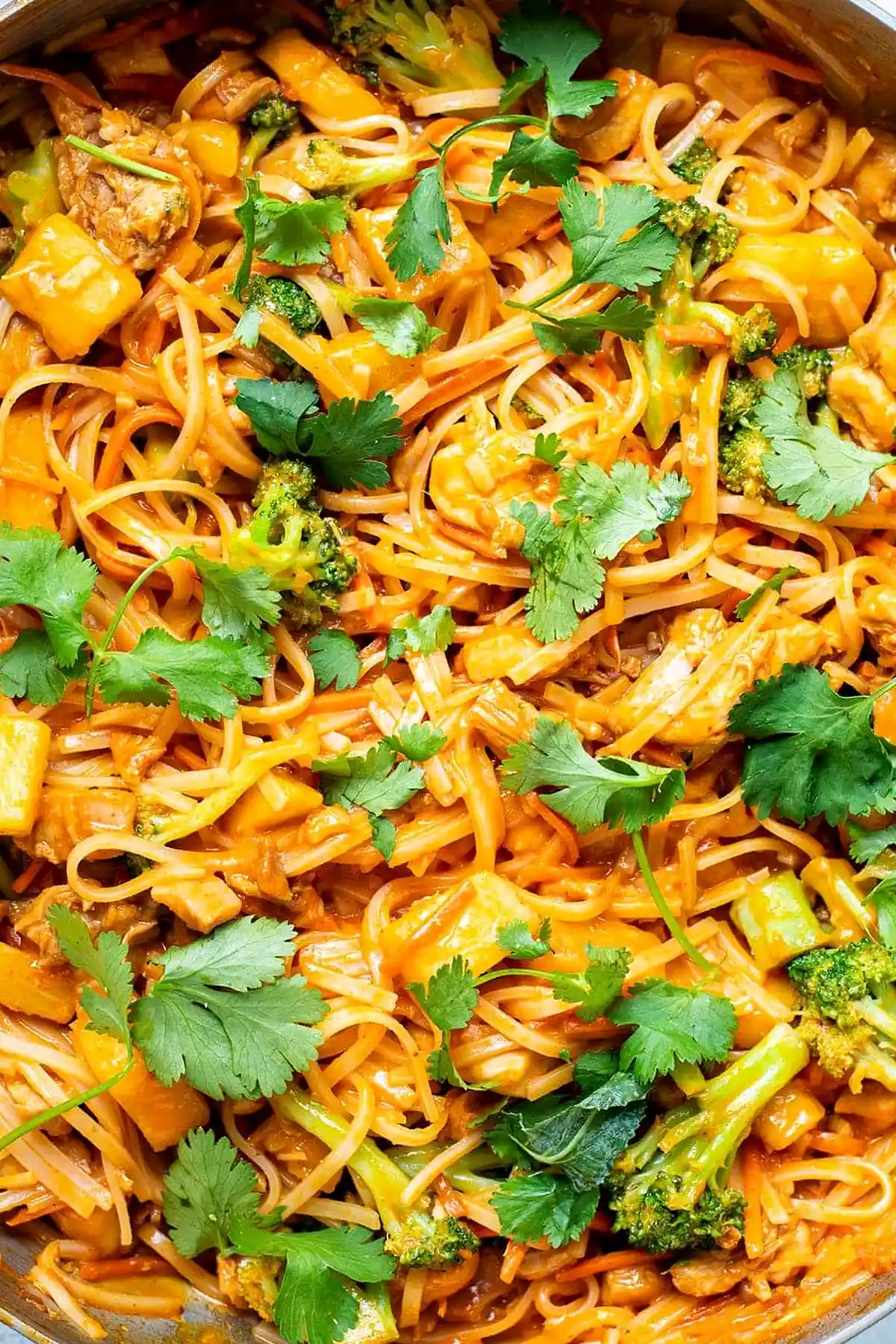
List of ingredients
- 4 boneless, skinless chicken thighs, cubed – provides a juicy texture.
- 14 ounce can coconut milk – ensures a creamy, rich base.
- 8-12 ounces rice noodles, linguine style – the ideal thickness for this sauce.
- 2-3 cups broccoli, small head cut into florets – adds crunch and color.
- 1 cup shredded carrots – adds a touch of sweetness.
- 1 cup diced pineapple, optional – introduces a tropical flavor contrast.
- 3-4 tablespoons red curry paste – the primary source of heat and spice.
- 2 tablespoons canola or vegetable oil – used for sautéing the proteins and vegetables.
- 2 tablespoons soy sauce – provides a salty, savory depth.
- 2 garlic cloves, grated – adds aromatic punch to the sauce.
- 1-2 teaspoons sriracha, optional – for those who prefer extra heat.
- cilantro leaves – used for a fresh, herbal garnish.
step-by-step instructions
- Prepare the noodles: Rinse rice noodles in cool water and then soak in hot water for 45-60 minutes or until tender but with a slight chewiness in the center. Alternatively, you may boil them for 3-4 minutes, but avoid overcooking to prevent them from getting mushy and sticking.
- Sauté the chicken and vegetables: Heat 1 tablespoon of oil in a wok or large pan on medium-high heat. Add cubed chicken, season with salt and pepper, and sauté until cooked through, about 5-7 minutes. Add broccoli, pineapple, carrots, soy sauce, and an extra splash of oil, then simmer until tender for about 5 minutes. Transfer everything to a large bowl and set aside.
- Simmer the curry sauce: In the same empty wok or pan, combine coconut milk, red curry paste, garlic, and sriracha. Stir well and bring to a boil for 5-7 minutes or until the sauce has slightly reduced and thickened.
- Combine and finish: Add the prepared rice noodles to the sauce first, tossing and simmering until tender. Return the cooked chicken and vegetables to the pan and toss until everything is fully mixed and well-coated in the curry sauce.
- Garnish: Serve the dish immediately, topped with fresh cilantro leaves for brightness.
Optimizing Your Rice Noodle Texture
The Advantage of Soaking
Soaking rice noodles in hot water rather than boiling them prevents the starch from breaking down too quickly. This technique preserves the structural integrity of the noodle, ensuring they stay firm and do not clump together in the pan.
Managing Thinner Noodles
If you are using thinner vermicelli or angel hair rice noodles, reduce the soaking time significantly. These delicate noodles can hydrate in as little as 10-15 minutes, so check them frequently to avoid over-softening.
Preventing Stickiness
Rinsing the noodles in cool water after soaking removes excess surface starch. This simple step is crucial for preventing the noodles from gluing together when they are tossed in the thick coconut curry sauce.
Handling Overcooked Noodles
If your noodles become too mushy, avoid stirring them aggressively. Gently fold them into the sauce using a spatula to prevent them from breaking into smaller pieces.
Using Brown Rice Noodles
Brown rice noodles offer a nuttier flavor and more fiber than white rice noodles. They generally require a slightly longer soaking time to reach the same tenderness as white varieties.
The Al Dente Goal
Aim for a slight resistance in the center of the noodle during the soaking phase. Since the noodles simmer in the sauce at the end, they will finish cooking in the pan, reaching a perfect texture.
Protein and Vegetable Customizations
Using Chicken Breast Instead of Thighs
While thighs are juicier, boneless skinless chicken breasts can be used for a leaner option. To prevent breasts from drying out, sauté them quickly over high heat and remove them from the pan as soon as they are cooked through.
Substituting Tofu for Chicken
For a plant-based version, use extra-firm tofu that has been pressed to remove excess moisture. Cube the tofu and sear it until golden brown on all sides before adding the vegetables to the pan.
Incorporating Bell Peppers
Adding sliced red or yellow bell peppers introduces a vibrant color and a sweet, crisp texture. Add them at the same time as the broccoli to ensure they soften slightly while maintaining a snap.
Adding Snap Peas or Snow Peas
Snap peas provide a fresh, garden-like flavor that complements the rich coconut milk. These should be added during the last two minutes of the vegetable sauté to prevent them from losing their bright green color.
Enhancing the Pineapple Component
Fresh pineapple is preferred over canned versions to avoid excess syrup. The acidity of the pineapple helps cut through the richness of the coconut milk, creating a more balanced flavor profile.
Adding Baby Corn or Water Chestnuts
For extra texture, incorporate sliced baby corn or canned water chestnuts. These ingredients add a distinct crunch that contrasts well with the softness of the rice noodles.
Refining the Coconut Curry Sauce
Choosing the Right Curry Paste
Red curry paste is typically spicier than yellow but milder than green curry. Ensure you are using a paste rather than a powder, as the paste contains aromatic oils and fermented ingredients essential for authenticity.
Full-Fat vs. Light Coconut Milk
Full-fat canned coconut milk is highly recommended for this recipe to achieve a creamy, luxurious consistency. Light coconut milk or boxed coconut milk is often too diluted and will result in a thin, watery sauce.
Adjusting the Heat Level
To control the spiciness, start with one teaspoon of sriracha and taste before adding more. If the red curry paste is too hot, adding a pinch of brown sugar can help neutralize the burn.
The Role of Grated Garlic
Grating the garlic instead of chopping it allows the flavor to disperse evenly throughout the sauce. This ensures that every bite of the curry has a consistent, aromatic garlic undertone.
Reducing the Sauce for Thickness
Simmering the coconut milk and curry paste for the full 5-7 minutes is vital for reduction. This process concentrates the flavors and ensures the sauce clings to the noodles rather than pooling at the bottom.
Substituting Soy Sauce
If you need a different salty element, coconut aminos are a great alternative to soy sauce. They provide a similar umami flavor with a slightly sweeter profile that pairs well with coconut milk.
Professional Cooking Techniques
Using a Wok for High Heat
A wok is ideal for this recipe because its shape allows for rapid evaporation and easy tossing. The high heat of a wok helps sear the chicken and broccoli quickly, locking in juices and color.
Managing Pan Temperature
Keep the pan on medium-high heat when sautéing the chicken to ensure a proper brown sear. If the pan is too cool, the chicken will steam in its own juices instead of browning, affecting the final taste.
The Importance of the Sauté Order
Cooking the chicken and vegetables first and then removing them is essential. This prevents the vegetables from becoming overcooked and mushy while the curry sauce reduces on the stove.
Preventing Sauce Splatter
When boiling the coconut milk, keep a close eye on the heat. Coconut milk can bubble up and splatter quickly, so a medium-high heat setting with occasional stirring is safest.
Tossing the Noodles Gently
When combining the noodles with the sauce, use a wide spatula or tongs to lift and fold. This ensures the noodles are coated in the curry without breaking the long strands.
Serving and Presentation Ideas
Adding Fresh Citrus
Squeezing fresh lime juice over the finished dish just before serving adds a bright, acidic note. This acidity balances the richness of the coconut milk and enhances the spicy notes of the curry.
Beyond Cilantro Garnishes
While cilantro is traditional, Thai basil or sliced green onions are excellent alternatives. These herbs provide a different aromatic profile that complements the red curry paste.
Adding Toasted Nuts
Sprinkling toasted peanuts or cashew nuts on top adds a delightful crunch. The nuttiness pairs perfectly with the sweetness of the coconut and pineapple.
Serving with Extra Sides
Although the dish contains noodles, serving it with a side of steamed jasmine rice allows you to enjoy every drop of the extra curry sauce. A side of sliced cucumbers can also provide a cooling contrast.
Plating for Visual Appeal
Use a shallow bowl to keep the noodles piled high in the center. Place the most colorful vegetables, like carrots and broccoli, on top before adding the fresh cilantro garnish.
Storage and Reheating Advice
Refrigerating the Dish
Store leftover curry in an airtight container in the refrigerator for up to three days. Keep the noodles and sauce together, though be aware that the noodles will absorb more liquid as they sit.
The Best Reheating Method
Reheat the dish in a pan over medium heat rather than in a microwave. Add a splash of water or coconut milk to loosen the sauce and bring back the creamy consistency.
Preventing Noodle Clumping
If the noodles have clumped together in the fridge, use a fork to gently separate them as the sauce heats up. The addition of a little extra liquid helps them slide apart easily.
Freezing Considerations
It is not recommended to freeze this dish because rice noodles often lose their texture upon thawing. They can become grainy or excessively soft, ruining the mouthfeel of the meal.
Prepping Components Ahead of Time
You can cube the chicken and chop the vegetables a day in advance. Store them in separate containers to keep them fresh and make the actual cooking process much faster.
Troubleshooting Common Issues
Fixing a Watery Sauce
If your sauce is too thin, simmer it for an additional few minutes before adding the noodles. Alternatively, whisking in a tiny amount of cornstarch slurry can thicken the sauce almost instantly.
Reducing Excess Saltiness
If the soy sauce or curry paste makes the dish too salty, add a squeeze of lime or a teaspoon of sugar. These flavors distract the palate from the salt and bring balance to the dish.
Managing Overwhelming Heat
If the dish is too spicy, stir in an extra tablespoon of coconut milk or a dollop of Greek yogurt. The fats in these ingredients help neutralize the capsaicin from the curry paste.
Correcting Bland Flavors
If the curry tastes flat, increase the amount of garlic or add a small amount of fish sauce. A touch of acidity from lime juice can also wake up the muted flavors.
Avoiding Burnt Garlic
Since the garlic is added to the sauce rather than sautéed in oil, it is less likely to burn. However, ensure the coconut milk is already in the pan before adding garlic to protect it from direct heat.
Frequently Asked Questions
Is this dish gluten-free?
This dish is naturally gluten-free if you use a certified gluten-free soy sauce or tamari. Traditional soy sauce contains wheat, so swapping it is necessary for a strict gluten-free diet.
Can I use coconut cream instead of milk?
Yes, you can use coconut cream, but it is much thicker than milk. You will likely need to dilute it with a small amount of water or vegetable broth to achieve the correct sauce consistency.
How do I store rice noodles before cooking?
Dry rice noodles should be stored in a cool, dry place in an airtight container. Keep them away from moisture to prevent mold and maintain their shelf life for several months.
Can I substitute the broccoli?
Yes, any sturdy vegetable like cauliflower, bok choy, or kale works well. Ensure they are cut into similar sizes so they cook evenly in the same timeframe as the chicken.
Which rice noodle is best for this recipe?
Linguine-style rice noodles are best because their width allows them to hold onto the thick curry sauce. Thinner vermicelli can work, but they may disappear into the sauce or overcook more easily.
Print
Creamy Spicy Coconut Curry Chicken with Rice Noodles
- Total Time: 30 minutes
- Yield: 4 servings 1x
- Diet: General
Description
Coconut curry chicken and rice noodles is a creamy stir-fried noodle dish with chicken, broccoli, and cilantro. It’s warm, spicy, and out-of-this-world good.
Ingredients
- 4 boneless, skinless chicken thighs, cubed
- 14 ounce can coconut milk
- 8–12 ounces rice noodles
- 2–3 cups broccoli, cut into florets
- 1 cup shredded carrots
- 1 cup diced pineapple
- 3–4 tablespoons red curry paste
- 2 tablespoons canola or vegetable oil
- 2 tablespoons soy sauce
- 2 garlic cloves, grated
- 1–2 teaspoons sriracha
- cilantro leaves for garnish
Instructions
- Step 1: Rinse rice noodles in cool water and then soak in hot water for 45-60 minutes or until tender but with a slight chewiness in the center (thinner noodles will take less time). Optionally boil for 3-4 minutes. Do not fully cook or you risk them getting mushy and sticking.
- Step 2: Heat 1 tablespoon of oil in a wok or large pan on medium-high heat. Add chicken and season with salt and pepper. Saute until cooked through, about 5-7 minutes. Add broccoli, pineapple, carrots, soy sauce, and an extra splash of oil. Simmer until tender, about 5 minutes. Transfer all contents to a large bowl and set aside.
- Step 3: Add coconut milk, red curry paste, garlic, and sriracha to the now empty wok or pan. Stir and boil for 5-7 minutes or until slightly reduced.
- Step 4: Add rice noodles first, toss and simmer until tender, and then return chicken and veggies. Toss in the coconut curry sauce until fully mixed together and well-coated.
- Step 5: Serve topped with fresh cilantro.
Notes
1 teaspoon sriracha is mildly spicy. For a noticeable kick, opt for 2 teaspoons. If you aren’t into spicy, add none at all. The coconut curry paste is very mild in terms of heat.
- Prep Time: 10 minutes
- Cook Time: 20 minutes
- Category: Dinner
- Method: Stir-fry
- Cuisine: Thai
Nutrition
- Serving Size: 1 serving
- Calories: 424 kcal
- Sugar: 6.1 g
- Sodium: 941 mg
- Fat: 17.4 g
- Saturated Fat: 11.1 g
- Unsaturated Fat: 6.3 g
- Trans Fat: 0 g
- Carbohydrates: 28.2 g
- Fiber: 4.2 g
- Protein: 38.8 g
- Cholesterol: 87 mg