
This quick stir-fry combines tender marinated beef with chewy udon noodles for a satisfying meal. It is an ideal choice for busy weeknights, delivering rich, savory Korean flavors in under 20 minutes.
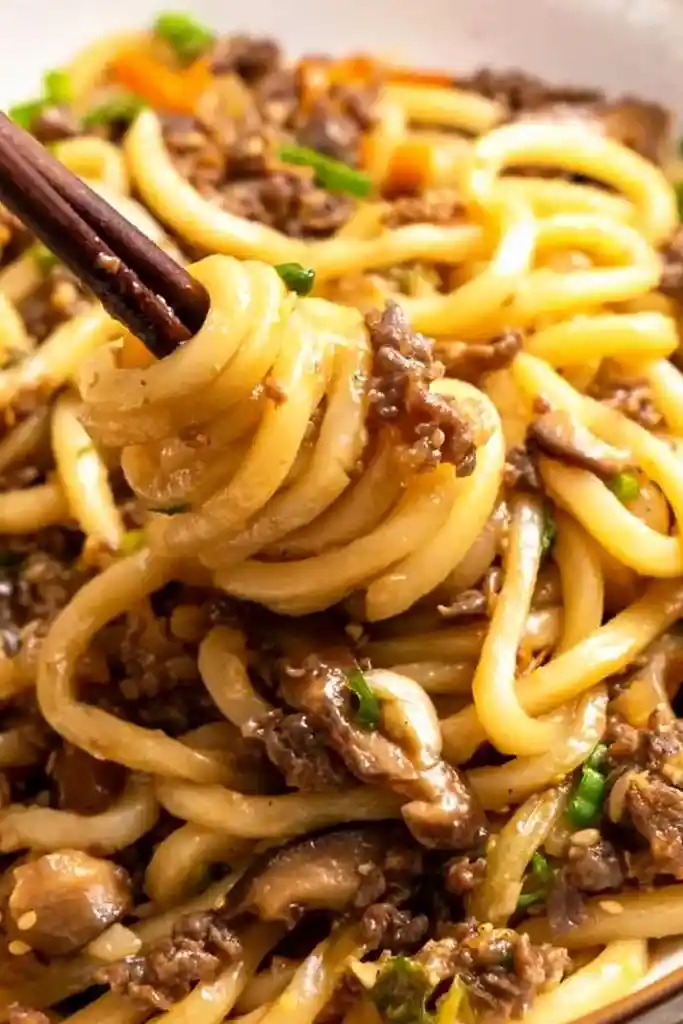
List of ingredients
- 2 packs (17-oz./500g) udon noodles – preferably frozen for a better chew.
- 2 tbsp vegetable oil – used for searing the meat and vegetables.
- 300 g sliced beef – rib eye or top sirloin works best.
- 1/2 medium onion – thinly sliced for quick cooking.
- 40 g carrot – julienned into thin strips.
- 30 g shiitake mushrooms – sliced thinly.
- 2 green onions – chopped into small pieces.
- 1 tbsp oyster sauce – adds a deep, savory finish.
- Toasted sesame seeds and green onion – used for the final garnish.
- 4 tbsp soy sauce – the base of the salty marinade.
- 2 tbsp apple juice – a safe substitute for mirin to add sweetness.
- 1 tbsp sesame oil – provides a nutty aroma.
- 1 tbsp honey – adds a glossy glaze and sweetness.
- 1 tbsp brown sugar – enhances the caramelization of the beef.
- 6 cloves garlic – minced finely.
- 1/4 tsp black pepper – for a hint of spice.
step-by-step instructions
- Prepare the marinade: Combine the soy sauce, apple juice, sesame oil, honey, brown sugar, minced garlic, and black pepper in a small bowl. Mix until the sugar and honey are fully dissolved.
- Marinate the beef and vegetables: Place the sliced beef, onion, carrot, mushrooms, and green onions in a medium bowl. Pour the marinade over the ingredients, mix well to coat everything, and let it sit for at least 10 minutes or overnight in the fridge.
- Thaw the noodles: If using frozen udon, soak them in hot water for about one minute. Use chopsticks to gently loosen the strands, then rinse with cold water and drain thoroughly.
- Sear the bulgogi mixture: Heat the vegetable oil in a wok or large pan over medium-high heat. Add the marinated beef and vegetable mixture, cooking for 2-3 minutes until the beef is browned and vegetables are tender.
- Combine and finish: Stir in the prepared udon noodles and the oyster sauce. Stir-fry everything together for 1-2 minutes until the noodles are heated through and coated in sauce. Garnish with sesame seeds and extra green onions.
Optimal Meat Selections
Rib Eye for Maximum Tenderness
Rib eye is the traditional choice for bulgogi because of its high fat content. The marbling ensures the beef remains juicy and tender even when cooked over high heat.
Top Sirloin for a Leaner Option
Top sirloin is a great alternative if you prefer less fat. It still provides a strong beefy flavor, but you should slice it very thinly against the grain to avoid toughness.
Using Flank Steak for Texture
Flank steak is another viable option that absorbs marinades very well. To keep it tender, ensure you slice the meat across the fibers into thin strips.
Preparing Frozen Beef Rolls
If using frozen hotpot beef rolls, thaw them slowly in the refrigerator overnight. This prevents the meat from releasing too much moisture during the stir-fry process.
Selecting the Right Udon Noodles
The Advantage of Frozen Udon
Frozen udon noodles generally have a superior, chewier texture compared to shelf-stable versions. They are less likely to become mushy or break apart during the stir-frying stage.
Handling Fresh Vacuum-Packed Udon
Fresh udon often comes in a vacuum-sealed pack with a light coating of oil. Always rinse these noodles under cold water first to remove the excess oil and starch.
Preparing Dried Udon Noodles
Dried udon requires boiling in water before stir-frying. Cook them slightly under the package directions so they remain firm when they hit the hot wok.
Avoiding Overcooked Noodles
To prevent the noodles from becoming too soft, avoid over-boiling or over-soaking. The goal is to have a distinct ‘bounce’ to the noodle when you bite into it.
Customizing Your Vegetable Mix
Adding Bok Choy for Crunch
Bok choy adds a fresh, crisp element and a light bitterness that balances the sweet marinade. Add the stems early and the leaves in the last minute of cooking.
Incorporating Colorful Bell Peppers
Red and yellow bell peppers add vibrant color and a subtle sweetness to the dish. Slice them into thin strips to match the shape of the carrots and onions.
Using Snap Peas for Freshness
Snap peas provide a satisfying snap and a bright green color. Add them toward the end of the beef searing process to maintain their crisp texture.
Adding Zucchini for Volume
Zucchini is a great way to add more volume to the meal without adding many calories. Slice it into half-moons and sauté it quickly so it doesn’t release too much water.
Adding Shredded Cabbage
Napa cabbage or green cabbage adds a traditional stir-fry feel. Shred it thinly and cook it until it just begins to wilt before adding the noodles.
Mastering the Stir Fry Technique
Maintaining High Heat
A hot wok is essential for achieving the ‘wok hei’ or breath of the wok. High heat sears the meat quickly, locking in juices and preventing the beef from stewing in its own liquid.
Avoiding Overcrowding the Pan
If you are doubling the recipe, cook the beef and vegetables in batches. Overcrowding the pan lowers the temperature, which leads to steaming instead of searing.
Timing the Noodle Addition
Only add the noodles once the beef is browned and the vegetables are tender. This ensures the noodles only cook long enough to heat through and absorb the sauce.
Constant Movement for Even Cooking
Use a spatula or tongs to keep the ingredients moving constantly. This prevents the sugar in the marinade from burning and ensures every noodle is evenly coated.
Alternative Marinade Adjustments
Reducing the Sweetness
If the sauce is too sweet for your taste, reduce the honey and brown sugar by half. You can increase the soy sauce or add a splash of rice vinegar to balance the flavor.
Adding Fresh Ginger for Zest
Grating a teaspoon of fresh ginger into the marinade adds a spicy, aromatic depth. Ginger complements the garlic and helps cut through the richness of the beef.
Replacing Honey with Maple Syrup
Maple syrup can be used as a 1:1 replacement for honey. It provides a similar viscosity and sweetness but adds a slightly different, woody flavor profile.
Using Coconut Aminos for a Different Salt Profile
For a slightly less salty taste, you can replace half of the soy sauce with coconut aminos. This adds a subtle sweetness and is a common alternative for those avoiding high sodium.
Storage and Preservation
Refrigerator Storage Guidelines
Store leftover bulgogi udon in an airtight container in the refrigerator. It will remain fresh and safe to eat for up to three days.
Preventing Noodle Clumping
When storing, a small drizzle of sesame oil can prevent the noodles from sticking together. This makes the reheating process much easier and keeps the texture smoother.
Freezing Stir Fry Noodles
Stir-fried noodles generally do not freeze well as the texture can become grainy. It is better to freeze the marinated raw beef and vegetables, then cook them fresh.
Managing Excess Moisture
If you notice liquid pooling in the container after storage, drain it before reheating. This prevents the noodles from becoming soggy when warmed up.
Best Ways to Reheat
Stovetop Reheating Method
The best way to reheat this dish is in a pan over medium heat. Add a tablespoon of water or broth to loosen the noodles and toss until heated through.
Microwave Reheating Tips
If using a microwave, sprinkle a bit of water over the noodles and cover with a damp paper towel. Heat in 30-second intervals, stirring in between to avoid hot spots.
Maintaining the Sauce Texture
If the sauce has thickened too much during storage, add a teaspoon of soy sauce or water during reheating. This restores the glossy coating on the noodles.
Avoiding Overheating
Reheat only until the dish is steaming. Overheating the noodles in the microwave can cause them to lose their chewiness and become mushy.
Serving and Pairing Ideas
Traditional Korean Side Dishes
Serve this dish with kimchi or pickled radish for a fermented, acidic contrast. These sides help cleanse the palate between bites of the rich beef.
Adding a Fresh Salad Pairing
A simple cucumber salad with rice vinegar and sesame oil pairs perfectly. The coolness of the cucumber balances the heat of the stir-fry.
Garnish Options for Visual Appeal
Beyond sesame seeds, try adding shredded nori or thinly sliced red chilies. These add layers of flavor and make the dish look professional.
Serving with Steamed Greens
Pair the noodles with a side of steamed spinach or broccoli. This ensures a balanced meal with a healthy serving of dark leafy greens.
Common Cooking Challenges
Preventing Mushy Noodles
Avoid over-soaking the frozen udon or over-boiling the dried udon. Ensure the noodles are drained well before adding them to the pan to avoid adding extra water.
Fixing a Sauce that is Too Thin
If the sauce is too watery, let it simmer for an extra minute before adding the noodles. The sugars in the marinade will naturally thicken as they reduce.
Preventing Beef from Becoming Tough
Do not overcook the beef; it only needs a few minutes to brown. Slicing the meat against the grain is the most effective way to ensure tenderness.
Handling Burnt Garlic
If the minced garlic browns too quickly, lower the heat slightly. Burnt garlic can taste bitter and ruin the delicate balance of the bulgogi marinade.
Frequently Asked Questions
Can I use different types of beef?
Yes, any thinly sliced beef will work. Rib eye is best for flavor, but sirloin or flank steak are excellent leaner alternatives.
How do I store leftovers?
Place them in an airtight container and keep them in the fridge for up to three days. Reheat them on the stove for the best texture.
Can I make this dish vegan?
You can replace the beef with extra-firm tofu or mushrooms and use a vegan-friendly oyster sauce substitute made from mushrooms.
What if I cannot find frozen udon?
You can use fresh vacuum-packed udon or dried udon. Just be sure to follow the specific preparation instructions for each type before stir-frying.
How can I make the dish spicier?
Add a tablespoon of Gochujang (Korean chili paste) to the marinade or sprinkle red pepper flakes over the finished dish.
Can I use a different oil for frying?
Any neutral oil with a high smoke point will work, such as canola, grapeseed, or sunflower oil.
Is apple juice a good replacement for mirin?
Yes, apple juice provides the sweetness and acidity needed to mimic the flavor of mirin without the alcohol content.
Can I add more vegetables?
Absolutely. Feel free to add any vegetables you have on hand, such as cabbage, broccoli, or snap peas, following the timing tips provided.
Print
Easy Bulgogi Beef Udon Stir Fry
- Total Time: 20 minutes
- Yield: 2 servings 1x
- Diet: General
Description
This easy bulgogi beef udon stir fry features thinly sliced beef, vegetables, and udon noodles coated in an incredibly flavorful marinade that will have you craving for more.
Ingredients
- 2 packs (17-oz./500g) udon noodles, preferably frozen
- 2 tbsp vegetable oil
- 300 g sliced beef (rib eye or top sirloin)
- 1/2 medium onion, sliced
- 40 g carrot, julienned
- 30 g shiitake mushrooms, sliced
- 2 green onions, chopped
- 1 tbsp oyster sauce
- Toasted sesame seeds and green onion for garnish
- 4 tbsp soy sauce
- 2 tbsp alcohol-free mirin substitute
- 1 tbsp sesame oil
- 1 tbsp honey
- 1 tbsp brown sugar
- 6 cloves garlic, minced
- 1/4 tsp black pepper
Instructions
- Step 1: Combine all marinade ingredients in a small bowl.
- Step 2: In a medium bowl, add sliced beef, onion, carrot, mushrooms, and green onions, and pour the marinade on top. Mix to combine and set aside for at least 10 minutes, or overnight.
- Step 3: To prepare your noodles from frozen, soak them in hot water for about a minute, and use a pair of chopsticks to carefully loosen the noodles. Rinse with cold water, drain, and set aside.
- Step 4: Heat oil in a wok or a pan over medium-high heat, and add the bulgogi mixture. Cook for about 2-3 minutes until the vegetables are tender and the beef is browned.
- Step 5: Add noodles and oyster sauce. Stir fry everything together for about 1-2 minutes. Garnish and enjoy!
Notes
Using frozen udon noodles is recommended as they store for months in the freezer and maintain a chewy texture without becoming mushy during stir-frying. Leftovers can be stored in an airtight container in the fridge for up to 3 days.
- Prep Time: 15 minutes
- Cook Time: 5 minutes
- Category: Dinner
- Method: Stir-frying
- Cuisine: Japanese, Korean
Nutrition
- Serving Size: 1 serving
- Calories: 820 kcal
- Sugar: 22 g
- Sodium: 1750 mg
- Fat: 28 g
- Saturated Fat: 9 g
- Unsaturated Fat: 19 g
- Trans Fat: 0 g
- Carbohydrates: 78 g
- Fiber: 6 g
- Protein: 42 g
- Cholesterol: 110 mg