
This indulgent meal combines tender garlic butter chicken bites with a rich, velvety Parmesan sauce. It is a straightforward one-pan approach that delivers restaurant-quality flavor in under 30 minutes.
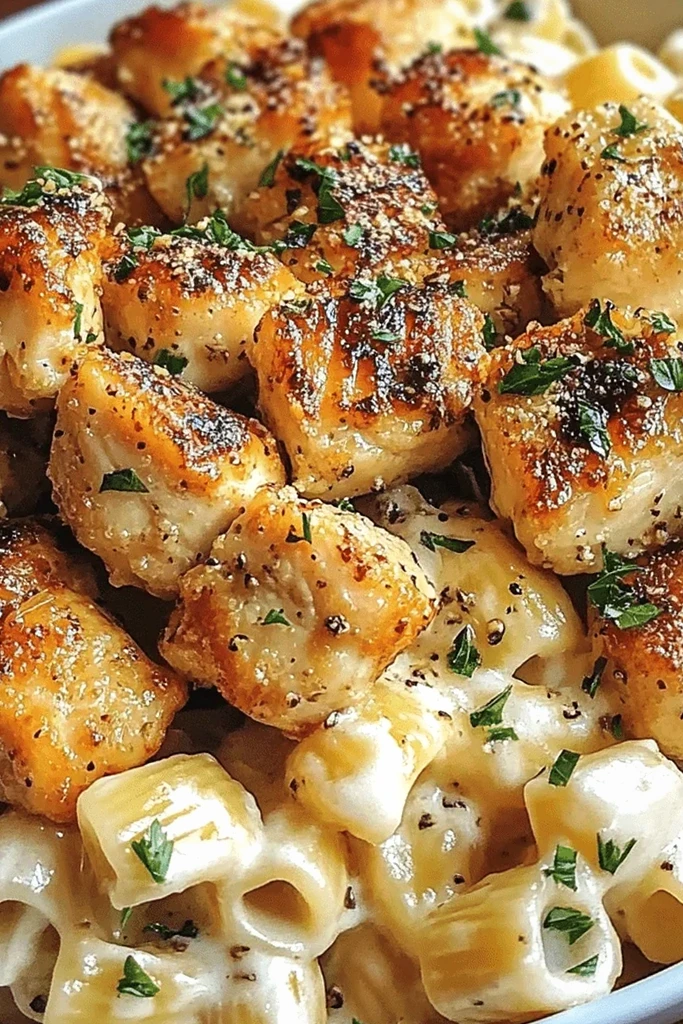
List of ingredients
- 1 lb chicken breast, cubed – ensures lean protein and quick cooking.
- 8 oz pasta (penne or rotini preferred) – these shapes hold the cream sauce well.
- 4 tbsp butter – divided for searing chicken and thickening the sauce.
- 2 cloves garlic, minced – provides a robust aromatic base.
- 1 cup heavy cream – creates the luxurious, silky texture of the sauce.
- 1 cup grated Parmesan cheese – adds a salty, nutty depth.
- Salt and pepper, to taste – for basic seasoning of all components.
- Fresh basil, for garnish – adds a pop of color and herbal freshness.
step-by-step instructions
- Cook the Pasta: Boil pasta in salted water until al dente. Drain the pasta and set it aside, making sure to reserve ½ cup of the starchy pasta water for the sauce.
- Prepare the Chicken: Melt 2 tbsp of butter in a skillet over medium heat. Sauté the minced garlic until fragrant, then add the cubed chicken. Cook until the meat is golden brown and fully cooked to an internal temperature of 165°F, then set the chicken aside.
- Make the Sauce: In the same skillet, melt the remaining 2 tbsp of butter. Gradually stir in the heavy cream and grated Parmesan cheese, cooking until the sauce thickens. Season the mixture with salt and pepper.
- Combine: Toss the cooked pasta into the skillet with the sauce. Fold in the reserved chicken bites and use the reserved pasta water if needed to adjust the sauce’s consistency.
- Garnish and Serve: Garnish the dish with freshly chopped basil and additional Parmesan cheese. Serve immediately while hot.
Mastering the Chicken Searing Process
Cutting Chicken into Uniform Cubes
Consistency in size is essential for even cooking. When chicken pieces are the same size, they all reach the safe internal temperature of 165°F at the same time, preventing some pieces from drying out while others remain undercooked.
Patting Chicken Dry Before Searing
Excess moisture on the surface of the meat creates steam when it hits the pan. By patting the cubed chicken dry with paper towels, you allow the meat to sear and brown quickly, creating a flavorful golden crust.
Avoiding Skillet Overcrowding
Adding too much chicken to the pan at once lowers the surface temperature of the skillet. This causes the meat to release juices and boil in its own liquid rather than searing, so cook in batches if your pan is small.
Preheating the Pan Correctly
Wait until the butter is fully melted and shimmering before adding the garlic and chicken. A hot pan ensures an immediate sear, which locks in juices and develops the rich flavors associated with the Maillard reaction.
Achieving the Perfect Parmesan Sauce
Using Freshly Grated Parmesan Cheese
Freshly grated cheese melts much more smoothly than pre-shredded varieties. Pre-shredded cheeses often contain cellulose or anti-caking agents that can lead to a grainy or clumpy texture in cream-based sauces.
Incorporating Heavy Cream Gradually
Adding the cream slowly while stirring constantly helps maintain a stable emulsion. This prevents the sauce from separating and ensures a consistent, velvety thickness throughout the cooking process.
Utilizing Reserved Pasta Water
Pasta water contains starch released from the noodles during boiling. Adding a splash of this water to the sauce helps bind the fats and liquids together, creating a glossy finish that clings better to the pasta.
Managing Heat to Avoid Sauce Separation
Keep the heat at a medium or low setting once the cream is added. Boiling the sauce too vigorously can cause the dairy to break or separate, resulting in an oily appearance rather than a smooth cream.
Pasta Selection and Preparation
Selecting Pasta with Ridges
Penne and rotini are ideal because their ridges and spirals trap the creamy sauce. Smooth pastas like spaghetti or linguine allow the sauce to slide off, whereas textured shapes ensure every bite is flavorful.
Cooking Pasta to Al Dente Texture
Cook the pasta for one to two minutes less than the package directions. Since the pasta is tossed in a warm sauce at the end, it will continue to cook slightly, and starting with al dente noodles prevents them from becoming mushy.
Preventing Pasta from Clumping
After draining the pasta, do not rinse it with water, as this removes the starch needed for the sauce to adhere. If you are not mixing it into the sauce immediately, a tiny drizzle of olive oil can prevent the noodles from sticking.
Using Gluten-Free Pasta Options
Gluten-free pastas, such as those made from brown rice or chickpeas, work well in this recipe. Be mindful that some gluten-free varieties cook faster or slower than wheat pasta, so test for doneness frequently.
Ingredient Substitutions and Modifications
Substituting Chicken Breast with Thighs
Boneless, skinless chicken thighs are a great alternative to breasts. They contain more fat and connective tissue, which makes them more succulent and more forgiving if cooked slightly longer.
Substituting Heavy Cream with Half-and-Half
For a slightly lighter sauce, you can use half-and-half instead of heavy cream. Note that the sauce will be thinner, so you may need to simmer it slightly longer or add an extra tablespoon of Parmesan to achieve the same thickness.
Creating a Dairy-Free Cream Substitute
Cashew cream or full-fat coconut milk can replace heavy cream for a plant-based version. These alternatives provide a similar richness, though the flavor profile will shift slightly toward a nuttier or coconut tone.
Replacing Chicken with Plant-Based Protein
Firm tofu or canned chickpeas can be used in place of chicken. Sauté them in the garlic butter until they are browned and crisp to mimic the texture of the chicken bites.
Vegetable Add-Ins for Extra Nutrition
Incorporating Fresh Baby Spinach
Stir in two cups of fresh baby spinach during the final combining step. The residual heat from the pasta and sauce is enough to wilt the spinach without overcooking it, adding a fresh, earthy flavor.
Adding Sautéed Mushrooms
Sauté sliced cremini or button mushrooms in the butter before adding the chicken. Mushrooms add a savory, umami depth that complements the saltiness of the Parmesan cheese perfectly.
Adding Steamed Broccoli Florets
Steam small broccoli florets separately or add them to the pasta water during the last three minutes of boiling. This ensures the broccoli is tender-crisp and vibrant green when folded into the creamy sauce.
Using Sun-Dried Tomatoes for Acidity
Chopped sun-dried tomatoes add a concentrated tanginess that cuts through the richness of the cream and butter. Stir them in along with the garlic for a Mediterranean-inspired flavor profile.
Serving and Pairing Recommendations
Pairing with Warm Garlic Bread
Toasted baguette slices with garlic butter are the perfect accompaniment. The crunchy texture of the bread provides a contrast to the soft pasta and helps soak up any remaining sauce on the plate.
Serving with a Crisp Side Salad
A simple garden salad with a lemon-vinaigrette or balsamic dressing cleanses the palate. The acidity of the dressing balances the heavy, creamy nature of the Parmesan sauce.
Garnishing with Fresh Basil Leaves
Tearing fresh basil leaves over the finished dish adds an aromatic quality and a bright visual contrast. Basil pairs naturally with garlic and Parmesan, enhancing the overall flavor profile.
Enhancing the Plate Presentation
Use a wide pasta bowl to allow the dish to spread out, then sprinkle a final dusting of Parmesan and freshly cracked black pepper on top. This creates a professional, restaurant-style appearance.
Storage and Reheating Guidance
Storing Leftovers in the Refrigerator
Place the leftovers in an airtight container and refrigerate for up to three days. Keep the chicken and pasta together to maintain moisture, but be aware that the pasta will absorb more sauce over time.
Restoring Sauce Consistency During Reheating
Dairy-based sauces often thicken significantly in the fridge. Add a tablespoon of milk, cream, or water before reheating to loosen the sauce and return it to its original creamy state.
Using Low Heat for Even Warming
Reheat the pasta in a skillet over low to medium-low heat rather than in the microwave. This allows you to stir the sauce gently and prevents the dairy from breaking or becoming oily.
Choosing the Right Storage Containers
Use glass containers for storage to avoid any plastic odors from affecting the dairy. Ensure the lid is tight to prevent the pasta from drying out in the refrigerator environment.
Frequently Asked Questions
Can I use chicken thighs instead of breasts?
Yes, chicken thighs are an excellent substitute. They are typically juicier than breasts and hold up well to the searing process, though you should trim any excess fat first.
What can I substitute for heavy cream?
Half-and-half is the closest substitute for a similar texture. For a non-dairy option, cashew cream or coconut cream provides the necessary thickness and richness.
Can this dish be made ahead of time?
You can prepare the chicken and the sauce in advance, but the pasta should be cooked fresh. Combining them too early can result in overcooked noodles that have absorbed all the sauce.
How do I reheat leftovers without the sauce breaking?
Avoid high heat. Warm the dish slowly on the stove and stir in a small amount of milk or water to re-emulsify the sauce and restore the creamy texture.
Which pasta shapes work best?
Penne, rotini, and farfalle are the best choices because they have ridges or folds that hold the sauce. Avoid long, smooth noodles like linguine if you want maximum sauce coverage.
Print
Creamy Garlic Chicken and Parmesan Pasta
- Total Time: 30 minutes
- Yield: 4 servings 1x
- Diet: General
Description
This Garlic Butter Chicken Bites with Creamy Parmesan Pasta recipe is the perfect blend of comfort and elegance. Tender, golden-brown chicken bites are tossed in a rich and creamy Parmesan sauce, then paired with perfectly cooked pasta.
Ingredients
- 1 lb chicken breast, cubed
- 8 oz pasta (penne or rotini preferred)
- 4 tbsp butter
- 2 cloves garlic, minced
- 1 cup heavy cream
- 1 cup grated Parmesan cheese
- Salt and pepper, to taste
- Fresh basil, for garnish
Instructions
- Cook the Pasta: Boil pasta in salted water until al dente. Drain and set aside. Reserve ½ cup of pasta water for the sauce.
- Prepare the Chicken: Melt 2 tbsp butter in a skillet over medium heat. Sauté garlic until fragrant, then add cubed chicken. Cook until golden and fully cooked (internal temperature: 165°F). Set aside.
- Make the Sauce: In the same skillet, melt the remaining 2 tbsp butter. Gradually stir in heavy cream and Parmesan cheese. Cook until the sauce thickens. Season with salt and pepper.
- Combine: Toss the cooked pasta into the sauce. Fold in the chicken bites. If needed, adjust the sauce with reserved pasta water.
- Garnish and Serve: Garnish with freshly chopped basil and extra Parmesan cheese. Serve hot.
Notes
Pasta Options: While penne and rotini work best, any pasta shape can be used. Protein Substitutions: Shrimp or tofu can replace chicken. Vegetable Add-Ins: Spinach, mushrooms, or sun-dried tomatoes make excellent additions. Storage: Leftovers can be stored in an airtight container in the refrigerator for up to 3 days; reheat gently with a splash of cream or milk.
- Prep Time: 10 minutes
- Cook Time: 20 minutes
- Category: Main Course
- Method: Sautéing
- Cuisine: Italian-American
Nutrition
- Serving Size: 1 serving
- Calories: 775 kcal
- Sugar: 6 g
- Sodium: 850 mg
- Fat: 41 g
- Saturated Fat: 22 g
- Unsaturated Fat: 15 g
- Trans Fat: 2 g
- Carbohydrates: 42 g
- Fiber: 3 g
- Protein: 39 g
- Cholesterol: 145 mg