
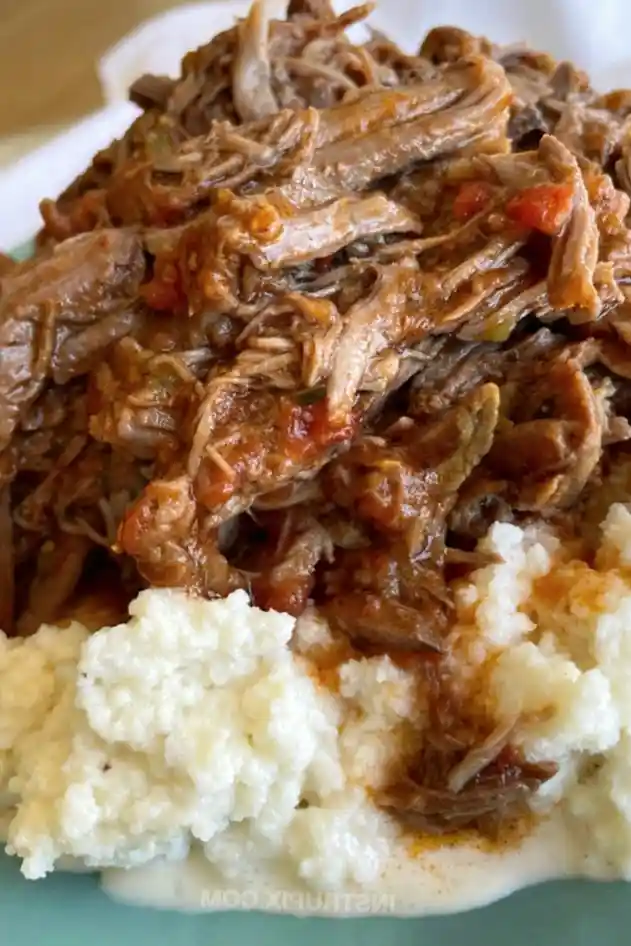
This simple beef roast uses only two main components to create a tender, flavor-packed meal. It is an ideal solution for busy weeknights when preparation time is limited.
List of ingredients
- 1 3-4 pound beef chuck roast – choose a piece with good marbling.
- 1 (16oz) jar of salsa – use your favorite variety, such as restaurant-style or chunky.
- salt & pepper to taste (optional) – for additional seasoning.
step-by-step instructions
- Prepare the pot: Place the beef roast into your slow cooker and pour the jar of salsa over the top. If you prefer more seasoning, you can sprinkle in a little salt, pepper, or garlic powder at this stage.
- Slow cook: Place the lid on and cook on LOW for 4-8 hours. Note that some slow cookers run hotter than others; check for tenderness starting at the 4-hour mark.
- Shred the meat: Once the roast is tender, remove it from the slow cooker and place it on a large cutting board. Use two forks to tear the beef apart and remove any large pieces of unwanted fat.
- Finish the dish: Place the shredded beef back into the slow cooker and mix it thoroughly with the remaining juices.
Meat Selection and Preparation
Why Chuck Roast is the Best Choice
Chuck roast comes from the shoulder area of the cow and is rich in connective tissue and collagen. During the slow cooking process, this collagen breaks down into gelatin, which gives the meat a succulent, melt-in-your-mouth texture. Other leaner cuts may become dry and stringy when cooked for several hours.
Understanding Beef Marbling
Look for a roast with significant white streaks of intramuscular fat, known as marbling. This fat renders down during the cooking process, basting the meat from the inside. High marbling ensures the beef remains juicy even after eight hours in the crockpot.
Alternative Cuts of Beef
If chuck roast is unavailable, a bottom round or rump roast can be used, though these are leaner. To prevent dryness with leaner cuts, consider reducing the cooking time or adding a small amount of beef broth. Brisket is another option, but it requires a very precise cooking time to avoid becoming tough.
Salsa Selection and Flavor Profiles
Using Restaurant Style Salsa
Restaurant style salsa is typically blended and smoother than chunky versions. This creates a more cohesive sauce that coats every shred of the beef evenly. It is ideal for those who prefer a consistent texture in their pot roast.
Adjusting Heat Levels
The spice level of your final dish depends entirely on the salsa you choose. Mild salsa provides a tangy tomato base without heat, while hot salsa adds a spicy kick. You can also mix a mild and a hot jar to customize the heat to your family’s preference.
Exploring Salsa Verde
For a different flavor profile, replace the red tomato salsa with salsa verde, which is made from tomatillos and green chiles. This results in a brighter, more acidic taste that pairs exceptionally well with beef. It transforms the dish into a zestier, lime-forward meal.
Adding Diced Green Chiles
To increase the depth of flavor and add a mild heat, stir in a small can of diced green chiles. This adds a slight smokiness and extra texture to the sauce. It is a great way to enhance the dish without needing to add complex spices.
Slow Cooker Timing and Temperature
The Importance of the Low Setting
Cooking on the LOW setting is highly recommended for this recipe because it allows the connective tissues to dissolve slowly. High heat can sometimes cause the muscle fibers to contract too quickly, which may result in tougher meat. The low and slow approach ensures maximum tenderness.
Converting to the High Setting
If you are short on time, you can use the HIGH setting, but you must monitor the meat closely. Typically, the cooking time on HIGH is about half the time of the LOW setting. However, the texture may not be as tender as it would be with a longer cook time.
Identifying When the Meat is Done
The roast is ready when it reaches a state called ‘fork-tender.’ This means you can easily insert a fork and twist it, and the meat pulls away from itself without resistance. If the meat still feels springy or tough, it needs more time to break down the collagen.
Meat Shredding and Finishing Techniques
The Two-Fork Shredding Method
Using two forks allows you to pull the meat in opposite directions, mimicking the natural grain of the beef. This creates long, tender shreds that are perfect for soaking up the salsa juices. Always shred the meat across the grain for the most tender result.
Removing Excess Fat on a Cutting Board
Removing the roast from the pot to shred it on a cutting board allows you to see the fat caps more clearly. You can trim away any large chunks of unrendered fat before returning the meat to the sauce. This results in a cleaner flavor and a healthier final dish.
Integrating Juices for Maximum Flavor
Once shredded, mixing the meat back into the slow cooker is essential for flavor absorption. The beef acts like a sponge, soaking up the concentrated salsa and beef drippings. Let it sit in the juices for 10-15 minutes before serving.
Suggested Side Dish Pairings
Garlic Mashed Cauliflower
For a low-carb alternative to potatoes, steam fresh cauliflower florets until very soft. Blend them with a tablespoon of butter, minced garlic, and a splash of heavy cream or plant-based cream. This creamy side complements the acidity of the salsa roast.
Classic Mashed Potatoes
Traditional mashed potatoes provide a hearty base for the savory beef. Boil peeled Yukon Gold potatoes until tender, then mash with butter and warm milk. The starch in the potatoes helps balance the bold flavors of the salsa.
White and Brown Rice Options
Serve the roast over steamed basmati or brown rice to absorb the extra sauce. Brown rice adds a nutty flavor and more fiber, while white rice provides a neutral backdrop. This makes the meal more filling and suitable for larger crowds.
Fresh Garden Salads
A crisp salad with a light vinaigrette helps cut through the richness of the beef. Use mixed greens, cucumbers, and radishes for a refreshing contrast. The acidity in a lemon or apple cider vinegar dressing cleanses the palate between bites.
Pasta Noodles
Tossing the shredded beef and salsa sauce with wide egg noodles or penne is a comforting option. The pasta picks up the tomato-based sauce similarly to a ragu. Add a sprinkle of parmesan cheese on top for extra depth.
Storage and Preservation
Refrigeration Guidelines
Store leftover salsa pot roast in an airtight glass or plastic container in the refrigerator. It will remain fresh and safe to eat for 3 to 4 days. Ensure the meat is fully submerged in the juices to prevent it from drying out.
Freezing for Long Term Use
This recipe freezes exceptionally well because the salsa acts as a preservative. Place the beef and sauce in freezer-safe bags, squeezing out as much air as possible to prevent freezer burn. The roast can be stored in the freezer for up to 3 months.
Proper Thawing Process
The safest way to thaw frozen pot roast is in the refrigerator overnight. Avoid thawing it on the counter to prevent bacterial growth. Once thawed, the meat can be reheated using any of the methods described below.
Reheating Methods
Stovetop Reheating
Place the leftovers in a skillet over medium-low heat. Add a splash of beef broth or water to loosen the sauce and restore moisture. Cover the pan with a lid to trap the steam, which keeps the beef tender.
Microwave Reheating
Put the beef in a microwave-safe bowl and cover it with a damp paper towel. Heat in short intervals, stirring in between to ensure even warming. The damp towel prevents the meat from becoming rubbery or dry.
Oven Reheating
Transfer the roast to a baking dish and cover it tightly with aluminum foil. Heat at 325 degrees Fahrenheit until the center is hot. This method is best for larger quantities of leftovers as it provides the most even heat distribution.
Customizing the Recipe
Adding Root Vegetables
You can add chunks of carrots and potatoes to the slow cooker at the start of the process. These vegetables will simmer in the salsa and beef juices, absorbing the flavor. Ensure the vegetables are cut into large pieces so they do not turn to mush during the 8-hour cook.
Incorporating Bell Peppers and Onions
For a ‘fiesta’ style roast, add sliced bell peppers and yellow onions to the pot. You can either add them raw or sauté them in a pan for 5 minutes first to caramelize the sugars. This adds a layer of sweetness and aromatic depth to the dish.
Adding Cumin and Smoked Paprika
While the salsa provides most of the flavor, adding a teaspoon of cumin or smoked paprika can enhance the earthy notes. These spices complement the beef and the tomato base of the salsa. Sprinkle them over the meat before sealing the lid.
Troubleshooting Common Issues
Fixing a Watery Sauce
If the sauce is too thin, remove the lid for the last hour of cooking to allow some moisture to evaporate. Alternatively, you can transfer the sauce to a saucepan and simmer it on the stove until it reduces. You can also stir in a small amount of cornstarch slurry to thicken it instantly.
Handling Tough or Rubbery Meat
If the meat is tough, it usually means it hasn’t cooked long enough for the collagen to break down. Simply return it to the slow cooker and cook for another 1-2 hours on low. If the meat is dry and stringy, it may have been overcooked on the high setting.
Managing Overly Salty Results
Depending on the brand of salsa, the dish can sometimes become too salty. To fix this, add a splash of water or a bit of unsalted beef broth to dilute the salt. Adding a squeeze of fresh lime juice or a teaspoon of sugar can also balance the saltiness.
Frequently Asked Questions
Can I sear the meat first?
Yes, searing the beef in a hot pan with a little oil before adding it to the slow cooker creates a brown crust. This process, known as the Maillard reaction, adds a deeper, more complex flavor to the final roast.
Is this recipe keto-friendly?
This recipe is naturally low-carb and keto-friendly, provided you choose a salsa with no added sugar. To keep it keto, avoid serving it over rice or pasta and instead choose cauliflower rice or a side salad.
Which brand of salsa works best?
Pace Restaurant Style Salsa is often recommended for its consistent texture and balanced flavor. However, any high-quality jarred salsa will work, as long as the ingredients are fresh and the flavor profile suits your taste.
Can I use a pressure cooker instead?
Yes, you can adapt this for a pressure cooker or Instant Pot. Use the manual high-pressure setting for about 60-90 minutes with a natural release. Ensure there is enough liquid in the pot to prevent the ‘burn’ notice.
Print
Slow Cooker Salsa Beef Roast
- Total Time: 8 hours 10 minutes
- Yield: 6 servings 1x
- Diet: Low Carb
Description
This pot roast is not only incredibly easy to make, it’s insanely delicious! Just dump a beef chuck roast into your crockpot with your favorite jar of salsa, and you’ve got the best family dinner recipe for busy weeknight meals.
Ingredients
- 1 3-4 pound beef chuck roast
- 1 (16oz) jar of salsa
- salt and pepper to taste (optional)
Instructions
- Step 1: Place the beef roast into your slow cooker and pour the jar of salsa over top. You can also sprinkle in a little salt, pepper, or garlic powder if you’d like.
- Step 2: Place the lid on and cook on LOW for 4-8 hours.
- Step 3: Shred the roast with forks, removing any unwanted fat, and mix it back into the slow cooker juices.
Notes
Serve this flavorful and juicy beef over mashed potatoes, white or brown rice, cauliflower rice, mashed cauliflower, pasta noodles, or with a side of salad or veggies.
- Prep Time: 10 minutes
- Cook Time: 8 hours
- Category: Main Course
- Method: Slow Cooker
- Cuisine: American
Nutrition
- Serving Size: 1 serving
- Calories: 710 kcal
- Sugar: 6 g
- Sodium: 920 mg
- Fat: 52 g
- Saturated Fat: 21 g
- Unsaturated Fat: 31 g
- Trans Fat: 0 g
- Carbohydrates: 12 g
- Fiber: 3 g
- Protein: 48 g
- Cholesterol: 160 mg