
This hearty soup delivers all the flavors of classic stuffed peppers in a convenient, one-pot meal. It is packed with protein and vegetables, making it a satisfying dinner for the whole family.
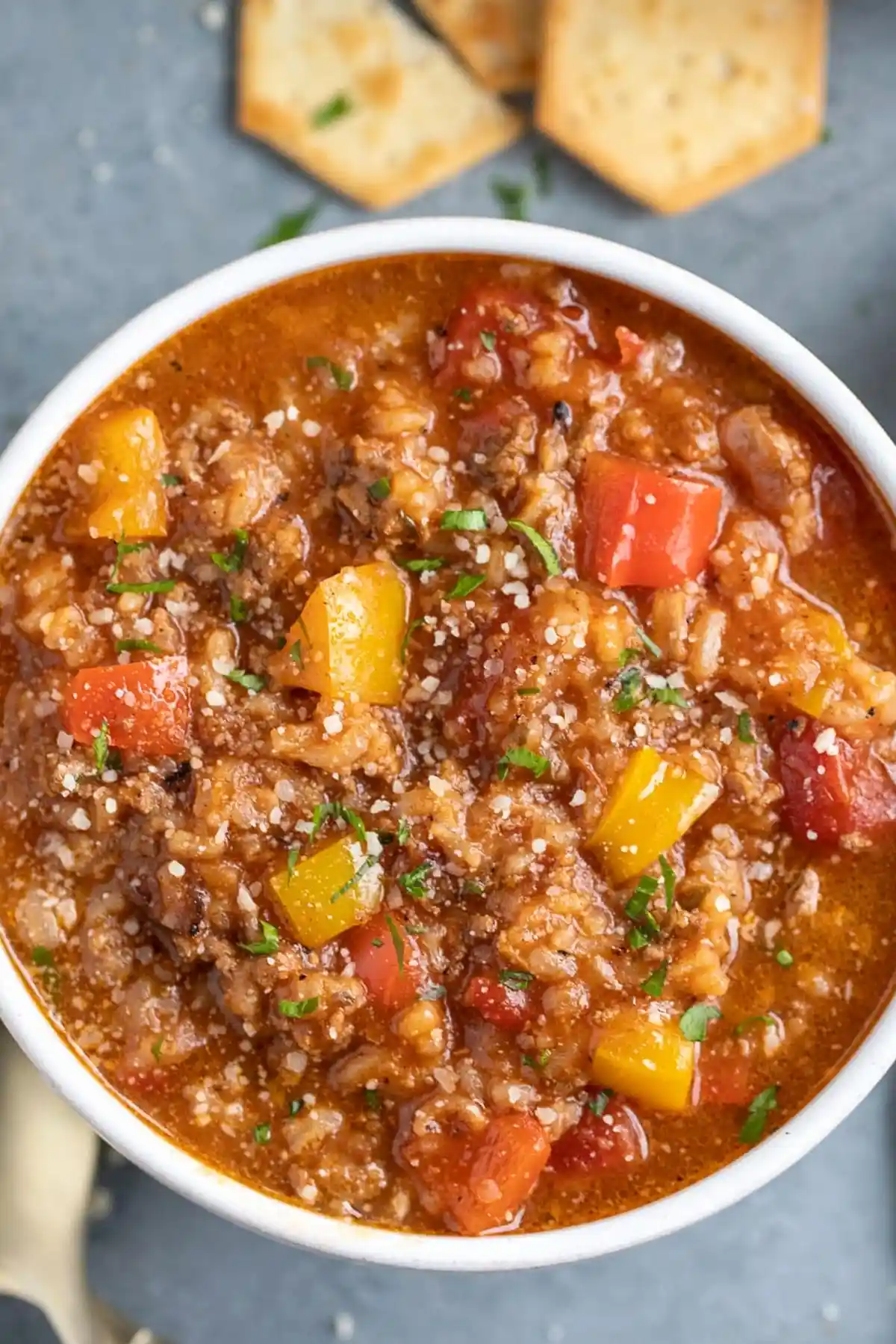
List of ingredients
- 1 tablespoon extra virgin olive oil – used for sautéing meat and aromatics.
- 1 pound ground beef – 80/20 or 85/15 lean ratio works best.
- 1 cup diced onion – provides a sweet, aromatic base.
- ½ tablespoon minced garlic – adds depth of flavor.
- 2 cups diced red, orange, or yellow bell peppers – the primary flavor component.
- 14 ½ oz can petite diced tomatoes – adds texture and a slight tang.
- 15 oz can tomato sauce – creates a thick, rich base.
- 3 cups water – for the soup consistency.
- 2 cups low sodium beef broth – enhances the savory beef flavor.
- ½ teaspoon dried parsley – adds a subtle herbal note.
- ½ teaspoon dried basil – brings a classic Italian aromatic quality.
- ½ teaspoon dried oregano – provides an earthy flavor.
- ¼ teaspoon black pepper – for basic seasoning.
- 1 bay leaf – adds complexity during the simmering process.
- ¼ teaspoon red pepper flakes – adds a touch of optional heat.
- ⅔ cup long grain white rice – makes the soup filling and hearty.
step-by-step instructions
- Stovetop Method: Heat olive oil in a large pot over medium heat. Add the ground beef and cook for 10 minutes until browned and no longer pink.
- Sauté Aromatics: Stir in the diced onion and minced garlic. Cook for another 2 minutes until fragrant.
- Combine Ingredients: Add the diced bell peppers, petite diced tomatoes, tomato sauce, water, beef broth, dried spices, and rice to the pot. Stir well to combine.
- Boil: Cover the pot and increase heat to high. Bring the soup to a boil, stirring every few minutes to ensure the rice does not stick to the bottom. This usually takes about 10 minutes.
- Simmer: Once boiling, remove the cover and reduce heat to medium. Cook uncovered for 2 minutes.
- Rest: Remove the pot from the heat and let it sit uncovered for 10 minutes. The residual heat will finish cooking the rice to the perfect texture.
- Final Touch: Remove the bay leaf before serving. Garnish with Parmesan cheese and fresh parsley.
- Instant Pot Method: Set the device to Sauté for 15 minutes. Heat olive oil for 3 minutes. Brown ground beef for 10 minutes, then sauté garlic and onion for 2 minutes.
- Pressure Cook: Add all remaining ingredients and stir, scraping the bottom to prevent a burn notice. Cover and set to Sealing, High Pressure for 2 minutes.
- Release: Perform a quick pressure release. Remove the bay leaf and serve with Parmesan and parsley.
- Crockpot Method: Brown the ground beef in olive oil in a skillet for 10 minutes. Sauté garlic and onion for 2 minutes.
- Slow Cook: Transfer the beef mixture to the slow cooker. Add all remaining ingredients and stir. Cook on low for 6 hours or high for 4 hours.
- Finish: Remove the bay leaf and serve with Parmesan and parsley.
Ingredient Customization and Substitutions
Switching the Protein Source
While ground beef is traditional, you can substitute it with ground turkey or ground chicken for a leaner option. Ensure you brown the meat thoroughly to maintain the savory depth of the soup. Adjust the salt slightly if using unseasoned poultry.
Low Carb Rice Alternatives
To make this recipe Whole30 compliant or lower in carbohydrates, replace the white rice with cauliflower rice. Add the cauliflower rice at the very end of the cooking process rather than boiling it. This prevents the cauliflower from becoming too mushy.
Selecting Different Bell Pepper Varieties
You can use any color of bell pepper available. Red, orange, and yellow peppers are sweeter, while green peppers provide a more bitter, sharp taste. Using a colorful mix of all three improves the visual appeal of the soup.
Tomato Product Alternatives
If petite diced tomatoes are unavailable, canned crushed tomatoes or extra tomato sauce can be used. Crushed tomatoes provide a thicker texture, while extra sauce makes the broth smoother. The flavor profile remains largely the same.
Using Different Broths
Low sodium beef broth is recommended, but chicken broth or vegetable broth are suitable substitutes. Vegetable broth is a great option for those wanting a lighter flavor. Always choose low-sodium versions to control the salt content.
Fresh Herb Substitutions
Fresh parsley, basil, and oregano can be used instead of dried versions. Use double the amount of fresh herbs to match the potency of the dried spices. Add fresh herbs toward the end of cooking to preserve their bright color and flavor.
Alternative Cooking Fats
If you prefer not to use extra virgin olive oil, avocado oil is a great high-heat alternative. Butter or ghee can also be used to add a richer, creamier taste to the sautéed vegetables. Use an equal tablespoon measurement.
Pro Cooking Tips for Success
Preventing Rice from Sticking
When using the stovetop method, stir the soup every few minutes as it approaches a boil. Long grain white rice releases starch that can settle at the bottom of the pot. Consistent stirring ensures the rice distributes evenly and does not burn.
Avoiding the Instant Pot Burn Notice
It is crucial to deglaze the bottom of the inner pot after browning the meat. Use the liquid from the tomatoes or broth to scrape up any browned bits. This prevents the sensors from detecting a burn and shutting off the machine.
Managing Rice Texture in Slow Cookers
Rice can sometimes overcook and become mushy in a crockpot. To avoid this, reduce the water by 1 cup and cook the rice separately on the stove. Stir the cooked rice into the soup just before serving for the best texture.
Controlling the Heat Level
The red pepper flakes provide a mild warmth, but you can adjust this to your preference. Increase the amount for a spicier kick or omit them entirely for a child-friendly version. Adding a pinch of cayenne can also increase the heat.
Searing the Beef for Maximum Flavor
Do not rush the browning process for the ground beef. Allow the meat to sear and develop a brown crust before breaking it apart. This Maillard reaction adds a depth of savory flavor that cannot be achieved by steaming the meat.
Serving and Pairing Suggestions
Adding Cheesy Garnishes
Freshly grated Parmesan cheese is the classic topping for this soup. For a stretchier, meltier experience, stir in shredded mozzarella or provolone just before serving. This adds a creamy element that complements the acidity of the tomatoes.
Pairing with Crusty Breads
Serve the soup with a toasted sourdough slice or a warm garlic baguette. A grilled cheese sandwich is also an excellent pairing for dunking. The crunch of the bread balances the softness of the rice and peppers.
Adding Fresh Greens for Nutrition
Stir in a handful of fresh baby spinach or chopped kale during the final resting period. The residual heat will wilt the greens without overcooking them. This adds extra vitamins and a pop of green color to the dish.
Suggested Side Salads
A light garden salad with a lemon vinaigrette helps cut through the richness of the beef. Use mixed greens, cucumbers, and radishes for a refreshing contrast. This turns the soup into a complete, balanced meal.
Storage and Reheating Advice
Refrigeration Guidelines
Store leftovers in an airtight container in the refrigerator for up to 4 days. Ensure the soup has cooled slightly before sealing to prevent condensation. The flavors often improve after a day of sitting.
Freezing for Long Term Use
This soup freezes exceptionally well for up to 3 months. Use freezer-safe containers and leave a small amount of space at the top for expansion. Avoid freezing the soup if you used a very high ratio of fresh cream or dairy.
The Proper Thawing Process
For the best quality, defrost the soup in the refrigerator overnight. This slow thaw preserves the texture of the vegetables and rice. If you are in a rush, you can reheat it directly from frozen on low heat.
Effective Reheating Techniques
Reheat on the stove over medium-low heat, adding a splash of beef broth or water. The rice tends to absorb liquid while sitting, so adding moisture restores the original consistency. You can also use a microwave, stirring halfway through.
Common Troubleshooting
Fixing a Soup That is Too Thick
Because rice continues to absorb liquid over time, the soup may thicken significantly upon reheating. Simply stir in an extra half-cup of beef broth or water until you reach your desired consistency. Do this slowly to avoid over-diluting the flavor.
Dealing with Mushy Rice
If the rice becomes too soft, it is likely due to overcooking or using a short-grain variety. Next time, ensure you use long-grain white rice and follow the resting period strictly. For current batches, avoid further boiling during reheating.
Enhancing a Mild Flavor Profile
If the soup tastes bland, add a small amount of salt or a teaspoon of Worcestershire sauce. A squeeze of fresh lemon juice can also brighten the flavors. Ensure you have removed the bay leaf before adding more seasonings.
Correcting Overly Soft Peppers
If you prefer a firmer bite to your peppers, reduce the simmering time. In a slow cooker, you can add half the peppers at the start and the other half during the last hour. This creates a variety of textures in the bowl.
Frequently Asked Questions
Do I need to boil the peppers before adding them?
No, you should not boil the bell peppers ahead of time. They cook perfectly during the simmering process in the soup, which helps them retain their shape and flavor.
How can I increase the protein content further?
Use a leaner cut of beef, such as 90/10, to increase the protein-to-fat ratio. You can also stir in cooked white beans or chickpeas for an extra boost of plant-based protein.
Can this recipe be made vegetarian?
Yes, replace the ground beef with cooked lentils or crumbled firm tofu. Use vegetable broth instead of beef broth to keep the dish entirely plant-based.
What is the best type of rice for this soup?
Long grain white rice is the best choice because it holds its structure well. Avoid using instant rice, as it can become too mushy during the simmering process.
Print
High Protein Stuffed Pepper Soup
- Total Time: 47 minutes
- Yield: 6 servings 1x
- Diet: General
Description
A delicious and hearty Stuffed Pepper Soup packed with protein and vegetables, easily made on the stove, in a crockpot, or an instant pot.
Ingredients
- 1 tablespoon extra virgin olive oil
- 1 pound ground beef
- 1 cup diced onion
- ½ tablespoon minced garlic
- 2 cups diced red, orange, or yellow bell peppers
- 14 ½ oz can petite diced tomatoes
- 15 oz can tomato sauce
- 3 cups water
- 2 cups low sodium beef broth
- ½ teaspoon dried parsley
- ½ teaspoon dried basil
- ½ teaspoon dried oregano
- ¼ teaspoon black pepper
- 1 bay leaf
- ¼ teaspoon red pepper flakes
- ⅔ cup long grain white rice
Instructions
- Brown Meat: Heat olive oil over medium heat in a large pot and cook ground beef for 10 minutes until brown and no longer pink.
- Sauté Aromatics: Add onion and garlic to the pot and sauté for 2 minutes.
- Simmer: Stir in bell peppers, tomatoes, water, broth, dried spices, and rice.
- Boil: Cover and bring to a boil over high heat, stirring occasionally to prevent rice from sticking.
- Cook: Once boiling, remove cover, reduce heat to medium, and cook uncovered for 2 minutes.
- Rest: Remove from heat and let sit uncovered for 10 minutes to allow rice to finish cooking.
- Finish: Remove the bay leaf and serve.
Notes
The rice will absorb broth as it cooks; add more broth when reheating leftovers for a thinner consistency. This soup stores in the refrigerator for up to 4 days or freezes for up to 3 months.
- Prep Time: 10 minutes
- Cook Time: 37 minutes
- Category: Main Course
- Method: Stovetop
- Cuisine: American
Nutrition
- Serving Size: 2.5 cups
- Calories: 327 kcal
- Sugar: 9 g
- Sodium: 633 mg
- Fat: 14 g
- Saturated Fat: 5 g
- Unsaturated Fat: 8 g
- Trans Fat: 1 g
- Carbohydrates: 31 g
- Fiber: 4 g
- Protein: 20 g
- Cholesterol: 51 mg