
This chicken pasta primavera is a fast and nutritious meal perfect for weeknight dinners. It combines tender chicken pieces with a variety of fresh vegetables in a light, creamy parmesan sauce.
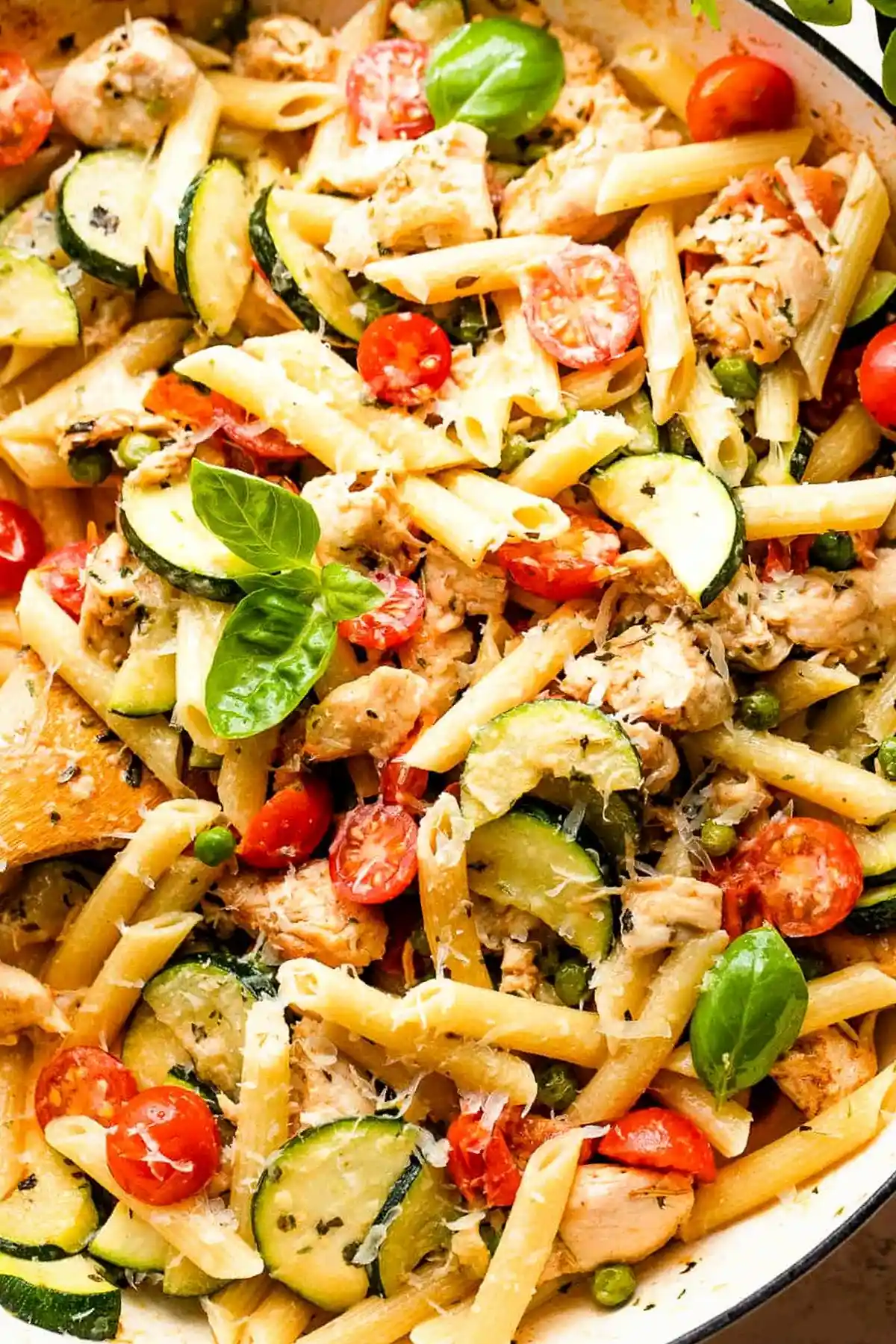
List of ingredients
- 8 to 10 ounces dry penne pasta – provides a sturdy base for the vegetables.
- 2 tablespoons olive oil – used for searing the chicken and sautéing.
- 1 pound skinless boneless chicken breasts – cut into 1-inch cubes or long thin strips.
- Salt and freshly ground black pepper – used for basic seasoning of the meat.
- 1 zucchini – sliced into thin half-moons for quick cooking.
- 1 to 2 cups grape tomatoes – quartered to release their juices.
- 1 cup frozen peas – adds sweetness and color.
- ½ tablespoon dried basil – adds a classic Italian herb flavor.
- 1 teaspoon dried rosemary – provides a woody, aromatic note.
- 1 teaspoon dried parsley – adds a fresh, herbal finish.
- 4 cloves garlic – minced for aromatic depth.
- ½ cup vegetable broth mixed with a squeeze of lemon juice – replaces the white wine for deglazing.
- ⅜ cup heavy whipping cream – creates the velvety sauce texture.
- ¼ cup grated fresh parmesan cheese – adds saltiness and thickness to the sauce.
- Chopped fresh basil – used as a final aromatic garnish.
step-by-step instructions
- Boil Pasta: Cook the penne pasta according to the directions on the package. Drain and set aside until the sauce is ready.
- Sear Chicken: Heat olive oil in a large 14-inch skillet over medium-high heat. Season chicken pieces with salt and pepper, then cook for 5 minutes until browned.
- Sauté Vegetables: Stir in the sliced zucchini, quartered tomatoes, and frozen peas. Season the mixture with dried basil, rosemary, and parsley.
- Add Aromatics: Stir in the minced garlic and continue to cook for 3 minutes, stirring occasionally to avoid burning the garlic.
- Deglaze and Simmer: Pour in the vegetable broth and lemon juice mixture, scraping up all the browned bits from the bottom of the pan. Stir in the heavy cream and cook for 1 minute.
- Combine: Add the drained cooked pasta into the skillet. Stir gently to coat the noodles in the sauce and taste for salt, adjusting if necessary.
- Finish and Serve: Remove the skillet from the heat. Top with grated parmesan cheese and garnish with chopped fresh basil before serving.
Professional Cooking Tips for Success
Salt the Pasta Water Properly
Adding a generous amount of salt to the boiling water is the only chance to season the pasta itself. This prevents the dish from tasting flat and enhances the flavor of the creamy sauce.
Avoid Overcooking the Zucchini
Sauté the zucchini just until it becomes tender-crisp. Overcooking this vegetable can make it mushy, which ruins the textural contrast of the primavera.
Use a Large Skillet for Searing
Using a wide, 14-inch skillet ensures the chicken has enough space to sear rather than steam. This creates a better crust and deeper flavor through the Maillard reaction.
Deglaze Thoroughly
When adding the broth, use a wooden spoon to scrape the brown bits, known as fond, from the bottom of the pan. These bits contain concentrated flavor that thickens and enriches the final sauce.
Ingredient Substitutions and Swaps
Using Chicken Thighs Instead of Breasts
Boneless, skinless chicken thighs are a great alternative to breasts. They have a higher fat content, which makes them more forgiving and less likely to dry out during the searing process.
Alternative Pasta Shapes
While penne is traditional, farfalle (bow-tie) or rotini (spirals) work exceptionally well. These shapes have nooks and crannies that hold onto the creamy parmesan sauce more effectively.
Swapping Zucchini for Yellow Squash
Yellow summer squash can be used in a 1:1 ratio with zucchini. It has a similar texture and flavor profile, adding a bright yellow color to the vegetable mix.
Dairy-Free Cream Alternatives
For a dairy-free version, replace heavy cream with full-fat coconut milk or cashew cream. Be aware that coconut milk may add a slight sweetness to the savory herbs.
Vegetable Broth for Wine
Substituting white wine with vegetable broth and lemon juice maintains the necessary acidity. The lemon juice cuts through the richness of the cream, mimicking the brightness of a dry white wine.
Customizing Your Vegetable Mix
Adding Sliced Mushrooms
Cremini or button mushrooms add an earthy depth to the dish. Sauté them with the chicken for a few minutes before adding the softer vegetables like zucchini.
Incorporating Fresh Broccoli
Small broccoli florets are a classic primavera addition. Blanch them briefly in the pasta water for two minutes before draining to ensure they are tender but bright green.
Adding Red Bell Peppers
Thinly sliced red bell peppers provide a sweet flavor and vibrant color. Add them at the same time as the zucchini to ensure they soften properly.
Adding Baby Spinach
Fresh baby spinach can be stirred in at the very end of the cooking process. The residual heat from the pasta and sauce will wilt the spinach in about 30 seconds.
Serving and Pairing Ideas
Pairing with a Fresh Side Salad
A simple garden salad with a light balsamic vinaigrette balances the richness of the cream sauce. Use mixed greens, cucumbers, and radishes for a crisp contrast.
Serving with Garlic Breadsticks
Warm garlic parmesan breadsticks are ideal for soaking up any extra sauce left on the plate. This adds a satisfying crunch to the meal.
Combining with a Light Starter Soup
A bowl of tomato bisque or a clear vegetable consommé makes this a complete multi-course dinner. The acidity of tomato soup complements the creamy pasta well.
Storage and Reheating Guidelines
Refrigerating Leftovers
Store any remaining pasta in an airtight container in the refrigerator for 2 to 3 days. Keep the container tightly sealed to prevent the pasta from drying out.
Stovetop Reheating Method
Place the leftovers in a covered skillet over low heat. Add a splash of milk or water to loosen the sauce and stir occasionally until heated through.
Microwave Reheating Tips
Heat the pasta in a microwave-safe bowl covered with a damp paper towel. This creates steam that prevents the noodles from becoming rubbery and keeps the sauce creamy.
Make-Ahead Preparation Advice
Pre-Cutting Ingredients
Dice the chicken and slice the zucchini and tomatoes the evening before. Store them in separate containers to save significant prep time on a busy weeknight.
Cooking Pasta in Advance
You can boil the pasta ahead of time and toss it with a teaspoon of olive oil to prevent sticking. Reheat it by stirring it directly into the hot sauce during the final step.
Preparing the Sauce Base
The vegetable and garlic mixture can be sautéed and cooled. When ready to eat, simply reheat the mixture, add the cream and parmesan, and toss with fresh pasta.
Troubleshooting Common Issues
Fixing a Sauce That Is Too Thin
If the sauce is too watery, simmer it for an extra minute before adding the pasta. You can also stir in an extra tablespoon of grated parmesan cheese to thicken it instantly.
Preventing Tough Chicken
Ensure the skillet is hot before adding the chicken to get a quick sear. Avoid overcooking the cubes; they should be just opaque in the center before you add the vegetables.
Correcting Over-Salted Sauce
If the sauce tastes too salty, add a small squeeze of fresh lemon juice or a splash more cream. The acidity and fat help neutralize the excess saltiness.
Frequently Asked Questions
Can I use gluten-free pasta?
Yes, gluten-free penne or rotini works well in this recipe. Be careful not to overcook the gluten-free noodles, as they can break apart more easily than wheat pasta.
Can I use frozen vegetables instead of fresh?
You can use a frozen mixed vegetable blend including carrots, corn, and peas. However, fresh zucchini and tomatoes provide a better texture and a more authentic primavera taste.
How do I make this dish vegan?
Replace the chicken with pan-seared tofu or chickpeas, and use cashew cream and nutritional yeast instead of heavy cream and parmesan cheese.
Which type of parmesan cheese is best?
Freshly grated Parmigiano-Reggiano is recommended for the best flavor and melting properties. Pre-shredded cheeses often contain cornstarch, which can make the sauce slightly grainy.
Print
Creamy Chicken and Vegetable Pasta Primavera
- Total Time: 30 minutes
- Yield: 6 servings 1x
- Diet: General
Description
For a quick and easy pasta dinner, whip up this Chicken Pasta Primavera packed with fresh veggies, penne pasta, and tender bites of chicken!
Ingredients
- 8 to 10 ounces dry penne pasta
- 2 tablespoons olive oil
- 1 pound skinless boneless chicken breasts, cut into 1-inch cubes or long thin strips
- salt and freshly ground black pepper
- 1 zucchini, sliced into thin half-moons
- 1 to 2 cups grape tomatoes, quartered
- 1 cup frozen peas
- ½ tablespoon dried basil
- 1 teaspoon dried rosemary
- 1 teaspoon dried parsley
- 4 cloves garlic, minced
- ¼ cup vegetable broth
- ⅓ cup heavy whipping cream
- ¼ cup grated fresh parmesan cheese
- chopped fresh basil, for garnish
Instructions
- Step 1: Cook pasta according to the directions on the package.
- Step 2: In the meantime, heat oil in a large 14-inch skillet set over medium-high heat.
- Step 3: Season the chicken pieces with salt and pepper, add the chicken to the hot oil, and cook for 5 minutes. Stir in the zucchini, tomatoes, and frozen peas; season with dried basil, rosemary, and parsley.
- Step 4: Stir in garlic and continue to cook for 3 minutes, stirring occasionally. Stir in the vegetable broth and scrape up all the browned bits from the bottom of the pan. Add cream and cook for 1 minute.
- Step 5: Drain the cooked pasta, then stir the pasta into the skillet. Taste for salt and adjust accordingly.
- Step 6: Remove from heat.
- Step 7: Top with parmesan cheese, garnish with basil, and serve.
Notes
Substitute vegetable broth for wine. You can also use boneless, skinless chicken thighs for a juicier alternative. Feel free to swap penne for farfalle or rotini.
- Prep Time: 10 minutes
- Cook Time: 20 minutes
- Category: Dinner
- Method: Sautéing
- Cuisine: American Italian
Nutrition
- Serving Size: 1 serving
- Calories: 373 kcal
- Sugar: 4 g
- Sodium: 165 mg
- Fat: 14 g
- Saturated Fat: 5 g
- Unsaturated Fat: 8 g
- Trans Fat: 1 g
- Carbohydrates: 35 g
- Fiber: 3 g
- Protein: 25 g
- Cholesterol: 70 mg