
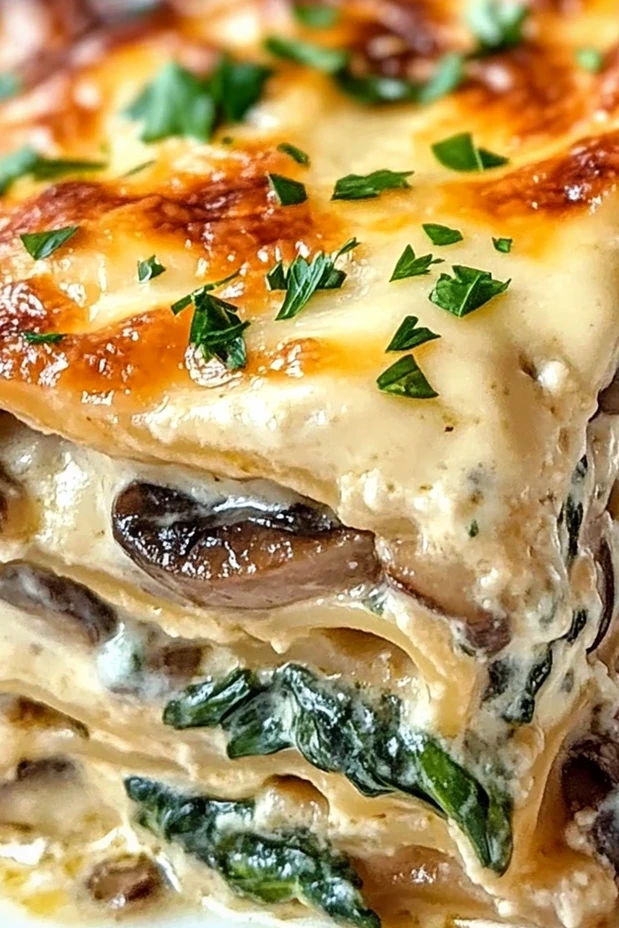
This creamy spinach and mushroom lasagna is a hearty vegetarian meal featuring a rich béchamel sauce and melted cheeses. It is an excellent choice for family dinners or a comforting meal prep option for the week.
List of ingredients
- 2 tbsp olive oil – used for sautéing vegetables.
- 3 cups fresh spinach, roughly chopped – provides color and nutrients.
- 2 cups mushrooms, sliced – adds earthy flavor and texture.
- 3 garlic cloves, minced – for aromatic depth.
- Salt and pepper to taste – basic seasoning for the filling.
- 3 tbsp butter – base for the roux.
- 3 tbsp all-purpose flour – thickens the béchamel sauce.
- 3 cups milk, warm – creates a smooth white sauce.
- ½ tsp ground nutmeg – adds a classic nutty warmth to the cream.
- Salt and pepper to taste – to season the béchamel.
- 9 lasagna noodles – no-boil or pre-cooked per package instructions.
- 2 cups shredded mozzarella cheese – for a gooey, melty finish.
- ½ cup grated Parmesan cheese – adds a salty, sharp accent.
- 1 cup ricotta cheese – provides creamy pockets in the layers.
step-by-step instructions
- Prepare the vegetable filling: Heat olive oil in a skillet over medium heat. Add mushrooms and sauté until softened and lightly browned, about 5 minutes. Add the spinach and garlic, cooking until the spinach wilts. Season with salt and pepper, then remove from heat and set aside.
- Make the béchamel sauce: In a saucepan, melt butter over medium heat. Stir in the flour and cook for 1-2 minutes to form a paste. Gradually whisk in the warm milk, ensuring no lumps form. Bring to a gentle simmer, stirring constantly, until the sauce thickens. Season with nutmeg, salt, and pepper, then remove from heat.
- Assemble the lasagna: Preheat your oven to 375°F (190°C). Spread a thin layer of béchamel sauce on the bottom of a 9×13-inch baking dish. Layer 3 lasagna noodles over the sauce. Spread ⅓ of the vegetable filling on top of the noodles, followed by dollops of ricotta, a sprinkle of mozzarella, and a spoonful of béchamel sauce. Repeat the layers twice more, finishing with béchamel sauce and the remaining mozzarella and Parmesan on top.
- Bake the lasagna: Cover the dish with aluminum foil and bake for 25 minutes. Remove the foil and bake for an additional 15 minutes, or until the cheese is bubbly and golden.
- Serve: Let the lasagna rest for 10 minutes before slicing. Serve warm to enjoy the set layers and creamy texture.
Professional Cooking Tips
Grate Your Own Mozzarella Cheese
Buying block cheese and grating it yourself results in a better melt. Pre-shredded cheeses often contain cornstarch or cellulose to prevent clumping, which can make the lasagna layers feel grainy. Freshly grated mozzarella blends more smoothly into the béchamel sauce.
Warm the Milk Before Adding to Roux
Using warm milk prevents the butter and flour mixture from seizing or forming lumps. Slowly pouring the warm liquid while whisking constantly ensures a silky texture. This makes the béchamel much easier to stir and thicken uniformly.
Brown the Mushrooms Thoroughly
Sautéing mushrooms until they are golden brown removes excess moisture and concentrates their flavor. If mushrooms are undercooked, they can release water during baking, making the lasagna soggy. A deep brown color indicates a richer, meatier taste.
Use a Heavy-Bottomed Saucepan
A heavy pot distributes heat more evenly and prevents the milk from scorching at the bottom. This is especially important when simmering a thick white sauce. Stir the sauce constantly with a whisk to reach every corner of the pan.
Ingredient Substitutions
Gluten-Free Pasta and Flour
Replace the standard lasagna noodles with gluten-free sheets available at most stores. In the béchamel, substitute all-purpose flour with an equal amount of a gluten-free all-purpose blend or rice flour. These swaps maintain the structure and creaminess of the dish.
Plant-Based Dairy Alternatives
For a vegan version, use plant-based butter and unsweetened almond or soy milk for the sauce. Substitute the ricotta with mashed tofu seasoned with lemon juice and salt. Use vegan mozzarella and Parmesan shreds to achieve the cheesy top layer.
Different Mushroom Varieties
While white button mushrooms are standard, cremini or shiitake mushrooms offer a deeper flavor profile. Oyster mushrooms provide a unique texture that complements the spinach well. You can use a mixture of three different types for a more complex taste.
Using Frozen Spinach
If fresh spinach is unavailable, use frozen chopped spinach. Ensure you thaw the spinach completely and squeeze out every drop of excess water using a kitchen towel. Adding wet spinach will make the lasagna too watery and prevent the noodles from cooking.
Creative Recipe Variations
Adding Roasted Red Peppers
Adding sliced roasted red peppers between the layers provides a sweet, smoky contrast to the earthy mushrooms. Layer them on top of the spinach mixture before adding the ricotta. This adds a pop of bright color to the interior of the lasagna.
Incorporating Sliced Zucchini
Thinly sliced zucchini can be sautéed with the mushrooms or layered raw if sliced very thin. Zucchini adds a fresh, garden-like quality to the dish. It pairs perfectly with the nutmeg in the béchamel sauce.
Adding a Spicy Kick
Stir a pinch of red pepper flakes into the vegetable filling for a subtle heat. Alternatively, add a small amount of cayenne pepper to the béchamel sauce. This cuts through the richness of the cheese and adds a modern twist.
Using Different Cheese Blends
Try swapping some of the mozzarella for fontina or gruyère for a more sophisticated, nutty flavor. These cheeses melt beautifully and pair well with mushrooms. Keep the Parmesan on top for the necessary salty crust.
Serving and Pairing Ideas
Fresh Green Side Salad
A crisp arugula or mixed greens salad with a lemon vinaigrette balances the heaviness of the lasagna. The acidity of the dressing cleanses the palate between creamy bites. Use a simple mix of olive oil, lemon juice, and salt.
Garlic Bread Accompaniment
Toasted baguette slices rubbed with fresh garlic and butter are a classic pairing. The crunch of the bread provides a texture contrast to the soft lasagna layers. Bake the bread during the last 10 minutes of the lasagna’s cooking time.
Roasted Root Vegetables
Roasted carrots or asparagus offer a healthy and colorful side option. Roast them at the same temperature as the lasagna for efficiency. A drizzle of balsamic glaze over the vegetables complements the creamy sauce.
Storage and Reheating Guide
Refrigeration Tips
Store leftover lasagna in an airtight container in the refrigerator for up to 4 days. Ensure the dish has cooled slightly before sealing to prevent condensation. This keeps the noodles from becoming mushy.
Freezing the Unbaked Lasagna
You can assemble the lasagna and freeze it before baking. Cover the dish tightly with plastic wrap and then a layer of aluminum foil. It will stay fresh in the freezer for up to 3 months.
Baking From Frozen
To bake from frozen, remove the plastic wrap and cover with foil. Bake at 375°F (190°C) for 60-70 minutes. Remove the foil for the last 15 minutes to brown the cheese topping.
Best Reheating Methods
For a single slice, microwave on medium power for 2 minutes. For larger portions, cover with foil and bake at 350°F (175°C) for 20 minutes. Adding a teaspoon of milk to the slice before reheating helps restore the creaminess.
Troubleshooting Common Issues
Fixing Lumpy Béchamel
If your sauce develops lumps, do not panic. Remove the pan from the heat and whisk vigorously. If the lumps persist, pour the sauce through a fine-mesh strainer or use an immersion blender for a few seconds.
Preventing a Watery Lasagna
Wateriness usually comes from undercooked mushrooms or wet spinach. Always sauté the vegetables until the liquid has evaporated. Additionally, ensure your béchamel has thickened enough to coat the back of a spoon.
Avoiding Burnt Cheese
If the cheese is browning too quickly before the center is hot, cover the dish back up with foil. Adjust your oven rack to a lower position to reduce direct heat from the top element. Monitor the top closely during the final 15 minutes.
Frequently Asked Questions
Can I use no-boil noodles?
Yes, no-boil noodles work perfectly in this recipe because the béchamel sauce provides enough moisture. Just ensure the noodles are completely covered by sauce and filling to avoid hard edges.
How long does it last in the fridge?
The lasagna remains safe and delicious for 3 to 4 days when stored in an airtight container. The flavors often meld and improve after a day of resting.
Can I add protein to this recipe?
You can add grilled chicken strips or sautéed tofu to the vegetable layer. Ensure the protein is fully cooked before layering it into the lasagna. This makes the meal more filling for those who want more protein.
What is the best ricotta substitute?
Cottage cheese is the best alternative to ricotta. For the best texture, blend the cottage cheese in a food processor until smooth before adding it to the layers. It provides a similar creaminess and tang.
Print
Creamy Spinach and Mushroom Lasagna Guide
- Total Time: 1 hour
- Yield: 6 servings 1x
- Diet: Vegetarian
Description
This creamy spinach mushroom lasagna is a perfect balance of cheesy comfort and hearty vegetables. Layered with a creamy béchamel sauce, tender mushrooms, spinach, and gooey cheese, it’s a crowd-pleaser that’s surprisingly simple to make!
Ingredients
- 2 tbsp olive oil
- 3 cups fresh spinach (roughly chopped)
- 2 cups mushrooms (sliced)
- 3 garlic cloves (minced)
- Salt and pepper to taste
- 3 tbsp butter
- 3 tbsp all-purpose flour
- 3 cups milk (warm)
- ½ tsp ground nutmeg
- 9 lasagna noodles (no-boil or pre-cooked)
- 2 cups shredded mozzarella cheese
- ½ cup grated Parmesan cheese
- 1 cup ricotta cheese
Instructions
- Step: Prepare the vegetable filling: Heat olive oil in a skillet over medium heat. Add mushrooms and sauté until softened and lightly browned, about 5 minutes. Add the spinach and garlic, cooking until the spinach wilts. Season with salt and pepper. Remove from heat and set aside.
- Step: Make the béchamel sauce: In a saucepan, melt butter over medium heat. Stir in the flour and cook for 1-2 minutes to form a paste. Gradually whisk in the warm milk, ensuring no lumps form. Bring to a gentle simmer, stirring constantly, until the sauce thickens. Season with nutmeg, salt, and pepper. Remove from heat.
- Step: Assemble the lasagna: Preheat your oven to 375°F (190°C). Spread a thin layer of béchamel sauce on the bottom of a 9×13-inch baking dish. Layer 3 lasagna noodles over the sauce. Spread ⅓ of the vegetable filling on top of the noodles, followed by dollops of ricotta, a sprinkle of mozzarella, and a spoonful of béchamel sauce. Repeat the layers twice more, finishing with béchamel sauce and the remaining mozzarella and Parmesan on top.
- Step: Bake the lasagna: Cover the dish with aluminum foil and bake for 25 minutes. Remove the foil and bake for an additional 15 minutes, or until the cheese is bubbly and golden.
- Step: Serve: Let the lasagna rest for 10 minutes before slicing. Serve warm and enjoy the creamy, cheesy goodness!
Notes
For added flavor, sauté onions with the mushrooms, or add a pinch of chili flakes to the vegetable filling. Substitute whole-wheat or gluten-free lasagna noodles if needed. Leftovers reheat beautifully—store in an airtight container in the fridge for up to 3 days.
- Prep Time: 20 minutes
- Cook Time: 40 minutes
- Category: Dinner
- Method: Baking
- Cuisine: Italian-American
Nutrition
- Serving Size: 1 slice
- Calories: 550 kcal
- Sugar: 10 g
- Sodium: 950 mg
- Fat: 30 g
- Saturated Fat: 18 g
- Unsaturated Fat: 12 g
- Trans Fat: 0 g
- Carbohydrates: 45 g
- Fiber: 5 g
- Protein: 25 g
- Cholesterol: 100 mg