
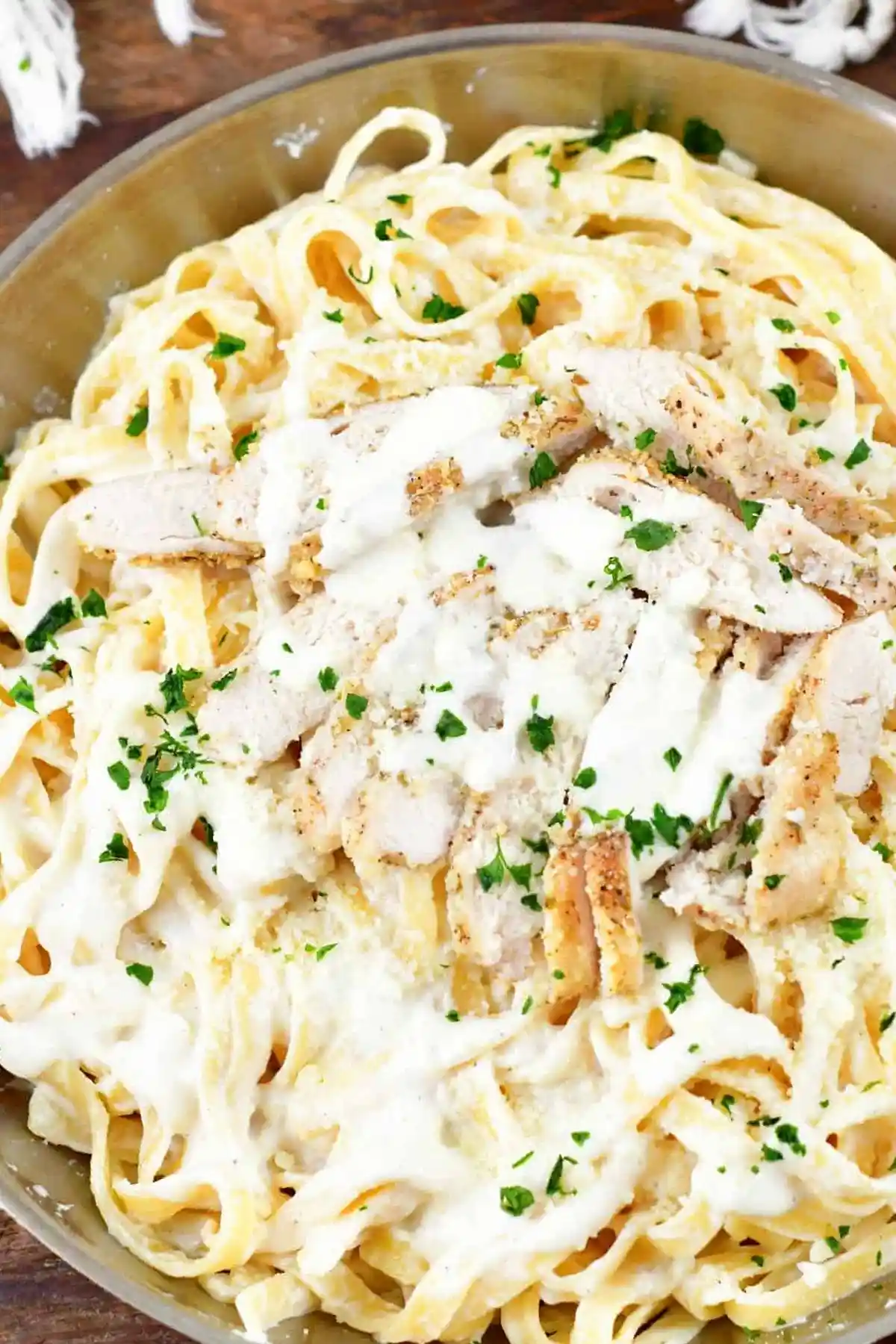
This recipe delivers a rich and comforting dinner featuring tender baked chicken and a velvety homemade cheese sauce. It is a streamlined approach to a classic Italian-American favorite that can be prepared in just 30 minutes.
List of ingredients
- 16 oz fettuccine – the traditional wide noodle for this dish.
- 1.5 lbs chicken breast or thighs – boneless and skinless.
- 1/2 cup grated Parmesan cheese – for coating the chicken.
- 2.5 tsp oregano – adds a classic Italian herbal note.
- salt – to taste for seasoning.
- fresh cracked black pepper – for a sharp, aromatic spice.
- 2 tbsp unsalted butter – used to create the sauce base.
- 2 garlic cloves – pressed or finely minced.
- 1 tbsp all purpose flour – used as a thickening agent.
- 2 cups heavy whipping cream – provides the rich, creamy texture.
- 1/4 cup sour cream – adds a subtle tang and thickness.
- 1/2 cup fresh grated Parmesan cheese – for a smooth melt in the sauce.
- 1/2 cup dry Parmesan cheese – for added salty depth.
- salt – for sauce seasoning.
- fresh cracked black pepper – for sauce seasoning.
step-by-step instructions
- Boil the Pasta: Cook the fettuccine according to the package directions. Ensure you do not overcook the noodles to prevent them from becoming mushy. Drain the pasta and set it aside.
- Prepare the Oven: Preheat your oven to 450°F and grease a rimmed baking sheet to prevent sticking.
- Season the Chicken: Trim any excess fat from the chicken breasts or thighs. Season both sides of the meat generously with salt, pepper, and oregano.
- Apply Cheese Crust: Sprinkle freshly grated Parmesan cheese on both sides of the seasoned chicken. Place the pieces on the prepared baking sheet.
- Bake the Chicken: Bake for 15-20 minutes, depending on the thickness of the meat. Once finished, move the chicken to a cutting board and let it rest for 5 minutes.
- Slice the Meat: Slice the rested chicken against the grain to ensure the most tender bite.
- Start the Sauce Base: In a medium, heavy-bottomed sauce pot, melt the butter over medium heat. Add the pressed garlic and cook until it becomes fragrant.
- Create the Roux: Sprinkle the flour over the melted butter and garlic. Stir constantly until the flour is fully incorporated into the butter.
- Incorporate Cream: Slowly pour in the heavy whipping cream while stirring continuously. Gently heat the mixture through, but be careful not to let the liquid reach a boil.
- Finish the Sauce: Whisk in the sour cream, both types of Parmesan cheese, salt, and pepper. Reduce the heat to medium-low and stir gently until the cheese is fully melted and smooth.
- Simmer Briefly: Continue cooking over medium-low heat for approximately 5 minutes, stirring frequently.
- Combine and Serve: Toss the cooked fettuccine into the sauce until evenly coated. Top the pasta with the sliced baked chicken and serve immediately.
Advanced Cooking Techniques
Slicing Chicken Against the Grain
To achieve maximum tenderness, identify the direction of the muscle fibers in the cooked chicken. Slice perpendicular to these fibers, which shortens the muscle strands and makes the meat easier to chew. This prevents the chicken from feeling stringy or tough.
Managing Sauce Temperature to Prevent Splitting
Dairy-based sauces can separate or ‘break’ if they are exposed to extreme heat. Keep the temperature at a gentle simmer or medium-low heat and avoid letting the sauce reach a rolling boil. Constant stirring helps maintain a stable emulsion between the fats and liquids.
Using a Heavy-Bottomed Pot for Even Heating
A heavy-bottomed pot distributes heat more evenly across the base, preventing the butter and garlic from burning. Thin pots often have hot spots that can scorch the flour or the cream. This ensures a smooth, consistent texture throughout the sauce.
The Importance of Resting the Meat
Allowing the chicken to rest for five minutes after baking lets the juices redistribute within the meat. If you slice it immediately, the moisture escapes, leading to drier chicken. Resting ensures every slice remains juicy and flavorful.
Ingredient Substitutions
Substituting Chicken Thighs for Breasts
Boneless, skinless chicken thighs can be used instead of breasts for a richer flavor and more moisture. Thighs are less prone to drying out during the high-heat baking process. They may require an extra few minutes of cooking time depending on their size.
Using Alternative Pasta Shapes
While fettuccine is the standard, linguine or spaghetti are excellent alternatives if you are short on supplies. Tagliatelle is another great choice for holding onto the thick sauce. Avoid using very small pasta shapes, as they may get lost in the heavy cream.
Adjusting for Different Cheese Types
If you do not have dry Parmesan, you can use additional freshly grated cheese or a mix of Romano and Asiago. Romano provides a saltier profile, while Asiago adds a nuttier taste. Ensure the cheese is finely grated to allow for a smooth melt.
Making the Recipe Gluten-Free
Replace the all-purpose flour in the sauce with a 1:1 gluten-free all-purpose flour blend. Use your favorite gluten-free pasta, such as brown rice or corn-based noodles. These substitutions maintain the creamy consistency without using wheat.
Adapting for Lactose-Free Diets
Substitute the heavy cream and sour cream with lactose-free versions. Aged Parmesan is often naturally low in lactose, but always check the label for confirmation. You may need to add an extra half-tablespoon of flour to maintain the sauce’s thickness.
Plant-Based Dairy Alternatives
For a dairy-free version, use unsweetened cashew cream or a combination of almond milk and a plant-based butter. Use a nutritional yeast-based Parmesan alternative for the cheesy flavor. You may need to simmer the sauce slightly longer to achieve the desired thickness.
Adding Vegetable Variations
Roasting Broccoli and Cauliflower
Cut broccoli and cauliflower into small florets and toss them with olive oil, salt, and pepper. Place them on the same baking sheet as the chicken and roast them together at 450°F. They will caramelize and add a healthy crunch to the dish.
Incorporating Fresh Spinach
Add a few handfuls of fresh baby spinach to the sauce during the final two minutes of simmering. The residual heat will wilt the spinach perfectly without overcooking it. This adds color and nutrients without altering the flavor profile.
Adding Sautéed Mushrooms
Sauté sliced cremini or button mushrooms in a separate pan with a bit of butter until browned. Stir the mushrooms into the Alfredo sauce just before tossing in the pasta. This adds an earthy, savory depth to the creaminess.
Using Zucchini and Summer Squash
Dice zucchini and summer squash into small cubes and roast them alongside the chicken. Alternatively, sauté them in the pot before starting the roux. These vegetables blend seamlessly with the garlic and parmesan flavors.
Storage and Preservation
Refrigerating the Components Separately
To maintain the best quality, store the baked chicken, the cooked pasta, and the Alfredo sauce in separate containers. Pasta tends to absorb liquid over time, which can leave the dish dry if stored together. Separate storage prevents the noodles from becoming mushy.
Using Airtight Glass Containers
Store the sauce in a glass jar with an airtight lid to keep it fresh for 3-5 days. Glass is preferable to plastic as it does not absorb odors and provides a better seal. Ensure the container is completely sealed to prevent the sauce from picking up other fridge smells.
Maximizing Shelf Life
Keep the refrigerated components at a consistent cold temperature. Avoid leaving the sauce at room temperature for more than two hours. When stored correctly, the chicken remains tender and the sauce stays creamy for several days.
Reheating Strategies
The Stovetop Reheating Method
The best way to revive the dish is in a small sauce pot over medium-low heat. Add the sauce first and stir slowly until it warms through. Once the sauce is fluid, toss in the pasta and chicken to heat them through gently.
Microwave Heating Tips
If using a microwave, use a lower power setting to avoid overheating the dairy. Heat the food in 30-40 second intervals, stirring thoroughly between each session. This prevents the sauce from separating or creating hot spots.
Loosening Thickened Sauce
Since pasta absorbs sauce during storage, the mixture may seem too thick when reheating. Stir in a tablespoon of milk, heavy cream, or reserved pasta water to restore the creamy consistency. Do this slowly until the desired texture is reached.
Troubleshooting Common Issues
Fixing a Sauce That Is Too Thick
If the sauce becomes too dense, whisk in a small amount of warm milk or water. Add the liquid one tablespoon at a time while stirring over low heat. This thins the sauce without compromising the flavor.
Handling a Curdled or Separated Sauce
If the sauce separates, it is usually due to too much heat. Remove the pot from the burner and whisk vigorously to try and re-emulsify the fats. Adding a tiny bit of cold butter while whisking can also help bring the sauce back together.
Preventing Overcooked Pasta
To avoid mushy noodles, cook the pasta for one minute less than the package directions. Since the pasta will be tossed in a hot sauce and potentially reheated later, keeping it ‘al dente’ ensures it maintains a firm bite.
Addressing Bland Flavor
If the sauce tastes flat, add a pinch more salt or a squeeze of fresh lemon juice. The acidity of the lemon cuts through the richness of the cream and enhances the Parmesan flavor. Freshly cracked black pepper also adds a needed sharp contrast.
Frequently Asked Questions
Can I make this in a slow cooker?
This specific recipe is designed for the oven and stovetop to maintain the sauce’s emulsion. While you can slow-cook chicken, adding dairy like heavy cream for long periods in a crockpot can cause it to curdle. It is better to follow the stovetop method for the sauce.
What is the best type of Parmesan to use?
A combination of fresh grated Parmesan and dry grated Parmesan is ideal. Freshly grated cheese melts more smoothly into the sauce, while the dry version provides a concentrated, salty punch that deepens the overall flavor.
How do I know when the chicken is fully cooked?
The safest way to check is using a meat thermometer to ensure the internal temperature reaches 165°F. Alternatively, the meat should be opaque throughout and the juices should run clear when pierced with a fork.
Can I use half and half instead of heavy cream?
Yes, you can use half and half, but the sauce will be thinner and less rich. To compensate for the lower fat content, add an extra half-tablespoon of flour to the roux and increase the amount of Parmesan cheese used.
Print
Creamy Baked Chicken Alfredo
- Total Time: 30 minutes
- Yield: 4 servings 1x
- Diet: General
Description
Classic Italian comfort food recipe: rich, creamy, cheesy homemade Alfredo sauce, parmesan baked chicken breasts, and fettuccine pasta.
Ingredients
- 16 oz fettuccine
- 1.5 lbs chicken breast or thighs
- 1/2 cup grated Parmesan cheese
- 2.5 tsp oregano
- salt
- fresh cracked black pepper
- 2 tbsp unsalted butter
- 2 garlic cloves
- 1 tbsp all purpose flour
- 2 cups heavy whipping cream
- 1/4 cup sour cream
- 1/2 cup fresh grated Parmesan cheese
- 1/2 cup dry Parmesan cheese
- salt
- fresh cracked black pepper
Instructions
- Cook Pasta: Cook fettuccine according to the package instructions. Drain it and set aside.
- Prepare Chicken: Preheat the oven to 450°F and grease a rimmed baking sheet. Trim excess fat off the chicken and season with salt, pepper, and oregano on both sides.
- Bake Chicken: Sprinkle fresh grated Parmesan cheese generously on both sides of the chicken and place it on the baking sheet. Bake for 15-20 minutes.
- Rest Chicken: Let the chicken rest for about 5 minutes on the cutting board before slicing it against the grain.
- Sauté Garlic: In a medium, heavy bottom sauce pot, melt butter over medium heat. Add pressed garlic and cook until fragrant.
- Thicken Sauce: Sprinkle flour over the garlic, stir until mixed, and slowly pour in heavy whipping cream while constantly stirring. Heat through without letting it boil.
- Finish Sauce: Whisk in sour cream, Parmesan cheeses, salt, and pepper. Lower heat to medium-low and stir until cheese melts, then cook for about 5 minutes, stirring often.
- Combine: Mix the sauce with cooked pasta and sliced chicken.
Notes
Store alfredo sauce in a glass jar with an airtight lid in the refrigerator for 3-5 days. For best results, reheat slowly in a sauce pot over medium-low heat.
- Prep Time: 10 minutes
- Cook Time: 20 minutes
- Category: Dinner
- Method: Baking
- Cuisine: Italian-American
Nutrition
- Serving Size: 1 serving
- Calories: 1286 kcal
- Sugar: 3 g
- Sodium: 862 mg
- Fat: 73 g
- Saturated Fat: 41 g
- Unsaturated Fat: 32 g
- Trans Fat: 0 g
- Carbohydrates: 88 g
- Fiber: 4 g
- Protein: 69 g
- Cholesterol: 420 mg