
This creamy fusion dish blends the bold heat of Korean gochujang with the rich texture of a classic Italian cream sauce. It is a quick, savory meal that comes together in under 15 minutes.
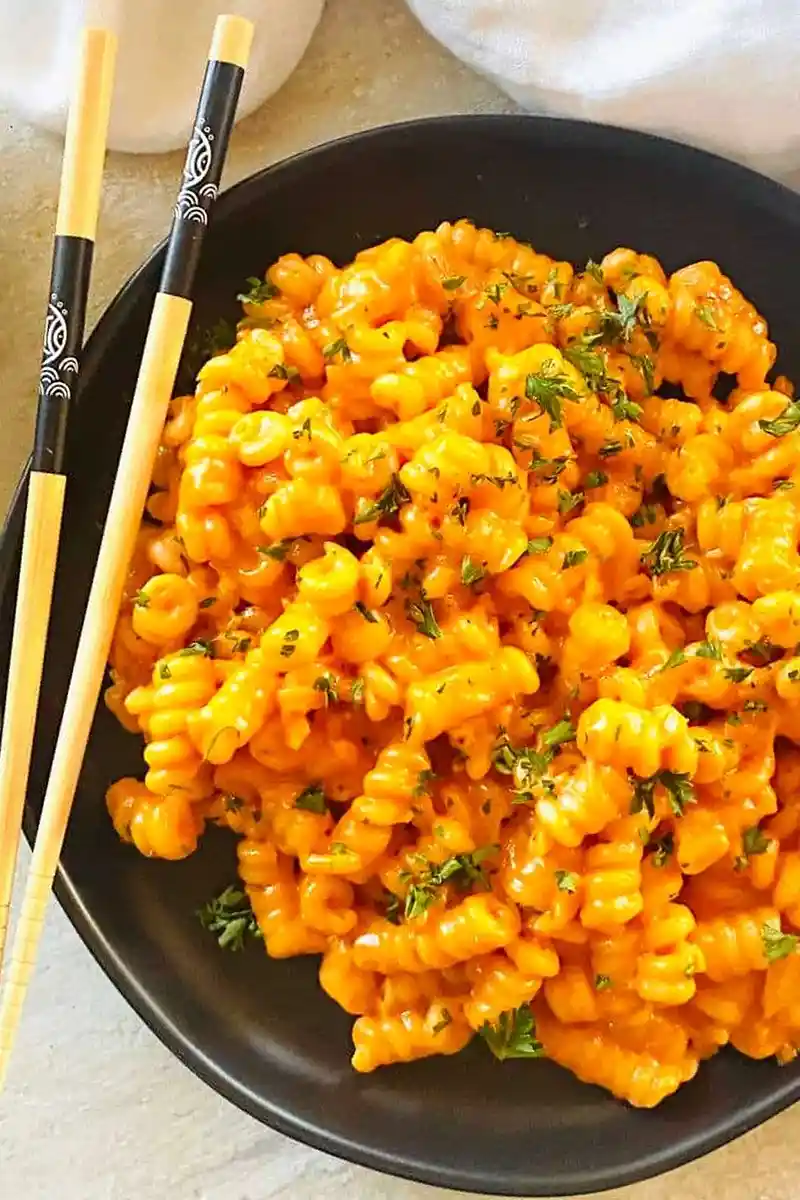
List of ingredients
- 8 oz dry Fusilli Corti Bucati Pasta (Bucatini Pasta) – any pasta shape of your choice works well.
- 2 tablespoons Gochujang – a Korean red chili pepper paste sauce.
- 3 cloves garlic – minced or pressed.
- 4 tablespoons salted butter – for richness and flavor.
- 2 tablespoons olive oil – helps prevent the butter from burning.
- 1/2 cup shredded parmesan or cheddar cheese – parmesan for an Alfredo style or cheddar for a mac and cheese feel.
- 1/2 cup heavy cream – creates the creamy base.
- 1/2 teaspoon freshly ground black pepper – optional for extra seasoning.
- 2 teaspoon chopped parsley – optional for garnish.
step-by-step instructions
- Prepare the pasta: Bring a pot of water to a rolling boil. Salt the water if desired, then add the pasta and cook for 7-12 minutes or until it reaches your preferred texture. Strain and set aside.
- Sauté the aromatics: Add the butter and olive oil to a sauté pan and bring to medium heat. Add the minced garlic and optional black pepper, cooking for 30-60 seconds until fragrant, being careful not to burn the garlic.
- Create the cream sauce: Stir in the gochujang, heavy cream, and shredded cheese. Cook for 1-2 minutes, stirring constantly until the sauce has slightly thickened.
- Combine and serve: Add the cooked pasta to the pan and stir until every piece is well-coated. Transfer the pasta to plates and garnish with fresh parsley.
Pro Cooking Techniques
Prevent Garlic from Burning
Garlic can turn bitter if it browns too quickly over high heat. Keep the pan at a steady medium heat and remove the garlic as soon as it becomes fragrant. This ensures a sweet, aromatic base for the sauce.
Reserve a Cup of Pasta Water
Before straining your noodles, save a small amount of the starchy cooking water. If the gochujang sauce becomes too thick, a splash of this water will emulsify the sauce and make it glossier. This is a professional trick to achieve a restaurant-quality consistency.
Cooking Pasta Al Dente
Cook your pasta for one minute less than the package directions. The pasta will continue to cook slightly when tossed in the hot cream sauce. This prevents the noodles from becoming mushy and helps them hold their shape.
Emulsifying the Cheese
Add the cheese slowly to the cream and gochujang mixture. Stirring constantly on low to medium heat prevents the cheese from clumping. This creates a smooth, homogenous sauce that clings to the pasta.
Ingredient Substitutions
Dairy-Free Cream Alternatives
Replace heavy cream with full-fat coconut cream or a cashew-based cream for a vegan option. Coconut cream adds a slight sweetness that complements the spicy gochujang. Ensure the substitute is thick enough to provide a rich mouthfeel.
Plant-Based Cheese Options
Use nutritional yeast or a vegan parmesan substitute to maintain the savory depth. If using vegan shreds, be aware that some may not melt as smoothly as dairy cheese. Stirring them in at a slightly higher heat can help them incorporate.
Alternative Pasta Shapes
While bucatini is recommended, penne or rigatoni are excellent choices because their holes trap the thick sauce. Fusilli or rotini also work well due to their spirals. Avoid very thin pastas like angel hair, as they can break under the weight of the sauce.
Adjusting the Heat Level
Increase the gochujang to 3 tablespoons if you prefer a more intense spicy kick. Conversely, reduce it to 1 tablespoon for a milder flavor profile. You can also add a pinch of sugar to balance the heat.
Flavor Variations
Incorporating Fresh Vegetables
Sauté diced bell peppers or sliced zucchini in the butter before adding the garlic. Spinach or kale can be stirred in at the very end until wilted. This adds nutritional value and a fresh crunch to the rich dish.
Adding Protein Boosts
Top the finished pasta with grilled chicken breast or sautéed shrimp for a heartier meal. Sliced tofu or ground beef also pair well with the savory gochujang flavors. Cook the protein separately and place it on top of the plated pasta.
Using Asian Noodles
Replace Italian pasta with ramen noodles, udon, or thick rice noodles. This shifts the dish further toward a Korean-style fusion meal. Adjust the boiling time based on the specific type of noodle used.
Enhancing Umami Depth
Add a teaspoon of soy sauce or a dash of fish sauce to the cream mixture. These ingredients deepen the savory profile of the dish. Be careful with additional salt, as gochujang and parmesan are already salty.
Serving and Pairing Ideas
Complementary Side Dishes
Serve this pasta with a side of Korean-style pickled radishes (Danmuji) to cut through the richness. A crisp cucumber salad with rice vinegar also provides a refreshing contrast. These acidic sides balance the creaminess of the sauce.
Using Fresh Herb Garnishes
While parsley is traditional, fresh cilantro or Thai basil adds a bright, aromatic note. Thinly sliced green onions provide a sharp contrast to the spicy cream. These herbs lift the overall flavor of the dish.
Pairing with Kimchi
Add a side of well-fermented kimchi for extra tang and complexity. The acidity of the kimchi cuts through the butter and cream. This pairing enhances the Korean influence of the recipe.
Plating for Presentation
Use a shallow bowl to keep the pasta warm and the sauce pooled at the bottom. Sprinkle extra parmesan and a pinch of red chili flakes on top for color. A final drizzle of olive oil adds a professional finish.
Storage and Reheating Guide
Refrigerator Storage
Store leftover pasta in an airtight container once it has cooled completely. It will stay fresh in the refrigerator for up to five days. Keep the container sealed tightly to prevent the pasta from drying out.
Stovetop Reheating Method
Place the pasta in a small skillet over medium-low heat. Add a tablespoon of milk or water to loosen the sauce as it warms. Stir gently until the sauce returns to a creamy consistency.
Microwave Reheating Tips
Heat the pasta in short intervals of 30 seconds, stirring in between. Adding a teaspoon of water before heating helps steam the noodles. This prevents the cheese from separating or becoming oily.
Freezing Considerations
This recipe is not recommended for freezing due to the high cream and cheese content. The sauce may split or become grainy upon thawing. It is best enjoyed fresh or from the refrigerator.
Troubleshooting Common Issues
Fixing a Sauce That is Too Thick
If the sauce becomes too heavy or pasty, stir in a tablespoon of pasta water or heavy cream. Do this over low heat while stirring constantly. This restores the smooth, flowing texture of the sauce.
Reducing Excessive Spiciness
If the gochujang is too hot for your taste, stir in an extra tablespoon of heavy cream. A small amount of honey or maple syrup can also neutralize the heat. These additions mellow the spice without ruining the flavor.
Preventing Cheese Clumping
If the cheese forms clumps, lower the heat immediately. Use a whisk or a fork to stir the sauce vigorously. If it still won’t smooth out, add a tiny bit of warm milk to help the cheese melt.
Managing Overcooked Pasta
If the pasta is too soft, reduce the time it spends in the pan with the sauce. Simply toss the noodles in the sauce quickly and serve immediately. This prevents further softening of the pasta structure.
Frequently Asked Questions
What is Gochujang exactly?
Gochujang is a savory, sweet, and spicy fermented condiment made from chili powder, glutinous rice, fermented soybeans, and salt. It provides a deep umami flavor characteristic of Korean cuisine.
Is Gochujang generally gluten-free?
It depends on the brand, as many traditional versions use wheat or barley in the fermentation process. Always check the ingredient label for gluten-free certification if you have a sensitivity.
Can I use unsalted butter for this recipe?
Yes, you can use unsalted butter. However, you may need to add a pinch of extra salt to the sauce to balance the flavors since you are losing the salt from the butter.
Can I make this dish in advance?
It is best served immediately, but you can prepare the sauce ahead of time. Simply reheat the sauce and toss in freshly cooked pasta right before serving to ensure the best texture.
What is the best cheese to use?
Parmesan provides a salty, nutty flavor that mimics Alfredo. Cheddar creates a richer, bolder taste similar to gourmet mac and cheese. Both work well depending on your preference.
Print
Creamy Gochujang Pasta
- Total Time: 15 minutes
- Yield: 4 servings 1x
- Diet: General
Description
This gochujang pasta recipe is rich, decadent and easy to make! This creamy gochujang Korean pasta is ready in less than 15 minutes and creates an irresistibly spicy-savory flavor combo that is perfect for a date night, weeknight dinner or party!
Ingredients
- 8 oz dry Fusilli Corti Bucati Pasta (Bucatini Pasta)
- 2 tablespoons Gochujang (Korean Red Chili Pepper Paste Sauce)
- 3 clove garlic (minced or pressed)
- 4 tablespoons salted butter
- 2 tablespoons olive oil
- ½ cup shredded microbial-rennet parmesan or cheddar cheese
- ½ cup heavy cream
- ½ teaspoon freshly ground black pepper (optional)
- 2 teaspoon chopped parsley (optional garnish)
Instructions
- Pasta Preparation: Bring water to rolling boil. Salt water (optional). Add pasta to water and cook for 7-12 minutes or until pasta reaches your desired texture. Strain and set aside.
- Sauté Base: Add butter and olive oil to sauté pan, bring to medium heat.
- Sauté Garlic: Add garlic (and optional freshly ground black pepper) and cook for 30-60 seconds until garlic is fragrant (be careful not to burn).
- Make Sauce: Add Gochujang, heavy cream and shredded parmesan or cheddar cheese and cook for 1-2 minutes or until sauce is slightly thickened.
- Combine: Add cooked Bucatini pasta and stir to combine.
- Finish: Transfer to plate, garnish with fresh parsley and enjoy!
Notes
Store cooked Gochujang pasta in an airtight container in the refrigerator for up to five days. Pairs wonderfully with grilled chicken, shrimp, tofu, or sliced steak. You can also mix in sautéed bell peppers, asparagus, zucchini, or mushrooms.
- Prep Time: 5 minutes
- Cook Time: 10 minutes
- Category: Dinner
- Method: Sautéing
- Cuisine: American
Nutrition
- Serving Size: 1 serving
- Calories: 535 kcal
- Sugar: 3 g
- Sodium: 346 mg
- Fat: 33 g
- Saturated Fat: 12 g
- Unsaturated Fat: 21 g
- Trans Fat: 0 g
- Carbohydrates: 47 g
- Fiber: 2 g
- Protein: 13 g
- Cholesterol: 42 mg