
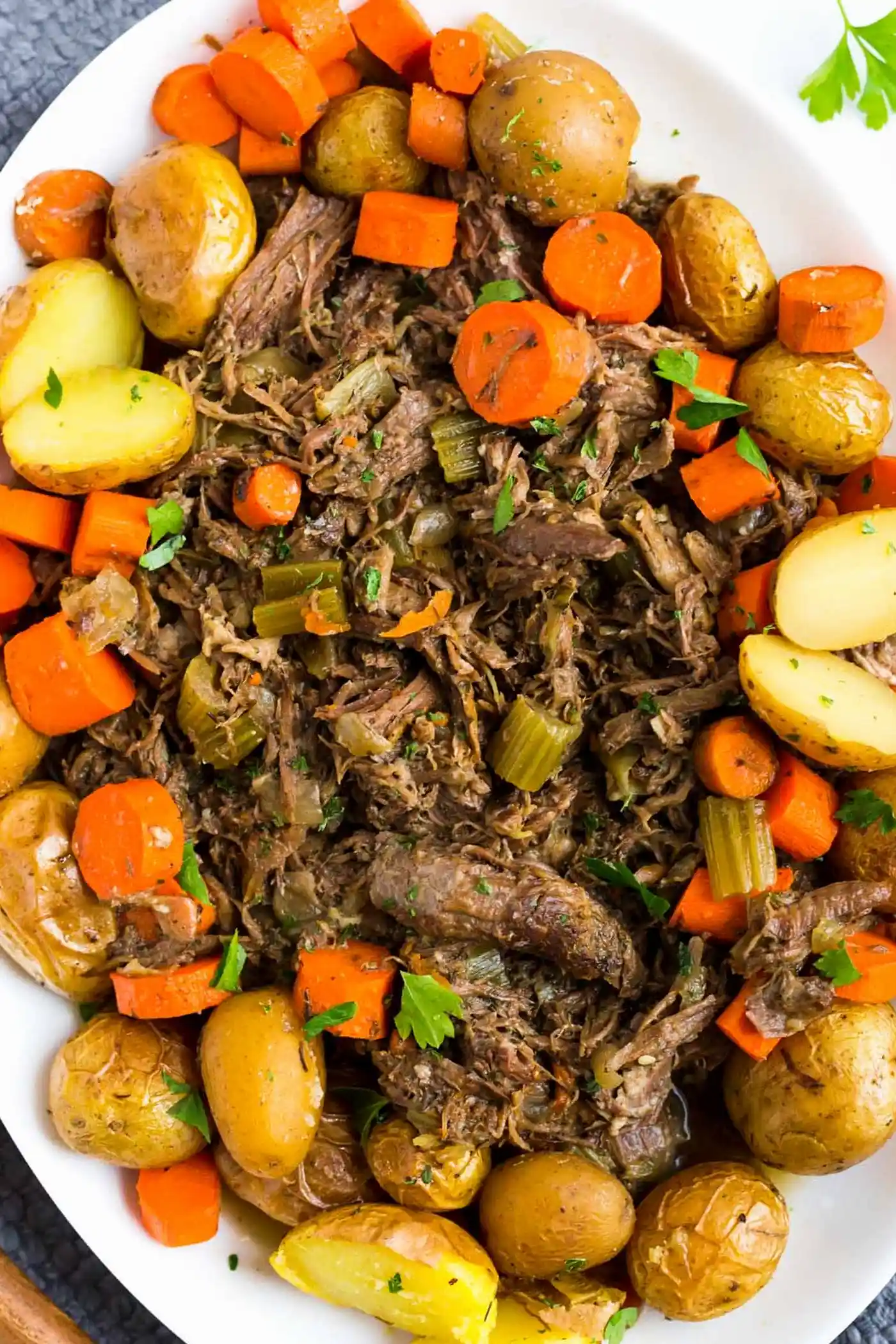
This hearty pot roast is a simple set-and-forget meal perfect for busy weeknights. Using a slow cooker ensures the meat becomes tender while the vegetables soak up all the savory flavors.
List of ingredients
- 3-4 pound grass-fed boneless chuck roast – ensure it is well marbled with fat for moisture.
- 2 teaspoons sea salt – used for the initial seasoning.
- 1 teaspoon black pepper – used for the initial seasoning.
- 2 tablespoons ghee, grass-fed butter or tallow – for searing the meat.
- 1 pound carrots – peeled and cut into 2″ chunks.
- 1 medium yellow onion – sliced.
- 1 pound baby gold potatoes – left whole or halved.
- 3-5 stalks celery – cut into 2″ pieces.
- 1 tablespoon dried thyme – for aromatic flavor.
- 3 garlic cloves – minced.
- 1/2 tablespoon sea salt – added to the slow cooker.
- 2 cups beef broth – provides the cooking liquid.
- 2 tablespoons tapioca starch or arrowroot starch – for thickening the gravy.
- 3 tablespoons beef broth – mixed with starch for the slurry.
step-by-step instructions
- Season: Apply sea salt and black pepper to all sides of the roast.
- Sear: Heat ghee in a large skillet over medium-high heat. Once hot, add the roast and cook until golden brown, about 4-5 minutes on each side.
- Assemble: Place carrots, onion, baby gold potatoes, and celery into the bottom of a 6-quart slow cooker. Lay the roast on top, and add the thyme, garlic, sea salt, and beef broth.
- Slow Cook: Cover and cook the roast for 8-9 hours on the low setting, or until the meat is tender and easily shreds.
- Finish: Transfer the roast to a plate and shred with two forks. Cut potatoes if desired. Season with additional salt and pepper to reach your desired flavor.
- Make Gravy: To thicken the broth, pour it from the slow cooker into a small saucepan over medium-high heat. Whisk tapioca flour with 3 tablespoons of beef broth in a small bowl, then pour the mixture into the saucepan. Simmer for 1-2 minutes while stirring constantly.
Selecting the Best Meat for Slow Cooking
Choosing Chuck Roast for Tenderness
Chuck roast is the ideal choice because it comes from the shoulder area and contains a high amount of connective tissue. During the long cooking process, this collagen breaks down into gelatin, resulting in a melt-in-your-mouth texture. Look for a piece with significant white marbling to ensure the meat remains moist.
Using Brisket as an Alternative
Brisket is another excellent option, though it has a different grain and texture compared to chuck. When using brisket, it is essential to slice the finished meat against the grain to ensure it is not chewy. Brisket often produces a deeper beefy flavor but may require a slightly longer cook time to reach maximum tenderness.
Selecting Rump or Bottom Round
Rump roast or bottom round are leaner cuts and can become dry if overcooked. If you choose these cuts, ensure the slow cooker is well-filled with liquid to prevent the meat from toughening. These are best for those who prefer a more structured slice of meat rather than a shreddable consistency.
Vegetable Customization and Selection
Using Baby Gold Potatoes for Structure
Baby gold potatoes are preferred because they hold their shape well during an 8-hour cook cycle. Unlike russet potatoes, which can break down and make the sauce grainy, gold potatoes stay intact. You can leave them whole or slice them in half depending on your preference for softness.
Preparing Carrots for Even Cooking
Cutting carrots into large 2-inch chunks prevents them from turning into mush before the meat is finished. Smaller pieces will disintegrate during the long cooking process. If you prefer softer carrots, you can add them halfway through the cooking time.
Incorporating Parsnips and Turnips
Parsnips and turnips provide a slightly peppery and earthy flavor that complements the beef. Cut them into the same size as the carrots to ensure they cook evenly. These root vegetables add a nutritional boost and a varied flavor profile to the pot.
Using Winter Squash Varieties
Butternut squash or kabocha squash can be added for a sweeter flavor profile. Since squash cooks faster than potatoes, it is best to add large cubes toward the final 3 hours of cooking. This prevents the squash from dissolving into the broth.
Optimizing Your Cooking Technique
The Importance of Searing the Meat
Browning the roast in a skillet before adding it to the slow cooker creates a caramelized crust on the surface. This process adds a depth of flavor that cannot be achieved by slow cooking alone. It also helps the meat maintain its structure during the shredding process.
Managing Slow Cooker Temperature Settings
Cooking on the low setting for 8-9 hours is recommended to allow the connective tissues to break down slowly. If you must use the high setting, reduce the time to 5-6 hours, but be aware that the meat may not be as tender. Low and slow is always the superior method for tough cuts of beef.
Adjusting Liquid Levels for Your Preference
Two cups of beef broth are sufficient for most 6-quart slow cookers to create a concentrated sauce. If you prefer a more soup-like consistency or have a larger roast, you can increase the liquid to 3-4 cups. Avoid overfilling the pot, as this can lead to uneven cooking and a diluted flavor.
Preventing Meat Dryness
To keep the roast moist, avoid lifting the lid of the slow cooker frequently. Every time the lid is opened, a significant amount of heat and steam escapes, which can extend the cooking time. Keep the roast submerged or resting on the vegetables to ensure it steams properly.
Gravy Preparation and Thickening
Using Tapioca Starch for a Clear Glaze
Tapioca starch is an excellent thickener that provides a glossy finish to the gravy without altering the flavor. It is a great alternative for those avoiding cornstarch. Always mix it with a cold liquid first to create a slurry, preventing clumps from forming in the hot broth.
Using Arrowroot Starch for Stability
Arrowroot starch works similarly to tapioca and is highly effective for thickening sauces. It remains stable at high temperatures and provides a smooth consistency. Like tapioca, it should be whisked into a small amount of beef broth before being added to the saucepan.
Increasing Gravy Volume
If the slow cooker does not produce enough liquid for your liking, you can add more beef broth to the saucepan during the thickening phase. Simply maintain the ratio of starch to liquid to ensure the gravy reaches the desired thickness. Simmer the mixture for at least two minutes to fully activate the starch.
Storage and Reheating Guidelines
Refrigerating Leftovers Safely
Store the leftover roast and vegetables in an airtight glass container to maintain freshness. The dish will keep in the refrigerator for up to one week. Ensure the meat is covered in some of the remaining broth to prevent it from drying out during storage.
Freezing Pot Roast for Long-Term Use
This recipe freezes well for up to three months. Use freezer-safe containers or heavy-duty freezer bags, squeezing out as much air as possible to prevent freezer burn. Thaw the roast in the refrigerator overnight before reheating.
Reheating Methods for Maximum Moisture
To reheat in the microwave, place the meat and vegetables in a microwave-safe dish and add a splash of beef broth. Cover the dish with a damp paper towel to trap steam. Alternatively, reheat in a covered pot on the stove over low heat until warmed through.
Repurposing Leftover Beef
Shredded pot roast can be used in various other dishes, such as beef tacos or sandwiches. Simply sauté the meat in a pan with a bit of the gravy to refresh the flavor. It also works well as a topping for mashed potatoes or over cooked quinoa.
Troubleshooting Common Issues
Handling Meat That Won’t Shred
If the meat is still tough after the recommended cooking time, it simply needs more time. Continue cooking on low for another hour or two until the fibers separate easily with a fork. Toughness is almost always a result of undercooking the connective tissues.
Reducing Watery Broth
If the broth is too thin or watery, it is usually due to excess moisture from the vegetables. The best solution is to simmer the broth in a saucepan on the stove to reduce the liquid. You can also increase the amount of thickening starch used in the gravy step.
Balancing Overly Salty Flavors
If the final dish is too salty, add a few peeled, halved raw potatoes to the pot during the last hour of cooking. Potatoes can absorb some of the excess salt from the liquid. Alternatively, stir in a tablespoon of apple cider vinegar to cut through the saltiness.
Preventing Vegetable Mushiness
If your vegetables are consistently too soft, try placing them in a separate heat-proof dish inside the slow cooker. This allows you to remove them once they reach the perfect tenderness. You can also add the carrots and celery during the last 4 hours of cooking.
Frequently Asked Questions
Can I use a different type of potato?
Yes, you can use red potatoes or russet potatoes. Red potatoes hold their shape similarly to gold potatoes, while russets will soften more and may break apart, which can naturally thicken the sauce.
Do I have to brown the meat first?
While you can skip the browning step, it is highly recommended for flavor. Searing the meat creates a depth of savory taste and a better texture that cannot be replicated by the slow cooker alone.
How do I know when the roast is fully cooked?
The roast is done when it can be easily shredded with two forks without any resistance. If the meat feels springy or tough, it requires more time to break down the collagen.
Can I add other herbs to the roast?
Yes, rosemary and bay leaves are excellent additions. Add one or two bay leaves to the broth and a sprig of fresh rosemary for a more complex aromatic profile.
Is it possible to cook this on high?
You can cook it on high for 5-6 hours, but the low setting is preferred. The slower temperature allows for a more consistent breakdown of fat and connective tissue, resulting in a more tender roast.
Print
Tender Slow Cooker Beef Roast
- Total Time: 8 hours 15 minutes
- Yield: 6–8 servings 1x
- Diet: Whole30, Paleo
Description
This easy slow cooker pot roast is the perfect weeknight dinner! Let the slow cooker do the work and you’ll have tender, fall-apart pot roast and hearty vegetables all topped with a simple gravy.
Ingredients
- 3–4 pound grass-fed boneless chuck roast, well marbled with fat
- 2 teaspoons sea salt
- 1 teaspoon black pepper
- 2 tablespoons ghee, grass-fed butter or tallow
- 1 pound carrots, peeled and cut into 2” chunks
- 1 medium yellow onion, sliced
- 1 pound baby gold potatoes
- 3–5 stalks celery, cut into 2” pieces
- 1 tablespoon dried thyme
- 3 garlic cloves, minced
- 1/2 tablespoon sea salt
- 2 cups beef broth
- 2 tablespoons tapioca starch or arrowroot starch
- 3 tablespoons beef broth
Instructions
- Step: Season roast on all sides with sea salt and black pepper.
- Step: Heat ghee in a large skillet over medium-high heat. Once oil is hot, add the roast and cook until golden brown, about 4-5 minutes on each side.
- Step: Place carrots, onion, baby gold potatoes, and celery into the bottom of a 6-quart slow cooker. Lay the roast on top, and add the thyme, garlic, sea salt, and beef broth.
- Step: Cover, and cook the roast for 8-9 hours on low setting, or until meat easily shreds and is tender.
- Step: Transfer roast to a plate and shred with two forks. Cut potatoes if desired. Season with salt and pepper until you reach desired flavor.
- Step: If you want to thicken the broth to make gravy, pour the broth from the slow cooker into a small saucepan. Heat over medium-high heat. In a small bowl, whisk tapioca flour with 3 tablespoons of beef broth then pour into sauce pan. Simmer for 1-2 minutes, stirring constantly.
Notes
Store in a air-tight glass container for up to 1 week in the fridge. Reheat in the microwave in a microwave safe container. Freeze this dish in a freezer safe container for up to 3 months.
- Prep Time: 15 minutes
- Cook Time: 8 hours
- Category: Main Dish
- Method: Slow Cooker
- Cuisine: American
Nutrition
- Serving Size: 1 serving
- Calories: 320 kcal
- Sugar: 4.4 g
- Sodium: 288 mg
- Fat: 11.7 g
- Saturated Fat: 4.8 g
- Unsaturated Fat: 6.9 g
- Trans Fat: 0 g
- Carbohydrates: 16.6 g
- Fiber: 3.2 g
- Protein: 35.9 g
- Cholesterol: 108.2 mg