
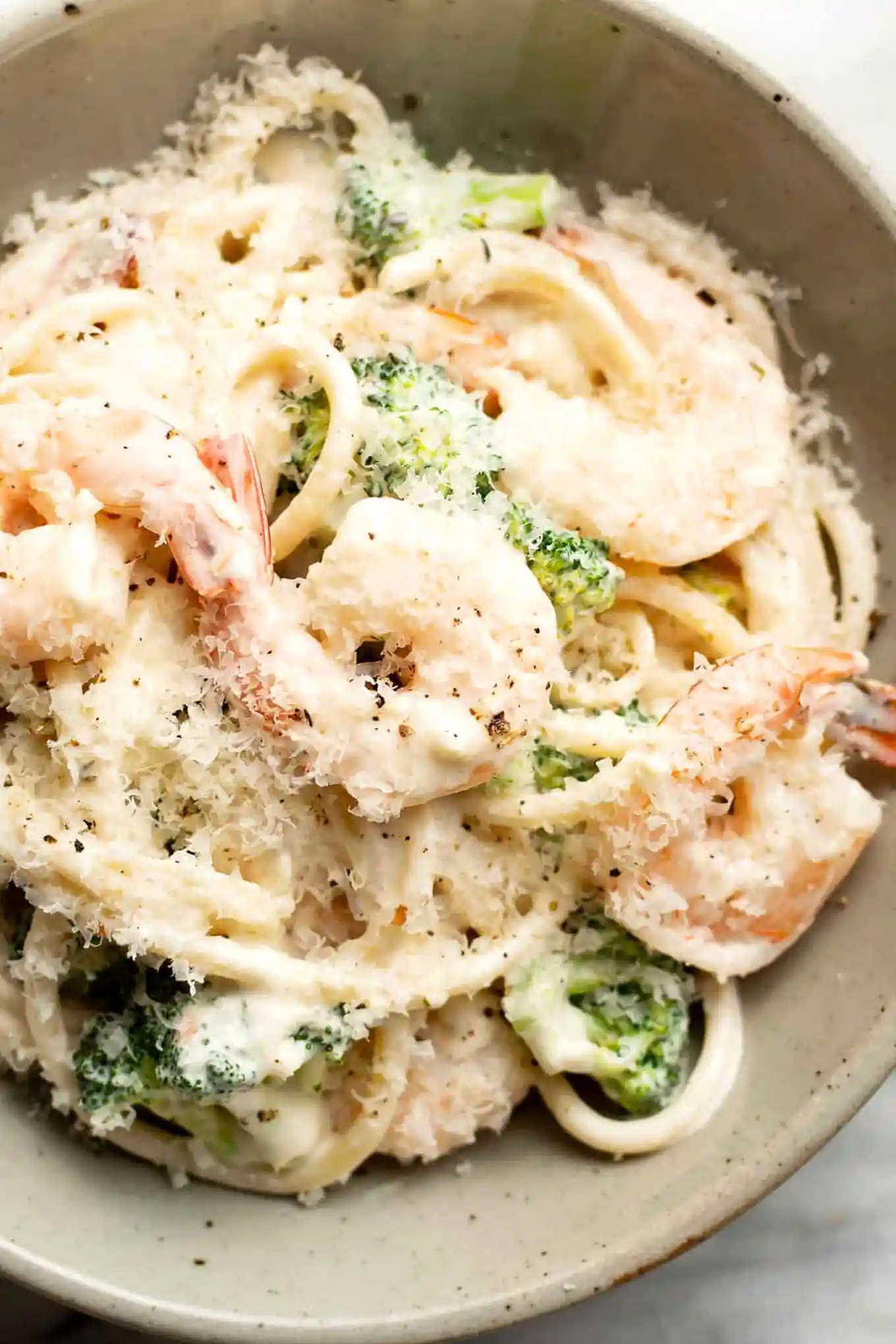
This quick and comforting meal combines tender shrimp and fresh broccoli in a rich, velvety cream cheese sauce. It is a perfect one-pan dinner that delivers a balance of protein and vegetables in under 30 minutes.
List of ingredients
- 1 pound uncooked shrimp (31-40 size) – thawed, peeled, and patted dry.
- 8 ounces uncooked pasta – spaghetti, linguine, or penne work best.
- 1 tablespoon olive oil – used for searing the shrimp.
- 1 tablespoon butter – adds a rich, nutty flavor to the base.
- 2 generous cups broccoli florets – cut into small, bite-sized pieces.
- 1 cup chicken broth – creates the liquid base for the cream sauce.
- 8 ounces cream cheese – softened and cut into small cubes for faster melting.
- 4 cloves garlic – finely minced.
- 1/4 teaspoon Italian seasoning – a blend of dried herbs for depth.
- Salt and pepper – added to taste for seasoning.
- Freshly grated parmesan cheese – optional for a salty, nutty finish.
step-by-step instructions
- Prepare Shrimp: Place frozen shrimp in a colander and run under cool water until fully thawed. Pat them dry with paper towels to ensure a better sear in the pan.
- Cook Pasta: Bring a large pot of salted water to a boil. Cook the pasta according to package directions until al dente, then drain.
- Sear Shrimp: Heat olive oil and butter in a large skillet over medium-high heat. Add shrimp and cook for 2 minutes per side until pink; remove them immediately to a plate to avoid overcooking.
- Sauté Broccoli: Add broccoli florets to the same skillet. Reduce heat to medium, cover with a lid, and cook for 3 to 5 minutes until tender-crisp.
- Clear the Pan: Remove the broccoli from the skillet and place it on the plate with the cooked shrimp.
- Create Sauce: Pour chicken broth into the skillet and add cubed cream cheese, minced garlic, and Italian seasoning. Return to heat and whisk constantly until the cheese is fully melted and the sauce is smooth.
- Combine Components: Return the shrimp and broccoli to the skillet. Stir gently to coat everything in the sauce and heat through.
- Final Toss: Season with salt and pepper. Toss in the drained pasta, adding a small amount of reserved pasta water if the sauce needs thinning. Serve with optional parmesan cheese.
Professional Cooking Techniques
Pat Shrimp Dry for a Better Sear
Moisture on the surface of the shrimp creates steam, which prevents them from browning. By patting them dry with paper towels, you ensure the shrimp sear quickly and develop a golden-brown crust. This process locks in flavor and prevents the seafood from boiling in its own juices.
Cut Broccoli into Small Florets
Consistency in size is key for even cooking. Cutting the broccoli into small, uniform florets allows them to steam and sauté quickly without becoming mushy. Smaller pieces also integrate better with the pasta and sauce, ensuring you get a bit of everything in every forkful.
Softening Cream Cheese for Smooth Emulsion
Cold cream cheese can clump when added to hot broth, leading to a grainy texture. Microwave the cubed cheese in 20-second intervals or leave it at room temperature for an hour. Softened cheese incorporates seamlessly, resulting in a professional, silky sauce.
Using Reserved Pasta Water
Pasta water contains starch that acts as a natural emulsifier. If your sauce becomes too thick after adding the pasta, a tablespoon or two of this starchy water will thin it out while maintaining the sauce’s creamy bind. This prevents the sauce from separating or appearing oily.
Customizing Your Ingredients
Alternative Pasta Shapes
While spaghetti is traditional, shapes like penne, fusilli, or farfalle are excellent choices. Rigate pasta (pasta with ridges) is particularly effective because the grooves trap the thick cream cheese sauce. Choose a shape based on how much sauce you want in every bite.
Swapping the Broth Base
If you prefer a different flavor profile, you can substitute the chicken broth with vegetable broth for a lighter taste. For a deeper, more savory flavor, use a low-sodium beef broth or a concentrated seafood stock. Ensure the broth is unsalted or low-sodium to maintain control over the final seasoning.
Variations in Cheese
For a tangier flavor, you can use Neufchâtel cheese instead of standard cream cheese. If you prefer a richer, more buttery taste, substitute half of the cream cheese with mascarpone. Both options provide the necessary thickness while slightly altering the acidity of the sauce.
Herbal Substitutions
If you do not have a pre-mixed Italian seasoning, create your own using a pinch of dried oregano, basil, and thyme. For a fresher taste, stir in chopped fresh parsley or basil at the very end of the cooking process. Fresh herbs add a bright, aromatic quality that cuts through the richness of the cheese.
Expanding the Flavor Profile
Adding a Spicy Kick
To introduce heat, add a half-teaspoon of crushed red pepper flakes to the skillet when sautéing the garlic. This infuses the oil with warmth that carries through the entire sauce. Alternatively, sprinkle Cajun seasoning on the shrimp before searing for a zesty, bold flavor.
Integrating Citrus Notes
The richness of cream cheese pairs perfectly with acidity. Squeeze half a fresh lemon over the finished dish or stir in one teaspoon of lemon zest. This brightness balances the heavy fats and enhances the natural sweetness of the shrimp.
Adding Extra Greens
For additional nutrition, stir in two cups of fresh baby spinach during the final heating stage. The residual heat from the sauce will wilt the spinach in about 60 seconds. You can also use chopped kale or swiss chard, though these may require an extra minute of cooking time.
Enhancing the Garlic Depth
For those who love garlic, you can roast the garlic cloves before adding them to the sauce. Roasted garlic provides a mellow, caramelized sweetness compared to the sharp bite of raw minced garlic. This creates a more complex, gourmet flavor profile.
Complementary Side Dishes
Garlic Bread and Toasted Baguettes
A crusty piece of bread is essential for soaking up the extra cream sauce. Slices of sourdough or a French baguette toasted with garlic butter provide a crunchy contrast to the soft pasta. Warm the bread in the oven at 350 degrees Fahrenheit for 5-7 minutes until golden.
Fresh Garden Salads
A bright, acidic salad cleanses the palate between bites of the creamy pasta. A simple spring mix with a lemon-vinaigrette or a classic Caesar salad works well. Avoid overly creamy dressings to prevent the meal from feeling too heavy.
Steamed Vegetable Medleys
If you want more vegetables, serve the pasta alongside steamed carrots or snap peas. These provide a snap of freshness and a pop of color to the plate. Keep the seasoning light on the side vegetables to let the pasta sauce remain the star.
Preserving and Warming Leftovers
Refrigeration and Storage
Store any remaining pasta in an airtight container in the refrigerator for up to two to three days. Seafood can degrade quickly, so it is best to consume leftovers within 48 hours. Ensure the container is sealed tightly to prevent the pasta from absorbing fridge odors.
The Proper Reheating Process
Creamy sauces often separate when reheated in a microwave. For best results, reheat the pasta in a skillet over low heat. Add a splash of milk or water to the pan to help the cream cheese re-emulsify and return to its original silky consistency.
Avoiding the Freezer
It is not recommended to freeze this dish. The high fat content in cream cheese and the structure of the shrimp do not hold up well during the freezing and thawing process. This typically results in a broken sauce and rubbery shrimp.
Solving Common Cooking Issues
Fixing a Lumpy Sauce
If the sauce appears grainy or lumpy, it is usually because the cream cheese was added too quickly or was too cold. Use a whisk to vigorously stir the sauce over medium heat. If lumps persist, you can carefully pass the sauce through a fine-mesh strainer or use an immersion blender for a few seconds.
Preventing Rubbery Shrimp
Shrimp overcook in seconds. To avoid a rubbery texture, remove the shrimp from the pan the moment they turn opaque and form a ‘C’ shape. If they curl tightly into an ‘O’ shape, they are likely overcooked. Removing them to a plate ensures they do not continue cooking while you prepare the sauce.
Adjusting Broccoli Texture
If the broccoli is too hard, increase the lid-on steaming time by another two minutes. If it is too mushy, reduce the cooking time or sauté it over higher heat without a lid. The goal is ‘tender-crisp,’ meaning the broccoli is cooked through but still retains a slight snap.
Frequently Asked Questions
Can I use frozen broccoli instead of fresh?
Yes, you can use frozen broccoli florets. However, you should increase the cooking time by two to three minutes to allow the florets to thaw and sear. Make sure to drain any excess water from the frozen broccoli to prevent the sauce from becoming watery.
What can I use instead of chicken broth?
Vegetable broth is the best direct substitute. If you have neither, you can use a mixture of water and a small amount of butter or a bouillon cube dissolved in water. Avoid using plain water alone, as you will lose the depth of flavor provided by the broth.
How do I know when the pasta is al dente?
Al dente means ‘to the tooth.’ The pasta should be tender but still have a slight firmness or resistance in the center when you bite into it. This is important because the pasta will continue to cook slightly when tossed in the hot sauce.
Can I make this recipe without cream cheese?
You can substitute cream cheese with a mixture of heavy cream and parmesan cheese to create a traditional Alfredo-style sauce. However, the texture will be thinner and less tangy than the cream cheese version. You may need to simmer the cream longer to achieve the desired thickness.
Print
Creamy Garlic Shrimp and Broccoli Pasta
- Total Time: 30 minutes
- Yield: 4 servings 1x
- Diet: General
Description
This creamy shrimp and broccoli pasta recipe is quick and simple. It’s made with cream cheese, garlic, and pantry staples for a low-effort, comforting meal!
Ingredients
- 1 pound uncooked (31-40/pound size) shrimp (thawed & peeled, tails optional)
- 8 ounces uncooked pasta
- 1 tablespoon olive oil
- 1 tablespoon butter
- 2 generous cups broccoli florets
- 1 cup chicken broth
- 8 ounces cream cheese (softened and cut into cubes)
- 4 cloves garlic (minced)
- 1/4 teaspoon Italian seasoning
- Salt & pepper (to taste)
- Freshly grated parmesan cheese (optional)
Instructions
- Prep: Prep your shrimp. If they’re frozen, add them to a colander and run under cool water until thawed.
- Boil: Boil a salted pot of water for the pasta. Cook it al dente according to package directions.
- Sear: Meanwhile, heat the oil and butter in a skillet over medium-high heat. Once the pan is hot, add the shrimp. Cook for 2 minutes/side and then take them out of the pan and transfer to a plate.
- Sauté: Add the broccoli to the pan and give it a good stir. Reduce the heat to medium. Cover the pan with a lid and let the broccoli cook for 3 minutes. If it’s still too crisp for your liking, cover the pan for another minute or two.
- Remove: Take the pan off the heat and transfer the broccoli to the same plate as the shrimp.
- Sauce: Add the chicken broth, cream cheese, garlic, and Italian seasoning to the skillet. Return the pan to the heat and stir/whisk until the cream cheese has melted and it’s a nice and creamy sauce.
- Combine: Add the shrimp and broccoli back into the pan and let it heat through. Season the sauce with salt & pepper as needed. Drain the pasta and toss with the sauce. Serve immediately with parmesan cheese if desired.
Notes
I chop my broccoli into fairly small florets and they are tender-crisp with the recommended cooking time. Instead of regular salt, try using some Tony’s seasoning or Lawry’s seasoning salt.
- Prep Time: 10 minutes
- Cook Time: 20 minutes
- Category: Main Course
- Method: Stovetop
- Cuisine: American
Nutrition
- Serving Size: 1 serving
- Calories: 585 kcal
- Sugar: 5 g
- Sodium: 572 mg
- Fat: 28 g
- Saturated Fat: 14 g
- Unsaturated Fat: 11 g
- Trans Fat: 0.1 g
- Carbohydrates: 50 g
- Fiber: 3 g
- Protein: 36 g
- Cholesterol: 249 mg