
This creamy pesto tortellini is a versatile dish that works equally well as a hearty main course or a refreshing side salad. It combines cheese-filled pasta with a zesty caesar-pesto blend for a rich and flavorful result.
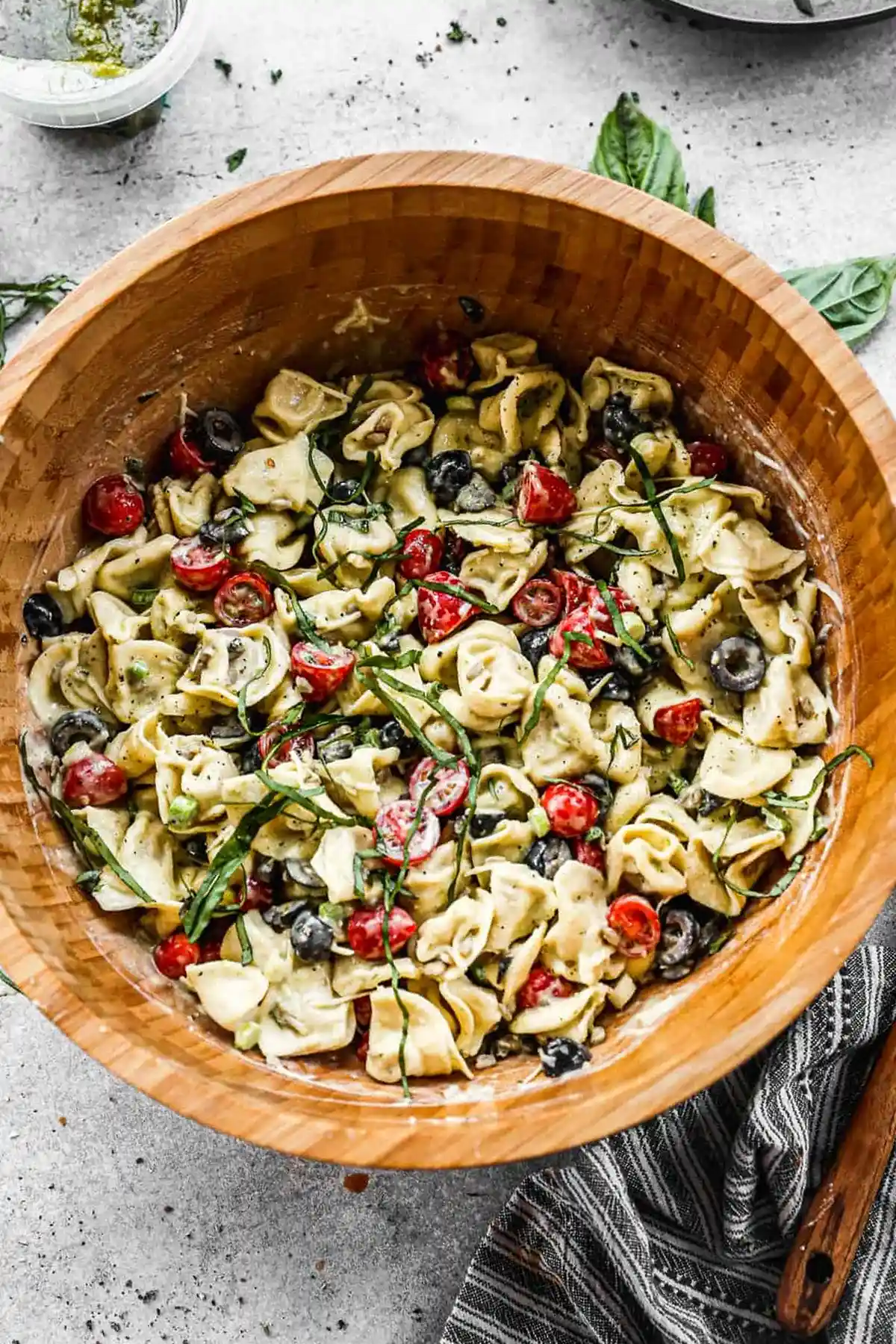
List of ingredients
- 20 ounce package cheese tortellini (refrigerated kind) – provides a soft, tender base.
- 1 cup caesar salad dressing (homemade or store-bought) – creates the creamy sauce foundation.
- 1 1/2 cups cherry tomatoes (halved) – adds brightness and acidity.
- 6 ounces black olives (drained and chopped) – contributes a salty, briny flavor.
- 3 green onions (chopped) – adds a mild, fresh onion bite.
- 1/4 cup basil pesto (homemade or store-bought) – gives the dish its signature herbal taste.
- salt and freshly ground black pepper (to taste) – for basic seasoning.
- 1/4 teaspoon garlic powder – enhances the savory profile.
- 1/3 cup sunflower seeds – adds a nutty crunch.
- 2/3 cup freshly grated parmesan cheese (divided) – used for both mixing and garnishing.
- 6-8 fresh basil leaves (chopped) – used for a fresh finish.
step-by-step instructions
- Cook the pasta: Boil the cheese tortellini according to the package directions. Drain the pasta thoroughly and let it cool slightly before proceeding.
- Initial coating: Transfer the cooked tortellini to a large mixing bowl. Toss with half of the caesar dressing to ensure the pasta is evenly coated.
- Mix in components: Add the halved cherry tomatoes, chopped black olives, chopped green onions, basil pesto, salt, pepper, and garlic powder. Stir in 1/3 cup of the grated parmesan cheese and the sunflower seeds.
- Adjust consistency: Toss all ingredients together until well combined. If you prefer a creamier texture, stir in the remaining caesar dressing.
- Final touch: Serve the dish warm or cold. Garnish with the remaining grated parmesan cheese and the chopped fresh basil leaves just before serving.
Optimal Tortellini Selection
Refrigerated vs Frozen Tortellini
Refrigerated tortellini generally offers a more tender texture and cooks faster than frozen versions. If using frozen, ensure they are fully cooked but not overboiled to prevent them from breaking apart during tossing.
Choosing the Right Filling
Cheese-filled tortellini is the standard for this recipe as it complements the pesto and caesar flavors. Avoid meat-filled varieties if you want the herbal notes of the basil to remain the primary flavor profile.
Enhancing the Sauce Profile
Selecting a Quality Pesto
Use a pesto made with fresh basil and high-quality olive oil for the best taste. If using store-bought, look for brands that list basil as the first ingredient and avoid those with excessive preservatives.
Adjusting the Caesar Dressing
Depending on the brand, some caesar dressings are saltier than others. Taste your sauce before adding additional salt to avoid over-seasoning the final dish.
Adding Extra Creaminess
For an even richer sauce, you can stir in a tablespoon of Greek yogurt or sour cream. This adds a slight tang that cuts through the richness of the pesto and parmesan.
Hearty Protein Additions
Incorporating Grilled Chicken
Add sliced grilled chicken breast or diced rotisserie chicken to transform this into a full meal. Ensure the chicken is cooked and cooled if serving the dish as a cold pasta salad.
Sautéed Shrimp Options
Shrimp pairs exceptionally well with pesto and lemon. Sauté shrimp in olive oil and garlic until pink, then fold them into the pasta during the final mixing step.
Plant-Based Protein Swaps
Add chickpeas or cannellini beans for a vegetarian protein boost. These legumes add a creamy texture that blends well with the caesar-pesto dressing.
Vegetable Variation Ideas
Adding Sautéed Zucchini
Dice zucchini into small cubes and sauté them until golden brown. Adding them to the mix provides a fresh, garden-like quality and extra volume to the dish.
Fresh Baby Spinach Integration
Fold in two cups of fresh baby spinach leaves just before serving. The residual heat from warm tortellini will wilt the spinach slightly, adding color and nutrients.
Incorporating Bell Peppers
Finely diced red or yellow bell peppers add a sweet crunch and vibrant color. These are best added raw to maintain their crisp texture against the soft pasta.
Textural Improvements
Pine Nut Substitutions
While sunflower seeds provide a great crunch, toasted pine nuts are the traditional pesto accompaniment. Toast them in a dry pan for 2-3 minutes until fragrant before adding.
Using Sliced Almonds
Toasted sliced almonds offer a different type of crunch and a slightly sweeter flavor. They hold up well even if the salad sits in the refrigerator for a few hours.
Alternative Cheese Options
Fresh mozzarella pearls are an excellent addition to this recipe. They provide a creamy, mild contrast to the salty parmesan and sharp caesar dressing.
Serving Temperature Guide
Serving the Dish Warm
Serving warm makes the dish feel more like a traditional dinner. The pesto becomes more aromatic and the cheese melts slightly into the pasta folds.
Serving as a Cold Pasta Salad
For BBQs or picnics, allow the dish to chill in the refrigerator for at least an hour. The flavors meld together more deeply when cold, making it a refreshing side.
Plating for Large Groups
Use a wide, shallow platter rather than a deep bowl when serving a crowd. This prevents the tortellini at the bottom from being crushed by the weight of the ingredients.
Storage and Preservation
Refrigeration Guidelines
Store leftovers in an airtight container in the refrigerator for up to 3-4 days. Ensure the container is sealed tightly to prevent the pasta from absorbing refrigerator odors.
Preventing Pasta Dryness
Pasta absorbs sauce over time, which can leave the dish dry. Store the salad with a small amount of extra caesar dressing or a splash of olive oil to maintain moisture.
Maximum Freshness Window
Fresh basil leaves can oxidize and turn brown over time. For the best presentation, store the garnish separately and add it just before serving the leftovers.
Reheating Methods
Microwave Reheating
Heat the pasta in short 30-second intervals, stirring in between. This prevents the cheese in the tortellini from overcooking and the sauce from separating.
Stovetop Reheating
Place the pasta in a skillet over low heat with a tablespoon of water or milk. Stir gently until warmed through to restore the creaminess of the sauce.
Restoring Sauce Consistency
If the sauce looks broken or oily after reheating, whisk in a teaspoon of warm water. This helps re-emulsify the caesar dressing and pesto for a smooth finish.
Planning and Prep Advice
Advanced Ingredient Prep
You can chop the onions, halve the tomatoes, and slice the olives up to 24 hours in advance. Store them in separate containers to keep the vegetables crisp.
The Cooling Process
When making a cold salad, rinse the cooked tortellini under cold water after draining. This stops the cooking process immediately and prevents the pasta from sticking together.
Timing the Mix
Mix the pasta with the dressing first, then add the vegetables. This ensures every piece of tortellini is coated before the other ingredients take up space in the bowl.
Troubleshooting Common Issues
Fixing a Watery Salad
If the salad seems watery, it is often due to poorly drained olives or tomatoes. Drain these ingredients thoroughly in a colander before adding them to the bowl.
Preventing Mushy Tortellini
Avoid overcooking the pasta; cook it exactly to the ‘al dente’ stage. Since it will be tossed with other ingredients, a firmer texture prevents the pasta from disintegrating.
Balancing Excessive Saltiness
If the combination of pesto, parmesan, and caesar dressing is too salty, add more fresh cherry tomatoes or unsalted sunflower seeds to dilute the salt concentration.
Common Questions
Can I use dried basil instead of fresh?
While you can use dried basil in the pesto, the final garnish should be fresh. Dried basil does not provide the same bright, peppery flavor and visual appeal as fresh leaves.
Can I use a different pasta shape?
Yes, you can use bow-tie (farfalle) or rotini pasta. However, tortellini adds a cheese-filled center that enhances the creaminess of the dish.
How do I store the leftovers safely?
Place the leftovers in a food-grade airtight container and refrigerate within two hours of cooking. This prevents bacterial growth and keeps the vegetables fresh.
Is this recipe freezer-friendly?
It is not recommended to freeze this dish because the caesar dressing and fresh vegetables will separate and lose their texture upon thawing.
Print
Creamy Pesto Tortellini
- Total Time: 20 minutes
- Yield: 6 servings 1x
- Diet: Vegetarian
Description
Whether you serve it for dinner or as a side dish at a BBQ, this Pesto Tortellini recipe will be the star of the show! It’s made with tender cheese tortellini tossed in creamy caesar pesto sauce, with tomatoes, olives, green onion, sunflower seeds and fresh basil.
Ingredients
- 20 ounce package cheese tortellini, refrigerated
- 1 cup caesar salad dressing
- 1 1/2 cups cherry tomatoes, halved
- 6 ounces black olives, drained and chopped
- 3 green onions, chopped
- 1/4 cup basil pesto
- salt and freshly ground black pepper, to taste
- 1/4 teaspoon garlic powder
- 1/3 cup sunflower seeds
- 2/3 cup microbial-rennet parmesan cheese, divided
- 6–8 fresh basil leaves, chopped, for garnish
Instructions
- Step 1: Cook tortellini according to package instructions. Drain and allow to cool.
- Step 2: Add tortellini to a large bowl and toss with 1/2 the caesar dressing. Add tomatoes, olives, green onion, pesto, salt, pepper and garlic powder, 1/3 cup fresh parmesan, and sunflower seeds and toss to combine. Add more caesar dressing, to make it saucier, if desired.
- Step 3: Serve warm or cold. Garnish with remaining fresh parmesan and fresh chopped basil before serving.
Notes
Serving size is about 1.5 cups. Add protein to make it a heartier meal, like chicken, turkey sausage, or shrimp. Extra Veggies: Add sautéed zucchini or yellow squash, chopped bell peppers, spinach.
- Prep Time: 10 minutes
- Cook Time: 10 minutes
- Category: Main Course
- Method: Boiling
- Cuisine: American
Nutrition
- Serving Size: 1.5 cups
- Calories: 687 kcal
- Sugar: 6 g
- Sodium: 1623 mg
- Fat: 46 g
- Saturated Fat: 9 g
- Unsaturated Fat: 26 g
- Trans Fat: 0 g
- Carbohydrates: 49 g
- Fiber: 6 g
- Protein: 21 g
- Cholesterol: 62 mg