
This comforting meal combines tender chicken pieces with a rich, three-cheese sauce and hearty pasta. It is a family-friendly dish that is quick to prepare and satisfies those who love cheesy comfort food.
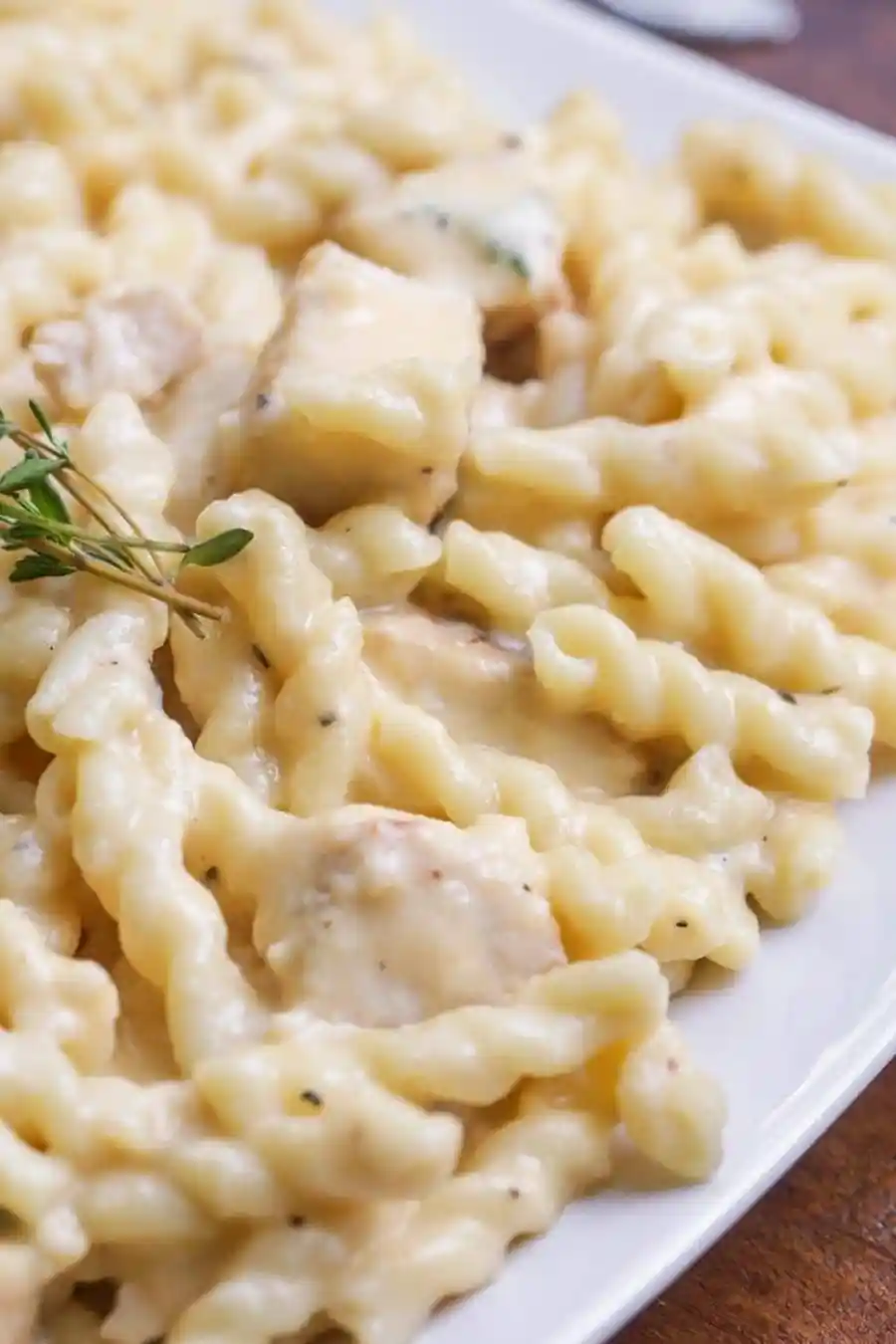
List of ingredients
- 2-3 boneless, skinless chicken breasts – cut into 1 inch pieces for fast cooking.
- 1 TB fresh thyme – used for seasoning the chicken.
- Olive oil – for sautéing the chicken.
- Salt and pepper – to taste for basic seasoning.
- 1 lb fusilli pasta or rotini – spiral shapes hold the sauce best.
- 2 TB butter – used to start the roux.
- 2 TB all-purpose flour – thickens the cheese sauce.
- 2 tsp minced garlic – adds aromatic flavor to the sauce.
- 2 c milk – the liquid base for the creamy sauce.
- 1 c shredded triple cheddar cheese – a mix of white, sharp, and mild cheddars.
- 2 TB fresh thyme – stirred in at the end for freshness.
- 1 TB oregano – added for an earthy herbal note.
- 1/4 c grated Parmesan cheese – used as a final garnish.
step-by-step instructions
- Prepare the pasta: Cook the fusilli or rotini in boiling salted water as directed on the package until al dente. Drain and set aside.
- Cook the chicken: Heat olive oil in a pan over medium-high heat. Add the chicken pieces, sprinkle with thyme, salt, and pepper, and sauté until the chicken is fully cooked through.
- Create the roux: In a separate pan, melt the butter over medium heat. Once melted, whisk in the flour and cook for a minute to remove the raw flour taste.
- Build the sauce: Add the minced garlic and cook for a few minutes until fragrant. Slowly pour in the milk, whisking constantly until the mixture thickens.
- Melt the cheese: Stir in the shredded triple cheddar cheese and continue to stir until the cheese is completely melted and smooth.
- Combine ingredients: Fold the cooked chicken and pasta into the cheese sauce, mixing until everything is well coated.
- Final seasoning: Sprinkle in the additional thyme and oregano. Top with grated Parmesan cheese and serve immediately.
Mastering the Cheese Blend
Mixing Your Own Triple Cheddar
If you cannot find a pre-packaged triple cheddar mix, you can easily create your own. Use equal parts Vermont white cheddar, sharp cheddar, and mild cheddar cheese. Shred each type finely and toss them together in a bowl before adding to the sauce.
Benefits of Freshly Shredded Cheese
Grating your own cheese from a block prevents the sauce from becoming grainy. Pre-shredded cheeses are often coated in potato starch or cellulose to prevent clumping, which can interfere with a smooth melt. Fresh cheese integrates more seamlessly into the warm milk base.
Selecting the Ideal Pasta Shape
The Advantage of Spiral Pasta
Fusilli and rotini are recommended because their spirals create pockets that trap the thick cheese sauce. This ensures that every bite is loaded with flavor rather than the sauce sliding off the noodle. These shapes provide a better texture and mouthfeel for creamy dishes.
Alternative Pasta Options
If you do not have spirals, penne or farfalle (bowtie) are excellent substitutes. Penne has a hollow center that captures sauce, while farfalle offers a sturdy bite. Avoid very thin pastas like spaghetti, as they may break under the weight of the heavy cheese sauce.
Chicken Preparation and Cooking
Achieving Uniform Piece Sizes
Cutting the chicken breasts into consistent 1-inch pieces is crucial for even cooking. If some pieces are larger than others, the smaller ones may overcook and become dry while the larger ones remain raw. Consistency ensures all meat reaches the safe internal temperature simultaneously.
Searing for Maximum Flavor
Using a hot pan with olive oil allows the chicken to brown slightly, which adds depth to the flavor. This process, known as the Maillard reaction, creates a savory crust that complements the creaminess of the cheese. Avoid overcrowding the pan to ensure the meat sears rather than steams.
Perfecting the Cheese Sauce
Managing the Roux Consistency
The combination of butter and flour creates a roux, which is the foundation of the sauce. Whisk the flour into the melted butter constantly to avoid lumps. Cooking the roux for a minute or two ensures the flour is cooked through, preventing a pasty taste in the final dish.
Incorporating Milk Gradually
When adding milk to the roux, pour it in small increments while whisking vigorously. This gradual addition allows the flour to absorb the liquid slowly, resulting in a velvety smooth sauce. If you add all the milk at once, you increase the risk of creating lumps that are difficult to whisk out.
Controlling the Heat for Cheese
Add the shredded cheddar only after the sauce has thickened and you have lowered the heat. Excessive heat can cause the cheese to separate, leading to an oily texture. Stir the cheese in gently until just melted to maintain a cohesive emulsion.
Nutritional Add-ons and Vegetables
Adding Broccoli Florets
Steam or sauté broccoli florets separately and fold them into the pasta at the very end. The bitterness of the broccoli cuts through the richness of the cheddar. Ensure the broccoli is slightly undercooked so it retains a crisp texture after being mixed into the hot pasta.
Incorporating Red Bell Peppers
Sauté diced red bell peppers with the chicken to add a pop of color and a subtle sweetness. The peppers provide a fresh contrast to the savory cheese and herbs. For the best results, cook the peppers until they are tender-crisp.
Using Fresh Baby Spinach
Stir in a handful of fresh baby spinach during the final mixing stage. The residual heat from the sauce will wilt the spinach in a matter of seconds. This adds essential vitamins and a vibrant green color to the dish without requiring extra cooking time.
Pairing and Serving Suggestions
Accompaniments for Balance
Since this pasta is very rich, serve it with a light side dish. A crisp garden salad with a lemon vinaigrette provides an acidic balance to the heavy cheese. Sliced fresh fruit, such as apples or pears, also offers a refreshing palate cleanser.
Best Bread Pairings
Garlic bread is a classic accompaniment that complements the savory notes of the chicken and cheese. Toasted baguette slices with butter and garlic powder work well. Use the bread to scoop up any remaining cheese sauce from the plate.
Storage and Preservation
Refrigerator Storage Guidelines
Store leftover pasta in an airtight container in the refrigerator for up to four or five days. Because the sauce is dairy-based, it is important to cool the dish quickly before sealing it. Keep the container tightly closed to prevent the pasta from drying out.
Freezing with Pasta Included
If you intend to freeze the entire dish, undercook the pasta by two to three minutes. This prevents the noodles from becoming mushy during the reheating process. Place the pasta in a freezer-safe container and store for up to six months.
Freezing the Base Components
For the highest quality, freeze the cooked chicken and cheese sauce together but keep the pasta separate. Thaw the sauce and chicken in the refrigerator overnight. Once thawed, reheat the sauce on the stove and toss in freshly cooked pasta.
Reheating for Best Results
Microwave Reheating Tips
When reheating in the microwave, add about half a tablespoon of milk to the portion. This helps loosen the thickened sauce and restores the creamy consistency. Heat in 30-second intervals, stirring between each session to ensure even warming.
Stovetop Reheating Method
For a more controlled reheat, place the pasta in a saucepan over medium-low heat. Add a small splash of milk or water to emulsify the sauce again. Stir occasionally until the dish is heated through and the cheese is melted.
Customizing the Recipe
Milk Substitutions for Richness
While whole milk provides a standard creaminess, you can use heavy cream for a more luxurious, restaurant-style sauce. If you prefer a lighter version, 2% milk works, though the sauce will be slightly thinner. Avoid using skim milk, as it may not emulsify as well with the cheese.
Alternative Cheese Options
If you do not have triple cheddar, you can use a mix of sharp cheddar and Monterey Jack for a milder, meltier experience. For a saltier profile, increase the amount of Parmesan cheese. Gruyre is another excellent addition that provides a nutty flavor.
Herb Swaps for Different Profiles
If you do not have fresh thyme, dried thyme can be used, but reduce the quantity by half. Fresh basil or parsley can be stirred in at the end for a more Italian-inspired flavor. Dried oregano is a suitable substitute if fresh is unavailable.
Troubleshooting Common Issues
Fixing a Sauce That is Too Thick
If the cheese sauce becomes too thick or sticky, stir in small amounts of milk. Alternatively, use a tablespoon of the starchy pasta cooking water. Whisk in the liquid one tablespoon at a time until the sauce reaches your desired flow.
Addressing a Thin or Watery Sauce
If the sauce is too thin, simmer it on medium-low heat for a few additional minutes to reduce the liquid. You can also stir in a small amount of additional grated Parmesan cheese to help thicken the mixture. Avoid adding more flour after the sauce has already been formed.
Preventing Overcooked Chicken
To keep the chicken juicy, remove it from the pan as soon as it reaches an internal temperature of 165°F. Overcooking chicken breasts can make them rubbery, which clashes with the creamy sauce. Let the chicken rest for a few minutes before mixing it with the pasta.
Frequently Asked Questions
Can I use pre-shredded cheese for this recipe?
Yes, you can use pre-shredded cheese, but the sauce may be slightly grainier. Pre-shredded varieties contain anti-caking agents that prevent them from melting as smoothly as block cheese.
What is the best chicken breast to use?
Boneless, skinless chicken breasts are the best choice because they cook quickly and have a neutral flavor that lets the cheese and herbs shine. You can also use chicken thighs for a juicier, more flavorful meat option.
Can this recipe be made with gluten-free pasta?
Yes, you can use any gluten-free rotini or fusilli. To make the sauce gluten-free, replace the all-purpose flour with a 1:1 gluten-free flour blend or cornstarch.
How do I stop the sauce from breaking?
Avoid boiling the sauce once the cheese has been added. Keep the heat on low or medium-low and stir constantly to keep the fats and liquids emulsified.
Print
Creamy Triple Cheddar Chicken Pasta
- Total Time: 35 minutes
- Yield: 6 servings 1x
- Diet: General
Description
Even my pickiest eaters love this easy chicken pasta, which is why it’s a go-to weeknight dinner in our family! With pasta, chicken, seasonings, and cream sauce full of cheese, you definitely can’t go wrong!
Ingredients
- 2–3 boneless, skinless chicken breasts (cut into 1 in pieces)
- 1 TB fresh thyme
- olive oil
- salt and pepper to taste
- 1 lb fusili pasta or rotini
- 2 TB butter
- 2 TB all-purpose flour
- 2 tsp minced garlic
- 2 c milk
- 1 c shredded triple cheddar cheese
- 2 TB fresh thyme
- 1 TB oregano
- 1/4 c grated Parmesan cheese
Instructions
- Step 1: Cook pasta as directed on box to al dente.
- Step 2: While pasta is cooking, add oil to a pan and add chicken pieces. Sprinkle on thyme, salt and pepper and cook until chicken is cooked through.
- Step 3: In a separate pan, add butter and melt on medium heat. Once melted, add flour and whisk together. Add garlic and cook for a few minutes, followed by the milk. Cook until the sauce thickens and then add cheese and stir to melt.
- Step 4: Then, add chicken pieces and pasta to the sauce and mix until well combined. Sprinkle on thyme and oregano. Top with grated Parmesan cheese and serve warm.
Notes
To make your own triple cheddar mix, use equal amounts of Vermont white cheddar, sharp cheddar, and mild cheddar cheese. For reheating leftovers, add a small amount of milk to maintain the creamy texture.
- Prep Time: 5 minutes
- Cook Time: 30 minutes
- Category: Main Course
- Method: Stovetop
- Cuisine: Italian
Nutrition
- Serving Size: 1 serving
- Calories: 559 kcal
- Sugar: 6 g
- Sodium: 342 mg
- Fat: 17 g
- Saturated Fat: 9 g
- Unsaturated Fat: 8 g
- Trans Fat: 0 g
- Carbohydrates: 64 g
- Fiber: 3 g
- Protein: 35 g
- Cholesterol: 89 mg