
This one-pan meal combines tender seasoned chicken and a rich garlic parmesan sauce in under 30 minutes. It is a practical choice for weeknight dinners when you need a filling, restaurant-style dish with minimal cleanup.
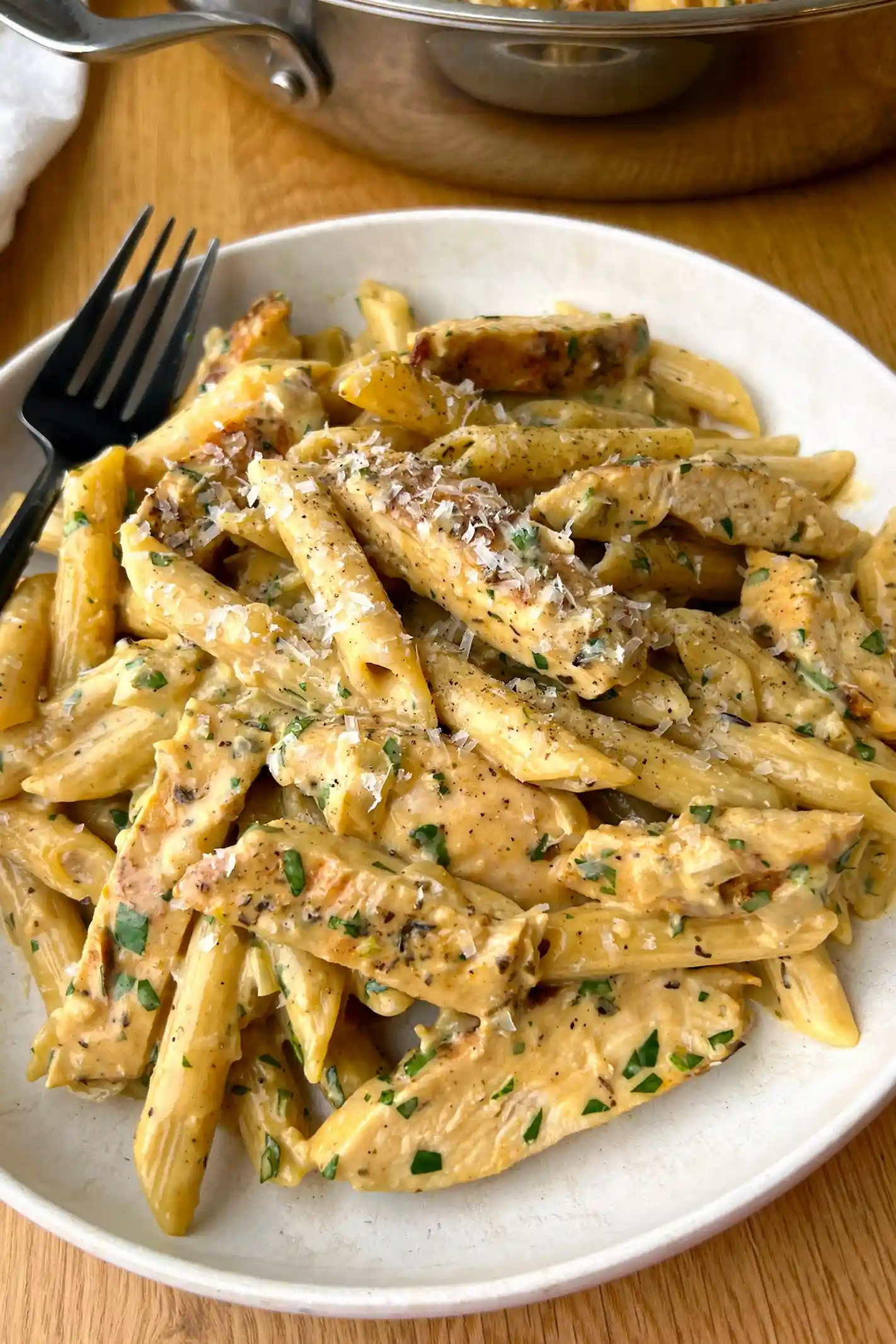
List of ingredients
- 1 tbsp avocado oil or olive oil – used for searing the chicken.
- 1 lb boneless, skinless chicken breast – butterflied or beaten to 1/2 inch thickness for even cooking.
- 1 tbsp italian seasoning – provides a herbal base for the meat.
- 1/2 tsp paprika – adds color and a mild earthy flavor.
- Salt and pepper – adjusted to taste.
- 1 tbsp avocado oil or olive oil – used for the vegetable base.
- 1 tbsp unsalted butter – adds richness to the aromatics.
- 1/2 jumbo yellow onion (1 cup diced) – provides sweetness and depth.
- 4-6 large cloves garlic (minced) – the primary flavor profile of the sauce.
- 8 oz dry penne pasta – can be standard, gluten-free, or protein-based.
- 2 cups chicken broth – used to cook the pasta and build the sauce.
- 1 cup finely grated parmesan cheese – preferably freshly grated for better melting.
- 1/2 cup heavy cream – creates a thick and velvety texture.
- 2 tbsp chopped parsley – adds freshness and visual contrast.
step-by-step instructions
- Season the chicken: In a small bowl, combine the italian seasoning, paprika, salt, and pepper. Pat the chicken breasts dry with paper towels and rub the seasoning mixture onto both sides of the meat.
- Sear the meat: Heat a large pan over medium heat and add avocado oil. Once hot, add the chicken and cook for 3-5 minutes per side until the internal temperature reaches 165F. Remove the chicken from the pan and let it rest on a plate.
- Sauté aromatics: Reduce the pan heat to medium-low and add more oil and butter. Add the diced onion with a pinch of salt and cook for 3 minutes until translucent. Stir in the minced garlic and cook for one additional minute.
- Simmer the pasta: Pour in the chicken broth and scrape the bottom of the pan to release the browned bits. Once the broth reaches a light boil, stir in the dry penne pasta, ensuring all pieces are submerged.
- Cook pasta: Cover the pan with a lid and simmer for 10 minutes, or until the pasta is al-dente.
- Finish the sauce: Turn off the heat completely. Stir in the grated parmesan, heavy cream, and chopped parsley until the cheese is melted and the sauce has thickened slightly. Adjust salt and pepper as needed.
- Combine and serve: Slice the rested chicken into strips and return them to the pan. Toss everything together to coat the chicken in the sauce and serve immediately.
Professional Pan Management
Testing Stainless Steel Preheating
To prevent chicken from sticking to a stainless steel pan, use the water droplet test. Splash a small amount of water onto the hot surface; if it evaporates instantly, the pan is not yet ready. When the water beads up and slides around like a marble, the pan has reached the correct temperature for searing.
Ensuring Proper Meat Release
Chicken naturally releases from the pan once a proper crust has formed. If the meat feels stuck when you try to flip it, allow it to cook for another minute. Forcing the meat to lift before the sear is complete often results in tearing the protein.
Preventing Sauce Curdling
Dairy products can separate or curdle if they are boiled at high temperatures. Always turn off the heat source before stirring in the heavy cream and parmesan cheese. The residual heat of the pasta and broth is sufficient to melt the cheese and warm the cream.
Chicken Preparation Techniques
Butterfly Method for Thickness
Butterfly the chicken breasts by slicing horizontally through the thickest part without cutting all the way through. Open the breast like a book to create a thinner, wider piece of meat. This ensures the chicken cooks through at the same rate as the pasta.
Pounding for Uniformity
If you prefer not to butterfly, place the chicken between two sheets of parchment paper. Use a meat mallet or a heavy skillet to pound the thickest parts down to roughly 1/2 inch. Consistent thickness prevents the edges from overcooking while the center remains raw.
The Importance of Drying Meat
Pat the chicken dry with paper towels before applying seasonings and oil. Excess moisture on the surface of the meat creates steam, which prevents the Maillard reaction. A dry surface is essential for achieving a golden-brown, restaurant-style sear.
Ingredient Substitutions and Variations
Gluten-Free Pasta Alternatives
This recipe works well with gluten-free penne such as those made from chickpeas, brown rice, or corn. Be sure to check the package instructions for the specific cook time of your brand. If the gluten-free pasta cooks faster than 10 minutes, reduce the simmering time to avoid a mushy texture.
Dairy-Free Modifications
To make this dish dairy-free, replace the unsalted butter with an additional tablespoon of avocado oil. Substitute the heavy cream with a plant-based heavy cream alternative and use a vegan parmesan substitute. Note that vegan cheeses may have different melting points and might require a small amount of extra liquid to smooth out.
Using Milk Instead of Cream
Substituting milk for heavy cream will result in a thinner, less rich sauce. If you must use milk, use whole milk for the best possible consistency. You may need to simmer the sauce slightly longer before adding the cheese to achieve a similar thickness.
Changing the Pasta Shape
While penne is recommended for its ability to hold sauce, other shapes like fusilli, rotini, or farfalle work well. These shapes increase the surface area, allowing the garlic parmesan sauce to cling to the pasta. Maintain the same liquid-to-pasta ratio regardless of the shape chosen.
Vegetable Integration and Serving Ideas
Adding Green Vegetables
Fresh spinach can be wilted directly into the sauce at the very end of the cooking process. Stir in a few handfuls of spinach after adding the cream and parmesan; the residual heat will wilt the leaves in about 60 seconds. For broccoli, steam or roast the florets separately and serve them on the side or toss them in with the finished pasta.
Complementary Side Dishes
A crisp green salad with a lemon vinaigrette provides an acidic contrast to the rich, creamy sauce. Roasted asparagus or sautéed zucchini also pair well with the garlic and parmesan flavors. For those desiring more carbohydrates, a slice of toasted sourdough or garlic bread is ideal for soaking up extra sauce.
Protein Swaps
While chicken breast is the standard, boneless skinless chicken thighs can be used for a juicier result. Thighs may require an additional 2-3 minutes of searing time to reach the safe internal temperature. Shrimp is another quick alternative; sear them separately and add them at the final stage to avoid overcooking.
Storage and Reheating Guide
Refrigeration Requirements
Allow the pasta to cool completely before transferring it to an airtight container. Store the dish in the refrigerator for up to three to four days. Ensure the container is sealed tightly to prevent the pasta from drying out or absorbing odors from other foods.
Optimizing the Reheating Process
Pasta tends to absorb the sauce while sitting in the fridge, which can make the dish seem dry upon reheating. When warming it on the stove, add a splash of chicken broth, water, or milk to loosen the sauce. Heat over low-medium heat, stirring frequently to avoid burning the bottom.
Serving as a Cold Pasta Salad
This recipe can be enjoyed cold, as the garlic parmesan flavors remain potent even when chilled. If serving cold, you may want to add a squeeze of fresh lemon juice to brighten the flavors. Toss with additional fresh parsley before serving to refresh the appearance.
Troubleshooting and FAQs
Why is my parmesan clumping?
Clumping usually occurs when using pre-shredded cheese, which is coated in potato starch or cellulose to prevent sticking in the bag. Freshly grated parmesan melts much more smoothly into the sauce. Use the smallest holes on your grater to create a fine powder that integrates easily.
How do I fix a sauce that is too thick?
If the sauce becomes too thick after adding the cheese and cream, stir in a tablespoon of chicken broth at a time. Continue adding liquid until the desired consistency is reached. Be careful not to add too much, or the sauce will lose its creamy quality.
What if the pasta is still hard after 10 minutes?
Different brands of pasta vary in density and absorption rates. If the pasta is not al-dente after the initial 10 minutes, add 1/4 cup of chicken broth and cover for another 2-3 minutes. Stir occasionally to ensure the pasta does not stick to the bottom of the pan.
Can I use a different oil for searing?
Avocado oil is recommended due to its high smoke point, which prevents the oil from burning at medium-high heat. Olive oil is a suitable alternative, though it has a lower smoke point and may smoke if the pan is too hot. Avoid using butter alone for searing, as it will burn before the chicken is cooked.
Can this be made in a slow cooker?
This specific recipe is designed as a one-pan stovetop meal to maintain the texture of the pasta and the sear on the chicken. A slow cooker would overcook the pasta and prevent the chicken from getting a golden crust. For a slow cooker version, you would need to adjust the liquid ratios and add the pasta during the final hour of cooking.
How can I increase the protein content?
Using a protein-enriched pasta made from lentils or chickpeas is the easiest way to boost protein. You can also increase the amount of chicken from 1 lb to 1.5 lbs, searing in two batches to avoid crowding the pan. Adding a side of steamed edamame or quinoa also increases the overall protein of the meal.
Print
Garlic Parmesan Chicken and Pasta
- Total Time: 35 minutes
- Yield: 4 servings 1x
- Diet: General
Description
This Garlic Parmesan Chicken and Pasta is an easy yet restaurant-worthy dinner. With an irresistibly rich and creamy sauce and tender chicken, this will quickly become your new favorite pasta dish. All made in one pan in about 30 minutes.
Ingredients
- 1 tbsp avocado oil (or olive oil)
- 1 lb boneless, skinless chicken breast (butterflied or beaten down to about ½” thickness)
- 1 tbsp italian seasoning
- ½ tsp paprika
- salt & pepper (to taste)
- 1 tbsp avocado oil (or olive oil)
- 1 tbsp unsalted butter
- ½ jumbo yellow onion (diced (1 cup))
- 4–6 large cloves garlic (minced)
- 8 oz dry penne pasta
- 2 cups chicken broth
- 1 cup finely grated parmesan cheese
- ½ cup heavy cream
- 2 tbsp chopped parsley
Instructions
- Step: In a small bowl, mix together the italian seasoning, paprika, salt & pepper. Pat the chicken dry and then rub both sides with the seasoning mixture.
- Step: Bring a large pan to medium heat. Once hot, add avocado oil. Then, add seasoned chicken and cook for 3-5 minutes per side, until the internal temperature reaches 165F. Remove chicken from the pan and set it aside to rest.
- Step: Reduce heat to medium-low and add more avocado oil and butter. Then, add onion and season it with salt. Cook, stirring occasionally, for about 3 minutes, or until beginning to get tender and translucent. Add garlic, stir, and cook for 1 minute longer.
- Step: Deglaze the pan with chicken broth, scraping up all the browned bits stuck to the bottom. Allow the broth to come to a light boil. Then, add the dry pasta and stir to make sure that the pasta is submerged in the broth.
- Step: Cover the pan and cook for 10 minutes or until the pasta is al-dente.
- Step: Turn off the heat and add in the parmesan, heavy cream and parsley. Stir until the parmesan is melted and the sauce is warm and thickened slightly. Taste and adjust salt and pepper as needed.
- Step: Slice the cooked chicken into strips and add it into the pan along with the pasta. Toss to combine. Then, serve & enjoy!
Notes
Use a stainless steel pan for the best results. Freshly grated parmesan is recommended for a smoother melt.
- Prep Time: 5 minutes
- Cook Time: 30 minutes
- Category: Dinner
- Method: One-Pan
- Cuisine: Italian-American
Nutrition
- Serving Size: 1 serving
- Calories: 665 kcal
- Sugar: 5 g
- Sodium: 1021 mg
- Fat: 32 g
- Saturated Fat: 14 g
- Unsaturated Fat: 14 g
- Trans Fat: 0.1 g
- Carbohydrates: 53 g
- Fiber: 3 g
- Protein: 41 g
- Cholesterol: 138 mg