
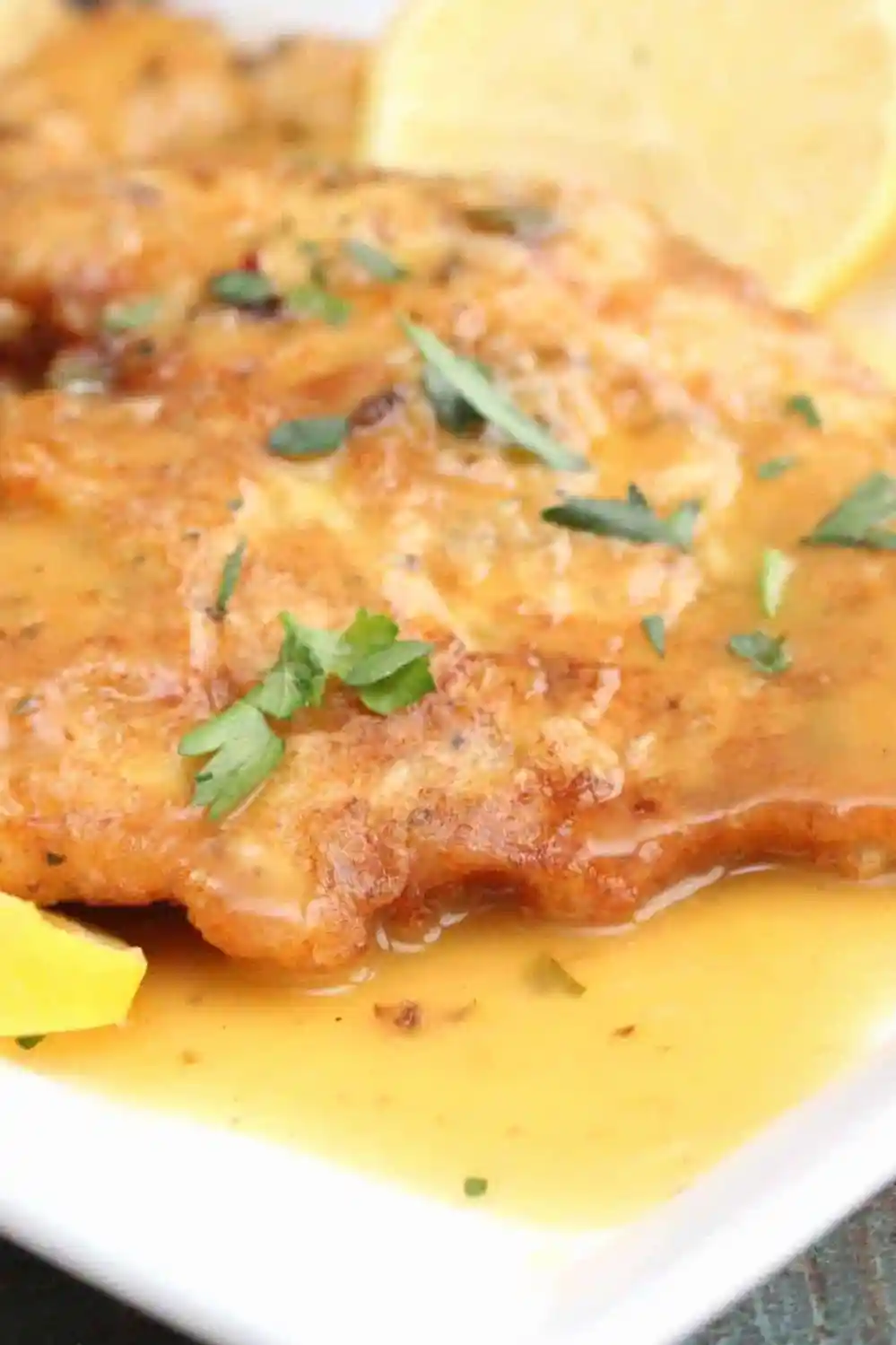
This Chicken Francese is a quick and elegant meal that brings a bright, lemony flavor to tender chicken cutlets. It is perfect for a weeknight dinner or a special guest occasion, offering a sophisticated taste in under 40 minutes.
List of ingredients
- 3 to 4 boneless, skinless chicken breasts (about 14 oz. to 16 oz. total) – pounded thin for quick cooking.
- 1 cup flour – divided for dredging and thickening the sauce.
- Kosher salt – used for seasoning both the meat and sauce.
- Freshly ground black pepper – provides a subtle spice.
- 1 tsp garlic powder – mixed into the flour for depth.
- 4 eggs – used as the primary coating for the cutlets.
- 2 tbsp Parmesan (made with microbial rennet), grated – adds a salty richness to the batter.
- 4 tbsp fresh parsley, chopped (divided) – 2 tbsp for the batter and 2 tbsp for garnish.
- 4 tbsp olive oil (divided) – 2 tbsp for frying and 2 tbsp for the sauce base.
- 4 tbsp unsalted butter (divided) – 2 tbsp for sautéing and 2 tbsp for finishing the sauce.
- 4 garlic cloves, minced – creates an aromatic base for the pan sauce.
- 1/4 teaspoon red pepper flakes – adds a mild, warm heat.
- 1/2 cup alcohol-free white wine – provides necessary acidity without alcohol.
- 1 1/4 cups chicken stock – builds the body and savory flavor of the sauce.
- Juice of two fresh lemons (about 4 tablespoons) – provides the signature citrus brightness.
step-by-step instructions
- Pound the meat: Place each chicken breast in a large freezer bag and use a meat tenderizer to pound it to 1/8″ to 1/4″ thickness for even cooking.
- Portion the cutlets: Cut the pounded chicken pieces into halves or thirds so they fit easily in the pan.
- Prepare the flour: Combine flour, 1/2 teaspoon salt, 1/2 teaspoon pepper, and garlic powder on a platter; set aside 2 tablespoons of this mix for the sauce later.
- Mix the batter: In a medium bowl, whisk together the eggs, grated Parmesan, 2 tablespoons of chopped parsley, and a pinch of salt and pepper.
- Coat the chicken: Dredge each chicken piece in the seasoned flour, then dip it into the egg mixture to ensure a full coating.
- Heat the pan: Set a large skillet over medium heat and add 2 tablespoons of olive oil followed by 2 tablespoons of butter.
- Sear the chicken: Place cutlets in the pan 2 at a time and cook for 3 to 4 minutes until the bottom is nicely browned.
- Flip and finish: Turn the chicken and cook for another 3 to 4 minutes until fully cooked through and golden brown on both sides.
- Rest the meat: Remove the cutlets from the pan and keep them warm in a 220F oven or reheat at 350F for 15 minutes before serving.
- Sauté aromatics: In the same skillet, add the remaining 2 tablespoons of oil over medium heat and cook the minced garlic and red pepper flakes for 3 minutes.
- Thicken the base: Stir in the reserved 2 tablespoons of seasoned flour and cook for 1 to 2 minutes without letting it turn dark brown.
- Simmer the sauce: Pour in the alcohol-free white wine and chicken stock and bring the mixture to a boil.
- Add acidity: Reduce the heat and stir in the fresh lemon juice, simmering until the sauce thickens slightly.
- Final seasoning: Add a healthy pinch of salt and pepper to the sauce and taste for balance.
- Mount with butter: Remove the pan from the heat and stir in the remaining 2 tablespoons of butter until completely melted and glossy.
- Assemble the dish: Place the chicken cutlets on a platter and pour the hot lemon butter sauce over the top.
- Garnish: Sprinkle with the remaining 2 tablespoons of fresh parsley and serve immediately.
Expert Techniques for Texture
Use a Meat Mallet for Consistent Thickness
Pounding the chicken is the most critical step for ensuring the meat cooks quickly and evenly. If the chicken varies in thickness, the thin edges will overcook and become tough before the center is safe to eat. Using a freezer bag prevents the meat from tearing and keeps your kitchen clean.
Prevent Batter Separation
The flour dredge acts as a primer, creating a dry surface that allows the egg batter to adhere firmly to the meat. To prevent the coating from peeling, avoid simmering the cooked cutlets directly in the sauce for long periods. Instead, pour the finished sauce over the chicken immediately before serving.
Control the Searing Temperature
Maintain a steady medium heat to ensure the egg coating browns without burning. If the pan is too hot, the butter will burn and the exterior will be dark while the interior remains raw. Use a shimmer of oil as your indicator that the pan is ready for the chicken.
Ingredient Substitutions
Dairy-Free Cheese Alternatives
For those avoiding Parmesan, nutritional yeast can provide a similar salty, nutty flavor in the egg batter. Alternatively, a small amount of finely crumbled feta can offer a tangy profile that complements the lemon sauce. Ensure any substitute is finely grated to maintain the batter’s consistency.
Gluten-Free Flour Options
You can replace the all-purpose flour with a 1:1 gluten-free flour blend or cornstarch for the dredging process. Cornstarch often produces a slightly crispier exterior, though the sauce may require an extra minute of simmering to reach the desired thickness. The taste remains virtually identical to the original version.
Using Dried Herbs
If fresh parsley is unavailable, dried parsley can be used in a 1:3 ratio, meaning one tablespoon of dried parsley equals three tablespoons of fresh. However, adding a pinch of dried oregano or basil can add a different Mediterranean depth to the dish. Add dried herbs to the flour mix rather than the egg batter for better distribution.
Flavor Variations
Add Capers for a Briny Twist
Adding two tablespoons of drained capers to the sauce during the simmering stage transforms this into a hybrid between Francese and Piccata. The salty, briny pop of the capers cuts through the richness of the butter. This variation works best when you slightly reduce the amount of added salt in the sauce.
Incorporate Sautéed Mushrooms
Sautéing sliced cremini or button mushrooms in the pan before adding the garlic adds an earthy dimension to the meal. The mushrooms absorb the lemon and butter flavors, making the dish feel more like a hearty entree. Ensure the mushrooms are fully browned before proceeding with the flour and stock.
Enhance the Citrus Profile
For a more intense citrus flavor, grate the zest of one lemon into the egg batter before dipping the chicken. You can also add a teaspoon of lemon zest to the final butter emulsion. This adds an aromatic brightness that penetrates the meat and the sauce simultaneously.
Serving and Pairing Ideas
Ideal Pasta Accompaniments
Linguine or angel hair pasta are the traditional choices for this dish as they soak up the lemon butter sauce efficiently. Toss the cooked pasta with a small amount of olive oil and garlic before plating the chicken on top. This prevents the noodles from sticking and adds another layer of flavor.
Best Vegetable Pairings
Steamed asparagus or sautéed spinach provide a fresh, green contrast to the rich butter sauce. The natural bitterness of the greens balances the acidity of the lemon. For a heartier option, roasted carrots or broccolini work exceptionally well with the citrus notes.
Bread Selections for Sauce
A crusty Italian baguette or toasted ciabatta is essential for cleaning the remaining sauce from the plate. Warm the bread in the oven for a few minutes and brush it with a touch of garlic butter. The porous texture of the bread is perfect for absorbing the emulsified butter and stock.
Storage and Reheating Advice
Refrigerator Storage
Store the chicken and the sauce in separate airtight glass containers to maintain the best quality. The chicken will stay fresh for up to three days, while the sauce can last for four. Keeping them separate prevents the breading from becoming soggy during storage.
Freezing the Pan Sauce
The lemon butter sauce can be frozen for up to two months in a freezer-safe container. When thawing, let it soften in the refrigerator overnight before heating it on the stove. Avoid freezing the chicken cutlets, as the texture of the egg coating degrades significantly during the freezing process.
Best Reheating Methods
To reheat the chicken, place the cutlets in a 350F oven for 10 to 15 minutes to restore some of the exterior crispness. Avoid using a microwave, as it can make the chicken rubbery and the batter soggy. Heat the sauce slowly in a small saucepan over low heat, stirring constantly to re-emulsify the butter.
Make-Ahead Strategies
Pre-Cooking the Cutlets
You can cook the chicken cutlets 1 to 2 hours before your guests arrive. Once cooked, keep them in a low-temperature oven at 220F to maintain warmth without overcooking. This allows you to focus entirely on the sauce preparation right before serving.
Preparing the Batter Early
The egg and Parmesan mixture can be whisked together and stored in the refrigerator for a few hours. Make sure to stir it again before use, as the cheese may settle at the bottom. Keep the flour mixture in a dry place to avoid clumping from humidity.
Cooking Troubleshooting
Fixing a Thin Sauce
If the sauce remains too watery after simmering, you can whisk in a small slurry of one teaspoon of cornstarch and a tablespoon of water. Simmer for another minute until the sauce coats the back of a spoon. Be careful not to over-reduce, or the lemon flavor may become too concentrated and sour.
Preventing Dry Chicken
If the chicken feels dry, it is likely due to overcooking the thin cutlets. Use a meat thermometer to ensure the internal temperature reaches exactly 165F and no higher. The thinness of the meat means the window between perfectly cooked and overcooked is very small.
Solving Batter Peeling
If you notice the egg coating sliding off the meat, ensure you are dredging the chicken in flour thoroughly before the egg dip. Also, check that the oil is hot enough; if the chicken is placed in lukewarm oil, it will absorb the fat and the batter will not set quickly enough to stick.
Frequently Asked Questions
Can I use chicken thighs instead of breasts?
Yes, you can use boneless skinless thighs, but they require more pounding to achieve a uniform thickness. Thighs are naturally juicier and more forgiving, though they have a stronger flavor than breasts. Adjust the cooking time slightly as thighs may take an extra minute to cook through.
How do I know when the chicken is perfectly done?
The chicken is done when it reaches an internal temperature of 165F and the exterior is a deep golden brown. The meat should feel firm to the touch but still have a slight spring. Avoid overcooking, as the thin cutlets can dry out in seconds.
Can I use a non-stick pan for this recipe?
A non-stick pan works well for the frying stage, but a stainless steel skillet is better for the sauce. Stainless steel allows for ‘fond’ (browned bits) to build up on the bottom, which adds immense flavor to the pan sauce. If using non-stick, you may need to add a pinch more salt or bouillon to the sauce for depth.
Print
Classic Lemon Butter Chicken Francese
- Total Time: 40 minutes
- Yield: 4 people 1x
- Diet: General
Description
This Chicken Francese recipe is so easy to make, and one of the tastiest dishes there is. The ‘egg on the outside’ gives it a wonderful texture. And the sauce is divine. Amazing.
Ingredients
- 3 to 4 chicken breasts (boneless and skinless, about 14 oz. to 16 oz. total)
- 1 cup flour
- Kosher salt
- Freshly ground black pepper
- 1 tsp garlic powder
- 4 eggs
- 2 tbsp Parmesan (grated, microbial-rennet)
- 4 tbsp fresh parsley (chopped, divided)
- 4 tbsp olive oil (divided)
- 4 tablespoons unsalted butter (divided)
- 4 garlic cloves (minced)
- ¼ teaspoon red pepper flakes
- ½ cup alcohol-free white wine
- 1 ¼ cups chicken stock
- Juice of two fresh lemons (about 4 tablespoons)
Instructions
- Step: Pound chicken to 1/8″ to 1/4″ thickness using a meat tenderizer.
- Step: Cut each pounded chicken piece into halves or thirds.
- Step: Mix flour, 1/2 teaspoon salt, 1/2 teaspoon pepper, and 1 teaspoon garlic powder; reserve 2 tablespoons for the sauce.
- Step: Mix eggs, Parmesan, 2 tablespoons parsley, and a pinch of salt and pepper in a bowl.
- Step: Dredge chicken cutlets in the flour mixture and then dip into the egg mixture.
- Step: Heat 2 tablespoons olive oil and 2 tablespoons butter over medium heat in a large skillet.
- Step: Sauté coated chicken 2 at a time for 3 to 4 minutes per side until browned and cooked through.
- Step: Remove chicken from pan and repeat with remaining pieces.
- Step: Add remaining 2 tablespoons olive oil to the skillet over medium heat.
- Step: Sauté minced garlic and red pepper flakes for about 3 minutes.
- Step: Stir in reserved seasoned flour and cook for 1 to 2 minutes.
- Step: Add alcohol-free white wine and chicken stock, bringing to a boil.
- Step: Reduce heat and stir in lemon juice until slightly thickened.
- Step: Season with salt and pepper.
- Step: Remove from heat and stir in remaining 2 tablespoons of butter until melted.
- Step: Place cutlets on plates and pour sauce over the top.
- Step: Garnish with remaining parsley.
Notes
Prepare the sauce separate from the chicken cutlets to prevent the egg batter from pulling away. The cutlets and sauce can be prepared several hours in advance; re-heat cutlets in a low-temp oven and warm sauce on the stove. The sauce can be frozen for up to 2 months.
- Prep Time: 20 minutes
- Cook Time: 20 minutes
- Category: Entree
- Method: Sautéing
- Cuisine: Italian
Nutrition
- Serving Size: 1 portion
- Calories: 526 kcal
- Sugar: 2 g
- Sodium: 415 mg
- Fat: 36 g
- Saturated Fat: 7 g
- Unsaturated Fat: 29 g
- Trans Fat: 0 g
- Carbohydrates: 30 g
- Fiber: 1 g
- Protein: 48 g
- Cholesterol: 306 mg