
This quick pasta dish combines seared shrimp, burst cherry tomatoes, and a pungent garlic sauce. It is an ideal weeknight meal that delivers bold flavors in under 30 minutes.
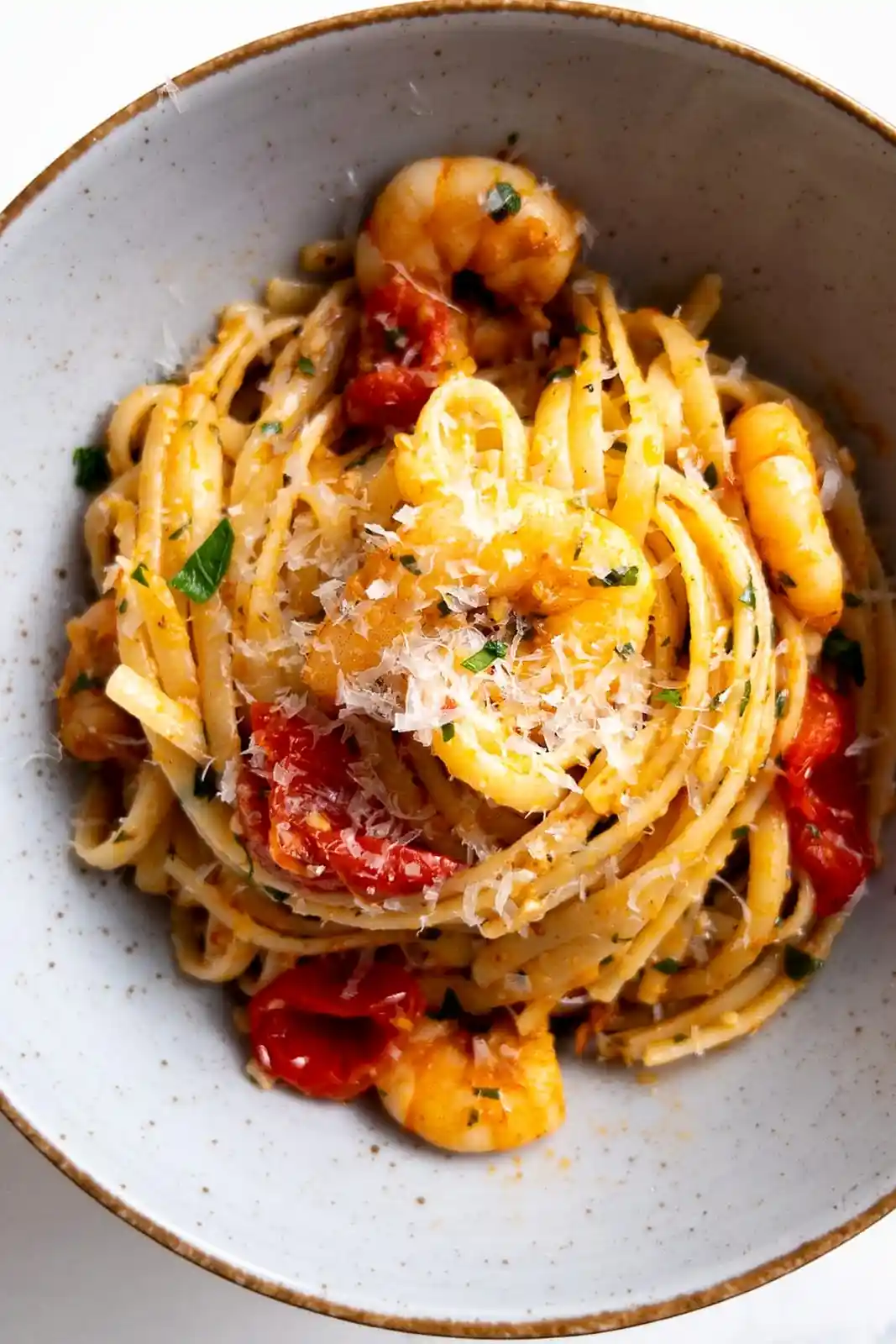
List of ingredients
- 1 pound shrimp (peeled and deveined) – jumbo size works best for texture.
- 1 tablespoon extra virgin olive oil – used for the initial shrimp marinade.
- 1 ½ teaspoon paprika powder – adds a rich color and earthy base.
- ¼ teaspoon cayenne pepper – provides a subtle, sharp heat.
- Salt and pepper – to taste for seasoning.
- 2 tablespoons extra virgin olive oil – for searing the shrimp in the pan.
- 12 ounces whole-wheat linguine – long pasta that holds the sauce well.
- 3 tablespoons extra virgin olive oil – the base for the garlic and tomato sauce.
- 2 cups cherry tomatoes (cut in half) – these will blister and create a natural sauce.
- 5 garlic cloves (minced) – provide the primary aromatic flavor.
- 1 shallot (finely diced) – adds a mild, sweet onion note.
- 2 teaspoons red pepper flakes – for a spicy kick.
- Salt and pepper – to taste for the sauce.
- ¼ cup vegetable broth – used as a flavorful, non-alcoholic deglazing liquid.
- ½ cup pasta water – reserved from the pot to emulsify the sauce.
- ¼ cup chopped parsley – for a fresh, herbal finish.
- 1 small lemon (juiced) – to brighten the overall flavor profile.
- Microbial-rennet parmesan cheese (grated) – for a salty garnish.
step-by-step instructions
- Prepare the pasta: Cook linguine in a pot of boiling salted water according to the package directions. Reserve at least one cup of the starchy pasta water before draining the noodles.
- Heat the pan: Pour 2 tablespoons of olive oil into a large skillet and heat over medium heat until shimmering.
- Marinate the shrimp: In a mixing bowl, combine the shrimp with 1 tablespoon of olive oil, paprika, cayenne, salt, and pepper. Toss thoroughly to ensure every shrimp is coated.
- Sear the shrimp: Add the marinated shrimp to the hot skillet. Sauté for 3-4 minutes until they are opaque and cooked through, then move them to a plate.
- Sauté aromatics: In the same pan, add 3 tablespoons of olive oil, halved cherry tomatoes, minced garlic, diced shallot, and red pepper flakes. Season with salt and pepper, stirring occasionally until the tomatoes soften and blister.
- Create the sauce: Pour in the vegetable broth and the reserved pasta water. Allow the mixture to simmer for approximately 1 minute to concentrate the flavors.
- Combine elements: Add the fresh parsley, cooked linguine, and seared shrimp to the skillet. Toss everything together for about 2 minutes until the pasta is well-coated; add more pasta water if the sauce is too thick.
- Final touch: Stir in the fresh lemon juice and adjust the salt and pepper as needed.
- Garnish and serve: Plate the pasta and top with a generous sprinkle of grated microbial-rennet parmesan cheese.
Pro Cooking Techniques
Achieving Al Dente Texture
Cook your linguine for 1 to 2 minutes less than the package suggests. Since the pasta finishes cooking in the pan with the sauce, undercooking it slightly prevents the noodles from becoming mushy.
Preventing Garlic Burn
Garlic releases its flavor quickly but burns at high temperatures. If your pan is too hot after searing the shrimp, lower the heat to medium-low before adding the garlic and shallots to keep the taste sweet rather than bitter.
Emulsifying the Sauce
Pasta water contains starch that acts as a binder between the oil and the liquid. Stirring the pasta vigorously in the pan helps create a creamy, glossy emulsion that clings to the noodles instead of pooling at the bottom.
Searing Shrimp Perfectly
Avoid overcrowding the pan when cooking the shrimp to ensure they sear rather than steam. Working in batches if necessary allows the paprika and cayenne to caramelize on the surface for maximum flavor.
Ingredient Substitutions
Alternative Pasta Shapes
While linguine is recommended for its surface area, you can use spaghetti or fettuccine. For a different texture, rigatoni or penne work well as they capture the blistered tomatoes inside the tubes.
Replacing Shallots
If shallots are unavailable, finely diced red onion is the best alternative due to its similar mildness. Avoid using white or yellow onions if possible, as their stronger sulfurous flavor can overpower the delicate shrimp.
Using Different Broths
Vegetable broth is a great all-purpose choice, but a low-sodium seafood stock can add more depth. Ensure the broth is not too salty, as the parmesan and pasta water already contribute significant sodium.
Alternative Heat Sources
If you do not have cayenne pepper, a pinch of crushed habanero or a dash of hot paprika can work. Adjust the quantity carefully, as different peppers vary greatly in heat intensity.
Flavor Variations
Adding Green Vegetables
Fresh baby spinach or chopped kale can be stirred in during the final assembly. The residual heat from the pasta will wilt the greens quickly without overcooking them.
Increasing the Spice Level
For those who prefer a very spicy dish, increase the red pepper flakes to one tablespoon. You can also add a pinch of crushed red pepper to the shrimp marinade for an extra layer of heat.
Adding Creaminess
While the original is oil-based, you can stir in a tablespoon of unsalted butter at the end. This adds a rich, velvety quality to the sauce that complements the lemon juice.
Adding Extra Umami
A teaspoon of minced capers or a few chopped kalamata olives can be added with the garlic. These ingredients provide a briny contrast to the sweetness of the cherry tomatoes.
Serving and Pairing Ideas
Complementary Side Dishes
Serve this pasta with a crisp side salad featuring a balsamic vinaigrette. Roasted asparagus or steamed broccoli also pair well with the garlic and lemon notes of the main course.
Fresh Herb Garnishes
While parsley is the primary herb, a sprinkle of fresh basil leaves adds a traditional Italian sweetness. Chives can also be used for a mild onion-like finish.
Bread Pairings
Warm garlic bread or toasted ciabatta is ideal for soaking up the remaining spicy garlic oil. Brush the bread with olive oil and a pinch of salt before toasting in the oven.
Beverage Pairings
Pair this dish with a chilled sparkling water with a slice of lime. The carbonation and acidity help cleanse the palate between bites of the rich garlic sauce.
Storage and Reheating
Refrigeration Guidelines
Store leftovers in an airtight container in the refrigerator for up to 3 days. Keep the pasta and shrimp tightly sealed to prevent the noodles from drying out.
Stove Top Reheating
Reheat the pasta in a skillet over medium heat with a splash of water or vegetable broth. This restores the moisture to the sauce and prevents the shrimp from becoming rubbery.
Microwave Instructions
Place the pasta in a microwave-safe dish and cover it with a damp paper towel. Heat in short 30-second intervals, stirring in between, to ensure even warming.
Preventing Rubberized Shrimp
Avoid overcooking the shrimp during the reheating process. Heat the sauce and pasta first, then add the shrimp at the very end just until they are warmed through.
Make-Ahead Strategy
Prep Work for Weeknights
Mince the garlic, dice the shallot, and halve the cherry tomatoes a few hours in advance. Store them in separate containers in the fridge to speed up the cooking process.
Marinating the Shrimp
You can marinate the shrimp in the oil and spices up to 4 hours before cooking. Keep them chilled in the refrigerator to maintain freshness and flavor penetration.
Partial Pasta Prep
Cook the linguine slightly under al dente and toss with a drizzle of oil to prevent sticking. Store in the fridge and add to the pan during the final assembly step.
Pre-grating Cheese
Grate the microbial-rennet parmesan in bulk and store it in a sealed jar. This allows for a quick garnish right before serving without needing a grater during the meal rush.
Troubleshooting Common Issues
Sauce is Too Oily
If the sauce separates and looks too greasy, stir in an extra tablespoon of pasta water. The starch helps bind the oil and liquid into a cohesive glaze.
Pasta is Too Dry
If the linguine absorbs all the liquid, add a small amount of vegetable broth or water. Toss continuously over low heat until the desired consistency is reached.
Shrimp are Overcooked
Shrimp cook very quickly and can become tough if left in the pan. Always remove them as soon as they turn opaque and only return them to the pan for the final minute of tossing.
Lack of Flavor Depth
If the dish tastes flat, add an extra squeeze of fresh lemon juice. The acidity acts as a flavor enhancer that wakes up the garlic and spices.
Frequently Asked Questions
What is garlic shrimp pasta made of?
This dish consists of long pasta like linguine combined with seared shrimp, sautéed garlic, shallots, and blistered cherry tomatoes. The sauce is a blend of olive oil, vegetable broth, and starchy pasta water, finished with lemon and parsley.
How spicy is this recipe?
The recipe has a moderate level of heat due to the cayenne and red pepper flakes. You can easily adjust this by reducing the amount of these two spices for a milder version or increasing them for more heat.
Can I make this without vegetable broth?
Yes, you can use a similar amount of plain water or a light seafood stock. However, broth adds a layer of savory flavor that plain water lacks.
Why is pasta water important?
The starch in the cooking water helps the sauce adhere to the pasta. Without it, the oil and broth would slide off the noodles and collect at the bottom of the plate.
Can I use frozen shrimp?
Yes, frozen shrimp work perfectly as long as they are fully thawed and patted dry before marinating. Drying the shrimp ensures they sear properly rather than steaming in the pan.
Print
Zesty Garlic Shrimp Pasta with Blistered Tomatoes
- Total Time: 25 minutes
- Yield: 4 servings 1x
- Diet: General
Description
This spicy garlic shrimp pasta perfectly combines delicious linguine, juicy seared shrimp, blistered cherry tomatoes, and a garlicky and spicy pasta sauce made with olive oil.
Ingredients
- 1 pound shrimp, peeled and deveined
- 1 tablespoon extra virgin olive oil, for marinating
- 1 ½ teaspoon paprika powder
- ¼ teaspoon cayenne pepper
- salt and pepper, to taste
- 2 tablespoons extra virgin olive oil, for sautéing the shrimp
- 12 ounces whole-wheat linguine
- 3 tablespoons extra virgin olive oil
- 2 cups cherry tomatoes, cut in half
- 5 garlic cloves, minced
- 1 shallot, finely diced
- 2 teaspoons red pepper flakes
- salt and pepper, to taste
- ¼ cup vegetable broth
- ⅓ – ½ cup pasta water, adjust as needed
- ¼ cup chopped parsley
- 1 small lemon, juiced, to taste
- parmesan cheese, grated, for garnish
Instructions
- Step 1: Cook the pasta in salted water according to the package instructions. Save some pasta water, drain, and set aside.
- Step 2: Preheat the olive oil in a large pan over medium heat.
- Step 3: Place the shrimp in a bowl. Add the olive oil and seasonings. Toss until the shrimp are evenly covered.
- Step 4: Sauté the shrimp for 3-4 minutes until they are cooked through. Transfer to a plate and set aside.
- Step 5: Add more olive oil, cherry tomatoes, garlic, shallot, and red pepper flakes to the same pan. Season with salt and pepper. Occasionally stir and let the cherry tomatoes blister. Lower the heat when necessary so the garlic doesn’t burn.
- Step 6: Add the vegetable broth and pasta water to the pan. Let everything simmer for around 1 minute.
- Step 7: Add the parsley, cooked pasta, and shrimp. Toss until the pasta is evenly covered in sauce and the shrimp are heated up (about 2 minutes). Add more pasta water if the sauce doesn’t cling to the pasta.
- Step 8: Shortly before serving, finish off with lemon juice. Season with more salt and pepper if needed.
- Step 9: Garnish with freshly grated parmesan cheese and enjoy!
Notes
Cook the pasta until al dente as it will continue to cook in the pan. Be careful not to burn the garlic; lower the heat if necessary. Ensure you save the pasta water as the starch is essential for binding the sauce to the linguine.
- Prep Time: 10 minutes
- Cook Time: 15 minutes
- Category: Dinner
- Method: Sautéing
- Cuisine: Italian-Inspired
Nutrition
- Serving Size: 1 serving
- Calories: 632 kcal
- Sugar: 6 g
- Sodium: 678 mg
- Fat: 24 g
- Saturated Fat: 3 g
- Unsaturated Fat: 21 g
- Trans Fat: 0.01 g
- Carbohydrates: 74 g
- Fiber: 5 g
- Protein: 28 g
- Cholesterol: 143 mg