
This savory pasta dish blends the tangy depth of a balsamic reduction with a smooth cream sauce and earthy mushrooms. It is a quick and efficient meal that brings a sophisticated flavor profile to a simple weeknight dinner.
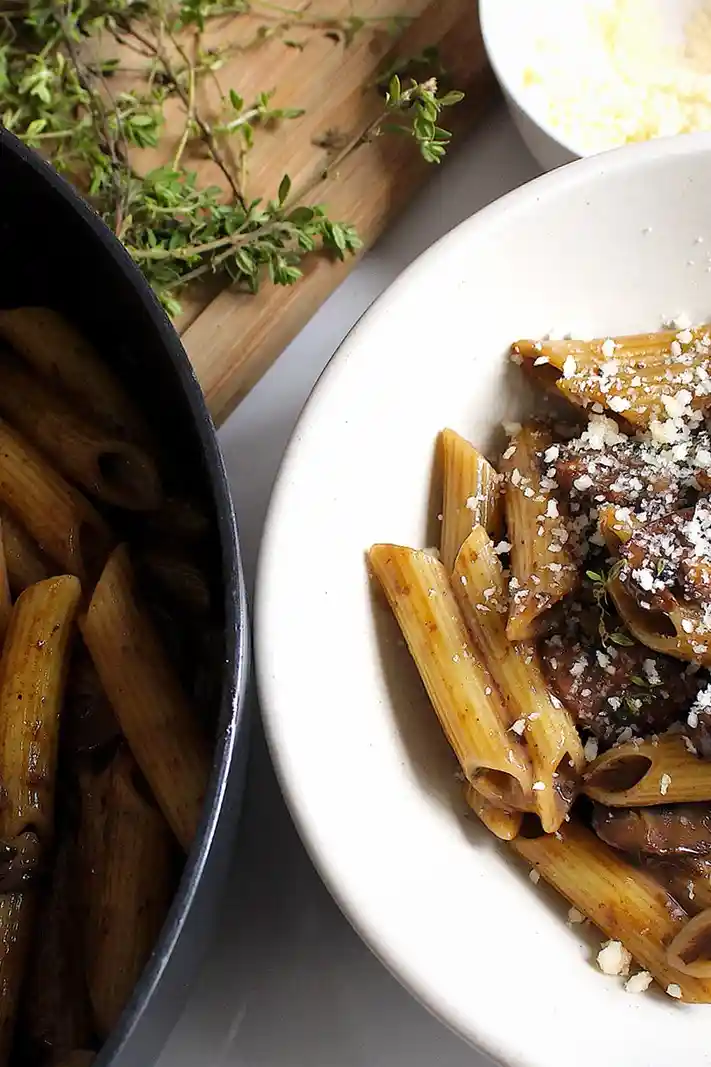
List of ingredients
- 1 cup Pasta (of your choice) – such as penne or fusilli for optimal sauce grip.
- 200 grams Mushrooms – thinly sliced for consistent browning.
- 2 tbsp Olive oil (extra virgin) – used for sautéing the aromatics.
- 1 1/2 tbsp Garlic (crushed) – fresh garlic provides the most potent flavor.
- 1/4 cup Balsamic vinegar – reduced to concentrate sweetness and acidity.
- 1/2 cup Whipping cream – creates a rich and velvety texture.
- 2 tbsp Parmesan cheese (grated) – adds a salty, nutty finish to the dish.
- Salt & pepper – for basic seasoning to taste.
- Thyme – used to add an earthy herbal layer.
step-by-step instructions
- Boil Pasta: Cook the pasta in salted water according to the package instructions until it reaches an al dente texture.
- Prepare Mushrooms: Slice the mushrooms into uniform pieces to ensure they cook at the same rate.
- Sauté: Heat olive oil in a pan and add the sliced mushrooms and crushed garlic. Sauté for 2-3 minutes on medium-low heat until the mushrooms are cooked and begin to turn brown.
- Reduce Vinegar: Pour the balsamic vinegar into the pan with the mushrooms. Let the mixture cook on low flame until the vinegar has reduced and thickened.
- Cream the Sauce: Once the vinegar is completely reduced, stir in the whipping cream. Mix thoroughly and let it simmer for no more than one minute.
- Combine: Add the boiled pasta, salt, pepper, and thyme to the pan. Cook for another 1-2 minutes to allow the sauce to coat the pasta thoroughly, then turn off the heat.
- Finish: Sprinkle the grated parmesan cheese over the top and serve while hot.
Optimal Cooking Techniques
Sautéing Mushrooms Without Steaming
To prevent mushrooms from releasing too much water and steaming, ensure the pan is heated before adding the olive oil. Avoid overcrowding the pan, as too many mushrooms will drop the temperature and trap moisture. Cook them in batches if necessary to achieve a deep brown caramelization.
Achieving the Perfect Balsamic Reduction
The balsamic vinegar should be simmered on low heat to allow the water content to evaporate slowly. This process concentrates the sugars and acidity, creating a syrupy consistency. Be careful not to burn the reduction, as it can turn bitter if overheated.
Maintaining Al Dente Pasta Texture
Boil your pasta for one minute less than the package instructions recommend. Since the pasta is simmered in the sauce for an additional two minutes, this prevents it from becoming mushy. Always salt the boiling water generously to season the pasta from within.
Balancing Acidity and Creaminess
The key to this recipe is the interplay between the tart balsamic vinegar and the rich whipping cream. Ensuring the vinegar is fully reduced before adding the cream prevents the sauce from tasting too sharp. The cream mellows the acidity, resulting in a balanced, savory glaze.
Component Breakdown
The Role of Extra Virgin Olive Oil
Extra virgin olive oil provides a fruity base that complements the earthy mushrooms. It has a higher quality of flavor compared to refined oils, adding a subtle richness to the sauté. Use a medium-low heat to prevent the oil from reaching its smoke point.
Choosing the Right Balsamic Vinegar
A high-quality balsamic vinegar with a natural sweetness works best for reductions. Avoid very thin, watery vinegars, as they take longer to reduce and may lack the depth required for the sauce. A denser vinegar provides a more intense glaze.
Benefits of Using Whipping Cream
Whipping cream has a higher fat content than regular milk or light cream, which helps stabilize the sauce. This prevents the mixture from separating when combined with the acidic balsamic reduction. It also provides the signature velvety mouthfeel of the dish.
Adding Depth with Thyme
Thyme is an essential herbal addition that bridges the gap between the mushrooms and the cream. Its woody notes enhance the umami of the fungi and cut through the richness of the dairy. Fresh thyme is preferred, but dried thyme can be used as a substitute.
Advanced Flavor Modifications
Incorporating Fresh Spinach
Folding in a handful of fresh baby spinach during the final minute of cooking adds color and nutrition. The residual heat from the pasta will wilt the spinach perfectly without overcooking it. This provides a fresh contrast to the rich cream sauce.
Adding a Hint of Lemon Zest
A small amount of lemon zest added at the end can brighten the entire flavor profile. The citrus notes cut through the heaviness of the parmesan and cream. Grate the zest finely and stir it in just before serving.
Using a Mix of Wild Mushrooms
While button mushrooms are standard, using a blend of shiitake, oyster, and cremini mushrooms increases the complexity. Different mushrooms offer varying levels of earthiness and texture. This creates a more gourmet experience and a deeper flavor.
Increasing the Umami Profile
To deepen the savory taste, you can add a small pinch of nutritional yeast or a drop of soy sauce during the reduction phase. These ingredients enhance the natural glutamates in the mushrooms. Use these sparingly to avoid making the sauce too salty.
Meal Preparation Strategy
Prepping Ingredients for Efficiency
Prepare all components, including the crushed garlic and sliced mushrooms, before turning on the stove. This is known as mise en place and ensures that the fast-paced reduction process goes smoothly. It prevents the garlic from burning while you are busy slicing mushrooms.
Timing the Pasta and Sauce
Start boiling the pasta water first, as it takes the longest to heat. Aim to have the pasta finish cooking exactly when the balsamic reduction is ready for the cream. This ensures the pasta is hot and the sauce is fresh when combined.
Managing Multiple Pan Tasks
Use a wide sauté pan for the mushrooms to maximize surface area for browning. If you have a small pan, cook the mushrooms in two stages. This prevents the mushrooms from boiling in their own juices, which would ruin the texture.
Batch Cooking Considerations
If doubling the recipe, increase the pan size significantly to accommodate the extra mushrooms. Be mindful that a larger volume of balsamic vinegar will take longer to reduce. Adjust your timing to ensure the reduction is complete before adding the cream.
Equipment Recommendations
Selecting the Best Sauté Pan
A stainless steel or cast iron pan is ideal for this recipe because they retain heat well. This helps in achieving a proper sear on the mushrooms and a consistent reduction of the vinegar. Non-stick pans are acceptable but may not brown the mushrooms as effectively.
The Importance of a Large Pasta Pot
Use a large pot with plenty of water to prevent the pasta from sticking together. Proper circulation allows the starch to disperse, ensuring each piece of pasta cooks evenly. A wider pot also makes it easier to drain the pasta quickly.
Using a Microplane for Parmesan
A microplane or fine grater creates light, fluffy parmesan that melts instantly into the sauce. This results in a more homogenous texture compared to thick shredded cheese. Finely grated cheese distributes the saltiness more evenly throughout the dish.
Choosing the Right Knife for Slicing
A sharp chef’s knife is necessary for slicing mushrooms into uniform thickness. Consistent slices ensure that every piece of mushroom cooks at the same rate. Avoid using serrated knives, as they can tear the delicate structure of the fungi.
Storage and Reheating
Storing Leftover Pasta
Store any remaining pasta in an airtight container in the refrigerator for up to three days. To prevent the pasta from absorbing all the sauce, you can store a small amount of extra cream or pasta water separately. Keep the container sealed to maintain moisture.
Reheating Methods
Reheat the pasta on a stovetop over low heat rather than in a microwave. Add a splash of milk or water to the pan to loosen the sauce and restore its creaminess. Stir gently to avoid breaking the pasta pieces.
Preventing Sauce Separation
When reheating, avoid bringing the sauce to a rolling boil, as this can cause the fats in the cream to separate. Keep the temperature low and stir constantly. This keeps the emulsion stable and the texture smooth.
Common Troubleshooting
Managing Sauce Thickness
If the sauce becomes too thick after adding the pasta, stir in a tablespoon of reserved pasta water. The starchy water helps thin the sauce while maintaining its binding properties. Add the water incrementally until the desired consistency is reached.
Fixing Over-Reduced Vinegar
If the balsamic vinegar reduces too far and becomes overly sticky or bitter, add a teaspoon of water or a pinch of sugar. This balances the intensity and restores the fluidity of the reduction. Be careful not to add too much liquid, or you will lose the concentrated flavor.
Preventing Overcooked Pasta
If the pasta continues to cook too much in the pan, rinse it briefly with warm water after draining. This stops the cooking process immediately. When added to the sauce, it will reheat quickly without becoming overly soft.
Frequently Asked Questions
Can I use white balsamic vinegar?
Yes, you can use white balsamic vinegar, but the color of the dish will be lighter. The flavor profile will remain similar, though white balsamic is often slightly milder and less syrupy than the traditional dark version.
Is whipping cream necessary?
Whipping cream is recommended for the best texture and stability. If you use a lower-fat cream, the sauce may be thinner and more prone to curdling when it hits the acidic balsamic reduction. For a lighter version, use half-and-half and stir in more parmesan.
How long does this dish stay fresh?
This dish is best served immediately, but it stays fresh in the refrigerator for 3 to 4 days. The mushrooms may soften slightly over time, but the flavor remains consistent.
What is the best pasta shape for this sauce?
Shapes with ridges or holes, such as penne, rigatoni, or fusilli, are best. These shapes trap the creamy sauce and small pieces of mushroom, ensuring every bite is flavorful. Long pastas like spaghetti can also work, though they are harder to toss with the mushrooms.
Print
Creamy Balsamic Mushroom Pasta Guide
- Total Time: 25 minutes
- Yield: 2 servings 1x
- Diet: Vegetarian
Description
Penne pasta tossed in creamy balsamic mushrooms sauce
Ingredients
- 1 cup pasta (of your choice)
- 200 grams mushrooms
- 2 tbsp olive oil (extra virgin)
- 1 1/2 tbsp garlic (crushed)
- 1/4 cup balsamic vinegar
- 1/2 cup whipping cream
- 2 tbsp parmesan cheese (microbial-rennet, grated)
- salt and pepper
- thyme
Instructions
- Step: Boil the pasta as per the package instructions.
- Step: Slice the mushrooms as shown in the blog post.
- Step: Heat olive oil in a pan and add mushrooms and garlic to it. Sauté for about 2-3 minutes on medium low heat until the mushrooms are cooked and start turning brown.
- Step: Add the balsamic vinegar to the mushrooms and let this cook on low flame until the vinegar is reduced.
- Step: Once the vinegar is completely reduced, add the whipping cream and mix everything. Let this cook (and come together) for not more than a minute.
- Step: Add the boiled pasta, salt & pepper, thyme and cook this for another minute or two max and turn off the heat.
- Step: Sprinkle some parmesan cheese and serve hot.
Notes
Avoid crowding the mushrooms while cooking to ensure they brown properly. Using whipping cream instead of regular cream is highly recommended.
- Prep Time: 10 minutes
- Cook Time: 15 minutes
- Category: Main Course
- Method: Sautéing
- Cuisine: Italian-inspired
Nutrition
- Serving Size: 1 serving
- Calories: 580 kcal
- Sugar: 8 g
- Sodium: 620 mg
- Fat: 36 g
- Saturated Fat: 21 g
- Unsaturated Fat: 15 g
- Trans Fat: 0 g
- Carbohydrates: 48 g
- Fiber: 4 g
- Protein: 13 g
- Cholesterol: 85 mg