
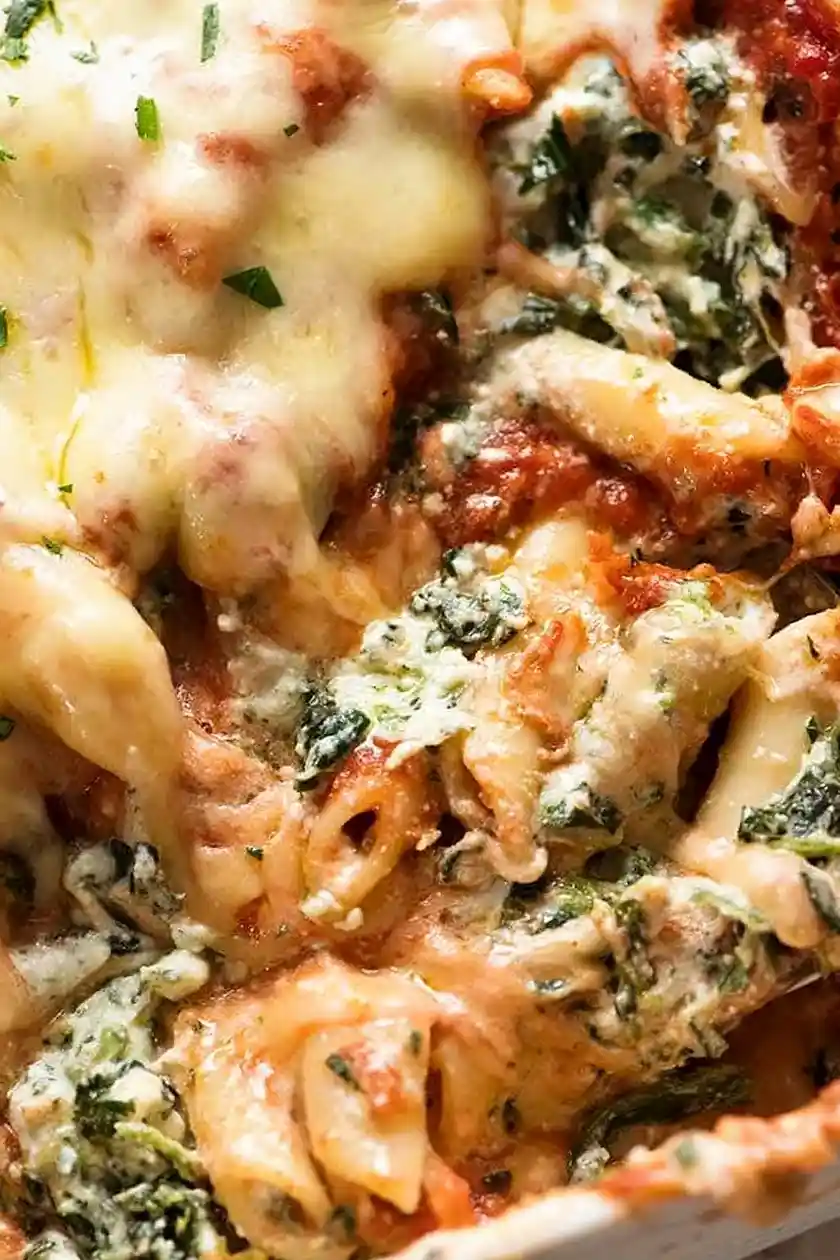
This creamy pasta bake delivers the flavor profile of spinach and ricotta stuffed shells without the intensive labor of filling individual pasta tubes. It is a practical, one-dish meal that is ideal for midweek dinners and simplifies the process of preparing a cheesy Italian-style bake.
List of ingredients
- 300g / 10 oz ziti pasta (uncooked, or other short pasta of choice)
- 1 1/2 cups mozzarella cheese, shredded (for topping)
- 1 lb / 500 g ricotta
- 1/2 cup parmesan cheese, grated
- 2 garlic cloves, crushed
- 350g / 12oz frozen chopped spinach (thawed and excess liquid pressed out)
- 1 cup mozzarella cheese, shredded
- 3/4 tsp salt & pepper
- 1 tbsp extra virgin olive oil
- 2 garlic cloves, minced
- 700g / 24oz tomato passata (1 standard bottle)
- 1 tsp onion powder
- 1 tsp garlic powder
- 2 tsp dried Italian Mixed Herbs
- 1/2 tsp dried chili flakes, to taste (optional)
- 1 tsp sugar
- 1 tsp salt
- Black pepper
- 2 tbsp water (if needed)
- Parmesan cheese, grated (for serving)
step-by-step instructions
- Prepare Oven: Preheat your oven to 350F/180C.
- Prepare Pasta Sauce: Pour out about 1/4 cup of the passata from the bottle to make space for other ingredients. Add the remaining pasta sauce ingredients directly into the bottle, screw the lid on tightly, and shake well to combine.
- Cook Pasta: Boil the pasta according to the packet instructions, but remove it from the heat 1 minute before the recommended time.
- Reserve Water: Scoop out 1 mugful of the pasta cooking water before draining the pasta and setting it aside.
- Create Ricotta Mixture: In a very large bowl, mix the ricotta, 1 cup of mozzarella, parmesan, crushed garlic, pressed spinach, and salt and pepper. If the mixture is too thick, stir in a splash of the reserved pasta cooking water to achieve a creamy consistency.
- Combine Pasta: Add the cooked pasta to the ricotta mixture and stir until evenly coated. Transfer the combined mixture into a heatproof baking dish.
- Layer and Cover: Pour the prepared pasta sauce over the top and sprinkle with the remaining mozzarella cheese. Cover the dish loosely with aluminum foil.
- Bake: Bake for 25 minutes. Remove the foil cover and bake for an additional 10 minutes, or until the cheese is fully melted and bubbling.
- Serve: Serve immediately while hot, garnished with extra grated parmesan cheese.
Optimizing Pasta and Texture
Selecting the Ideal Pasta Shape
Ziti is the preferred choice for this bake because its tubular structure allows the ricotta and spinach mixture to coat the inside and outside of the pasta. If ziti is unavailable, penne or rigatoni serve as excellent alternatives. Avoid using thin pastas like spaghetti or linguine, as they do not hold the heavy ricotta mixture effectively and may collapse during the baking process.
Managing the Undercooking Process
Cooking the pasta for one minute less than the package instructions is critical for the final texture. Since the pasta continues to cook in the oven while absorbing moisture from the sauce and ricotta, fully cooking it on the stove leads to mushy results. Undercooking ensures the pasta maintains an al dente bite after the 35 minutes of baking time.
Utilizing Pasta Cooking Water
Reserved pasta water contains starch that acts as an emulsifier. Adding a small amount of this liquid to the ricotta mixture helps the cheese bind to the pasta more effectively than plain water or milk. This technique prevents the ricotta from separating and ensures a smooth, creamy consistency throughout the bake.
Preparing Ingredients for Success
Managing Frozen Spinach Moisture
Frozen spinach holds a significant amount of water that can make a pasta bake watery or soggy. After thawing, place the spinach in a clean kitchen towel or a fine-mesh sieve and press firmly to remove as much liquid as possible. This step ensures the ricotta mixture remains thick and the flavors remain concentrated.
Handling Different Ricotta Consistencies
Ricotta brands vary in moisture levels; some are naturally creamy while others are crumbly. If you are using a drier ricotta, stir in the reserved pasta water gradually until the mixture is spreadable. A smooth ricotta base is essential for achieving a uniform distribution of spinach and cheese throughout the dish.
Using Fresh Spinach Substitutions
If you prefer fresh spinach over frozen, you must first wilt it. Sauté the fresh spinach in a pan with a small amount of olive oil until it collapses, then let it cool and squeeze out the excess liquid before adding it to the ricotta. Using raw fresh spinach will release too much water during baking, compromising the structural integrity of the bake.
Advanced Sauce Techniques
Understanding the Shake and Pour Method
Adding the sauce ingredients directly into the passata bottle eliminates the need for sautéing onions and garlic on the stove. This method is efficient for midweek meals and allows the seasonings to integrate thoroughly through mechanical shaking. The use of onion and garlic powders compensates for the lack of fresh sautéed aromatics by providing a concentrated flavor base.
Adjusting the Sauce Flavor Profile
The addition of sugar in the sauce is used to balance the natural acidity of the tomato passata. If you prefer a more savory or tangy sauce, you can reduce the sugar or add a small amount of balsamic vinegar. The dried Italian mixed herbs provide a broad flavor profile, but adding fresh basil at the end of the baking process can brighten the taste.
Tomato Passata Alternatives
Tomato passata is a smooth, strained tomato puree. If it is unavailable, you can use canned tomato sauce or blend a can of crushed tomatoes until smooth. Avoid using chunky diced tomatoes, as they do not provide the same cohesive coating over the pasta and can lead to an uneven distribution of sauce.
Baking and Cheese Tips
Choosing the Right Mozzarella
For the best melt, use a low-moisture mozzarella rather than fresh mozzarella stored in water. Low-moisture mozzarella browns more evenly and creates the classic stretchy, bubbly crust. If using pre-shredded cheese, be aware that some brands contain cellulose to prevent clumping, which can slightly affect the smoothness of the melt.
Preventing the Cheese from Burning
Covering the dish with foil for the first 25 minutes is essential. This traps steam, which cooks the pasta through and melts the cheese without browning the top too quickly. Removing the foil for the final 10 minutes allows the direct heat to caramelize the cheese and create a golden-brown finish.
Achieving a Consistent Melt
Ensure the mozzarella is spread evenly across the entire surface of the sauce. If there are gaps in the cheese layer, the sauce underneath may evaporate too quickly, leading to dry patches. A solid layer of cheese acts as a protective seal, keeping the pasta moist while it bakes.
Storage and Preservation
Optimal Refrigeration Practices
Store leftover pasta bake in an airtight container in the refrigerator for up to four days. Because the dish contains high amounts of dairy and moisture, keeping it tightly sealed prevents the pasta from drying out and protects it from absorbing other fridge odors.
Freezing for Future Use
This recipe is well-suited for freezing if assembled but not baked. Transfer the uncooked assembly into a freezer-safe dish and wrap it tightly with plastic wrap and foil. Freezing after baking is possible, but the pasta may become softer upon reheating due to the additional cooking time.
Thawing and Baking Frozen Pasta Bake
To cook a frozen pasta bake, thaw it completely in the refrigerator for 24 hours before placing it in the oven. Bake using the same temperature and timing as the original recipe. If baking from frozen without thawing, increase the initial covered baking time by 15-20 minutes and ensure the center reaches an internal temperature of 165F.
Reheating Instructions
Microwave Reheating Techniques
When reheating a single portion in the microwave, add a teaspoon of water to the dish and cover it with a damp paper towel. This creates a small amount of steam that prevents the pasta and ricotta from becoming rubbery. Heat in 30-second intervals, stirring gently between bursts.
Oven Reheating for Quality
For larger portions, reheating in the oven is the best way to maintain the cheese’s texture. Place the leftovers in a baking dish, cover with foil to prevent drying, and heat at 325F (160C) until warmed through. Remove the foil for the last two minutes to crisp the cheese topping.
Frequently Asked Questions
Can I make this without ricotta?
While ricotta provides the signature creaminess, you can substitute it with a mixture of cottage cheese and cream cheese. Blend the cottage cheese until smooth before mixing it with the other ingredients to avoid a lumpy texture.
How do I prevent the pasta from getting mushy?
The most effective way to prevent mushiness is to ensure the pasta is undercooked by at least one minute before it goes into the oven. Additionally, avoiding the use of too much extra water in the ricotta mixture will keep the pasta firm.
What can I add for extra protein?
You can stir in cooked shredded chicken or sautéed mushrooms to add more substance. If adding protein, ensure it is fully cooked before mixing it into the ricotta and pasta, as the baking time is not sufficient to cook raw meats.
Can I use a different type of spinach?
Swiss chard or kale can be used as alternatives to spinach. However, these greens are heartier, so they must be sautéed thoroughly before being added to the ricotta mixture to ensure they are tender.
Is it possible to make this dairy-free?
Yes, replace the ricotta with a tofu-based ricotta or cashew cream, and use vegan mozzarella and parmesan alternatives. Ensure the plant-based cheeses are specifically designed for melting to achieve the bubbly top.
Print
Spinach and Ricotta Pasta Bake
- Total Time: 55 minutes
- Yield: 6 servings 1x
- Diet: Vegetarian
Description
A lazy meal for midweek that tastes like spinach and ricotta stuffed shells or cannelloni – but without all the labour! Reheats well and freezes well too!
Ingredients
- 300g / 10 oz ziti pasta, uncooked, or other short pasta of choice
- 1 1/2 cups mozzarella cheese, shredded
- 1 lb / 500 g ricotta
- 1/2 cup parmesan cheese, grated
- 2 garlic cloves, crushed
- 350g / 12oz frozen chopped spinach, thawed and excess liquid pressed out
- 1 cup mozzarella cheese, shredded
- 3/4 tsp salt & pepper
- 1 tbsp extra virgin olive oil
- 2 garlic cloves, minced
- 700g / 24oz tomato passata
- 1 tsp onion powder
- 1 tsp garlic powder
- 2 tsp dried Italian Mixed Herbs
- 1/2 tsp dried chili flakes
- 1 tsp sugar
- 1 tsp salt
- Black pepper
- 2 tbsp water (if needed)
- Parmesan cheese, grated for serving
Instructions
- Step 1: Preheat oven to 350F/180C.
- Step 2: Pour out about 1/4 cup of the passata, add the remaining Pasta Sauce ingredients into the bottle, screw the lid on and give it a shake.
- Step 3: Cook pasta for time per packet MINUS 1 minute.
- Step 4: Scoop out 1 mugful pasta cooking water, drain and set aside.
- Step 5: Mix Ricotta Mixture ingredients in a very large bowl, using a splash of pasta cooking water if needed to make it creamy.
- Step 6: Add pasta and stir to combine, then transfer to a heatproof baking dish.
- Step 7: Top with Pasta Sauce, top with cheese, and loosely cover with foil.
- Step 8: Bake for 25 minutes, then remove the cover and bake for a further 10 minutes or until the cheese is melted and bubbly.
- Step 9: Serve while hot and fresh!
Notes
Use pasta cooking water to loosen ricotta if it is dry. Fresh shredded spinach can be used as a substitute for frozen. Tomato passata can be replaced with tomato sauce.
- Prep Time: 15 minutes
- Cook Time: 40 minutes
- Category: Pasta
- Method: Baking
- Cuisine: Italian
Nutrition
- Serving Size: 1 serving
- Calories: 569 kcal
- Sugar: 8 g
- Sodium: 1346 mg
- Fat: 26 g
- Saturated Fat: 14 g
- Unsaturated Fat: 12 g
- Trans Fat: 0 g
- Carbohydrates: 53 g
- Fiber: 5 g
- Protein: 32 g
- Cholesterol: 81 mg