
This quick noodle dish combines sweet and savory flavors for a fast weeknight meal. It works perfectly as a warm dinner or a chilled pasta salad.
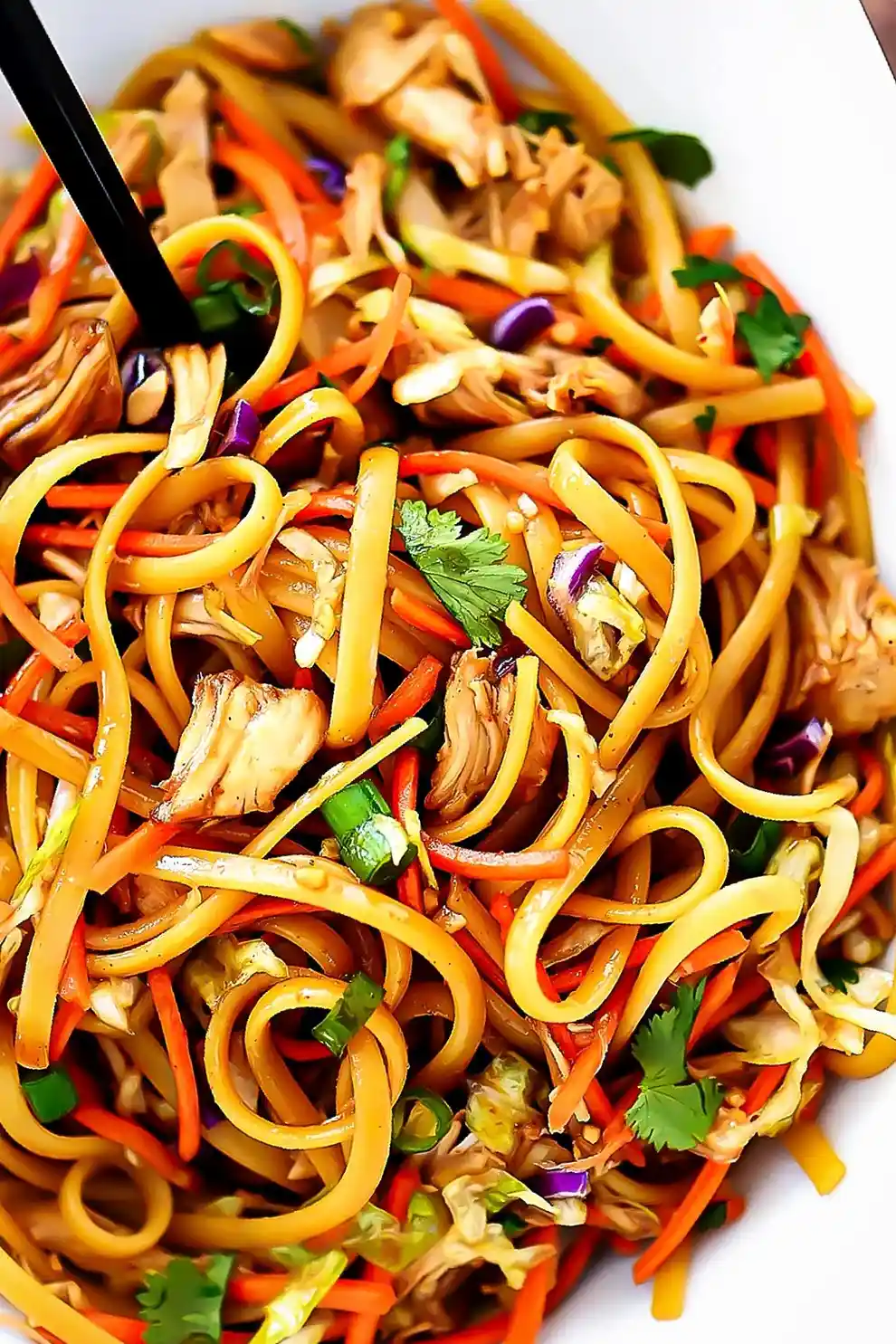
List of ingredients
- 6 ounces linguini noodles – the primary base of the dish.
- 1 cup bagged coleslaw mix – provides a fresh, crunchy texture.
- 1/2 cup shredded carrots – adds natural sweetness and color.
- 1/3 cup chopped cilantro – brings a bright, herbal note.
- 1/4 cup chopped green onions – adds a mild, pungent flavor.
- 1/3 cup chopped honey roasted peanuts – contributes a sweet, nutty crunch.
- 2 cups shredded rotisserie chicken (optional) – a convenient protein addition.
- 1/4 cup low sodium soy sauce – the savory salt base for the sauce.
- 2 tablespoons honey – adds a balanced sweetness.
- 2 tablespoons sesame oil – provides a deep, toasted aroma.
- 4 cloves minced garlic – essential for bold, aromatic flavor.
- 1/2 teaspoon red pepper flakes – adds a touch of heat, adjustable to taste.
step-by-step instructions
- Boil the Pasta: Cook linguini noodles according to the package instructions. Drain them thoroughly once they reach the desired doneness.
- Prepare the Sauce: While the noodles are cooking, whisk together the soy sauce, honey, sesame oil, minced garlic, and red pepper flakes in a small bowl.
- Coat the Noodles: Pour the prepared sauce onto the drained noodles and toss them together until every strand is evenly coated.
- Integrate Vegetables: Add the bagged coleslaw mix, shredded carrots, and shredded cilantro to the noodle mixture and mix well.
- Fold in Garnishes: Gently stir in half of the chopped green onions and honey roasted peanuts, reserving the other half for the final garnish. Add the shredded rotisserie chicken at this stage if you are using it.
- Finish and Serve: Serve the dish warm or cold. Garnish the final plates with the remaining cilantro, green onions, and chopped peanuts.
Sauce Customization and Flavor Tweaks
Using Sriracha for a Different Heat Profile
If red pepper flakes are not providing the type of heat you desire, try adding a teaspoon of Sriracha. This adds a vinegary, fermented depth to the spice level. Be sure to taste as you go to avoid overpowering the honey.
Replacing Honey with Maple Syrup for a Vegan Version
For those avoiding honey, pure maple syrup is an excellent alternative. It provides a similar viscosity and sweetness while remaining entirely plant-based. The flavor profile remains very close to the original recipe.
Using Tamari for a Gluten-Free Soy Alternative
If you need a gluten-free option, replace the low sodium soy sauce with Tamari. Tamari is typically made without wheat and offers a slightly richer, more concentrated savory taste. It blends seamlessly with the sesame oil and garlic.
Adjusting the Garlic Intensity
For a more mellow garlic flavor, you can sauté the minced garlic in a tiny bit of oil before whisking it into the sauce. This removes the raw bite while keeping the aroma. Conversely, leave it raw for a sharper, more pungent experience.
Protein Alternatives and Add-ins
Adding Sautéed Shrimp for a Seafood Variation
Sautéed shrimp pairs beautifully with these Thai flavors. Peel and devein medium shrimp, then sear them in a pan with a bit of oil until pink. Toss them into the noodles at the same time you would add the chicken.
Incorporating Firm Tofu for a Meatless Meal
Extra-firm tofu is a great substitute for chicken. Press the tofu to remove excess water, cube it, and pan-fry until the edges are golden brown. Fold the crispy tofu cubes into the noodles gently to keep them intact.
Adding Sliced Flank Steak for a Heartier Dish
For a beefier version, use thinly sliced flank steak. Sear the beef over high heat for a few minutes until caramelized. Stir the beef and its pan juices into the noodle mixture for extra depth.
Using Edamame for an Added Protein Boost
Shelled edamame adds both protein and a pop of green color. Use frozen thawed edamame and stir them in during the final mixing step. This provides a nice textural contrast to the soft noodles.
Vegetable Variations for Extra Nutrition
Incorporating Red Bell Pepper for Color and Crunch
Thinly sliced red bell peppers add a sweet crunch and vibrant color. Slice them into matchsticks to match the shape of the carrots. Mix them in with the coleslaw mix for a more diverse vegetable blend.
Adding Shredded Purple Cabbage for Visual Appeal
If your coleslaw mix is primarily green, add a handful of shredded purple cabbage. This creates a visually striking dish with deep purple hues. It also adds a slightly peppery taste that complements the sesame oil.
Using Sugar Snap Peas for Freshness
Sugar snap peas provide a juicy, crisp element to the meal. Slice them lengthwise or leave them whole if they are small. Stir them in raw for maximum crunch or blanch them for a few seconds first.
Sautéing Mushrooms for an Earthy Depth
Sliced shiitake or button mushrooms add a savory, earthy quality. Sauté them until brown before adding them to the final noodle toss. This creates a more complex flavor profile that mimics restaurant-style noodles.
Noodle Substitutions and Gluten-Free Options
Preparing Rice Noodles for an Authentic Texture
For a more traditional feel, use wide Pad Thai rice noodles. Soak them in hot water according to the package instructions rather than boiling them vigorously. This prevents them from becoming too mushy.
Using Soba Noodles for a Heartier Grain
Soba noodles made from buckwheat offer a nuttier flavor and more protein. Cook them quickly and rinse them under cold water to remove excess starch. They pair exceptionally well with the soy and sesame sauce.
Choosing Gluten-Free Pasta for Dietary Needs
Brown rice or corn-based linguini are suitable substitutes for those with gluten sensitivities. Be careful not to overcook these, as they can break apart more easily than wheat pasta. Always test for al dente texture.
Using Spaghetti when Linguini is Unavailable
Spaghetti is a perfectly acceptable substitute if you are raiding your pantry. The slightly thinner diameter allows the sauce to coat the strands effectively. Your family likely won’t notice the difference in noodle type.
Preparation and Cooking Tips
Rinsing Noodles to Prevent Sticking
If you are serving the noodles cold, rinse them under cold running water immediately after draining. This stops the cooking process and removes surface starch. It ensures the noodles stay separate and don’t clump together.
Mincing Garlic Finely for Even Distribution
Use a sharp knife or a garlic press to ensure the garlic is as fine as possible. Large chunks of raw garlic can be overpowering in a single bite. Fine mincing allows the flavor to distribute evenly throughout the sauce.
Toasting Peanuts to Intensify the Flavor
Even though honey roasted peanuts are used, a quick toss in a dry pan over medium heat can wake up the oils. Toast them for 2-3 minutes until fragrant. This adds an extra layer of depth to the garnish.
Adding Vegetables at the End to Maintain Texture
Avoid cooking the coleslaw mix or carrots. Stirring them in raw at the end ensures they stay crisp and fresh. This contrast between soft noodles and crunchy vegetables is key to the dish.
Serving and Presentation Ideas
Chilling the Dish for a Cold Pasta Salad
This recipe makes an excellent cold salad for picnics or meal prep. After mixing everything together, let it sit in the refrigerator for at least an hour. This allows the flavors to meld and the noodles to absorb the sauce.
Serving with Fresh Lime Wedges for Acidity
Squeeze a fresh lime wedge over the finished dish just before eating. The acidity of the lime cuts through the richness of the sesame oil and honey. It brightens the overall flavor profile significantly.
Pairing with Vegetable Spring Rolls
For a complete meal, serve these noodles alongside crispy vegetable spring rolls. The fried texture of the rolls complements the fresh, raw vegetables in the noodles. Use a side of sweet chili sauce for dipping.
Plating on a Large Platter for Family Style
Instead of individual bowls, pile the noodles on a large serving platter. This allows everyone to see the colorful vegetables and peanuts. Garnish the top heavily with cilantro and green onions for a professional look.
Storage and Reheating Guide
Using Airtight Glass Containers for Storage
Store leftovers in airtight glass containers to keep the vegetables from wilting. Glass helps maintain the temperature and prevents the plastic from absorbing the sesame oil scent. Press the lid down firmly to exclude air.
Reheating in the Microwave with a Splash of Water
When reheating, add a tablespoon of water or broth to the container. This creates steam that prevents the noodles from drying out. Heat in 30-second intervals and stir in between to ensure even warming.
Storing Sauce and Noodles Separately for Freshness
If you are preparing this for the next day, keep the sauce in a jar and the noodles/veg in a bowl. Toss them together right before serving. This prevents the noodles from absorbing all the sauce and becoming soggy.
Monitoring the Shelf Life in the Fridge
These noodles stay fresh for about 3 to 4 days when refrigerated. After this point, the raw vegetables may lose their crunch. Consume the dish within this window for the best quality and taste.
Make-Ahead Strategies
Preparing the Sauce Days in Advance
The sauce can be made up to a week ahead of time and stored in the refrigerator. Keep it in a sealed jar and shake well before using, as the honey may settle. This reduces your active prep time on dinner night.
Pre-chopping Aromatics for Faster Assembly
Chop your cilantro, green onions, and peanuts in one session. Store them in separate small containers or a divided meal prep box. Having these ready makes the final assembly take only a few minutes.
Cooking Pasta Early and Coating with Oil
You can boil the linguini ahead of time and toss them with a drizzle of neutral oil. This prevents them from sticking together in the fridge. When ready to eat, simply toss them with the sauce and fresh vegetables.
Transporting for Potlucks in Insulated Carriers
If taking this dish to a party, use an insulated carrier to keep it at the desired temperature. Keep the peanut garnish in a separate bag. Sprinkle the peanuts on top just before serving to ensure they stay crunchy.
Troubleshooting Common Issues
Adding Lime Juice to Balance Excess Salt
If the soy sauce makes the dish too salty, do not add more water. Instead, stir in a squeeze of fresh lime juice or a teaspoon of rice vinegar. The acidity neutralizes the perception of salt on the palate.
Whisking Sauce Thoroughly to Prevent Separation
Sesame oil and honey can sometimes separate from the soy sauce. Whisk vigorously until the mixture looks glossy and emulsified. If it still separates, stir it again immediately before pouring it over the noodles.
Cooking Pasta Al Dente to Prevent Mushiness
Cook your linguini for one minute less than the package suggests. The noodles will continue to soften as they sit in the sauce. This ensures the dish has a pleasant chew rather than being overly soft.
Adding Nut Butter to Mellow the Spice
If you added too many red pepper flakes, stir in a tablespoon of creamy peanut butter or almond butter. The fats in the nut butter neutralize the capsaicin in the peppers. This also adds a rich, creamy texture to the sauce.
Frequently Asked Questions
Can I use a different oil instead of sesame?
You can use toasted walnut oil for a similar nutty flavor, though it is less intense. Avoid using plain vegetable or canola oil, as the distinctive toasted aroma of sesame oil is a key component of the recipe.
Do I need to cook the coleslaw mix?
No, the coleslaw mix is intended to be eaten raw in this recipe. This provides a necessary crunch that contrasts with the tender noodles. Cooking the cabbage would make the dish too soft.
How do I make this dish vegan?
Replace the honey with agave nectar or maple syrup and omit the chicken. Ensure your soy sauce is a certified vegan brand. You can add tofu or chickpeas for a protein substitute.
Which rotisserie chicken is best?
A standard boneless, skinless breast or thigh meat works best. Shred the meat while it is still slightly warm for easier handling. Remove any excess skin to keep the dish feeling light and fresh.
Print
Savory Thai-Style Noodles with Chicken
- Total Time: 25 minutes
- Yield: 3 servings 1x
- Diet: General
Description
Easy Thai Noodles are fast to make and filled with authentic Asian flavor. This recipe is perfect for vegetarians and meat lovers alike.
Ingredients
- 6 ounces linguini noodles
- 1 cup bagged coleslaw mix
- 1/2 cup shredded carrots
- 1/3 cup chopped cilantro
- 1/4 cup chopped green onions
- 1/3 cup chopped honey roasted peanuts
- 2 cups shredded rotisserie chicken
- 1/4 cup low sodium soy sauce
- 2 tablespoons honey
- 2 tablespoons sesame oil
- 4 cloves minced garlic
- ½ teaspoon red pepper flakes
Instructions
- Step: Cook linguini noodles according to package instructions. Drain when done cooking.
- Step: While noodles are cooking whisk together in a small bowl the soy sauce, honey, sesame oil, garlic and red pepper flakes.
- Step: Pour sauce onto drained noodles and toss together. Add coleslaw mix, shredded carrots and shredded cilantro to noodle mixture and mix together. Gently stir in half of chopped cilantro, green onions and peanuts, reserving the other half for garnish. (Add the shredded rotisserie chicken now, if using.)
- Step: Serve warm or cold and garnish with remaining cilantro, green onions and chopped peanuts.
Notes
This recipe makes about 3 to 4 servings (not huge portions). You can easily double this if you want more. Store any leftovers in the refrigerator and eat cold or reheat in the microwave and garnish with desired toppings.
- Prep Time: 15 minutes
- Cook Time: 10 minutes
- Category: Main Course
- Method: Boiling
- Cuisine: Thai
Nutrition
- Serving Size: 1 serving
- Calories: 567 kcal
- Sugar: 12 g
- Sodium: 1200 mg
- Fat: 20 g
- Saturated Fat: 4 g
- Unsaturated Fat: 16 g
- Trans Fat: 0 g
- Carbohydrates: 50 g
- Fiber: 4 g
- Protein: 35 g
- Cholesterol: 85 mg