
This rich and savory dish combines spicy Cajun flavors with a velvety cream sauce for a satisfying meal. It is designed for quick preparation, bringing bold restaurant-style taste to your table in just 20 minutes.
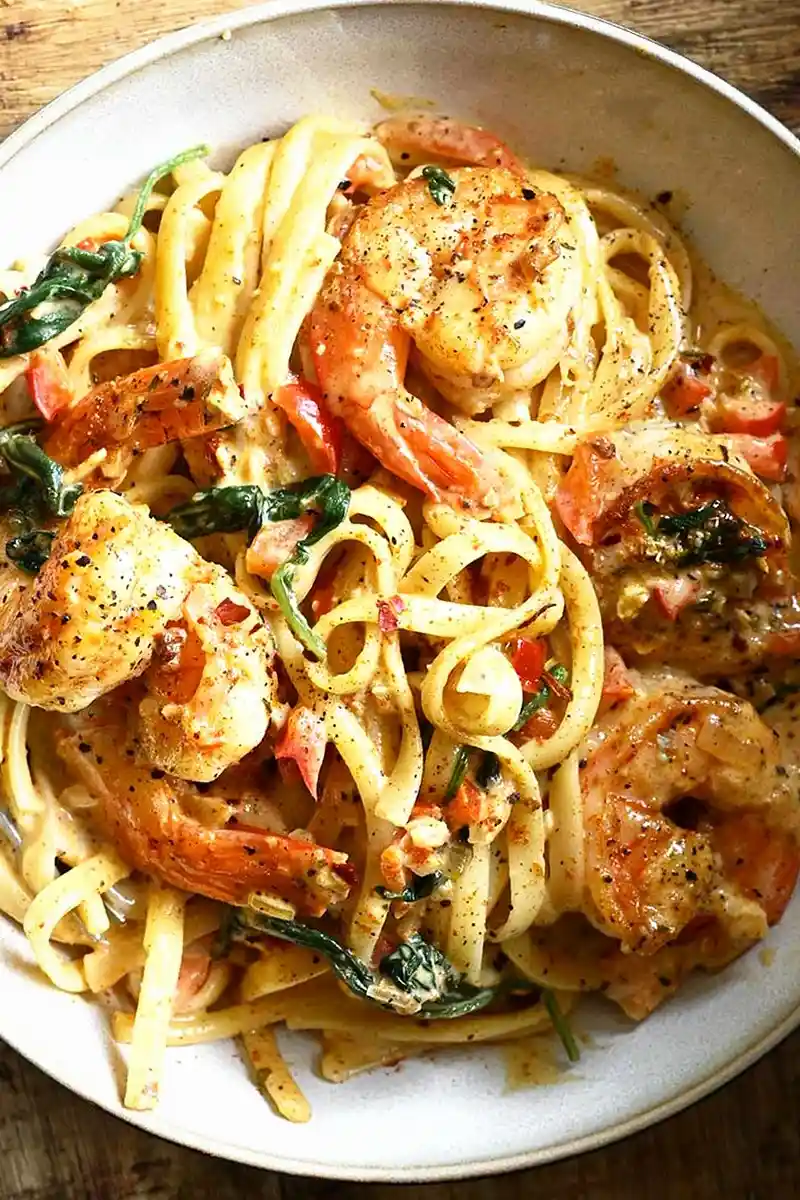
List of ingredients
- 10.5 ounces linguine – use a high-quality durum wheat pasta for best texture.
- 14 ounces shrimp – peeled and deveined for easy eating.
- 2 tbsp cajun seasoning – divided between shrimp and sauce.
- 1 tsp salt – divided for seasoning and pasta water.
- 1 tsp black pepper – divided for shrimp and sauce.
- 1 tsp garlic powder – used to enhance the shrimp flavor.
- 2 tbsp olive oil – divided for searing and sautéing.
- 1 tbsp butter – adds richness to the vegetable base.
- 1 bell pepper – diced into small, uniform pieces.
- 1 small brown onion – finely chopped to blend into the sauce.
- 4 garlic cloves – minced for a pungent, aromatic base.
- 1 cup cream (20% fat) – provides the creamy texture.
- 2 ounces baby spinach – adds color and nutrients.
- 2 tbsp lemon juice – cuts through the richness of the cream.
- 1 ounce Parmesan – grated for a salty, nutty finish.
- red pepper flakes – for optional extra heat.
- freshly ground black pepper – for final seasoning.
step-by-step instructions
- Prepare the components: Peel and devein the shrimp, then pat them completely dry with a paper towel. In a bowl, toss the shrimp with 1 tablespoon of Cajun seasoning, 1/2 tsp salt, 1/2 tsp black pepper, 1 tsp garlic powder, and 1 tablespoon of olive oil. Dice your bell pepper, mince the garlic, and chop the onion.
- Boil the pasta: Cook the linguine in a large pot of boiling water that has been generously salted. Follow the package directions to ensure the pasta is al dente.
- Sear the shrimp: Heat butter and the remaining olive oil in a large nonstick skillet over medium-high heat. Place the shrimp in a single layer and sear for 1 minute per side. Transfer the cooked shrimp to a clean plate to avoid overcooking.
- Sauté the vegetables: In the same skillet, add the diced bell pepper, chopped onion, and minced garlic. Sauté for about 5 minutes, stirring occasionally until softened. Stir in the remaining tablespoon of Cajun seasoning, salt, and black pepper.
- Deglaze the pan: Before draining the pasta, scoop out 1 cup of the starchy cooking water. Pour 1/2 cup of this water into the skillet. Reduce the heat and simmer for 2 minutes, using a wooden spoon to scrape up the browned bits from the bottom of the pan.
- Build the sauce: Pour in the cream and bring the mixture to a gentle simmer. Add the baby spinach and stir just until the leaves begin to wilt. Stir in the grated Parmesan cheese and the lemon juice.
- Combine and serve: Drain the pasta and toss it directly into the sauce. Add the seared shrimp back into the pan and stir well. If the sauce is too thick, add a splash of the remaining reserved pasta water. Taste and adjust the salt, then garnish with red pepper flakes and freshly ground black pepper.
Guide to Customizing Your Cajun Spice Blend
Creating a Homemade Cajun Mix
If you do not have store-bought seasoning, you can make your own. Combine 2 tablespoons of smoked paprika, 2 teaspoons each of onion powder and garlic powder, and 1 teaspoon each of dried thyme, dried oregano, salt, black pepper, cayenne pepper, chili powder, and ground cumin. Store this mixture in an airtight jar in a cool, dark place.
Adjusting the Heat Level
Cajun seasoning varies significantly in spiciness between brands. To reduce the heat, omit the cayenne pepper from your homemade blend or choose a mild commercial version. For those who prefer more fire, add extra red pepper flakes during the final tossing stage of the recipe.
Professional Tips for Perfect Shrimp
Preventing Rubberiness
Shrimp cook very quickly and can become tough if overexposed to heat. Sear them quickly over medium-high heat and remove them from the pan as soon as they turn opaque. Adding them back only at the very end prevents them from overcooking while the sauce simmers.
The Importance of Drying Shrimp
Patting shrimp dry with paper towels before seasoning is crucial. Excess moisture creates steam in the pan, which prevents the shrimp from searing and developing a golden-brown crust. A dry surface ensures the oil and spices adhere better to the seafood.
Selecting the Right Shrimp Size
Medium or large shrimp work best for this pasta dish. Jumbo shrimp may require slightly longer searing times, while small shrimp can disappear into the sauce and overcook almost instantly. Aim for consistency in size for even cooking.
Pasta and Sauce Mastery
Utilizing Starchy Pasta Water
The reserved pasta water is a secret weapon for achieving a glossy sauce. The starch released from the linguine helps emulsify the fat from the cream and butter, binding the sauce to the noodles. Always reserve more water than you think you need before draining the pot.
Choosing Alternative Pasta Shapes
While linguine is traditional for seafood pasta, other long noodles like fettuccine or spaghetti work equally well. For a different texture, use penne or rigatoni, as the hollow centers can capture more of the creamy sauce and diced vegetables.
Managing Sauce Consistency
If the sauce becomes too thick after adding the Parmesan, do not add more cream, which can dilute the flavor. Instead, whisk in small amounts of pasta water until the desired silkiness is achieved. This maintains the intensity of the Cajun spices.
Vegetable and Protein Variations
Adding More Greens
While baby spinach is used here, you can substitute it with kale or Swiss chard for a heartier texture. If using kale, add it a few minutes earlier than spinach, as it takes longer to soften. Chopped parsley added at the end also provides a fresh, herbal contrast.
Incorporating Different Vegetables
To add more depth, consider adding sliced mushrooms or diced zucchini to the sauté phase. Mushrooms provide an earthy umami flavor that complements the smokiness of the Cajun seasoning. Ensure these vegetables are sautéed until their moisture has evaporated before adding the cream.
Switching the Protein
This recipe works well with sliced chicken breast instead of shrimp. If using chicken, sear the pieces in the skillet first, ensuring they are cooked through before removing them to the plate. The cooking time for chicken will be longer than that of shrimp.
Serving and Presentation Ideas
Best Side Dish Pairings
A crisp green salad with a light vinaigrette balances the richness of the cream sauce. Roasted asparagus or steamed broccoli also provide a healthy contrast to the decadent pasta. For a more filling meal, serve the dish with toasted garlic bread to scoop up the remaining sauce.
Garnishing for Visual Appeal
Freshly chopped parsley or sliced green onions add a pop of color to the orange-hued sauce. A thin slice of fresh lemon placed on the side of the plate allows guests to add extra acidity to their liking. A final sprinkle of Parmesan cheese adds a professional touch.
Storage and Reheating Instructions
Storing Leftovers Safely
Place leftover pasta in an airtight container and refrigerate immediately. It will stay fresh for up to two days. Note that the pasta will absorb the sauce over time, making the dish appear drier when cold.
Reheating for Best Texture
Avoid reheating this dish in the microwave if possible, as the cream may separate. Instead, place the pasta in a skillet over low heat. Add a splash of milk or water to loosen the sauce and stir gently until heated through.
Freezing Considerations
Cream-based sauces often break or grain when frozen and thawed. It is recommended to eat this dish fresh or refrigerated. If you must freeze it, undercook the pasta slightly so it does not become mushy upon reheating.
Common Troubleshooting
What to do if the sauce breaks?
If the sauce separates and looks oily, it is usually due to excessive heat. Lower the temperature and whisk in a tablespoon of warm pasta water or a small knob of cold butter to bring the emulsion back together.
Why is my sauce too salty?
Cajun seasoning and Parmesan cheese both contain significant amounts of salt. If the dish is too salty, add a squeeze of extra lemon juice or a teaspoon of sugar to balance the flavors. You can also stir in a handful of unsalted spinach.
How to fix bland flavors?
If the dish lacks punch, increase the acidity. A small addition of lemon juice or a pinch more Cajun seasoning can brighten the flavor profile. Ensure the shrimp were seared well, as the browned bits (fond) provide the base flavor for the sauce.
Frequently Asked Questions
Can I use a different type of cream?
Yes, you can use heavy cream for a thicker sauce or soy cream for a dairy-free alternative. If using a lighter cream, be careful not to boil the sauce too vigorously, as lower-fat creams are more prone to curdling.
Do I have to peel the shrimp?
Yes, for this specific pasta style, peeled and deveined shrimp are necessary. This ensures the seafood is easy to eat and allows the seasoning to penetrate the meat more effectively during the searing process.
Is this dish very spicy?
The spice level is moderate and depends on your specific Cajun seasoning. The cream and Parmesan act as buffers that mellow out the heat, making it accessible for most palates while still providing a warm, smoky flavor.
Can I make this recipe ahead of time?
You can prep the vegetables and season the shrimp in advance. However, the final assembly should happen quickly. If you cook it ahead of time, the pasta may become overcooked and the sauce will thicken significantly.
Print
Creamy Cajun Shrimp Pasta
- Total Time: 20 minutes
- Yield: 4 servings 1x
- Diet: General
Description
Creamy cajun shrimp pasta. Super delicious, rich and surprisingly easy to make. Imagine smoky, garlicky shrimp and tender bell pepper served in an ultra creamy, slightly spicy Cajun sauce. Ready in 20 minutes!
Ingredients
- 10.5 ounces linguine
- 14 ounces shrimp (peeled and deveined)
- 2 tbsp cajun seasoning (divided)
- 1 tsp salt
- 1 tsp black pepper
- 1 tsp garlic powder
- 2 tbsp olive oil (divided)
- 1 tbsp butter
- 1 bell pepper (diced)
- 1 small brown onion (finely chopped)
- 4 garlic cloves (minced)
- 1 cup cream (20% fat)
- 2 ounces baby spinach
- 2 tbsp lemon juice
- 1 ounce Parmesan (grated)
- red pepper flakes (for serving)
- freshly ground black pepper (for serving)
Instructions
- Prep: Get all the prep done before you start cooking. Peel and devein the shrimp, pat dry with a paper towel. Combine with 1 tablespoon Cajun seasoning, ½ tsp salt, ½ black pepper, 1 teaspoon garlic powder and 1 tablespoon oil. Set aside. Dice the bell pepper, mince the garlic and finely chop the onion.
- Boil: Cook linguine according package directions in a large pot of generously salted boiling water.
- Sear: In the meantime, heat the butter and the remaining oil in a large nonstick skillet over medium high. Place the shrimp in a single layer, sear for 1 minute. Flip and sear the other side, 1 minute. Transfer to a clean plate.
- Sauté: Add bell pepper, onion and garlic, sauté for 5 minutes, stirring occasionally. Stir in the remaining Cajun seasoning, salt and black pepper. Scoop up 1 cup pasta cooking water. Deglaze the skillet with ½ cup cooking water, reduce the heat and simmer for 2 minutes while scraping up the brown bits on the bottom of the skillet with a wooden spoon.
- Simmer: Pour in cream and bring to a simmer. Add spinach and stir just until it starts to wilt. Next, stir in grated Parmesan and add lemon juice.
- Combine: When ready, drain the pasta and toss with sauce. Add shrimp, give it a good stir and add a splash of the remaining cooking water. Taste and adjust salt. Finish off with freshly ground black pepper and red pepper flakes. Serve immediately, enjoy!
Notes
The pasta is best eaten right away, as the sauce thickens over time. You can add an extra splash of the reserved cooking water to loosen it. Leftovers can be stored in airtight containers for up to 2 days in the fridge.
- Prep Time: 10 minutes
- Cook Time: 10 minutes
- Category: Main Course
- Method: Sautéing
- Cuisine: American
Nutrition
- Serving Size: 1 serving
- Calories: 678 kcal
- Sugar: 6 g
- Sodium: 291 mg
- Fat: 35 g
- Saturated Fat: 18 g
- Unsaturated Fat: 15 g
- Trans Fat: 0.1 g
- Carbohydrates: 64 g
- Fiber: 5 g
- Protein: 35 g
- Cholesterol: 239 mg