
This beef chuck roast is a simple, slow-cooked meal that requires minimal preparation. It uses a savory blend of ranch and onion seasonings to create tender, flavorful meat.
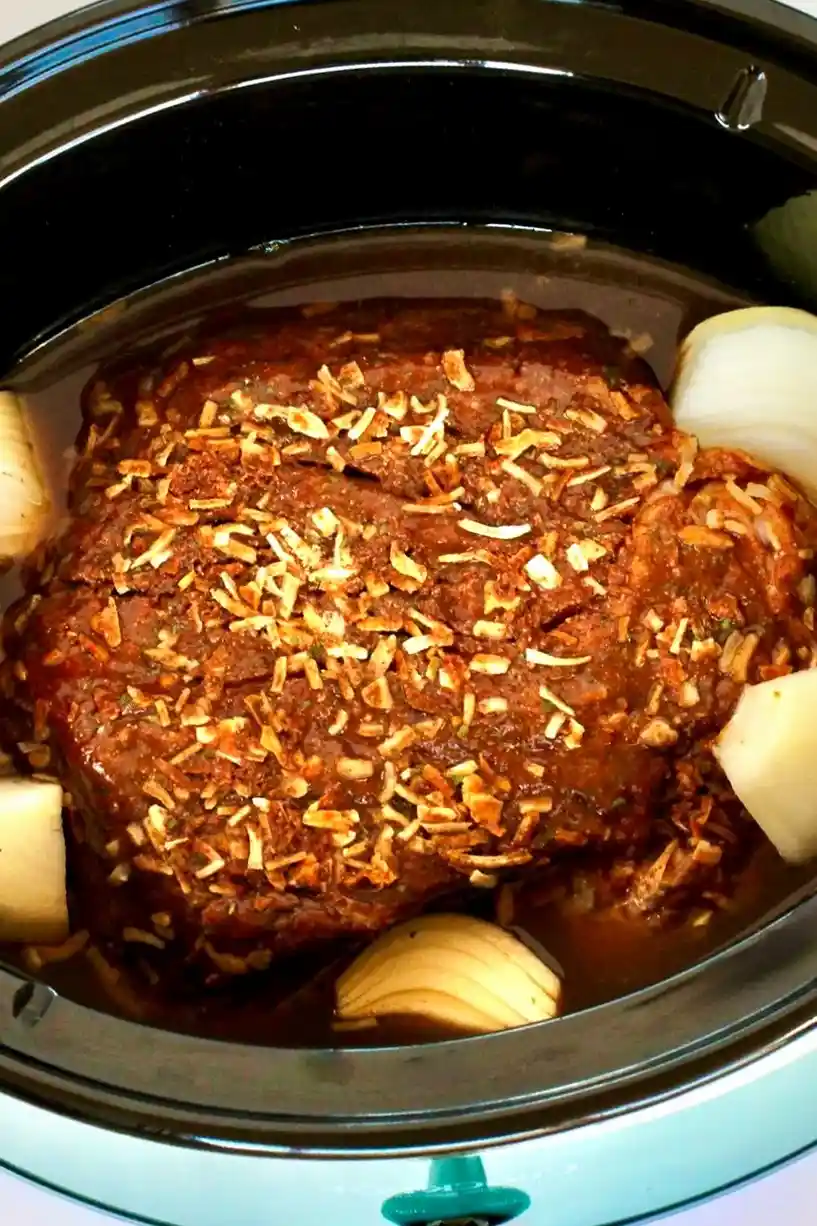
List of ingredients
- 3 lbs. Beef Chuck Roast – choose a cut with visible marbling for best results.
- 1 oz. Onion Soup packet – provides a deep, salty, and savory base.
- 1 oz. Ranch Dressing Mix – adds a creamy, herby dimension to the rub.
- 12 oz. Beef Broth – keeps the meat moist and creates a flavorful base for gravy.
- 1 Tsp. Paprika – adds a subtle warmth and enhances the color of the beef.
- 1 large White Onion, quartered – adds aromatic sweetness as it breaks down.
step-by-step instructions
- Gather Ingredients: Collect all measured seasonings and the beef roast.
- Prepare Rub: Mix the onion soup packet, ranch dressing mix, and paprika in a small bowl.
- Prep Beef: Pat the roast dry with paper towels and remove any twine or netting.
- Add Liquid: Pour the beef broth into the bottom of a 6-quart slow cooker.
- Season Roast: Place the beef in the pot and rub the seasoning mixture generously over all sides.
- Add Aromatics: Place the quartered onion pieces around the sides of the roast.
- Slow Cook: Cover the pot and cook on the LOW setting for 6 to 7 hours.
- Rest and Slice: Remove the meat to a platter and let it rest before slicing.
- Serve: Slice across the grain and serve with a side of mashed potatoes.
Choosing the Right Cut of Beef
Prioritize Beef Chuck Roast
The chuck roast comes from the shoulder area of the cow, which contains a high amount of connective tissue. When cooked slowly, this tissue breaks down into gelatin, making the meat incredibly tender. This is the ideal cut for slow cooking because it resists drying out over long periods.
Inspect the Intramuscular Marbling
Look for white flecks of fat distributed throughout the red muscle of the meat. This marbling is essential because it bastes the meat from the inside as it melts. A roast with more marbling will produce a more succulent and flavorful result than a lean cut.
Avoid Leaner Cuts like Round Roast
Lean cuts like bottom round or eye of round lack the fat necessary for slow cooking. These cuts often become tough or stringy when subjected to long cooking times. Stick to the chuck to ensure the meat remains fork-tender.
Check for Proper Meat Grading
Choose Choice or Prime grades if available to ensure better fat distribution. Higher grades generally offer more consistent tenderness and a richer flavor profile. This reduces the risk of the meat becoming chewy regardless of the cooking time.
Optimizing the Slow Cooking Process
The Importance of the Low Heat Setting
Cooking on low for a longer duration allows the collagen to melt slowly without tightening the muscle fibers. This results in a more tender texture compared to the high setting. High heat can sometimes cause the proteins to seize, leading to a drier roast.
Maintaining Internal Temperature
Avoid opening the lid of the slow cooker during the cooking process. Every time the lid is lifted, a significant amount of heat and steam escapes, which can add 15 to 20 minutes to the cook time. Keep the seal tight to maintain a consistent environment.
Adjusting for Roast Size
While 3 lbs is standard, larger roasts may require an additional hour of cooking time. Always check for fork-tenderness rather than relying solely on the clock. If the meat resists when pierced, continue cooking in 30-minute increments.
Selecting the Correct Pot Size
A 6-quart slow cooker is recommended for a 3 lb roast to allow for proper heat circulation. If the pot is too small, the meat may cook unevenly. If it is too large, the liquid may evaporate too quickly, potentially drying out the bottom of the roast.
Flavor Enhancements and Modifications
Developing a Rich Pan Gravy
Strain the leftover cooking liquid into a saucepan and bring it to a simmer. Whisk in a slurry of equal parts cornstarch and cold water to thicken the sauce. Simmer for a few minutes until it reaches a glossy, thick consistency.
Incorporating Root Vegetables
Carrots and potatoes can be added to the pot for a complete meal. Add these vegetables during the last 3 to 4 hours of cooking to prevent them from becoming mushy. Place them around the beef so they soak up the savory juices.
Substituting for Gluten-Free Needs
Check the labels on the onion soup and ranch packets for gluten-containing thickeners. You can replace these with certified gluten-free versions or make your own blends using onion powder, garlic powder, dried parsley, and salt. This ensures the dish is safe for those with sensitivities.
Adapting the Roast for Tacos
Once the roast is cooked, shred the meat using two forks instead of slicing it. Simmer the shredded beef in the remaining pot juices to concentrate the flavor. Serve in warm tortillas with fresh cilantro, diced onions, and lime wedges.
Adding Umami Boosters
For a deeper flavor, add a tablespoon of Worcestershire sauce or a teaspoon of soy sauce to the beef broth. These ingredients introduce glutamates that enhance the savory notes of the beef. This creates a more complex flavor profile without altering the primary taste.
Serving and Pairing Recommendations
The Best Starchy Pairings
Loaded mashed potatoes are a classic choice because they soak up the savory roast juices. Alternatively, try serving the beef over buttered egg noodles or a bed of wild rice. These options provide a neutral base that balances the strong flavors of the ranch and onion seasoning.
Balancing with Acidic Sides
Serve the roast with a side of steamed broccoli or a crisp green salad with a vinaigrette. The acidity of a vinegar-based dressing helps cut through the richness of the beef. This creates a more balanced palate during the meal.
Choosing the Right Bread
Garlic bread or a toasted baguette is perfect for mopping up the remaining sauce on the plate. A crusty sourdough also works well to add a slight tang to the dish. Ensure the bread is toasted to provide a texture contrast to the tender meat.
Using Fresh Garnishes
Sprinkle freshly chopped parsley or chives over the sliced beef before serving. This adds a pop of color and a fresh, grassy note to the heavy flavors. A sprinkle of cracked black pepper can also provide a sharp finish.
Storage and Food Safety
Proper Refrigeration Methods
Allow the roast to cool slightly before transferring it to an airtight container. Store the sliced meat and the cooking juices separately to maintain the texture of the beef. Refrigerate immediately and consume within 3 to 4 days.
Freezing for Long Term Storage
Place the cooled beef and gravy in a freezer-safe bag, removing as much air as possible. The juices act as a protective barrier, preventing freezer burn on the meat. The roast can be stored in the freezer for up to 3 months.
Best Reheating Techniques
To keep the meat moist, reheat it in a covered dish in the oven at 325 degrees Fahrenheit. Add a splash of beef broth to the pan to replenish moisture. Avoid over-microwaving, as this can make the beef rubbery.
Safe Cooling Practices
Do not leave the roast in the slow cooker on ‘warm’ for more than two hours after cooking. Transfer the meat to the fridge quickly to avoid the temperature danger zone. This prevents the growth of harmful bacteria.
Troubleshooting Common Issues
Resolving Tough or Rubbery Meat
If the meat is tough, it is likely undercooked and has not yet reached the temperature where collagen breaks down. Return it to the slow cooker for another hour on low. Conversely, if it is dry and crumbly, it may have been overcooked.
Correcting Excessive Liquid
If the sauce is too thin, transfer it to a skillet and boil it down to reduce the volume. This concentrates the flavor and thickens the consistency. You can also whisk in a small amount of butter for a richer finish.
Adjusting Salt Levels
Since the soup and ranch packets are salty, avoid adding extra salt until the end of the process. If the final result is too salty, stir in a teaspoon of sugar or a splash of apple cider vinegar. This helps neutralize the saltiness on the tongue.
Preventing Meat Dryness
Ensure the roast is fully submerged or well-coated in the broth and rub. Slicing the meat against the grain also makes it feel more tender in the mouth. Never skip the resting period after cooking, as this allows juices to redistribute.
Frequently Asked Questions
Can I use water instead of beef broth?
Using water will keep the meat moist, but you will lose a significant amount of flavor. Beef broth provides an essential savory foundation that water cannot replicate.
Should I sear the meat in a pan first?
Searing the meat is optional but can add a deeper brown color and a caramelized flavor. If you choose to sear, do it in a hot skillet with oil before placing the beef in the slow cooker.
Can I cook this on the High setting?
You can, but it will take 3 to 4 hours and may result in slightly tougher meat. The low setting is highly recommended for the most tender, fork-pull-apart texture.
How do I know when the roast is perfectly done?
The roast is done when it can be easily pierced with a fork and the meat pulls away without resistance. It should feel tender and yield easily to a knife.
What if I don’t have a 6-quart slow cooker?
You can use a smaller cooker, but you may need to trim the roast to fit or reduce the amount of broth. Ensure the meat is not packed too tightly to allow heat to circulate.
Print
Savory Slow Cooker Beef Chuck Roast
- Total Time: 6 hours 5 minutes
- Yield: 12 servings 1x
- Diet: General
Description
You’re about to transform your chuck roast into a divinely flavorful family feast! This fork tender, comforting Beef Chuck Roast Recipe serves up pure pot roast perfection!
Ingredients
- 3 lbs. Beef Chuck Roast
- 1 oz. Lipton Recipe Secrets Onion Soup packet
- 1 oz. Hidden Valley Ranch Dressing Mix packet
- 12 oz. Swanson Beef Broth
- 1 Tsp. Paprika
- 1 large White Onion, quartered
Instructions
- Step: Gather your ingredients.
- Step: Add dry ingredients to small bowl and mix together for rub.
- Step: Pat Roast with paper towels to dry and remove any strings or netting.
- Step: Pour Beef Broth into Crock Pot.
- Step: Carefully place Roast in Crock Pot and generously add the rub over top and sides of Roast.
- Step: Add in quartered White Onion around the Roast.
- Step: Cook on LOW for 6-7 hours, or until tender.
- Step: When done, remove Roast from Crock Pot, place on serving platter and slice.
- Step: Serve with a side of Loaded Mashed Potatoes.
Notes
To get the best pot roast flavor, consider picking a Chuck Roast with a little more fat. This will result in more tender meat and better flavor.
- Prep Time: 5 minutes
- Cook Time: 6 hours
- Category: Entree
- Method: Slow Cooking
- Cuisine: American
Nutrition
- Serving Size: 1 serving
- Calories: 410 kcal
- Sugar: 4 g
- Sodium: 750 mg
- Fat: 22 g
- Saturated Fat: 10 g
- Unsaturated Fat: 12 g
- Trans Fat: 1.5 g
- Carbohydrates: 11 g
- Fiber: 2 g
- Protein: 31 g
- Cholesterol: 105 mg