
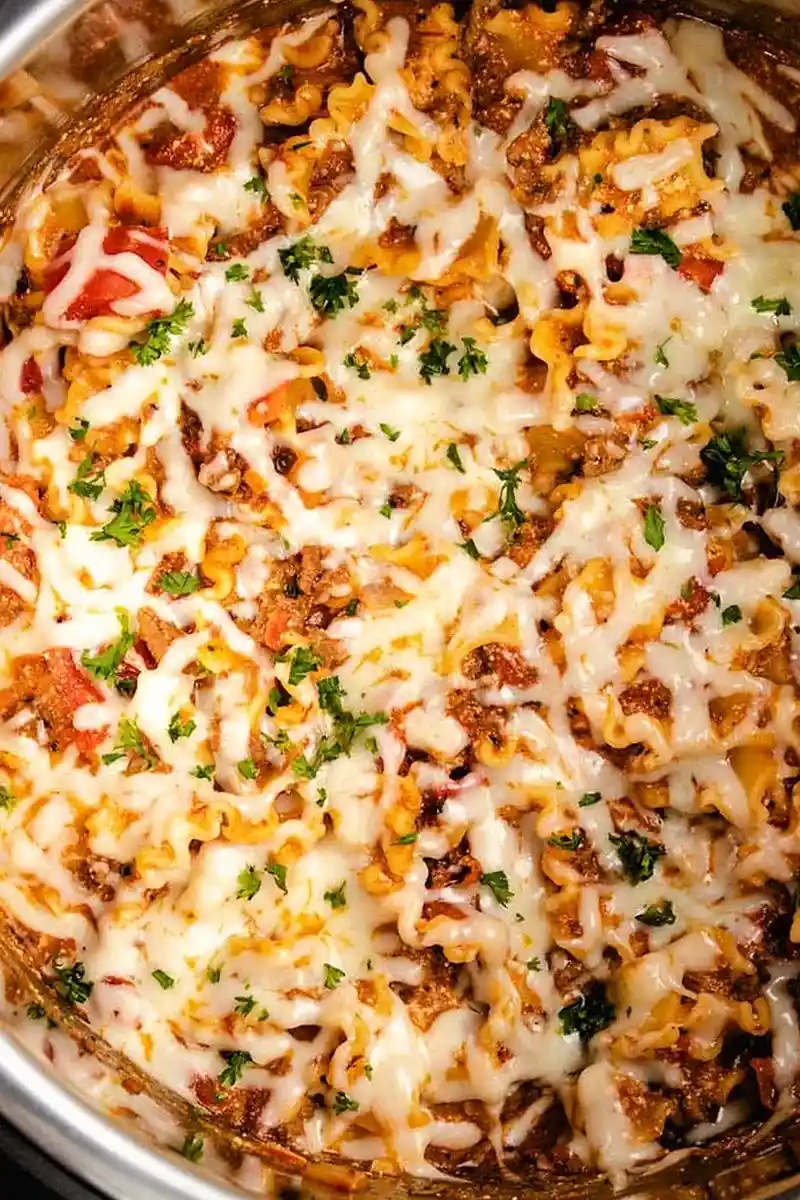
This simplified lasagna method brings all the comforting layers of a traditional baked dish to your table in a fraction of the time. By using an electric pressure cooker, you achieve perfectly tender noodles and a rich, meaty sauce in one single pot. It is an ideal solution for busy weeknights when you crave hearty Italian-inspired flavors without the hassle of boiling multiple pots or layering ingredients in a baking dish.
List of ingredients
- olive oil (optional, to sauté very lean ground beef)
- 1 lb lean ground beef
- ¼ teaspoon salt
- a few turns freshly ground black pepper
- 1 yellow onion, diced
- 5 cloves garlic, minced
- 3 cups chicken broth
- 22 oz jar marinara sauce
- 1 15oz can diced tomatoes
- 1 teaspoon dried basil
- 1 teaspoon dried parsley
- ½ teaspoon onion powder
- ½ teaspoon oregano
- ¼ teaspoon red pepper flakes (optional)
- 10-12 oz short Mafalda pasta (mini lasagna noodles)
- 1 cup ricotta cheese
- 1 cup freshly grated mozzarella cheese
- fresh parsley and parmesan cheese for garnish (optional)
step-by-step instructions
- Step: Turn on the Sauté function on the Instant Pot. When the screen says “hot” add the beef and season it with salt and pepper. Sauté until almost cooked through, breaking the beef into smaller pieces, then add the onion and garlic. Continue to cook until the beef is browned and the onion is softened. Drain grease if needed.
- Step: Turn off the Sauté function and add a small amount of broth. Use a flat-bottomed spatula to deglaze the bottom of the insert by scraping up any bits of food that are stuck to the bottom.
- Step: Add the remaining broth, then layer on the marinara sauce, diced tomatoes, basil, parsley, onion powder, oregano and red pepper flakes. Evenly layer the pasta on top and push them down into the liquid (it doesn’t need to be fully submerged). Do not stir.
- Step: Close the lid and set the vent to sealing. Pressure cook on Manual High pressure for 4 minutes. It will take about 15 minutes to come to pressure.
- Step: At the end of cooking time, do a controlled quick release of the pressure. Open the lid and give it a stir, then mix in the ricotta cheese and top with grated mozzarella. Set the lid askew on the pot for a few minutes to melt the cheese.
- Step: Serve immediately with a fresh parsley garnish, if desired.
Strategic Pointers for Success
Maintain Consistent Pressure
Ensure that the liquid base is thin enough to allow the pressure cooker to build steam efficiently. If you find the sauce is too thick, increase the broth slightly, but always keep the ratio of liquid to pasta in mind to avoid a burn warning. The moisture released from the tomatoes also contributes significantly to the final consistency of the meal.
Manage Pasta Ratios
Using the correct weight of pasta is critical because different shapes absorb varying amounts of liquid. Using 10 ounces of noodles will yield a saucier, looser texture, while 12 ounces will result in a firmer, more traditional consistency. Adjusting these amounts based on your preference for how much liquid you want left in the pot is a simple way to customize the dish.
Preventing the Burn Message
The golden rule for this recipe is to avoid stirring once the pasta and tomato sauce have been added to the pot. Keeping the heavier ingredients at the top and the thinner broth at the bottom prevents the starch from scorching against the heating element. Always verify that you have deglazed the pot properly after sautéing the meat.
Customizations and Ingredient Swaps
Alternative Cheese Varieties
If you prefer a different flavor profile, you can easily substitute the ricotta with cottage cheese, which offers a similar creamy texture but with a slightly higher protein content. For a more intense cheese experience, consider mixing a tablespoon of freshly grated Parmesan or Pecorino Romano into the sauce before adding the mozzarella topping.
Selecting Different Proteins
While beef is traditional, ground turkey or chicken works exceptionally well in this recipe because they absorb the savory herbs and spices of the marinara sauce. Ensure that if you use a very lean poultry, you add a drizzle of olive oil to the pot during the initial browning stage to keep the meat tender and prevent it from sticking to the surface.
Adapting Other Pasta Shapes
If you cannot source Mafalda noodles, opt for other short, textured shapes like rotini, fusilli, or farfalle. These shapes have ridges that effectively trap the sauce, ensuring every bite is flavorful. Avoid using long noodles like spaghetti or linguine, as they tend to clump together during the pressure cooking process and will not yield the same structural result.
Serving and Presentation
Enhancing the Final Plate
Before serving, garnish the dish with a generous handful of freshly chopped parsley to add a bright, herbal pop of color. If you are serving a crowd, a side dish of crusty toasted bread helps soak up the extra sauce. Serving this directly from the pot is perfectly acceptable, but transferring it to a large shallow serving bowl makes it easier to portion out the melted cheese layers evenly.
Pairing Suggestions
Because this is a rich and savory main course, it pairs beautifully with light, acidic sides. A crisp green salad dressed with a simple vinaigrette provides a nice contrast to the heaviness of the cheese and meat. Steamed green beans or roasted asparagus are also excellent choices that add texture and nutritional balance to your meal.
Storage and Reheating
Proper Refrigeration Techniques
Transfer any leftovers into an airtight container once the dish has cooled to room temperature. It will remain safe to consume in the refrigerator for up to four days. Note that the pasta will continue to absorb the sauce as it sits, so if you notice it has thickened upon opening, simply add a splash of water or broth when you reheat it.
Reviving Leftovers
When reheating individual portions in the microwave, add a teaspoon of water to the container and cover it loosely to retain steam. Stir the dish every sixty seconds to ensure the heat is distributed evenly throughout the center. For stovetop reheating, place the lasagna in a small saucepan over medium-low heat, stirring frequently and adding a tablespoon of broth to reconstitute the sauce.
Planning Your Weekly Meals
This dish is an excellent candidate for making ahead. If you intend to eat it later in the week, you can slightly under-cook the pasta by one minute if you plan on reheating the entire batch later, as the heat from the reheating process will continue to soften the noodles. This ensures the texture remains perfect even after the dish has been chilled.
Common Queries
Can I double the recipe size?
Yes, you can double the recipe in an 8-quart or larger pressure cooker. Ensure you do not exceed the fill line marked on the inside of your pot. The cook time remains the same, but the time it takes to build pressure will increase due to the larger volume of ingredients.
Why did my pasta come out too firm?
This usually happens if the pasta was not submerged well enough or if there was not enough thin liquid. Remember that the pasta needs to be pushed into the broth to hydrate correctly. If you find the pasta is consistently too firm, you can let the pot sit for a natural release of five minutes before flipping the vent to finish.
Is it possible to use frozen meat?
While this recipe is written for fresh or thawed meat, you can use frozen ground beef if you have enough time to brown it thoroughly in the Sauté function. Break the block apart as it thaws in the hot pot. It will take significantly longer to reach the “hot” state, but it is safe to proceed once it is fully browned and the onions have softened.
Does the type of broth matter?
The chicken broth adds a depth of savory flavor that complements the tomatoes and meat. You can substitute it with vegetable broth if you prefer, or even water. If using water, ensure you taste the sauce before serving and add a pinch of salt if necessary, as commercial broths often contain added sodium that water lacks.
Print
Instant Pot Lazy Lasagna
- Total Time: 34 minutes
- Yield: 6 servings 1x
- Diet: High Protein
Description
The easiest lasagna ever! Made with layers of meat, noodles, sauce, and two types of cheese, it’s a quick and easy one-pot meal that captures all the classic flavors with minimal effort.
Ingredients
- olive oil (optional, to sauté very lean ground beef)
- 1 lb lean ground beef
- ¼ teaspoon salt
- a few turns freshly ground black pepper
- 1 yellow onion, diced
- 5 cloves garlic, minced
- 3 cups chicken broth
- 22 oz jar marinara sauce
- 1 15oz can diced tomatoes
- 1 teaspoon dried basil
- 1 teaspoon dried parsley
- ½ teaspoon onion powder
- ½ teaspoon oregano
- ¼ teaspoon red pepper flakes (optional)
- 10–12 oz short Mafalda pasta (mini lasagna noodles)
- 1 cup ricotta cheese
- 1 cup freshly grated mozzarella cheese
- fresh parsley and parmesan cheese for garnish (optional)
Instructions
- Step: Turn on the Sauté function on the Instant Pot. When the screen says “hot” add the beef and season it with salt and pepper. Sauté until almost cooked through, breaking the beef into smaller pieces, then add the onion and garlic. Continue to cook until the beef is browned and the onion is softened. Drain grease if needed.
- Step: Turn off the Sauté function and add a small amount of broth. Use a flat-bottomed spatula to deglaze the bottom of the insert by scraping up any bits of food that are stuck to the bottom.
- Step: Add the remaining broth, then layer on the marinara sauce, diced tomatoes, basil, parsley, onion powder, oregano and red pepper flakes. Evenly layer the pasta on top and push them down into the liquid (it doesn’t need to be fully submerged). Do not stir.
- Step: Close the lid and set the vent to sealing. Pressure cook on Manual High pressure for 4 minutes. It will take about 15 minutes to come to pressure.
- Step: At the end of cooking time, do a controlled quick release of the pressure. Open the lid and give it a stir, then mix in the ricotta cheese and top with grated mozzarella. Set the lid askew on the pot for a few minutes to melt the cheese.
- Step: Serve immediately with a fresh parsley garnish, if desired.
Notes
Pasta substitution: you can substitute 12 ounces of any short pasta. If using other shapes, do not use 10 ounces, as Mafalda noodles absorb more liquid than other varieties. Pasta cook time calculation: use the lowest cook time on the package divided by 2. If it is an odd number, round down and divide by 2.
- Prep Time: 10 minutes
- Cook Time: 4 minutes
- Category: Main Course
- Method: Pressure Cooking
- Cuisine: American, Italian-inspired
Nutrition
- Serving Size: 1 serving
- Calories: 463 kcal
- Sugar: 7 g
- Sodium: 884 mg
- Fat: 15 g
- Saturated Fat: 8 g
- Unsaturated Fat: 6 g
- Trans Fat: 0 g
- Carbohydrates: 47 g
- Fiber: 4 g
- Protein: 35 g
- Cholesterol: 83 mg