
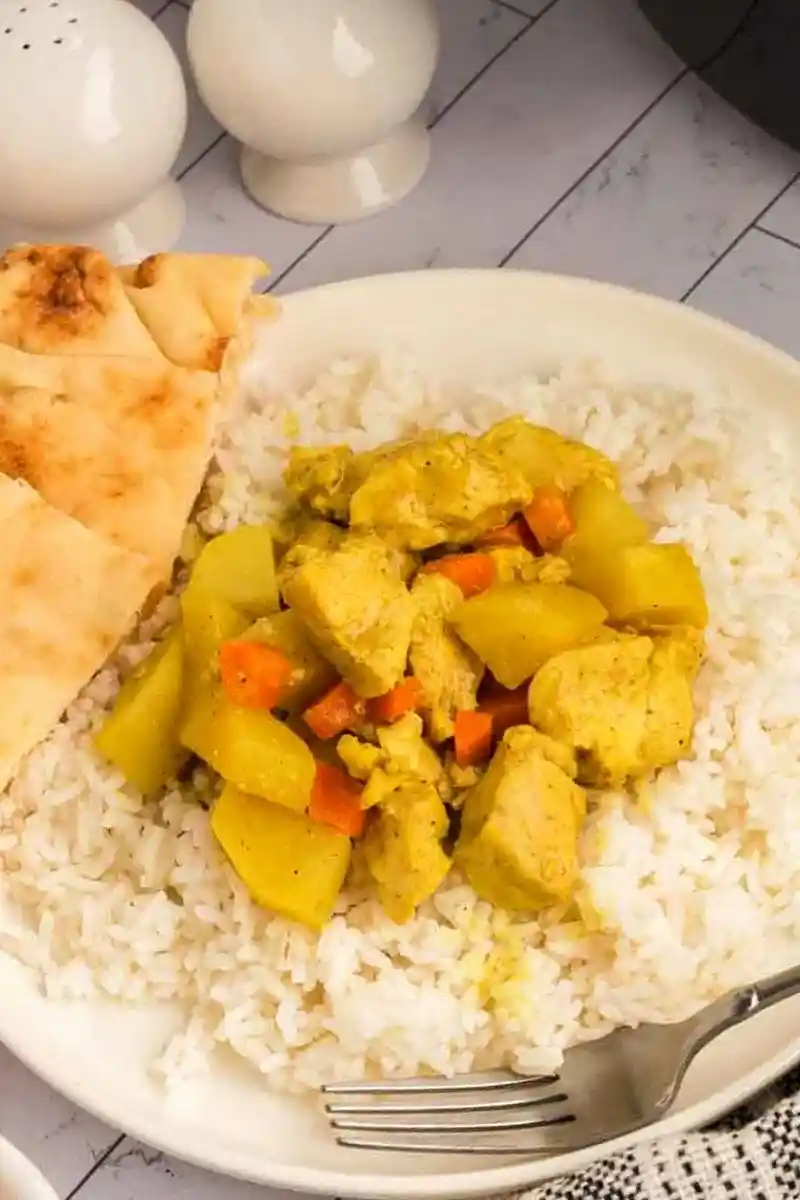
This easy slow cooker chicken curry combines tender meat and hearty vegetables in a rich, creamy coconut sauce. It is a perfect set-it-and-forget-it meal for busy weeknights that brings bold flavors to your table with minimal effort.
List of ingredients
- 1 1/2 pound chicken breasts – diced into 1 inch pieces for even cooking.
- 1 pound Russet Potatoes – peeled and diced into 1 inch pieces.
- 2 carrots – peeled and diced into small rounds.
- 2 tablespoons yellow curry powder – provides the primary flavor base.
- 1 can full fat coconut milk (14 oz) – creates a creamy texture and balances spices.
- 1 fresh lime – juiced for brightness and acidity.
- 1 tablespoon minced garlic – adds pungent aromatic depth.
- 1/2 cup chicken broth – provides necessary liquid for simmering.
- 1/2 teaspoon ground ginger – adds a subtle warmth to the sauce.
- 2 tablespoon brown sugar – balances the savory spices with a touch of sweetness.
- 1 teaspoon salt – enhances all other flavors in the pot.
- 2 tablespoons cornstarch – used as a thickener for the sauce.
step-by-step instructions
- Combine Base: Add 1 1/2 lbs diced chicken, 1 lb diced potatoes, and 2 diced carrots to a crock pot.
- Mix Seasonings: Stir in 2 Tbsp curry powder, 1 (14 oz) can coconut milk, juice of 1 lime, 1 Tbsp minced garlic, 1/2 cup chicken broth, 1/2 tsp ground ginger, 2 Tbsp brown sugar, and 1 tsp salt.
- Blend: Mix well to combine all ingredients thoroughly.
- Slow Cook: Cook on low for 4 to 5 hours.
- Thicken: Stir in 2 Tbsp cornstarch during the last 15 to 20 minutes of cooking if you prefer a thicker sauce.
- Finish: Serve the curry while warm.
Vegetable Customizations
Use Sweet Potatoes for Extra Sweetness
Replacing Russet potatoes with sweet potatoes adds a natural sweetness and a different texture to the dish. This pairing works exceptionally well with the coconut milk and curry powder. Ensure they are diced to the same size as the chicken to maintain consistent cooking times.
Swap Russets for Red Potatoes
Red potatoes are a great alternative if you prefer a vegetable that holds its shape better during the long cooking process. They provide a slightly firmer bite compared to the starchier Russets. Keep the dice size at 1 inch for the best results.
Add Red Bell Peppers for Color
Diced red bell peppers add a pop of color and a mild sweetness to the curry. To prevent them from becoming too mushy, add them during the last hour of cooking. They provide a nice textural contrast to the tender chicken.
Incorporate Frozen Peas for Freshness
Adding frozen peas during the final 10 minutes of cooking introduces a burst of color and a fresh taste. Because they are small and frozen, they only need a few minutes to heat through. This addition makes the meal feel more like a complete garden stew.
Protein Options
Use Chicken Thighs for More Moisture
If you prefer a juicier result, substitute chicken breasts with boneless, skinless chicken thighs. Thighs have a higher fat content, which prevents them from drying out during the 5-hour cook time. They also absorb the curry flavors more deeply.
Substitute Tofu for a Plant-Based Version
For a meat-free option, use extra-firm tofu that has been pressed to remove excess water. Dice the tofu into 1 inch cubes to match the size of the potatoes. Use vegetable broth instead of chicken broth to keep the dish entirely plant-based.
Use Chickpeas for Added Protein
Adding a can of rinsed chickpeas increases the protein and fiber content of the meal. You can either replace the chicken entirely or add them alongside the meat for a heartier texture. Stir them in at the beginning of the process.
Ways to Boost the Flavor
Include Garam Masala for Depth
Adding 1/2 teaspoon of Garam Masala along with the curry powder adds a layer of warmth and complexity. This blend typically includes cinnamon and cloves, which complement the ginger. It creates a more authentic Indian flavor profile.
Garnish with Fresh Cilantro
Chopping fresh cilantro and sprinkling it over the dish just before serving adds a bright, citrusy note. This freshness cuts through the richness of the full-fat coconut milk. It also provides a professional visual finish to the meal.
Add Cayenne Pepper for Heat
If you prefer a spicier curry, stir in a pinch of cayenne pepper or red pepper flakes. Start with 1/4 teaspoon and adjust to your heat tolerance. This adds a sharp kick that balances the brown sugar.
Incorporate Soy Sauce for Umami
A tablespoon of soy sauce can be stirred into the sauce to add a savory, salty depth. This enhances the overall umami of the dish without making it taste like soy. It works well to round out the acidity of the lime juice.
Best Side Dish Pairings
Pair with Basmati Rice
Basmati rice is the traditional choice for curry due to its long grains and aromatic scent. The fluffy texture is ideal for soaking up the creamy coconut sauce. Cook the rice separately and scoop the curry directly on top.
Serve over Quinoa
For a higher-protein and gluten-free alternative, serve the curry over cooked quinoa. The nutty flavor of quinoa complements the earthy tones of the curry powder. It provides a denser base that makes the meal even more filling.
Use Cauliflower Rice for Low Carb
Cauliflower rice is an excellent option for those reducing their carbohydrate intake. Sauté the cauliflower rice quickly in a pan with a bit of oil before serving. This maintains a light texture while allowing you to enjoy the heavy sauce.
Accompany with Naan Bread
Warm naan bread is perfect for scooping up the chunks of potato and chicken. Brush the bread with a little melted butter and garlic before heating. This allows you to enjoy every bit of the sauce left in the bowl.
Pair with Roasted Asparagus
For a side of greens, oven-roasted asparagus provides a crisp contrast to the soft texture of the slow-cooked curry. Toss the asparagus in olive oil, salt, and pepper before roasting at 400 degrees. This creates a balanced meal with a fresh vegetable side.
Try Brown Rice for Extra Fiber
Brown rice offers a chewier texture and more nutritional value than white rice. Because it takes longer to cook, start your rice preparation well before the slow cooker finishes. The whole grain nature of the rice pairs well with the rustic feel of the potatoes.
Alternative Cooking Methods
Stovetop Simmering Method
If you do not have a slow cooker, you can make this in a large skillet or pot. Sauté the garlic and ginger in oil over medium heat before adding the chicken and browning it slightly. Add the remaining ingredients and simmer on low for about 30 to 45 minutes until the potatoes are tender.
Instant Pot Pressure Cooking
To speed up the process, use an Instant Pot on the high-pressure setting. Combine all ingredients except the cornstarch and cook for about 10 to 15 minutes. Perform a quick release of the pressure, then stir in the cornstarch and simmer on the sauté function to thicken.
Storage and Reheating Guide
Refrigeration and Life Span
Once the curry has cooled to room temperature, transfer it to an airtight container. It can be stored in the refrigerator for up to 4 days. Keep the container tightly sealed to prevent the curry from absorbing other fridge odors.
Microwave Reheating Instructions
Place a portion of the curry and rice in a microwave-safe bowl. Cover the bowl with a lid or damp paper towel to trap steam, which prevents the chicken from drying out. Heat in 1-minute intervals, stirring in between, until steaming hot.
Avoid Freezing Coconut Milk
It is not recommended to freeze this dish because of the coconut milk content. Freezing often causes the coconut fats to separate, which results in a grainy or curdled texture upon thawing. For the best quality, consume the recipe within the refrigerated window.
Common Cooking Challenges
Preventing Coconut Milk Separation
To avoid the coconut milk curdling or separating, ensure you are using full-fat coconut milk. Some users prefer to stir the coconut milk in during the last hour of cooking rather than at the start. This preserves the creamy emulsion of the sauce.
Achieving the Perfect Sauce Thickness
If the sauce is too thin, create a cornstarch slurry by mixing the cornstarch with a tablespoon of cold water first. Stir this slurry into the boiling curry during the final 20 minutes. Avoid adding dry cornstarch directly into the pot, as it may create lumps.
Balancing the Salt and Acid
Every lime varies in acidity, so taste the sauce before serving. If the curry tastes too heavy or bland, add an extra squeeze of fresh lime juice. If it is too tart, a small pinch of additional brown sugar can balance the flavor.
Frequently Asked Questions
What does chicken curry taste like?
It has a complex profile that blends sweet and savory notes. The curry powder provides an earthy and floral base, while the coconut milk adds a rich creaminess and the lime provides a sharp, bright finish.
Should you brown the chicken first?
Browning the chicken is not required for this slow cooker recipe, as the meat remains tender through simmering. However, if you prefer a deeper flavor, you can sear the chicken in a pan for 2 minutes per side before adding it to the crock pot.
Can I use low-fat coconut milk?
Yes, you can use low-fat coconut milk, but the sauce will be thinner and less creamy. To compensate for the loss of thickness, you may need to increase the amount of cornstarch used at the end of the cooking process.
How do I know when the potatoes are done?
The potatoes are ready when they can be easily pierced with a fork with no resistance. Because they are diced into 1 inch pieces, this usually happens around the 4 to 5 hour mark on the low setting.
What is the best way to serve this for a crowd?
Keep the curry in the slow cooker on the ‘Warm’ setting to maintain the temperature. Serve it in a large bowl surrounded by bowls of steamed rice, warm naan, and fresh cilantro for a self-serve station.
Print
Effortless Slow Cooker Coconut Chicken Curry
- Total Time: 4 hours 10 minutes
- Yield: 6 servings 1x
- Diet: General
Description
A tasty and flavor-packed Slow Cooker Chicken Curry that is easy enough for weeknight dinners, featuring tender chicken and vegetables simmered in a rich and creamy coconut curry sauce.
Ingredients
- 1 1/2 pound chicken breasts, diced into 1 inch pieces
- 1 pound Russet Potatoes, peeled and diced into 1 inch pieces
- 2 carrots, peeled and diced
- 2 tablespoons yellow curry powder
- 1 can (14 oz) full fat coconut milk
- 1 fresh lime, juiced
- 1 tablespoon minced garlic
- 1/2 cup chicken broth
- 1/2 teaspoon ground ginger
- 2 tablespoon brown sugar
- 1 teaspoon salt
- 2 tablespoons cornstarch
Instructions
- Step 1: Add 1½ lbs diced chicken, 1 lb diced potatoes, and 2 diced carrots to a crock pot.
- Step 2: Stir in 2 Tbsp curry powder, 1 (14 oz) can coconut milk, juice of 1 lime, 1 Tbsp minced garlic, ½ cup chicken broth, ½ tsp ground ginger, 2 Tbsp brown sugar, and 1 tsp salt.
- Step 3: Mix well to combine.
- Step 4: Cook on low for 4–5 hours.
- Step 5: Stir in 2 Tbsp cornstarch during the last 15–20 minutes if you want a thicker sauce.
- Step 6: Serve warm.
Notes
You can use sweet potato or red potato instead of russet potato. To add heat, mix in jalapeno, hot sauce, red pepper flakes, or cayenne pepper. To prevent coconut milk from curdling, some prefer adding it towards the end of the cooking time.
- Prep Time: 10 minutes
- Cook Time: 4 hours
- Category: Main Course
- Method: Slow Cooking
- Cuisine: Indian
Nutrition
- Serving Size: 1 serving
- Calories: 376 kcal
- Sugar: 6 g
- Sodium: 622 mg
- Fat: 19 g
- Saturated Fat: 14 g
- Unsaturated Fat: 3 g
- Trans Fat: 1 g
- Carbohydrates: 27 g
- Fiber: 3 g
- Protein: 28 g
- Cholesterol: 73 mg