
This one-pot creamy garlic butter spinach pasta is the ultimate solution for busy weeknights when you need a comforting, delicious meal without the hassle of excessive cleanup. By cooking the pasta directly in a blend of stock and milk, you create a rich, velvety sauce that clings to every noodle while minimizing dishes. It is a foolproof method for achieving a restaurant-quality texture with minimal effort.
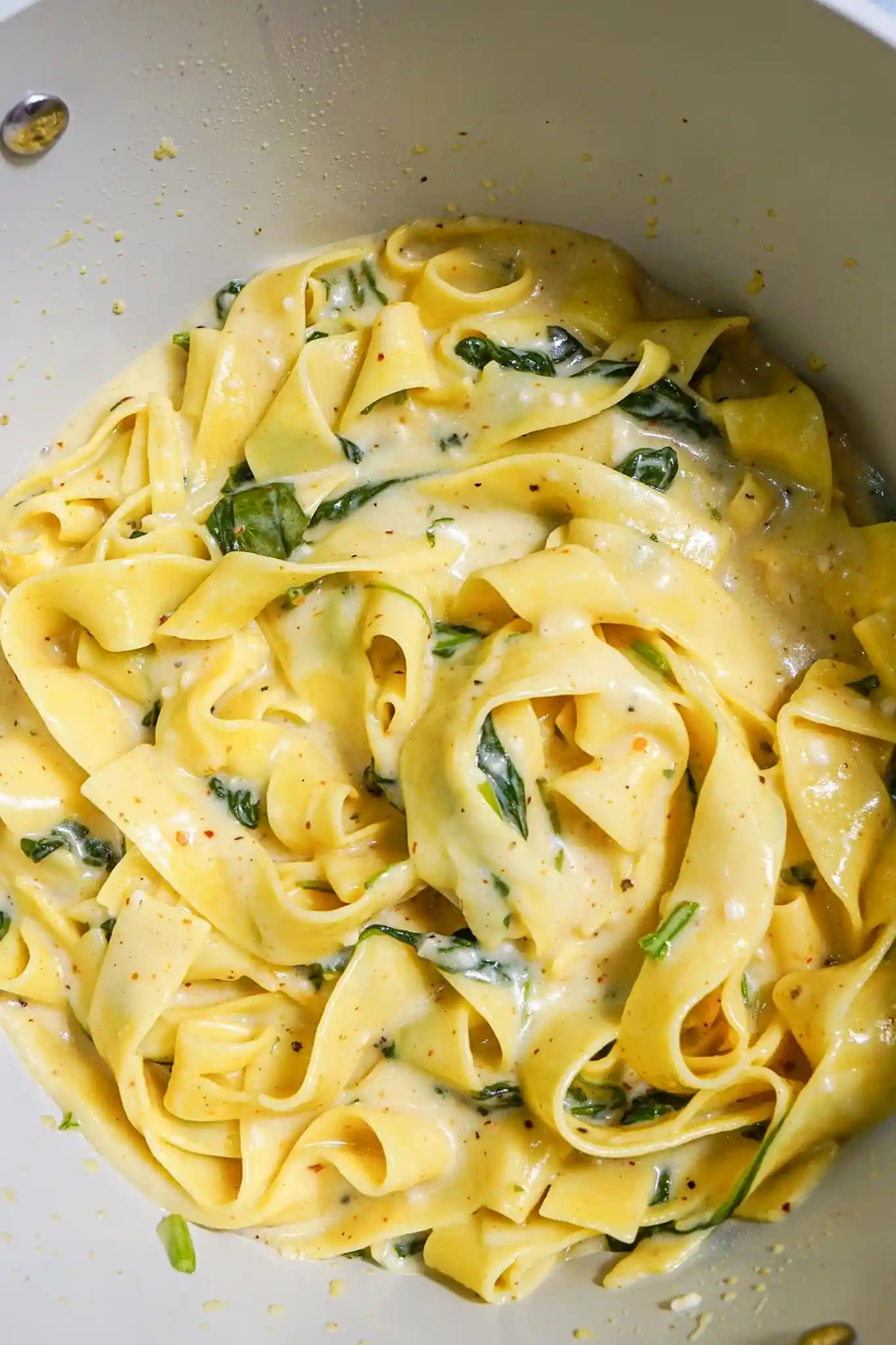
List of ingredients
- 4 servings of pappardelle or pasta of choice
- 2 tbsps butter
- 2-3 cloves garlic, minced
- 2 cups vegetable stock or water
- 2 cups milk
- 1 tsp salt, or to taste
- 150g or 2-3 loose cups of fresh spinach
- 1 cup grated Parmesan cheese
- 1 cup shredded cheddar cheese
- Black pepper, to taste
- 1 tsp chilli flakes, optional
- 2 tbsps fresh parsley, chopped
step-by-step instructions
- Step: Melt butter and garlic in a pan over low heat until fragrant and bubbling.
- Step: Add dry pasta, stock, milk, and salt. Stir to combine and bring the mixture to a boil.
- Step: Cook pasta until al dente, approximately 7-8 minutes or according to package directions, stirring occasionally to ensure even cooking.
- Step: Add the spinach and stir until wilted, then turn off the heat.
- Step: Immediately stir in the Parmesan, cheddar, black pepper, chilli flakes, and parsley until the cheese has melted into a creamy sauce. Serve immediately.
Techniques for a Perfectly Creamy Texture
The Role of Pasta Starch
The magic behind this one-pot method lies in the starch released from the pasta as it boils in a small amount of liquid. Instead of draining that liquid away, you retain it, allowing the starch to emulsify with the milk and butter. This creates a natural thickening effect that binds the sauce to the pasta, resulting in a glossy, rich coating without the need for flour or heavy thickeners.
Managing the Liquid-to-Pasta Ratio
Achieving the perfect sauce consistency depends on maintaining enough liquid to cook the pasta without turning it into a soup. If your pasta is cooked but the sauce still appears slightly thin, continue stirring for another minute off the heat; the residual heat and the added cheese will finish the thickening process. If you find the pasta is done but the liquid is too thick before adding the cheese, add a splash of warm water to loosen it up.
Selecting the Best Cheeses
Choosing Meltable Varieties
For the smoothest sauce, prioritize cheeses that melt well at low temperatures. Parmesan adds a salty, umami depth, while cheddar provides the creaminess and classic flavor most people crave. If you want to experiment, Gruyere or Monterey Jack are also excellent alternatives that contribute a smooth, uniform texture to the final dish.
Grating Your Own Cheese
Pre-shredded bagged cheese often contains anti-caking agents like cellulose, which can prevent it from melting smoothly into a sauce. To achieve the best results with this recipe, buy blocks of cheese and grate them yourself just before cooking. This simple step ensures the cheese incorporates completely and creates a uniform, silky sauce rather than a clumpy one.
Practical Serving and Pairing Advice
Adding Protein for a Heartier Meal
While this dish is satisfying on its own, it serves as a great base for various proteins if you want to make it more substantial. Pan-seared chickpeas or white beans can be stirred in during the final minutes of cooking for added fiber and substance. These additions pair perfectly with the garlic butter flavor profile and keep the meal vegetarian and simple.
Balancing the Richness
Because this pasta is inherently creamy and buttery, it pairs wonderfully with sides that offer a bright or acidic contrast. A simple side salad dressed with a lemon vinaigrette or roasted vegetables like asparagus or cherry tomatoes can cut through the richness of the cheese. These additions make for a well-rounded dinner that feels professional yet remains incredibly simple to prepare.
Storage and Reheating Guidelines
Managing Leftovers
If you have leftovers, store the pasta in an airtight container in the refrigerator for up to three days. Keep in mind that as the pasta cools, it will continue to absorb the remaining liquid in the sauce, causing it to thicken significantly. Place the pasta in the fridge as soon as it has cooled to room temperature to maintain the best quality.
Reheating for Optimal Consistency
To reheat, add a small splash of water or milk to the pasta before warming it over low heat on the stove. Stir gently and consistently to re-emulsify the sauce and bring it back to its original creamy state. Microwaving can lead to uneven heating or the sauce separating, so using the stovetop is highly recommended for the best texture.
Frequently Asked Questions
Can I use gluten-free pasta?
Gluten-free pasta can be used, but it requires more attention as it tends to break down faster than traditional wheat pasta. Keep a close eye on the texture and reduce the cooking liquid slightly, as gluten-free varieties often release starch differently during the boiling process.
What is the best way to prevent the sauce from breaking?
To prevent the sauce from breaking or becoming oily, always turn off the heat before adding the cheese. Combining the cheese with a pot that is still actively boiling can cause the fat to separate. The residual heat from the pasta and the cooking liquid is more than enough to melt the cheese into a smooth, stable emulsion.
Can I swap the spinach for other vegetables?
Yes, you can swap spinach for other quick-cooking greens like baby kale or chard. If using sturdier vegetables like broccoli florets or sliced zucchini, add them to the pot along with the pasta at the beginning to ensure they have enough time to soften before the pasta reaches an al dente state.
Is it necessary to use both stock and milk?
Using a mix of stock and milk provides a balanced flavor and creamy texture. If you prefer a lighter sauce, you can increase the amount of stock and decrease the milk, though the sauce will be slightly less opaque. Conversely, using only milk can lead to a very thick, heavy sauce, so the ratio provided is designed to keep the dish balanced.
Print
One Pot Creamy Garlic Butter Spinach Pasta
- Total Time: 15 minutes
- Yield: 4 servings 1x
- Diet: Vegetarian
Description
A quick, one-pot creamy garlic butter pasta loaded with fresh spinach and a blend of savory melted cheeses. Perfect for easy weeknight dinners with minimal cleanup.
Ingredients
- 4 servings of pappardelle or pasta of choice
- 2 tbsps butter
- 2–3 cloves garlic, minced
- 2 cups vegetable stock or water
- 2 cups milk
- 1 tsp salt, or to taste
- 150g or 2–3 loose cups of fresh spinach
- 1 cup grated Parmesan cheese
- 1 cup shredded cheddar cheese
- Black pepper, to taste
- 1 tsp chilli flakes, optional
- 2 tbsps fresh parsley, chopped
Instructions
- Step: Melt butter and garlic in a pan over low heat until fragrant and bubbling.
- Step: Add dry pasta, stock, milk, and salt. Stir to combine and bring the mixture to a boil.
- Step: Cook pasta until al dente, approximately 7-8 minutes or according to package directions, stirring occasionally to ensure even cooking.
- Step: Add the spinach and stir until wilted, then turn off the heat.
- Step: Immediately stir in the Parmesan, cheddar, black pepper, chilli flakes, and parsley until the cheese has melted into a creamy sauce. Serve immediately.
Notes
Ensure you use just enough liquid to barely cover the pasta; it will submerge as it softens. If the sauce seems thin, continue stirring as the cheese and pasta starches will naturally thicken the sauce as it cools slightly.
- Prep Time: 5 minutes
- Cook Time: 10 minutes
- Category: Main Course
- Method: Stovetop
- Cuisine: Italian-inspired
Nutrition
- Serving Size: 1 serving
- Calories: 520 kcal
- Sugar: 8 g
- Sodium: 780 mg
- Fat: 22 g
- Saturated Fat: 12 g
- Unsaturated Fat: 7 g
- Trans Fat: 0 g
- Carbohydrates: 62 g
- Fiber: 3 g
- Protein: 21 g
- Cholesterol: 65 mg