
This creamy Rasta pasta featuring tender jerk-seasoned chicken and a vibrant trio of sweet bell peppers is a bold, comforting Jamaican-inspired dinner that comes together in just 30 minutes. It is a fantastic way to bring restaurant-quality flavors into your own kitchen for a quick and satisfying weeknight meal. The secret to its success lies in the balance between the smoky, aromatic spice blend and the silky richness of a parmesan-infused cream sauce.
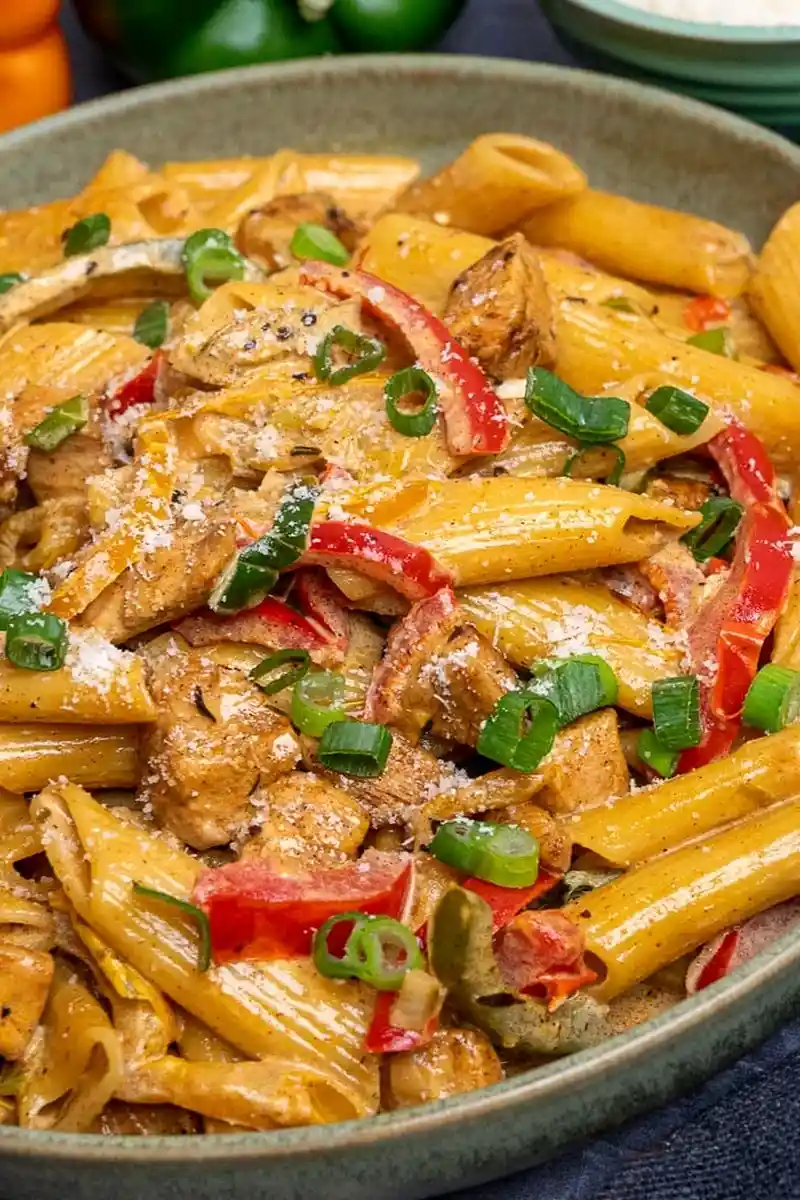
List of ingredients
- 1 lb pasta
- 1 lb chicken breast, diced
- 3 tablespoons jerk seasoning, divided
- 2 tablespoons olive oil, divided
- 1 tablespoon unsalted butter
- 1 red bell pepper
- 1 green bell pepper
- 1 yellow bell pepper
- 3 garlic cloves, minced
- 4 spring onions, chopped
- 1 cup chicken stock
- 1 cup heavy cream
- 1 cup parmesan, grated
- Fresh parsley, to garnish, optional
step-by-step instructions
- Step: Place the chicken pieces in a large bowl and toss them in two tablespoons of jerk seasoning.
- Step: Bring a large pot of water to a boil, salt it generously and cook the pasta al dente according to the instructions on the package. Reserve 1-2 cups of pasta water before draining.
- Step: Meanwhile, heat 1 tablespoon olive oil in a deep pan or shallow cast-iron casserole and melt the butter in it.
- Step: Add the chicken cubes to the pan and cook for 5-6 minutes until cooked through. Remove the chicken from the pan and set it aside.
- Step: Add the remaining olive oil to the pan and saute the peppers for 2-3 minutes or until they soften to your liking.
- Step: Next, add the garlic and sliced spring onions and cook for another minute until fragrant. Stir in the remaining jerk seasoning and continue to cook for 30 seconds until it smells toasty.
- Step: Stir in the chicken stock and heavy cream and cook until the sauce starts to thicken.
- Step: Add the chicken back to the pan and then the cooked pasta. Toss it well until coated in sauce, adding a dash of pasta water if it looks too thick.
- Step: Stir in the parmesan off the heat and serve immediately, garnished with fresh parsley and sliced spring onions if you like.
Essential Preparation Techniques
Maximizing Flavor with the Jerk Bloom
The step of blooming the final tablespoon of jerk seasoning in the hot oil with the garlic and spring onions is absolutely vital. This process heat-activates the dried herbs and spices, releasing essential oils that would otherwise remain dormant. It transforms the base of your sauce from a simple creamy mixture into a deep, layered, and authentic jerk-spiced experience.
Selecting and Preparing Your Peppers
Using the classic trio of red, yellow, and green peppers provides the iconic look for this dish, but it also creates a balanced flavor profile. The red and yellow peppers contribute a natural, sugary sweetness that helps temper the heat of the jerk spice, while the green pepper adds a refreshing, slightly grassy note. Ensure your dice is uniform so that all the pieces soften at the same rate, preventing mushy or raw-tasting vegetables.
Refining Your Sauce Consistency
Managing Thickening and Emulsification
Heavy cream is the backbone of this sauce, providing a luxurious mouthfeel that holds the jerk spices together. If you find your sauce is not thickening, resist the urge to add more flour; instead, continue to let it simmer uncovered, allowing the water content to evaporate. If the sauce becomes too thick during service, the reserved pasta water acts as an emulsifier that brings the fat and starch together into a smooth, glossy coating.
Preventing Sauce Separation
Always incorporate the parmesan cheese after you have removed the pan from the direct heat source. High heat can cause the proteins in the cheese to seize, leading to a grainy or curdled sauce rather than a smooth, unified finish. By stirring it in off the flame, you ensure the cheese melts gently into the tempered cream for a professional texture.
Flavor Variations and Customization
Exploring Plant-Based Dairy Swaps
For those who prefer a dairy-free approach, canned full-fat coconut milk is a perfect substitute for heavy cream in this recipe. Coconut milk actually aligns quite well with the flavor profile of jerk seasoning, as the tropical notes of the coconut complement the heat of the peppers and spices beautifully. Be sure to use the canned variety rather than the carton, as the carton versions are often too thin to provide the necessary richness.
Adjusting the Heat Level
The spiciness of this dish is inherently linked to the specific jerk seasoning blend you choose to purchase. If your household prefers a milder meal, check the spice label before buying, as many brands clearly mark their blends as mild or spicy. Conversely, for an authentic Caribbean fire, you can finely mince a small portion of a scotch bonnet pepper and add it alongside your garlic to dramatically increase the heat intensity.
Serving and Presentation Strategies
Enhancing the Meal Experience
While this pasta is incredibly satisfying on its own, pairing it with side dishes can turn a quick dinner into a full event. A crisp, acidic garden salad tossed in a sharp lime-based vinaigrette provides a necessary contrast to the creamy sauce, cleansing the palate between bites. For an extra touch of island-style authenticity, serving fried sweet plantains on the side adds a lovely contrast in textures and flavors.
Creating Texture with Toppings
A final sprinkle of crispy toppings can take your plating to the next level. If you enjoy a bit of crunch, consider topping your pasta with toasted breadcrumbs or a quick pangrattato to add a golden, crispy layer that breaks up the softness of the cream and pasta. Fresh herbs like parsley or extra scallions provide a burst of color and a fresh finish that cuts through the richness of the parmesan.
Managing Leftovers and Reheating
Proper Storage for Best Flavor
Because the complex spices in the jerk seasoning continue to permeate the chicken and sauce as the dish cools, the flavors often taste even better the next day. To store your Rasta pasta effectively, keep it in an airtight container in the refrigerator for no more than three days. Ensure the dish is cooled completely before sealing it to avoid excess condensation, which could dilute the sauce flavor.
Gentle Reheating Techniques
When you are ready to enjoy your leftovers, avoid using high heat, which can cause the cream sauce to split or become oily. The best method is to reheat the pasta in a wide skillet over low heat, adding a tablespoon of chicken stock or milk to loosen the sauce as it warms. Stir constantly and patiently until the sauce returns to its original creamy, clinging consistency, then serve immediately.
Common Kitchen Questions
Why is this dish referred to as Rasta Pasta?
The name stems from the striking visual appearance of the bell peppers used in the original creation. The combination of red, yellow, and green peppers represents the colors found in the Rastafarian flag, leading the patrons who first tried the dish to associate the name with those specific colors. It is now a beloved staple of Jamaican-inspired fusion cuisine.
Can I prepare this dish using pre-cooked protein?
Absolutely, this is an excellent strategy for utilizing leftover roast chicken or store-bought rotisserie chicken. Simply skip the initial step of cooking raw chicken in the pan and instead sauté your peppers and aromatics as usual. Once the sauce is simmering and beginning to thicken, fold in the pre-cooked, shredded, or diced chicken and let it warm through until it is fully integrated into the sauce.
What is the benefit of reserving the pasta water?
The starchy, salty liquid left behind after boiling your pasta is the secret weapon of any creamy dish. The starch acts as a natural binder, helping the sauce adhere to the surface of the pasta strands while ensuring the final dish is silky rather than greasy. Even a small amount, roughly a quarter-cup, can dramatically improve the cohesiveness and professional quality of your meal.
Is it possible to freeze the leftover pasta?
Freezing is generally not recommended for this particular recipe because cream-based sauces tend to lose their emulsion when they undergo the freezing and thawing process. The sauce often becomes watery or separates into oil and solids, which is difficult to fix once the structure of the emulsion is broken. It is best to prepare only what you can finish within a few days to enjoy the optimal texture of the dish.
How do I know if the pasta is cooked perfectly al dente?
Pasta that is al dente should be tender but still provide a firm, slight resistance to the bite. Since you will be combining the pasta with a hot sauce in the skillet for a short period, it is helpful to drain your pasta about a minute before the package instructions suggest. This ensures the pasta finishes its cooking process directly in the sauce, absorbing the jerk flavors rather than becoming overly soft.
Print
Creamy Rasta Pasta Recipe (Jamaican Jerk Chicken Pasta)
- Total Time: 30 minutes
- Yield: 4 servings 1x
- Diet: High Protein
Description
This creamy rasta pasta with jerk chicken and sweet bell peppers is a Jamaican-inspired dinner that’s bold, comforting and ready in 30 minutes.
Ingredients
- 1 lb pasta
- 1 lb chicken breast, diced
- 3 tablespoons jerk seasoning, divided
- 2 tablespoons olive oil, divided
- 1 tablespoon unsalted butter
- 1 red bell pepper
- 1 green bell pepper
- 1 yellow bell pepper
- 3 garlic cloves, minced
- 4 spring onions, chopped
- 1 cup chicken stock
- 1 cup heavy cream
- 1 cup parmesan, grated
- Fresh parsley, to garnish, optional
Instructions
- Step: Place the chicken pieces in a large bowl and toss them in two tablespoons of jerk seasoning.
- Step: Bring a large pot of water to a boil, salt it generously and cook the pasta al dente according to the instructions on the package. Reserve 1-2 cups of pasta water before draining.
- Step: Meanwhile, heat 1 tablespoon olive oil in a deep pan or shallow cast-iron casserole and melt the butter in it.
- Step: Add the chicken cubes to the pan and cook for 5-6 minutes until cooked through. Remove the chicken from the pan and set it aside.
- Step: Add the remaining olive oil to the pan and saute the peppers for 2-3 minutes or until they soften to your liking.
- Step: Next, add the garlic and sliced spring onions and cook for another minute until fragrant. Stir in the remaining jerk seasoning and continue to cook for 30 seconds until it smells toasty.
- Step: Stir in the chicken stock and heavy cream and cook until the sauce starts to thicken.
- Step: Add the chicken back to the pan and then the cooked pasta. Toss it well until coated in sauce, adding a dash of pasta water if it looks too thick.
- Step: Stir in the parmesan off the heat and serve immediately, garnished with fresh parsley and sliced spring onions if you like.
Notes
Mild jerk seasoning keeps this family-friendly. If you want real Caribbean heat, add a little minced scotch bonnet with the garlic. Stir the parmesan in off the heat to prevent the sauce from becoming grainy. The sauce thickens as it sits, so keep reserved pasta water handy to loosen it just before serving.
- Prep Time: 10 minutes
- Cook Time: 20 minutes
- Category: Pasta
- Method: Stovetop
- Cuisine: Jamaican
Nutrition
- Serving Size: 1 serving
- Calories: 608 kcal
- Sugar: 6 g
- Sodium: 650 mg
- Fat: 23 g
- Saturated Fat: 8 g
- Unsaturated Fat: 13 g
- Trans Fat: 0 g
- Carbohydrates: 50 g
- Fiber: 4 g
- Protein: 50 g
- Cholesterol: 124 mg