
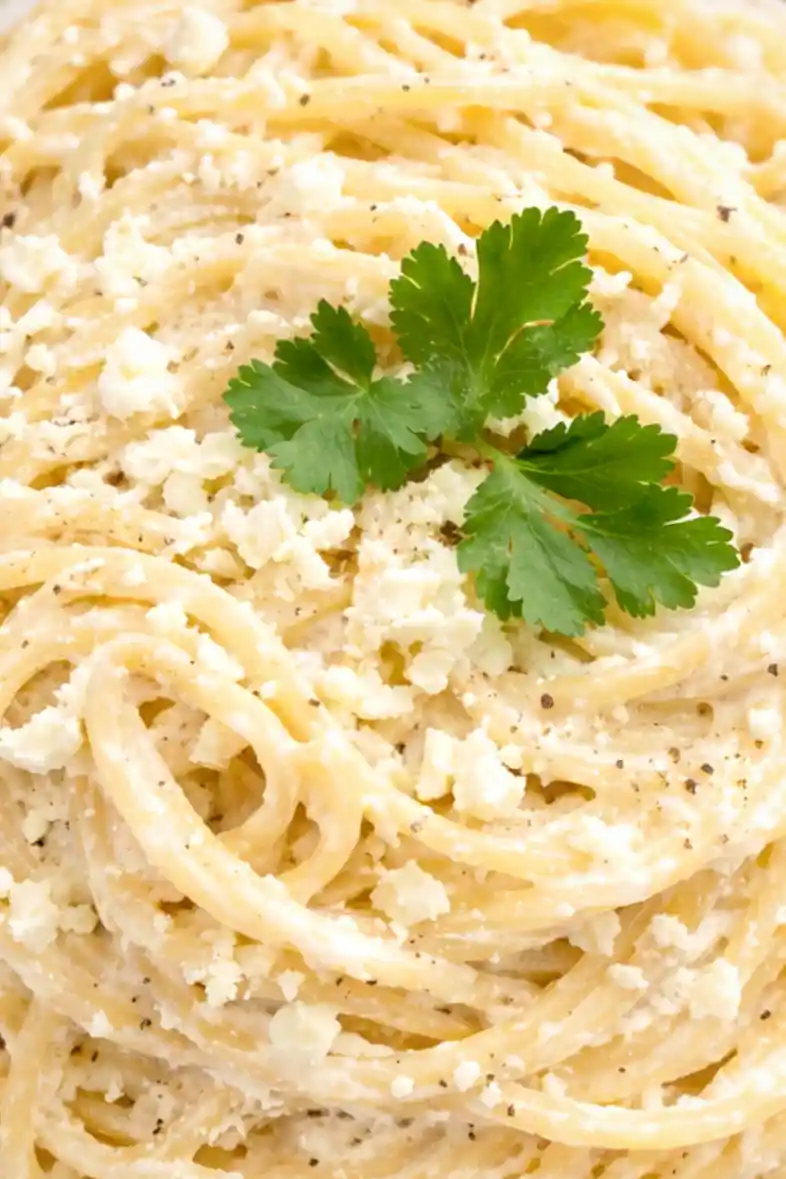
Mexican White Spaghetti, known as Espagueti Blanco, is a comforting and classic dish that brings simple, creamy flavors to your dinner table. By combining tender pasta with a rich garlic-infused cream sauce, this recipe offers a delicious departure from traditional tomato-based pasta dishes. It is a perfect weeknight meal that is both approachable for beginners and satisfying for the whole family.
List of ingredients
- 16 oz spaghetti
- 4 tbsp butter
- 1 tbsp garlic (minced)
- 1½ cups Mexican cream (crema)
- ½ cup milk
- 1 tsp salt
- 8 bay leaves
- ½ cup queso fresco (crumbled)
step-by-step instructions
- Step: In a large pot, boil water and add the spaghetti. Cook according to package instructions.
- Step: While the pasta is cooking, use a medium or large sized skillet to make the sauce. Turn heat to medium-low and add the butter and garlic. Cook on medium-low, stirring often, for about 2-3 minutes, or until the butter is melted and garlic is fragrant.
- Step: Add the Mexican cream, milk and salt. Turn heat down to low. Gently stir or whisk until combined.
- Step: Add the bay leaves and simmer on low for about 5 minutes, stirring often. Then, carefully remove bay leaves with a spoon.
- Step: Once noodles are done, drain well. Add them back to the large pot they cooked in and pour the sauce on top. Add the crumbled queso fresco and gently mix to combine everything. Taste and add more salt or queso fresco, if desired.
- Step: Serve immediately and enjoy!
Refining the Texture of Your Cream Sauce
Maintaining the Right Heat Level
When cooking the cream sauce, it is vital to keep your stove on medium-low or low heat at all times. High heat can cause the Mexican cream and milk mixture to separate or curdle, which ruins the silky consistency. If you notice the sauce thickening too rapidly, simply remove the skillet from the burner entirely while you continue to stir.
The Role of Starchy Water
If you find that your sauce is not adhering well to the spaghetti, save a small splash of the starchy pasta water before draining. Adding just a tablespoon or two of this liquid to the skillet with your cream sauce helps emulsify the fat and starches, resulting in a perfectly glossy coating on every strand of pasta.
Selecting and Using Your Cheeses
Finding the Ideal Queso Fresco
Queso fresco is a mild, non-melting cheese that provides a wonderful contrast to the creamy sauce. When shopping, look for blocks that are bright white and smell fresh. Since it does not melt into the sauce, the crumbles provide small pockets of texture and saltiness in every bite, which is essential for the authentic taste of this dish.
Alternative Cheese Options
If you cannot locate queso fresco at your local store, you can use farmer’s cheese as a direct substitute because it shares a similar crumbly texture and mild profile. If you prefer a slightly sharper flavor, a finely grated cotija can work, though it is significantly saltier, so ensure you reduce the amount of added salt in the sauce to compensate.
Perfecting the Aromatics and Seasoning
Maximizing Bay Leaf Infusion
The bay leaves serve as the primary herbal anchor for this recipe. To ensure they impart the most flavor, ensure they are fully submerged in the cream mixture throughout the five-minute simmer. Avoid using brittle, old bay leaves, as they will provide a metallic aftertaste rather than the delicate, earthy fragrance intended for the sauce.
Adjusting Garlic Intensity
For those who love a robust garlic flavor, you can increase the amount of minced garlic to two tablespoons. Ensure you do not let the garlic brown in the butter, as browned garlic turns bitter and will overpower the subtle notes of the cream and the bay leaves. A light golden shimmer in the butter is exactly what you need to achieve the best results.
Managing Leftovers and Reheating
Proper Storage Techniques
If you have leftovers, allow the spaghetti to cool completely before placing it in an airtight container. Because the sauce is cream-based, it is best to consume it within two to three days. Keep it stored in the coldest part of your refrigerator to maintain the integrity of the dairy ingredients.
Reviving the Sauce When Reheating
When reheating, pasta tends to absorb the liquid from the cream sauce, which can make it appear dry. To bring it back to its original consistency, add a small splash of milk or a tiny amount of water to the pan or microwave dish before warming it up. Stir gently until the sauce becomes smooth and creamy again, and add an extra pinch of fresh queso fresco if the cheese has fully dissolved.
Expanding the Dish
Incorporating Protein Varieties
While this dish is excellent on its own, it acts as a wonderful canvas for various proteins. Grilled chicken breast, thinly sliced and seasoned with mild spices, provides a satisfying contrast to the creamy pasta. Alternatively, you can toss in pre-cooked shrimp, which pairs beautifully with the light, herbal notes of the bay leaf-infused sauce.
Adding Texture with Vegetables
For a more balanced meal, consider folding in sautéed vegetables like spinach, zucchini ribbons, or fire-roasted corn kernels. These additions bring color and a slight crunch that complements the softness of the spaghetti. Always sauté your vegetables separately before adding them to the pasta to ensure they do not release excess moisture into the delicate cream sauce.
Frequently Asked Questions
Can I use heavy cream instead of Mexican crema?
You can use heavy cream if necessary, though it will lack the signature tang of the Mexican crema. To mimic the original flavor, add a teaspoon of lime juice to the heavy cream before whisking it into your butter and garlic.
Is it possible to make this dish ahead of time?
You can cook the pasta and prepare the sauce separately earlier in the day. Keep them refrigerated in individual containers and combine them on the stovetop over low heat just before you are ready to serve for the freshest outcome.
What should I do if my sauce is too thick?
If the sauce becomes too thick while it is simmering or after tossing with the pasta, simply add more milk, one tablespoon at a time. Continue to stir until you reach your desired consistency, ensuring you do not overheat the sauce during this process.
Print
Mexican White Spaghetti (Espagueti Blanco)
- Total Time: 20 minutes
- Yield: 6 1x
- Diet: Vegetarian
Description
This White Spaghetti (Espagueti Blanco) is a simple Mexican dish with spaghetti noodles tossed in a delicious, creamy white sauce. Quick, easy and ready in less than 20 minutes!
Ingredients
- 16 oz spaghetti
- 4 tbsp butter
- 1 tbsp garlic (minced)
- 1½ cups Mexican cream (crema)
- ½ cup milk
- 1 tsp salt
- 8 bay leaves
- ½ cup queso fresco (crumbled)
Instructions
- Step: In a large pot, boil water and add the spaghetti. Cook according to package instructions.
- Step: While the pasta is cooking, use a medium or large sized skillet to make the sauce. Turn heat to medium-low and add the butter and garlic. Cook on medium-low, stirring often, for about 2-3 minutes, or until the butter is melted and garlic is fragrant.
- Step: Add the Mexican cream, milk and salt. Turn heat down to low. Gently stir or whisk until combined.
- Step: Add the bay leaves and simmer on low for about 5 minutes, stirring often. Then, carefully remove bay leaves with a spoon.
- Step: Once noodles are done, drain well. Add them back to the large pot they cooked in and pour the sauce on top. Add the crumbled queso fresco and gently mix to combine everything. Taste and add more salt or queso fresco, if desired.
- Step: Serve immediately and enjoy!
Notes
For an authentic taste, it’s best to use a Mexican crema. If you can’t find it, you can substitute with a mixture of sour cream and heavy cream. Don’t forget to remove the bay leaves before serving. Serve immediately for best texture.
- Prep Time: 0 minutes
- Cook Time: 20 minutes
- Category: Dinner
- Method: Stovetop
- Cuisine: Mexican
Nutrition
- Serving Size: 1 serving
- Calories: 420 kcal
- Sugar: 4 g
- Sodium: 650 mg
- Fat: 18 g
- Saturated Fat: 9 g
- Unsaturated Fat: 7 g
- Trans Fat: 0 g
- Carbohydrates: 52 g
- Fiber: 2 g
- Protein: 12 g
- Cholesterol: 45 mg