
This classic chicken noodle soup provides a warm, restorative meal that is perfect for any time of year. By utilizing bone-in chicken breasts, you ensure the broth develops a rich, savory depth that highlights the natural sweetness of fresh mirepoix vegetables. It is a straightforward, reliable recipe that delivers consistent results for a cozy dinner or a comforting lunch.
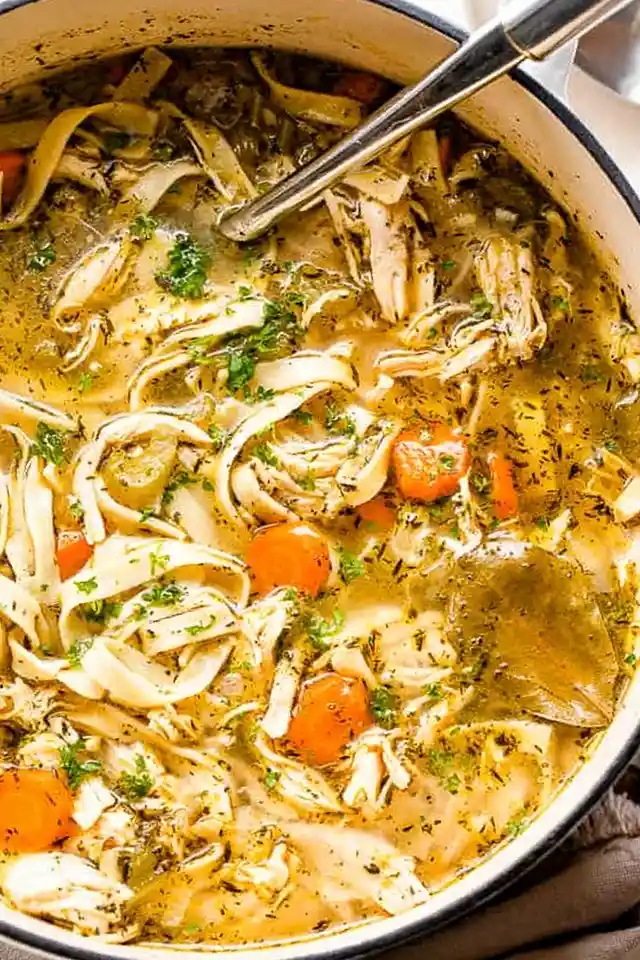
List of ingredients
- 1 tablespoon olive oil
- 1 tablespoon butter
- 1 small yellow onion (diced)
- 3 celery stalks (thinly sliced)
- 2 carrots (thinly sliced)
- 6 cloves garlic (minced)
- 12 cups low sodium chicken broth
- 4 thyme sprigs (or 1 teaspoon dried thyme)
- 2 bay leaves
- 2 pounds skinless, bone-in chicken breasts
- 1¼ teaspoon salt
- ½ teaspoon freshly ground black pepper
- 10 ounces carba-nada noodles (or wide egg noodles)
- chopped fresh parsley (for garnish)
- lemon wedges (for serving)
step-by-step instructions
- Step: Heat the olive oil and butter in a Dutch oven over medium heat. Add the chopped onions, sliced celery, and carrots; cook for 5 minutes, stirring occasionally. Stir in the garlic and cook for 20 seconds.
- Step: Add the chicken broth and stir to deglaze the bottom of the pot. Add thyme sprigs and bay leaves; increase heat to high and bring to a simmer.
- Step: Add the chicken breasts, salt, and pepper; cover and simmer over medium heat for 25 to 30 minutes until the chicken is cooked through.
- Step: Remove the chicken breasts from the pot and transfer to a cutting board.
- Step: If using egg noodles, add them to the broth and cook for 6 to 7 minutes. If using Carba-Nada noodles, wait to add them alongside the shredded chicken as they require only 4 to 5 minutes.
- Step: Shred the chicken, discarding the bones. Stir the shredded chicken into the soup, cover, and simmer for 2 more minutes.
- Step: Remove from heat, discard thyme sprigs and bay leaves, adjust seasoning with salt and pepper, garnish with parsley, and serve with lemon wedges.
Refining your soup flavors
Balancing the acidity levels
If your soup tastes a bit heavy or flat, a small splash of freshly squeezed lemon juice can make a world of difference. The acid cuts through the richness of the chicken and butter, elevating the brightness of the broth. You can also use a small drop of apple cider vinegar as a neutral-tasting alternative to brighten the profile without changing the signature flavor of the soup.
Selecting the right broth
The quality of your broth defines the quality of your soup. Always use a low-sodium option to maintain control over the salt levels throughout the cooking process. If you have extra time, simmering a vegetable-heavy stock beforehand can add hidden layers of nutrition and complexity that store-bought versions might lack.
Effective cooking techniques
Maintaining noodle texture
Noodles are prone to absorbing broth and becoming soggy if left sitting in the pot for too long. If you anticipate having leftovers, cook the noodles separately and store them in a different container. Only combine the noodles with the soup in the individual bowl just before serving to ensure they retain that perfect al dente bite.
Managing heat for tender meat
Maintaining a gentle, consistent simmer is critical for keeping the chicken breasts moist. If the liquid boils too vigorously, the meat can become tough and stringy. Adjust your stovetop temperature carefully so that the surface of the broth barely bubbles throughout the entire poaching process.
Storage and reheating best practices
Extending the shelf life
Your chicken noodle soup can be refrigerated in an airtight container for up to 4 days without losing quality. Ensure the soup has cooled completely before sealing it in the container to prevent condensation from altering the flavor. When ready to eat, reheat only the amount you intend to consume immediately to avoid repeated temperature fluctuations.
Freezing without compromising quality
Freezing the full soup with noodles is generally discouraged because the starch tends to break down and become mushy upon thawing. Instead, freeze the broth and shredded chicken mixture in freezer-safe bags or containers. When you are ready to eat, bring the soup to a boil and cook fresh noodles directly in the hot broth for the best results.
Ingredient substitutions
Vegetable variations
While the classic trio of onions, carrots, and celery is traditional, you can easily incorporate other vegetables for added texture. Diced parsnips or turnips offer a earthy sweetness, while chopped kale or baby spinach added during the final minute of cooking provides a boost of color. Ensure any root vegetables are cut to a similar size as the carrots to allow for uniform cooking times.
Protein alternatives
If you have leftover roast turkey or rotisserie chicken on hand, this recipe is a perfect way to repurpose it. Simply add the pre-cooked, shredded meat to the broth during the final few minutes of the cooking process just to warm it through. This reduces the total cooking time significantly, making it an ideal choice for a busy weeknight.
Common cooking inquiries
Why is my soup broth cloudy?
Cloudiness in chicken soup usually occurs when the liquid is allowed to boil too rapidly during the cooking of the chicken. To keep your broth clear and golden, maintain a steady simmer rather than a hard boil. Skimming off any foam that rises to the top during the initial simmer will also help achieve a cleaner look and cleaner taste.
How can I make the soup thicker?
If you prefer a more hearty or thicker consistency, you can create a slurry by whisking one tablespoon of cornstarch with two tablespoons of cold water. Gradually stir this mixture into the simmering soup during the last few minutes of cooking. This will give the broth a velvety, slightly thickened mouthfeel without requiring excessive cream.
Can I add dried herbs instead of fresh?
Yes, you can substitute fresh thyme with dried thyme, using about one-third of the amount requested. Since dried herbs are more concentrated, it is best to add them early in the cooking process so they have time to rehydrate and release their essential oils into the broth. Always crush dried herbs between your fingers before adding them to help release their hidden aroma.
How do I fix overly salty soup?
If you find that your soup has become too salty, the most effective fix is to add more liquid or incorporate mild ingredients that absorb salt. A peeled, quartered potato dropped into the pot for 10 minutes can help pull out some of the excess salinity. If that does not balance the flavor, try adding a little bit of extra water or unsalted chicken stock to dilute the concentration.
What should I serve on the side?
To turn this soup into a comprehensive meal, pair it with simple, high-quality accompaniments. A crusty sourdough bread, warm yeast rolls, or a simple side salad with a bright vinaigrette will complement the savory profile of the broth. For a crunchier option, try serving your soup with a few pieces of toasted garlic bread.
Print
Classic Homemade Chicken Noodle Soup
- Total Time: PT65M
- Yield: 14 1x
- Diet: High Protein
Description
This flavorful and cozy chicken noodle soup is packed with tender shredded chicken, hearty egg noodles, crisp celery, onions, and carrots, all simmered in a savory, warm broth.
Ingredients
- 1 tablespoon olive oil
- 1 tablespoon butter
- 1 small yellow onion (diced)
- 3 celery stalks (thinly sliced)
- 2 carrots (thinly sliced)
- 6 cloves garlic (minced)
- 12 cups low sodium chicken broth
- 4 thyme sprigs (or 1 teaspoon dried thyme)
- 2 bay leaves
- 2 pounds skinless, bone-in chicken breasts
- 1¼ teaspoon salt
- ½ teaspoon freshly ground black pepper
- 10 ounces carba-nada noodles (or wide egg noodles)
- chopped fresh parsley (for garnish)
- lemon wedges (for serving)
Instructions
- Step: Heat the olive oil and butter in a Dutch oven over medium heat. Add the chopped onions, sliced celery, and carrots; cook for 5 minutes, stirring occasionally. Stir in the garlic and cook for 20 seconds.
- Step: Add the chicken broth and stir to deglaze the bottom of the pot. Add thyme sprigs and bay leaves; increase heat to high and bring to a simmer.
- Step: Add the chicken breasts, salt, and pepper; cover and simmer over medium heat for 25 to 30 minutes until the chicken is cooked through.
- Step: Remove the chicken breasts from the pot and transfer to a cutting board.
- Step: If using egg noodles, add them to the broth and cook for 6 to 7 minutes. If using Carba-Nada noodles, wait to add them alongside the shredded chicken as they require only 4 to 5 minutes.
- Step: Shred the chicken, discarding the bones. Stir the shredded chicken into the soup, cover, and simmer for 2 more minutes.
- Step: Remove from heat, discard thyme sprigs and bay leaves, adjust seasoning with salt and pepper, garnish with parsley, and serve with lemon wedges.
Notes
Prepare in advance by cooking soup without noodles and adding them upon reheating. Store noodles separately if freezing to maintain texture.
- Prep Time: PT15M
- Cook Time: PT50M
- Category: Soup
- Method: Stovetop
- Cuisine: American
Nutrition
- Serving Size: 1.5 cups
- Calories: 213 kcal
- Sugar: 1 g
- Sodium: 323 mg
- Fat: 8 g
- Saturated Fat: 3 g
- Unsaturated Fat: 5 g
- Trans Fat: 0 g
- Carbohydrates: 19 g
- Fiber: 1 g
- Protein: 16 g
- Cholesterol: 35 mg