
This one-pot creamy chicken tomato pasta is the perfect solution for busy weeknights when you want a flavorful, comforting meal without the burden of washing multiple dishes. By cooking the chicken, aromatics, and pasta directly in a savory tomato and broth base, the noodles absorb maximum flavor while the sauce reaches a luxurious, silky consistency.
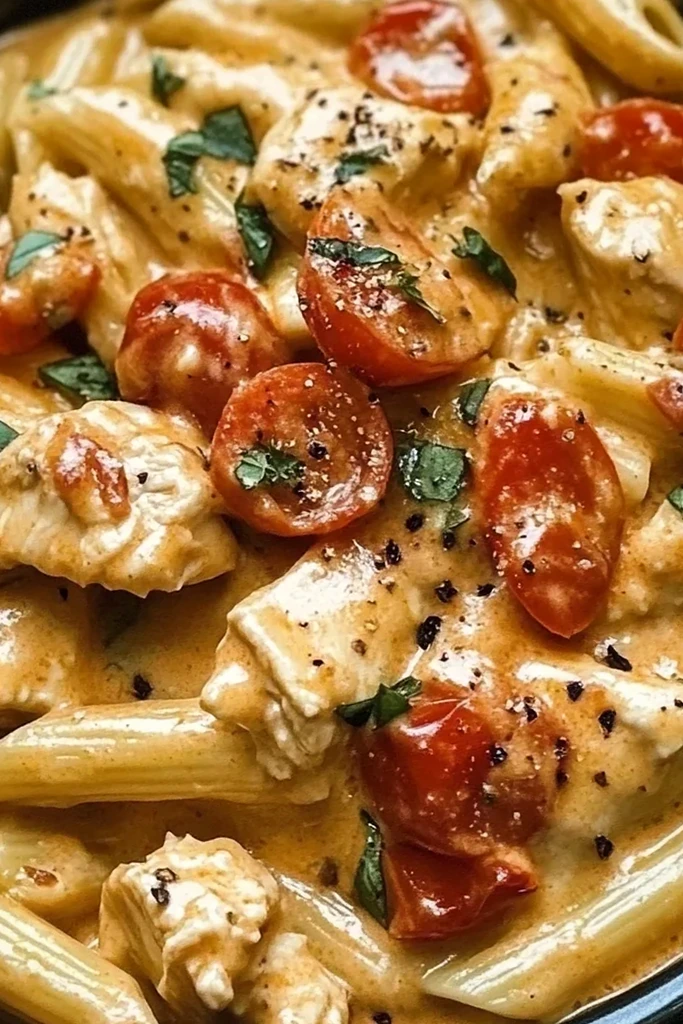
List of ingredients
- 2 tablespoons olive oil
- 1 pound boneless, skinless chicken breasts, diced
- 3 cloves garlic, minced
- 1 teaspoon Italian seasoning
- 1 can (14 ounces) diced tomatoes, undrained
- 2 cups chicken broth
- 8 ounces penne or fusilli pasta
- 1/2 cup heavy cream
- 1 cup fresh spinach
- 1 cup grated Parmesan cheese
- Salt and pepper to taste
- Fresh basil, for garnish
step-by-step instructions
- Heat: In a large pot over medium heat, add the olive oil.
- Cook Chicken: Add the diced chicken breasts and season with salt, pepper, and Italian seasoning. Cook until the chicken is browned, about 5-7 minutes.
- Add Garlic: Stir in the minced garlic and cook for an additional 1-2 minutes, until fragrant.
- Mix Tomatoes and Broth: Pour in the canned tomatoes with their juices and the chicken broth. Stir well to combine.
- Add Pasta: Bring the mixture to a boil, then add the pasta. Reduce heat to a simmer, cover, and cook for 10-12 minutes, stirring occasionally until the pasta is al dente.
- Stir in Cream: Once the pasta is cooked, stir in the heavy cream until smooth.
- Add Spinach: Toss in the fresh spinach and allow it to wilt for 1-2 minutes.
- Mix in Parmesan: Stir in the grated Parmesan cheese until melted and incorporated into the sauce. Adjust seasoning with additional salt and pepper if necessary.
- Serve: Remove from heat and let it sit for a few minutes. Garnish with fresh basil if desired.
Essential Preparation and Cooking Methods
Selecting the Correct Pasta Shapes
For this specific recipe, using short pasta varieties like penne, fusilli, or rigatoni is critical to the final texture. These shapes feature ridges and hollow centers that act as traps for the creamy tomato sauce, ensuring that every bite is as flavorful as the last. Avoid using long, thin noodles like spaghetti or linguine, as they tend to tangle and do not cook as evenly in the confined space of a one-pot liquid ratio.
The Role of Liquid Ratios
The total liquid volume, consisting of the canned tomato juices and the chicken broth, is precisely calculated to hydrate the starch in the pasta while simultaneously reducing into a thick sauce. If you find the pasta is absorbing the liquid too quickly before it becomes tender, add a small splash of warm water. Conversely, if there is too much liquid left after the pasta is done, simply remove the lid and increase the heat for a minute to evaporate the excess moisture.
Achieving the Perfect Sear
When browning the chicken at the start, aim to keep the pieces uniform in size. This ensures that every piece of chicken reaches the same internal temperature at the same rate. Do not crowd the pot, as doing so will cause the chicken to steam in its own juices rather than browning properly, which loses out on the essential flavor development created by the Maillard reaction.
Practical Serving and Plating
Balancing the Acidic Tomato Profile
While the tomato base provides a lovely brightness, it can sometimes be quite sharp depending on the brand of canned tomatoes used. If your sauce tastes too acidic, a tiny pinch of sugar can help balance the profile. Alternatively, adding a little extra Parmesan cheese during the final step acts as a buffer, mellowing the sharpness of the tomatoes with its salty, savory fat content.
Enhancing the Visual Appeal
Presenting this pasta in wide, shallow bowls rather than deep mugs allows for better heat distribution and makes the dish more visually inviting. Garnish immediately before serving with freshly chiffonaded basil or extra shavings of Parmesan. Providing a small side of crusty bread is excellent for wiping up the remaining creamy sauce left on the plate after the pasta is gone.
Storage and Reheating Strategies
Managing Leftovers Effectively
To store your leftovers, allow the pasta to cool to room temperature before transferring it to an airtight container. This helps prevent condensation from building up inside the lid, which can turn the pasta mushy. Kept in the refrigerator, this dish will maintain its quality for up to four days, though it is best enjoyed within the first two days while the sauce is still fresh.
Reviving the Texture During Reheating
When reheating, pasta tends to absorb more sauce as it sits, which can make the texture feel a bit thick or dry. Add a tablespoon or two of milk, cream, or chicken broth to the container before heating it in the microwave or on the stove. This small addition restores the original velvety consistency of the sauce and ensures the noodles regain their ideal moisture level.
Troubleshooting Common Issues
Addressing Clumpy or Separated Sauce
If your sauce appears thin or separated upon adding the cream, it is usually because the heat was too high during the final stage. The dairy in the heavy cream can curdle if it reaches a harsh boil. To fix this, always stir in the cream and Parmesan while the pot is off the heat or over the lowest possible simmer to maintain a smooth emulsion.
Correcting Under-Cooked Pasta
If you notice the liquid has evaporated but the pasta is still firm, add a half-cup of hot water and cover the pot again. Continue to cook for another 2 to 3 minutes, checking the texture frequently. It is better to add liquid in small increments than to drown the pasta, as you want the sauce to remain concentrated rather than watery.
Frequently Asked Questions
Can I use dried herbs instead of fresh basil?
Yes, if fresh basil is unavailable, you can substitute it with a half-teaspoon of dried basil or oregano added during the cooking process. However, add these dried herbs while sautéing the chicken and garlic to allow them to rehydrate and release their essential oils into the dish.
What if my store-bought broth is very salty?
If you are concerned about salt content, use low-sodium chicken broth and adjust the seasoning yourself at the very end. The Parmesan cheese is naturally salty, so it is always safer to add less salt initially and taste the sauce after the cheese has fully melted.
Can this dish be frozen for later?
While pasta can be frozen, the texture of the sauce may change slightly upon thawing. If you choose to freeze it, place the cooled pasta in a freezer-safe bag, pressing out as much air as possible to prevent freezer burn. Thaw it in the refrigerator overnight before reheating it on the stovetop with an additional splash of cream to refresh the sauce.
Print
One-Pot Creamy Chicken Tomato Pasta: An Amazing Ultimate Recipe
- Total Time: 35 minutes
- Yield: 4 servings 1x
- Diet: High-protein
Description
An amazing one-pot meal featuring tender chicken, pasta, and a rich, creamy tomato sauce. This simple, comforting dish is perfect for quick weeknight dinners.
Ingredients
- 2 tablespoons olive oil
- 1 pound boneless, skinless chicken breasts, diced
- 3 cloves garlic, minced
- 1 teaspoon Italian seasoning
- 1 can (14 ounces) diced tomatoes, undrained
- 2 cups chicken broth
- 8 ounces penne or fusilli pasta
- 1/2 cup heavy cream
- 1 cup fresh spinach
- 1 cup grated Parmesan cheese
- Salt and pepper to taste
- Fresh basil, for garnish
Instructions
- Heat: In a large pot over medium heat, add the olive oil.
- Cook Chicken: Add the diced chicken breasts and season with salt, pepper, and Italian seasoning. Cook until the chicken is browned, about 5-7 minutes.
- Add Garlic: Stir in the minced garlic and cook for an additional 1-2 minutes, until fragrant.
- Mix Tomatoes and Broth: Pour in the canned tomatoes with their juices and the chicken broth. Stir well to combine.
- Add Pasta: Bring the mixture to a boil, then add the pasta. Reduce heat to a simmer, cover, and cook for 10-12 minutes, stirring occasionally until the pasta is al dente.
- Stir in Cream: Once the pasta is cooked, stir in the heavy cream until smooth.
- Add Spinach: Toss in the fresh spinach and allow it to wilt for 1-2 minutes.
- Mix in Parmesan: Stir in the grated Parmesan cheese until melted and incorporated into the sauce. Adjust seasoning with additional salt and pepper if necessary.
- Serve: Remove from heat and let it sit for a few minutes. Garnish with fresh basil if desired.
Notes
Use fresh, high-quality ingredients for the best flavor. Store leftovers in an airtight container for up to 4 days.
- Prep Time: 15 minutes
- Cook Time: 20 minutes
- Category: Main Course
- Method: Stovetop
- Cuisine: Italian-inspired
Nutrition
- Serving Size: 1 bowl
- Calories: 550 kcal
- Sugar: 5 g
- Sodium: 780 mg
- Fat: 25 g
- Saturated Fat: 12 g
- Unsaturated Fat: 9 g
- Trans Fat: 0 g
- Carbohydrates: 42 g
- Fiber: 3 g
- Protein: 40 g
- Cholesterol: 110 mg