
Cowboy Butter Chicken Pasta is a hearty, flavorful dish that combines tender seasoned chicken with a rich, buttery, garlic-infused cream sauce. This meal comes together quickly in a single skillet, making it an ideal choice for busy weeknights when you need a comforting and satisfying dinner. By layering spices and utilizing high-quality dairy, you create a restaurant-style experience right in your own kitchen.
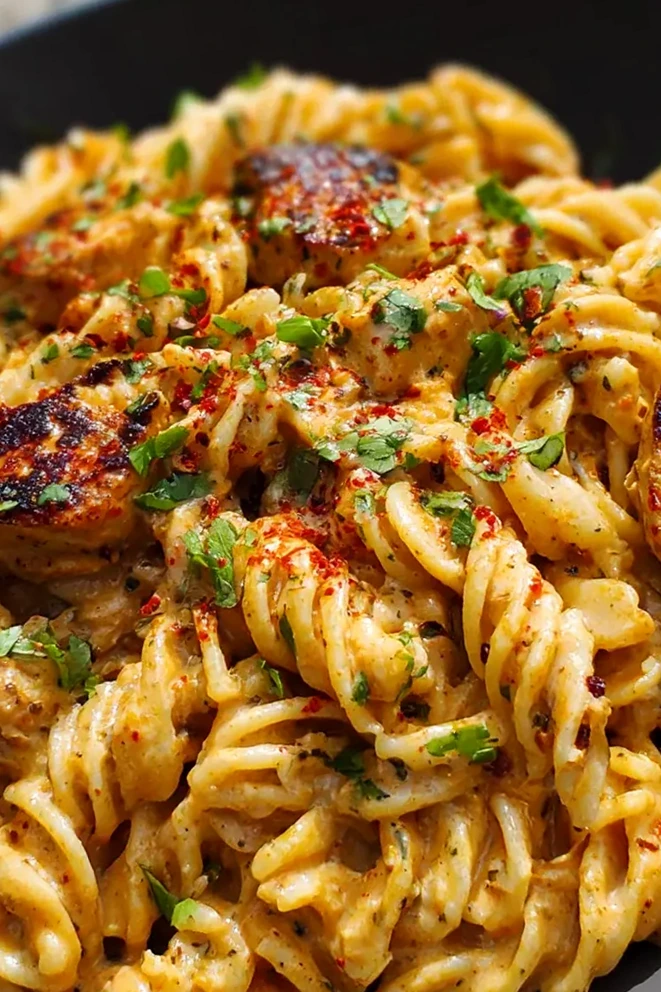
List of ingredients
- 12 oz rotini pasta
- 2 large boneless, skinless chicken breasts, cut into bite-sized cubes
- 3 tablespoons butter
- 4 cloves garlic, minced
- 1 teaspoon smoked paprika
- 1 teaspoon chili powder
- ½ teaspoon cumin
- ½ teaspoon dried oregano
- ¼ teaspoon cayenne pepper
- Salt and black pepper to taste
- 1 cup heavy cream
- ½ cup chicken broth
- ½ cup grated Parmesan cheese
- Fresh parsley, chopped for garnish
- Red pepper flakes for garnish
step-by-step instructions
- Step: Fill a large pot with salted water and bring it to a boil. Add the rotini pasta and cook according to the package directions until it’s just al dente, usually about 8-10 minutes. Drain the pasta and set it aside for later.
- Step: While the pasta cooks, season your chicken cubes generously with salt, pepper, smoked paprika, chili powder, cumin, oregano, and cayenne pepper. Heat 2 tablespoons of butter in a large skillet over medium-high heat. Add the chicken and cook, turning occasionally, until browned and cooked through, about 6-8 minutes. Remove the chicken from the skillet and set it aside.
- Step: Lower the heat to medium and add the remaining tablespoon of butter to the skillet. Add the minced garlic and sauté for about 1 minute until fragrant. Pour in the chicken broth and heavy cream, stirring to mix and scraping up any tasty bits stuck to the pan. Let the sauce simmer gently for 3-4 minutes to thicken. Then, stir in the grated Parmesan cheese until it melts smoothly into the sauce. Return the cooked chicken to the skillet, add the drained pasta, and toss everything together so the pasta and chicken are well coated in the creamy buttery sauce. Taste and add more salt or pepper if needed.
- Step: Dish out the pasta onto plates or bowls. Sprinkle with fresh chopped parsley and a pinch of red pepper flakes for an extra pop of flavor.
Mastering the Pan Sear
Why Dry Chicken Matters
Before you add your chicken to the skillet, make sure you pat the cubes dry with paper towels. Excess moisture on the surface of the meat will cause it to steam rather than brown, preventing the development of that flavorful, crispy crust we want. Dry surfaces react more quickly to the high heat, leading to a much deeper, more complex flavor profile in your final pasta dish.
Avoiding Overcrowding the Pan
When browning your chicken, ensure the pieces have enough space between them. If the skillet is too full, the temperature will drop rapidly, and the chicken will release its juices, effectively boiling the meat instead of searing it. Cooking in two smaller batches, if necessary, is a simple trick to ensure that golden-brown exterior that is essential for high-quality results.
Utilizing the Fond
The browned bits left at the bottom of the pan after searing the chicken are known as the fond. These particles are packed with concentrated flavor, and deglazing the pan with your chicken broth is a necessary step to release them into your sauce. Always use a wooden spoon to scrape the pan gently as you pour in the liquid to ensure every bit of flavor is incorporated into your final meal.
Refining Your Sauce Technique
Managing Heat for Consistency
Cream sauces can be temperamental, so keep your heat at a low simmer once you add the dairy. High temperatures can cause the cream to separate, leading to a grainy sauce rather than a smooth, silky one. If the sauce begins to bubble too aggressively, pull the pan off the heat for a moment to allow the temperature to stabilize.
The Role of Freshly Grated Cheese
Whenever possible, grate your Parmesan cheese directly from a block. Pre-shredded varieties often contain cellulose or other anti-caking agents that prevent the cheese from melting into a smooth consistency. Freshly grated cheese emulsifies much better, creating a cohesive, velvety sauce that clings beautifully to your pasta.
Balancing Sauce Thickness
If your sauce thickens more than you prefer, simply add a splash of reserved pasta water or extra broth. The starch in the pasta water acts as a stabilizer, helping the butter and cream stay emulsified while providing the perfect consistency. Start with just a tablespoon at a time, as the sauce can change texture very quickly once diluted.
Ingredient Adaptations
Choosing Your Pasta Shape
While rotini is excellent for trapping the buttery sauce in its ridges, other pasta varieties work just as well. Penne, rigatoni, or farfalle are all sturdy shapes that handle heavy, creamy sauces without becoming lost. Avoid very thin or delicate strands like angel hair, as they may become overwhelmed and mushy when tossed with larger chicken cubes.
Selecting Alternative Proteins
If you wish to switch up the main protein, shrimp is an excellent substitute that pairs naturally with butter and garlic. Sear the shrimp for just 2 to 3 minutes per side and set aside, adding them back into the sauce at the very end to prevent them from becoming rubbery. For those seeking plant-forward swaps, firm tofu cubes pressed and seasoned with the same spice blend can offer a similar texture to the chicken.
FAQ for Perfect Results
How can I ensure my chicken stays tender?
The most important factor is to avoid overcooking the chicken during the initial sear. Because the chicken will be added back into the sauce later to warm through, you should pull it off the heat as soon as it is just cooked through. Removing it from the skillet while the sauce is being prepared prevents the meat from turning dry or stringy.
Can I prepare the sauce in advance?
You can certainly prep the components ahead of time, but it is best to combine them right before serving. Cook your pasta and sear the chicken, then keep them separate until you are ready for dinner. Making the sauce fresh ensures it maintains its creamy, glossy texture, whereas reheating a pre-made cream sauce can often cause the fats to separate.
What should I do if the sauce looks broken?
A broken sauce usually looks oily or separated, which often happens if the heat is too high or the cheese was added too quickly. If this occurs, try removing the pan from the heat and whisking in one tablespoon of cold broth or heavy cream until it pulls back together. Usually, a quick, steady whisking motion off the heat is enough to emulsify the butter and cream once more.
Serving and Pairing Suggestions
Building a Balanced Menu
Because this pasta is quite rich, it pairs best with lighter vegetable side dishes that offer a crisp contrast. Consider serving a simple arugula salad dressed with a bright lemon vinaigrette to cut through the creaminess. Alternatively, roasted asparagus or steamed green beans with a light squeeze of lemon zest provide a fresh crunch that complements the smoky spices of the chicken.
Adding Color and Texture
Garnishes are more than just aesthetic; they add layers of flavor. Fresh parsley provides a clean, herbaceous note that balances the saltiness of the Parmesan. If you want a bit of texture, toasted pine nuts or crispy breadcrumbs sprinkled over the top can add a satisfying crunch that makes every bite more engaging.
Storing and Reheating
Proper Refrigeration
Store any leftover pasta in an airtight container in the refrigerator for up to three days. As the pasta sits, it will continue to absorb the sauce, which may make it appear thicker or drier the next day. This is a normal process, but you will need to adjust the moisture levels when reheating to bring it back to its original consistency.
Reheating for Best Texture
When reheating leftovers, the best method is to use a skillet on the stovetop over low heat. Add a tablespoon of milk, cream, or water to the pan to loosen the sauce as it warms. Avoid using the microwave if possible, as high-intensity heat can cause the fat in the sauce to separate from the cream, resulting in an oily, unappealing dish. If you must use a microwave, use a medium power setting and stir the pasta every thirty seconds.
Print
Cowboy Butter Chicken Pasta
- Total Time: 20 minutes
- Yield: 4 servings 1x
- Diet: High Protein
Description
Cowboy Butter Chicken Pasta is a hearty and flavorful dish that brings together tender chicken pieces, rich buttery sauce, and perfectly cooked pasta all in one skillet. With a mix of bold spices and a creamy, garlic-infused butter sauce, this meal feels warm and satisfying every time you eat it.
Ingredients
- 12 oz rotini pasta
- 2 large boneless, skinless chicken breasts, cut into bite-sized cubes
- 3 tablespoons butter
- 4 cloves garlic, minced
- 1 teaspoon smoked paprika
- 1 teaspoon chili powder
- ½ teaspoon cumin
- ½ teaspoon dried oregano
- ¼ teaspoon cayenne pepper
- Salt and black pepper to taste
- 1 cup heavy cream
- ½ cup chicken broth
- ½ cup grated Parmesan cheese
- Fresh parsley, chopped for garnish
- Red pepper flakes for garnish
Instructions
- Step: Fill a large pot with salted water and bring it to a boil. Add the rotini pasta and cook according to the package directions until it’s just al dente, usually about 8-10 minutes. Drain the pasta and set it aside for later.
- Step: While the pasta cooks, season your chicken cubes generously with salt, pepper, smoked paprika, chili powder, cumin, oregano, and cayenne pepper. Heat 2 tablespoons of butter in a large skillet over medium-high heat. Add the chicken and cook, turning occasionally, until browned and cooked through, about 6-8 minutes. Remove the chicken from the skillet and set it aside.
- Step: Lower the heat to medium and add the remaining tablespoon of butter to the skillet. Add the minced garlic and sauté for about 1 minute until fragrant. Pour in the chicken broth and heavy cream, stirring to mix and scraping up any tasty bits stuck to the pan. Let the sauce simmer gently for 3-4 minutes to thicken. Then, stir in the grated Parmesan cheese until it melts smoothly into the sauce. Return the cooked chicken to the skillet, add the drained pasta, and toss everything together so the pasta and chicken are well coated in the creamy buttery sauce. Taste and add more salt or pepper if needed.
- Step: Dish out the pasta onto plates or bowls. Sprinkle with fresh chopped parsley and a pinch of red pepper flakes for an extra pop of flavor.
Notes
Leftovers can be stored in an airtight container in the fridge for up to 3 days. Reheat gently in a skillet over low heat, adding a splash of milk or broth if the sauce thickens too much.
- Prep Time: 10 minutes
- Cook Time: 10 minutes
- Category: Main Course
- Method: Stovetop
- Cuisine: American
Nutrition
- Serving Size: 1.5 cups
- Calories: 580 kcal
- Sugar: 3 g
- Sodium: 720 mg
- Fat: 28 g
- Saturated Fat: 15 g
- Unsaturated Fat: 10 g
- Trans Fat: 0 g
- Carbohydrates: 52 g
- Fiber: 3 g
- Protein: 32 g
- Cholesterol: 115 mg