
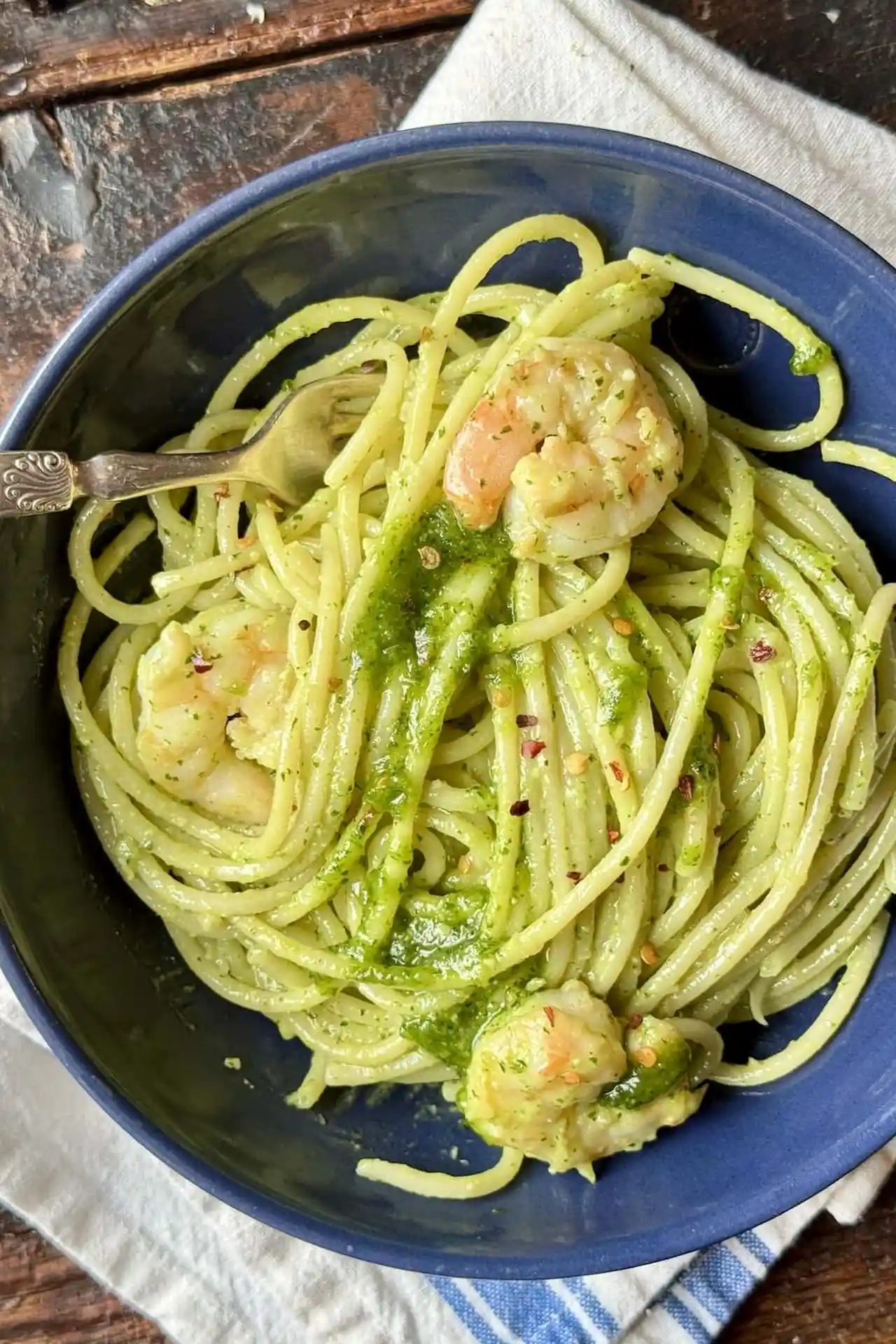
This vibrant pasta dish combines succulent shrimp with a homemade basil pesto to create a bright, fresh meal perfect for any occasion. By tossing the linguine directly with the aromatics and reserved pasta water, you achieve a restaurant-quality emulsion that coats every strand beautifully. This recipe is designed to be efficient, ensuring you have a flavorful, balanced dinner on the table in under thirty minutes.
List of ingredients
- 1 cup fresh basil leaves
- ½ cup pine nuts
- 2 garlic cloves
- Pinch of kosher salt
- ½ cup grated Parmesan cheese (1 ½ ounces)
- ½ cup olive oil
- Kosher salt, to taste
- 1 (1-pound) box linguine pasta
- 3 tablespoons butter
- 2 tablespoon extra-virgin olive oil
- ¾ pound shrimp, cleaned and deveined
- ¼ cup freshly grated parmesan
- ¼ teaspoon red pepper flakes
- Fresh basil, optional
step-by-step instructions
- Step: Put basil leaves, pine nuts, garlic, and salt in a food processor and blend until a paste forms. Add the parmesan and blend until well combined. While the food processor is running, slowly drizzle in the olive oil until the pesto has a creamy consistency and everything is fully incorporated. Transfer the pesto to a jar and set aside.
- Step: Bring a large pot of water to a boil, season with 2 tablespoons of kosher salt, and drop the pasta in. Cook 1 minute shy of al dente.
- Step: In a large sauté pan over medium heat, add the butter and olive oil. Once melted, add the shrimp to the pan and cook, stirring, until they turn pink and curl up, about 2-3 minutes. Turn off heat and set aside.
- Step: Turn the heat on under the shrimp, reserve 1 cup of pasta cooking water, and transfer the linguine directly from the boiling water into the sauté pan. Toss to coat in butter and oil, add ½ cup of reserved pasta water, and finish cooking the pasta for about 1 minute.
- Step: Remove from heat, add the pesto to the pan, and toss to coat evenly, adding the remaining ½ cup of pasta water if needed. Add half of the parmesan cheese and the red pepper flakes, tossing to combine.
- Step: Transfer to a serving bowl, top with the remaining parmesan and torn basil, and serve.
Helpful culinary techniques
Achieving the perfect pasta texture
The secret to this recipe lies in pulling the pasta from the boiling water slightly early. Because the noodles continue to cook while absorbing the starchy water and pesto in the skillet, starting them early ensures they remain firm and provide that signature al dente bite. Always test a strand a minute before the package time to confirm it has reached the desired consistency.
Selecting the best basil for pesto
For the most vibrant green results, ensure your basil leaves are completely dry after washing. Excess moisture can make your pesto runny or cause the color to oxidize and turn brown quickly. Choose leaves that are bright green, firm, and free of any dark spots or wilted edges to ensure the most robust herbal profile.
Substitutions and common adjustments
Replacing pine nuts in the pesto
If you cannot find pine nuts or want to experiment with different profiles, toasted walnuts or blanched almonds work well as replacements. Simply toast them in a dry pan until fragrant before adding them to the food processor for a similar crunch and earthy flavor. These alternatives are also excellent for lowering the total cost of the dish while maintaining that signature creamy consistency.
Adapting the pasta shape
While linguine is the traditional choice due to its ability to hold sauces effectively, other shapes work just as well. Long, thin varieties like spaghetti or spaghettini are excellent alternatives. Avoid very thick pasta shapes that might overpower the delicacy of the fresh basil pesto, as the balance of the dish relies on the sauce coating each strand evenly.
Storage and reheating
Keeping leftovers fresh
Store any remaining pasta in an airtight container in the refrigerator for up to three days. It is important to press plastic wrap directly onto the surface of the pasta if possible, as this helps prevent the pesto from darkening due to air exposure. Keep the pasta in a single layer if your container size allows to prevent the noodles from sticking together too tightly as they cool.
Gentle reheating strategies
To reheat, place the pasta in a non-stick pan over low heat with a very small splash of water or oil. Stir constantly to avoid scrambling the cheese or breaking the emulsion of the pesto. Gentle, low-heat application is necessary to bring the dish back to a warm temperature without overcooking the shrimp or turning the basil sauce bitter.
Frequently asked questions
Can I make the pesto a day in advance?
Yes, preparing the pesto ahead of time is an excellent way to save effort during a busy weeknight. Simply transfer it to a clean jar and cover the surface with a thin layer of olive oil before sealing it with a lid. The oil acts as a barrier against oxygen, which helps the pesto maintain its bright, vibrant green color until you are ready to toss it with the hot pasta.
How do I know when the shrimp are fully cooked?
Watch for the color and shape of the shrimp to tell you when they are ready. They should turn from translucent gray to an opaque, bright pink, and ideally, they will curl slightly into a ‘C’ shape. If they curl into a tight ‘O’ shape, they have likely been overcooked and may develop a rubbery, tough texture.
Why is it necessary to reserve the pasta water?
The starchy, salty water left behind in the pot is essentially ‘liquid gold’ for sauce-based pasta dishes. It helps the fats in the butter, oil, and pesto emulsify into a smooth, glossy sauce that clings to the noodles. Without this water, the sauce may separate, leaving the bottom of your pan greasy rather than coated with a cohesive, delicious mixture.
Is it okay to use pre-grated parmesan?
While pre-grated cheese is convenient, it often contains anti-caking agents that can interfere with the way the cheese melts. For the best sauce texture, grate your own Parmesan cheese using a microplane or fine box grater. This ensures the cheese melts perfectly into the hot pasta water and pesto, creating a smooth and creamy finish that pre-grated versions simply cannot replicate.
Can I add vegetables to this recipe?
This dish is very versatile and pairs well with many spring vegetables. Blanched snap peas, roasted asparagus, or even some sautéed zucchini coins can be added during the final tossing step. Ensure any vegetables you add are cooked separately and added just at the end to maintain their bright colors and crisp textures, as the sauce is very delicate.
Print
Shrimp and Pesto Pasta
- Total Time: PT25M
- Yield: 6 servings 1x
- Diet: Pescatarian
Description
This shrimp pasta dish is simple and fresh for a delicious Spring dinner!
Ingredients
- 1 cup fresh basil leaves
- ½ cup pine nuts
- 2 garlic cloves
- Pinch of kosher salt
- ½ cup grated Parmesan cheese (1 ½ ounces)
- ½ cup olive oil
- Kosher salt, to taste
- 1 (1-pound) box linguine pasta
- 3 tablespoons butter
- 2 tablespoon extra-virgin olive oil
- ¾ pound shrimp, cleaned and deveined
- ¼ cup freshly grated parmesan
- ¼ teaspoon red pepper flakes
- Fresh basil, optional
Instructions
- Step: Put basil leaves, pine nuts, garlic, and salt in a food processor and blend until a paste forms. Add the parmesan and blend until well combined. While the food processor is running, slowly drizzle in the olive oil until the pesto has a creamy consistency and everything is fully incorporated. Transfer the pesto to a jar and set aside.
- Step: Bring a large pot of water to a boil, season with 2 tablespoons of kosher salt, and drop the pasta in. Cook 1 minute shy of al dente.
- Step: In a large sauté pan over medium heat, add the butter and olive oil. Once melted, add the shrimp to the pan and cook, stirring, until they turn pink and curl up, about 2-3 minutes. Turn off heat and set aside.
- Step: Turn the heat on under the shrimp, reserve 1 cup of pasta cooking water, and transfer the linguine directly from the boiling water into the sauté pan. Toss to coat in butter and oil, add ½ cup of reserved pasta water, and finish cooking the pasta for about 1 minute.
- Step: Remove from heat, add the pesto to the pan, and toss to coat evenly, adding the remaining ½ cup of pasta water if needed. Add half of the parmesan cheese and the red pepper flakes, tossing to combine.
- Step: Transfer to a serving bowl, top with the remaining parmesan and torn basil, and serve.
Notes
Store leftover pasta in an airtight container in the refrigerator for up to three days. Reheat gently on the stovetop until warmed through.
- Prep Time: PT10M
- Cook Time: PT15M
- Category: Pasta
- Method: Stovetop
- Cuisine: Italian American
Nutrition
- Serving Size: 1 serving
- Calories: 456 kcal
- Sugar: 2.4 g
- Sodium: 538.4 mg
- Fat: 14.1 g
- Saturated Fat: 4.5 g
- Unsaturated Fat: 9.6 g
- Trans Fat: 0 g
- Carbohydrates: 57.9 g
- Fiber: 2.8 g
- Protein: 23.6 g
- Cholesterol: 98.7 mg