
This efficient weeknight meal combines tender chicken and fresh spinach in a rich, homemade parmesan sauce. It is designed for quick preparation and cleanup, making it an ideal choice for busy schedules.
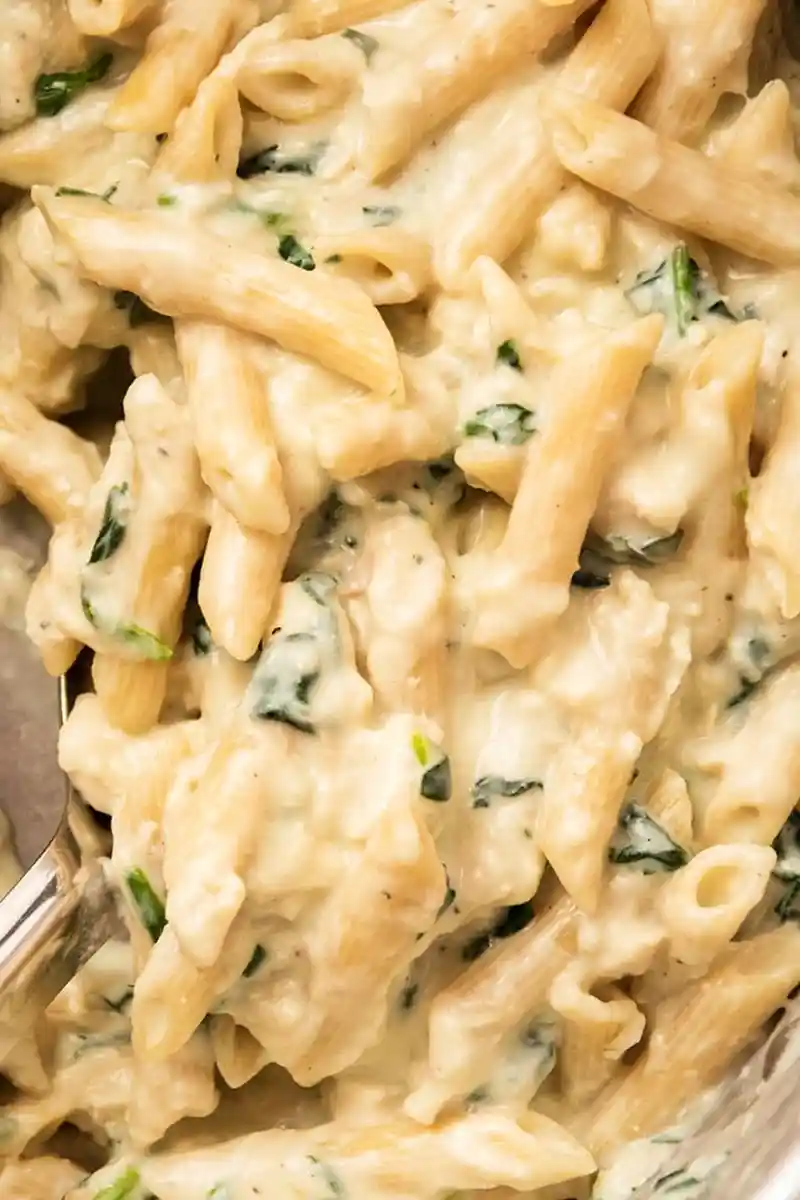
List of ingredients
- 1 pound pasta (penne recommended) – serves as the hearty base of the dish.
- 3 Tablespoons unsalted butter – used to create the roux for thickening.
- 2 cloves garlic, minced – provides a foundational aromatic flavor.
- 3 Tablespoons all purpose flour – acts as the thickening agent for the sauce.
- 1 3/4 cups milk – creates the creamy liquid body of the sauce.
- 2 Tablespoons cream cheese (optional) – adds extra richness and a slight tang.
- 1 1/2 cups shredded parmesan cheese, plus extra for garnish – provides a sharp, salty finish.
- 2 cups cooked shredded chicken – the primary protein source.
- 3 heaping cups fresh spinach, lightly chopped – adds color, texture, and nutrition.
- 1/2 cup reserved pasta water – essential for adjusting the final sauce consistency.
- salt and pepper to taste – for basic seasoning.
step-by-step instructions
- Boil the Pasta: Cook the penne in heavily salted water until it reaches an al dente texture. Reserve 1/2 cup of the starchy pasta water, drain the noodles, and return the empty pot to the stove.
- Sauté the Aromatics: Melt the butter in the pot over medium heat. Add the minced garlic and sauté for approximately 2 minutes until it is fragrant but not browned.
- Prepare the Roux: Whisk the all-purpose flour into the melted butter. Continue to cook for about 1 minute, stirring constantly until the mixture is fragrant and lightly browned.
- Build the Sauce: Gradually pour in the milk a little at a time. Whisk constantly to break up any clumps; the sauce will thicken initially and then loosen as more milk is added.
- Thicken the Base: Allow the sauce to cook for about 6 minutes, whisking occasionally, until it has reached a thickened consistency.
- Incorporate Main Ingredients: Stir in the cooked shredded chicken, chopped fresh spinach, and cream cheese. Stir until the cream cheese has completely melted into the sauce.
- Add the Cheese: Turn off the heat entirely. Stir in the shredded parmesan cheese until it is fully incorporated and melted.
- Combine and Emulsify: Return the cooked pasta to the pot. Stir in the reserved pasta water a few tablespoons at a time until the sauce is smooth and coats the pasta evenly.
- Final Seasoning: Taste the dish and add salt and pepper as needed. Garnish with extra parmesan and freshly cracked black pepper before serving immediately.
Optimizing Sauce Texture and Quality
Use Freshly Grated Parmesan for Better Melting
Store-bought pre-shredded cheeses are often coated in potato starch or cellulose to prevent clumping in the bag. These additives can hinder the cheese from melting smoothly, resulting in a grainy sauce. Grating a block of high-quality parmesan ensures a silky, homogeneous texture.
Utilize Starchy Pasta Water for Emulsification
The reserved pasta water contains released starches from the noodles, which act as a natural binder. Adding this water at the end helps the fat in the butter and cheese bond with the liquid milk. This prevents the sauce from separating or appearing oily on the plate.
Control the Roux Temperature
When cooking the flour and butter, keep the heat at a steady medium. If the heat is too high, the butter can burn, leaving a bitter taste in the final dish. Cooking the flour for one minute removes the raw flour taste while maintaining a light color.
Protein and Vegetable Modifications
Substituting Chicken with Seafood
Shrimp or scallops are excellent alternatives to chicken in this creamy sauce. For shrimp, sauté them separately in butter first, then add them to the sauce at the same time as the chicken. Ensure the seafood is not overcooked to maintain a tender texture.
Adding Hearty Root Vegetables
Roasted butternut squash or carrots can be stirred into the sauce for added sweetness and nutrition. Since these vegetables take longer to cook, they must be roasted or steamed before being added to the pot. This ensures they are tender and fully cooked through.
Incorporating Additional Green Vegetables
Steamed broccoli florets or frozen peas are compatible with the parmesan and garlic base. Add these during the final stages of sauce thickening to prevent them from becoming mushy. This increases the volume of the meal without significantly altering the flavor profile.
Swapping Spinach for Other Leafy Greens
Kale or arugula can be used in place of spinach if a different flavor profile is desired. Kale requires a few extra minutes of simmering to soften its tougher fibers. Arugula should be added at the very end, as its delicate leaves wilt almost instantly.
Pasta Selection and Alternatives
Choosing the Ideal Pasta Shape
Penne is recommended because its tubular shape and ridges trap the thick sauce effectively. Other great options include rigatoni, fusilli, or farfalle, which also offer high surface area for sauce adherence. Avoid very thin pastas like angel hair, as they may be overwhelmed by the heavy cream base.
Implementing Low-Carb Substitutes
Zucchini noodles or steamed cauliflower florets can replace traditional wheat pasta for a lower-carbohydrate version. If using zucchini noodles, sauté them briefly in a separate pan to remove excess moisture. This prevents the sauce from becoming too watery.
Converting the Dish into a Pasta Bake
This recipe can be transformed into a casserole by transferring the finished pasta into a baking dish. Top the mixture with shredded mozzarella and a dusting of parmesan cheese. Bake at 350°F (175°C) until the top is bubbly and lightly browned.
Storage and Long-Term Preservation
Refrigerating Leftover Pasta
Store leftover pasta in an airtight container in the refrigerator for up to 3 to 4 days. The sauce will naturally thicken as it cools and the pasta absorbs moisture. To maintain quality, ensure the container is sealed tightly to prevent the pasta from drying out.
Freezing the Prepared Sauce
The sauce can be frozen independently for up to 3 months. Allow the sauce to cool completely before transferring it to a freezer-safe container or bag. Thaw it overnight in the refrigerator before reheating in a saucepan and tossing with fresh pasta.
Freezing Assembled Pasta
The fully assembled dish can be frozen for 1 to 2 months. To preserve the texture, slightly undercook the pasta before assembling the meal. This prevents the noodles from becoming mushy after the thawing and reheating process.
Effective Reheating Techniques
Stovetop Reheating for Creaminess
The best way to reheat this dish is in a large saucepan over low to medium heat. Add a splash of milk, cream, or vegetable broth to loosen the sauce. Stir gently to avoid breaking the pasta noodles while the sauce returns to a creamy state.
Microwave Reheating Instructions
Place the pasta in a microwave-safe bowl and add a tablespoon of milk. Cover the bowl with a damp paper towel to trap steam, which helps prevent the edges from drying. Heat in 30-second intervals, stirring between each session until warmed through.
Preventing Sauce Separation During Reheating
Avoid using high heat during the reheating process, as this can cause the fats in the cheese and butter to separate. Keep the temperature low and stir constantly. Adding a small amount of liquid helps maintain the emulsion of the sauce.
Advanced Make-Ahead Strategies
Preparing the Sauce Base in Advance
The béchamel base (butter, flour, and milk) can be made a day ahead of time. Store it in the fridge and reheat it slowly before adding the chicken, spinach, and cheeses. This reduces the active cooking time on the night of serving.
Pre-Processing Ingredients
Minced garlic can be stored in oil, and chicken can be shredded and portioned in advance. Chopping the spinach and shredding the parmesan beforehand further streamlines the process. These preparation steps can reduce the actual stove time to under 20 minutes.
Troubleshooting Common Cooking Issues
Correcting a Thin Sauce
If the sauce remains too thin after the simmering stage, let it cook for an additional 2 to 3 minutes without the lid. You can also stir in a small amount of additional parmesan cheese, which acts as a natural thickener. Ensure the heat remains medium to avoid scorching the bottom.
Thinning Out an Overly Thick Sauce
If the sauce becomes too thick or pasty, stir in reserved pasta water one tablespoon at a time. If you have run out of pasta water, a small splash of milk or vegetable broth will work. Stir slowly until the desired consistency is achieved.
Managing Spinach Wilt and Color
To keep the spinach vibrant green, add it toward the end of the cooking process. Overcooking spinach causes it to lose its color and become overly soft. Stirring it in just before adding the cheese ensures it wilts but retains its structure.
Frequently Asked Questions
Can I use a different type of milk?
Yes, whole milk provides the richest flavor, but 2% or skim milk can be used. For a non-dairy option, unsweetened almond or soy milk works well, though the flavor may be slightly different and you may need a bit more parmesan for thickness.
How do I make this recipe vegetarian?
Omit the chicken and replace it with sautéed mushrooms, chickpeas, or extra vegetables like peas. Ensure the parmesan cheese used is made with microbial rennet rather than animal rennet to keep the dish entirely vegetarian.
What is the fastest way to shred chicken?
Using a hand mixer on low speed is the fastest method for shredding cooked chicken breasts. Place the warm chicken in a bowl and let the beaters pull the meat apart. Alternatively, two forks can be used to pull the meat along the grain.
Can I use frozen spinach instead of fresh?
Yes, frozen spinach can be used. Ensure it is fully thawed and squeezed dry of all excess water before adding it to the sauce. Using wet frozen spinach will dilute the sauce and may make it watery.
) Print
30 Minute Creamy Chicken Spinach Pasta
- Total Time: 30 minutes
- Yield: 4 servings 1x
- Diet: General
Description
This quick and easy weeknight pasta uses a homemade parmesan sauce, chicken, and plenty of spinach!
Ingredients
- 1 pound pasta (penne)
- 3 Tablespoons unsalted butter
- 2 cloves garlic, minced
- 3 Tablespoons all purpose flour
- 1 3/4 cups milk
- 2 Tablespoons cream cheese (optional)
- 1 1/2 cups shredded parmesan cheese, plus extra for garnish
- 2 cups cooked shredded chicken
- 3 heaping cups fresh spinach, lightly chopped
- 1/2 cup reserved pasta water
- salt and pepper to taste
Instructions
- Step: Cook the penne in very salty water until al dente. Reserve 1/2 cup of pasta water, then drain pasta and return the pot to the stove.
- Step: Add butter to pot and melt over medium heat. Add chopped garlic and sauté until fragrant, about 2 minutes.
- Step: Add flour to butter and whisk to combine. Let cook for 1 minute until fragrant and lightly browned.
- Step: Add milk a little at a time, whisking constantly to work out any lumps.
- Step: Cook sauce, whisking occasionally, until thickened, about 6 minutes.
- Step: Add chicken, spinach, and cream cheese. Stir until cheese has melted.
- Step: Turn off the heat and stir in parmesan cheese.
- Step: Return cooked pasta to sauce and stir to combine. Stir in the reserved pasta water a few Tablespoons at a time until sauce is smooth and creamy.
- Step: Taste the pasta! Add salt and pepper to taste. Garnish with extra parmesan and fresh cracked black pepper (optional) and serve immediately.
Notes
Shred your own parmesan cheese for best results. Store-bought shredded cheese often has preservatives that prevent it from melting smoothly.
- Prep Time: 10 minutes
- Cook Time: 20 minutes
- Category: Main Dish
- Method: Stovetop
- Cuisine: Italian-American
Nutrition
- Serving Size: 1 serving
- Calories: 618 kcal
- Sugar: 6 g
- Sodium: 461.4 mg
- Fat: 25 g
- Saturated Fat: 12 g
- Unsaturated Fat: 13 g
- Trans Fat: 0 g
- Carbohydrates: 64.9 g
- Fiber: 4 g
- Protein: 31.8 g
- Cholesterol: 99 mg