
This spaghetti aglio e olio is a fast and flavorful Italian meal that uses simple pantry staples. It combines high-quality olive oil and fresh garlic for a comforting dinner ready in 15 minutes.
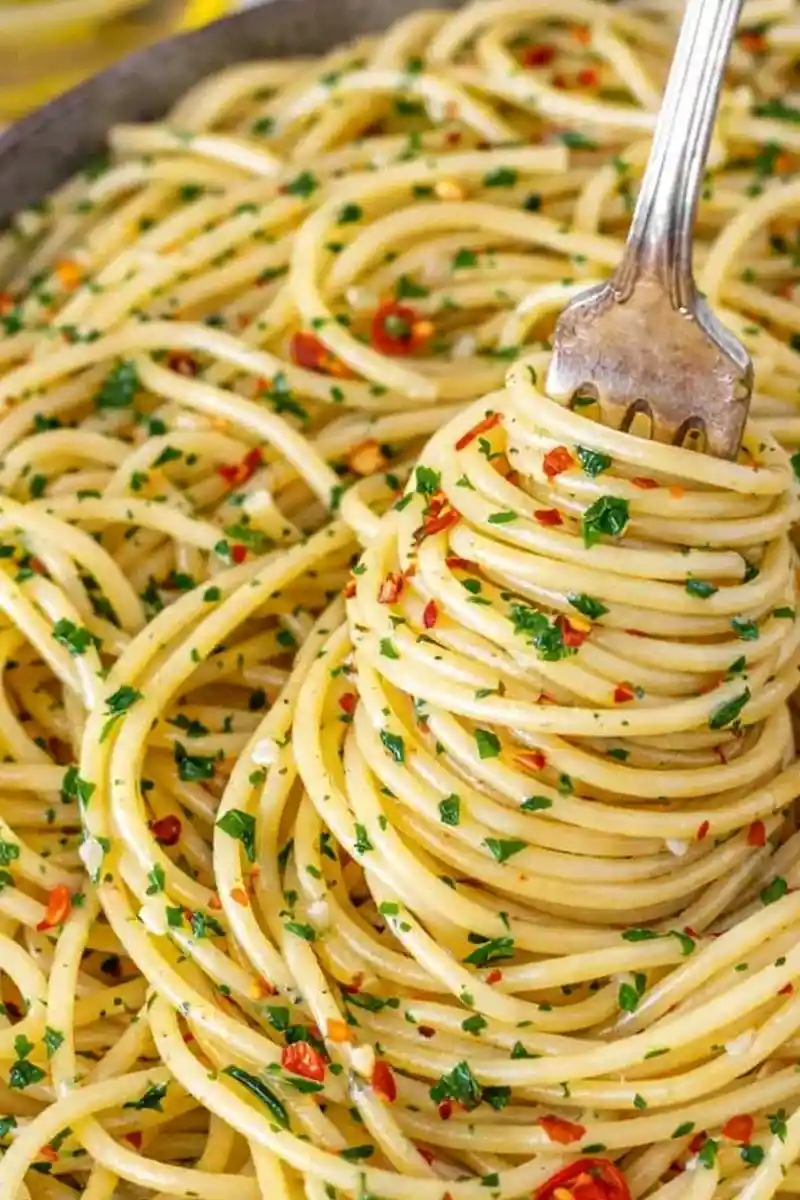
List of ingredients
- 12 ounces spaghetti – cook in 3.5 Liters of water with 1.5 tablespoons (20 grams) of salt.
- 1/3 cup extra virgin olive oil – used for the base of the sauce.
- 3 cloves garlic – grated, minced, or thinly sliced.
- 1 teaspoon red pepper flakes – or finely chopped red chili, adjusted for heat.
- 3 tablespoons flat-leaf parsley – finely chopped for freshness.
step-by-step instructions
- Cook the Pasta: Bring a big pot of water to a boil and add a good amount of salt so the water tastes salty. Add 12 ounces of spaghetti and stir once or twice to prevent sticking. Cook the pasta for about 1 minute less than the package instructions suggest. Before draining, scoop out 1 cup of the starchy pasta water and save it. While the pasta cooks, finely chop or grate the garlic and parsley and keep them nearby.
- Flavor the Oil: Pour 1/3 cup of extra virgin olive oil into a large pan and set the heat to low. When the oil is warm but not yet sizzling or smoking, add the garlic and chili. Let them gently sizzle for about 30 seconds, then turn off the heat immediately to prevent the garlic from burning.
- Add the Parsley: Just before the pasta finishes cooking, turn the heat back on to low. Once the garlic starts sizzling again, stir in the chopped parsley. Cook for 30 seconds until the parsley is fragrant and bright green.
- Toss Everything Together: Add the drained spaghetti to the pan. Pour in 1/4 cup of the reserved pasta water and add a small pinch of salt. Toss the mixture over medium heat for 1 to 2 minutes until the pasta is shiny, coated, and no liquid remains in the pan. Serve immediately.
Professional Cooking Tips
Prevent Garlic from Burning
Garlic contains natural sugars that caramelize quickly and turn bitter if exposed to high heat. Keep the oil temperature low and remove the pan from the burner as soon as the garlic becomes fragrant. If the garlic turns dark brown, it is best to start over to avoid a bitter sauce.
Achieve the Perfect Al Dente Texture
Drain your pasta about one minute before the package directions indicate it is done. This allows the noodles to finish cooking inside the sauce, absorbing the garlic-infused oil. This method ensures the pasta maintains a firm bite and a better structure.
Use Starchy Pasta Water for Emulsification
The starch released into the boiling water acts as a natural emulsifier between the fat and the liquid. Adding a small amount of this water to the oil prevents the sauce from separating or appearing greasy. It creates a silky, cohesive coating that clings to every strand of spaghetti.
Timing the Parsley Addition
Fresh parsley is delicate and loses its vibrant color and flavor if cooked for too long. Add it at the very end of the oil-infusing process for just a few seconds. This preserves the bright green hue and the fresh, peppery taste of the herb.
Selecting High-Quality Olive Oil
Since olive oil is the primary flavor component, the quality of the oil significantly impacts the final dish. Use a high-quality extra virgin olive oil with a fruity or peppery profile. Avoid refined oils that lack the distinct flavor necessary for a traditional aglio e olio.
Importance of Salting the Water
Salting the pasta water is the only opportunity to season the noodle itself from the inside out. Use a generous amount of salt so the water tastes like the sea. This enhances the overall flavor profile and prevents the dish from tasting bland.
Avoiding Oil in the Boiling Pot
Adding oil to the pasta water does not prevent the noodles from sticking. Instead, it creates a slick surface on the pasta that prevents the sauce from adhering to the strands. A simple stir during the first two minutes of boiling is sufficient to stop sticking.
Immediate Serving for Best Results
This pasta is best enjoyed immediately after tossing it in the pan. As the pasta cools, it continues to absorb the sauce, which can lead to a dry texture. Serving it hot and fresh ensures the sauce remains silky and glossy.
Using the Right Pan Size
Use a large skillet or a wide pan to allow the spaghetti to spread out and coat evenly. A cramped pan makes it difficult to toss the pasta and can lead to uneven distribution of garlic and chili. This helps in achieving a uniform coating of the emulsion.
Garlic Cutting Methods
The way you cut the garlic changes the flavor intensity. Grating or mincing creates a more pungent, integrated flavor, while thinly slicing provides mild, toasted garlic chips. Choose the method that best fits your preference for garlic intensity.
Alternative Ingredient Options
Alternative Pasta Shapes
While spaghetti is the traditional choice, linguine or bucatini are excellent alternatives that hold the oil-based sauce well. Whole wheat pasta can be used for added fiber and a nuttier taste. Avoid very small shapes like macaroni, as they do not provide the same surface area for the oil.
Using Garlic Paste or Roasted Garlic
If you do not have fresh cloves, garlic paste can be used as a convenient substitute. For a milder, sweeter flavor, you can stir in roasted garlic cloves that have been mashed into a paste. This changes the profile from sharp and pungent to soft and mellow.
Adjusting Heat Levels with Different Chilies
Red pepper flakes are standard, but fresh red bird’s eye chilies provide a sharper, cleaner heat. For a family-friendly version, you can omit the chili entirely or use a tiny pinch of paprika for color without the spice. Always taste as you go to balance the heat.
Herb Alternatives to Parsley
If flat-leaf parsley is unavailable, fresh cilantro or basil can provide a similar brightness. Basil offers a sweeter, more aromatic profile that pairs well with garlic. Use the same quantity and add it at the final stage of cooking.
Different Olive Oil Varieties
While extra virgin is preferred, a light olive oil can be used if you want the garlic flavor to be more dominant than the oil flavor. Cold-pressed oils generally offer the best nutritional profile and aroma. Avoid using butter or margarine to keep the authentic Italian flavor.
Ways to Customize Your Pasta
Adding Plant-Based Proteins
Stir in canned cannellini beans or butter beans for a hearty, protein-rich meal. These beans soak up the garlic oil and add a creamy texture to the dish. You can also add sautéed shrimp for a more decadent seafood version.
Incorporating Fresh Lemon
Adding lemon zest and a squeeze of fresh lemon juice at the end brightens the heavy oil base. The acidity cuts through the richness of the olive oil and enhances the garlic. This turns the dish into a light, refreshing summer meal.
Including Leafy Greens or Broccoli
Fold in a handful of baby spinach and let it wilt in the heat of the pasta. Alternatively, add steamed broccoli florets or sautéed zucchini slices. These additions increase the nutritional value and add color to the plate.
Boosting Umami with White Miso
A small teaspoon of white miso paste stirred into the sauce adds a deep, salty umami flavor. The miso blends seamlessly into the oil and pasta water emulsion. This provides a complex savory depth that mimics the taste of aged cheese.
Toasted Breadcrumbs for Texture
To add a crunch to the silky pasta, sprinkle toasted panko or coarse breadcrumbs on top before serving. Sauté the breadcrumbs in a bit of oil and garlic first for maximum flavor. This adds a contrasting texture that makes the dish more satisfying.
Sun-Dried Tomatoes for Tanginess
Thinly sliced sun-dried tomatoes add a concentrated sweet and tart flavor to the dish. Add them to the pan at the same time as the garlic to let their flavors infuse into the oil. This adds a Mediterranean twist to the classic recipe.
Storage and Reheating Guide
Proper Refrigeration Methods
Store leftover pasta in an airtight container in the refrigerator for up to three days. Keep the pasta separate from any additional toppings if possible. Ensure the container is sealed tightly to prevent the olive oil from absorbing other refrigerator odors.
Best Reheating Techniques
Avoid reheating this pasta in the microwave, as it can make the oil separate and the noodles rubbery. Instead, place the pasta in a skillet over low heat. Add a splash of water or a teaspoon of fresh olive oil to revive the silky texture of the sauce.
Make-Ahead Considerations
Aglio e olio is not ideal for make-ahead preparation because the pasta absorbs the oil over time. If you must prepare it in advance, undercook the pasta significantly. Finish the cooking process in the pan with fresh oil and water when you are ready to serve.
Freezing Limitations
Freezing this dish is not recommended because the emulsion of oil and starch breaks down during the freezing and thawing process. The result is often a greasy texture and mushy pasta. It is better to store the garlic-infused oil separately if you wish to freeze components.
Troubleshooting Common Issues
Fixing an Oily Sauce
If the pasta looks greasy rather than silky, it usually means there was not enough pasta water. Add an additional tablespoon of reserved pasta water and toss over medium-high heat. The starch will help bind the oil into a smooth sauce.
Reducing Bitter Garlic Taste
Bitterness is a sign that the garlic was overheated or burnt. If this happens, you cannot remove the taste from the oil. You must discard the oil and start the infusion process again using a lower heat setting.
Handling Overcooked Pasta
If the pasta becomes too soft, avoid tossing it for too long in the pan. Simply fold in the sauce quickly and serve immediately to prevent further breakdown. Next time, remember to drain the pasta well before the al dente stage.
Addressing Bland Flavor
If the dish tastes flat, it is likely due to a lack of salt in the boiling water. You can correct this by adding a small pinch of fine sea salt or a squeeze of lemon juice during the final toss. This awakens the flavors of the garlic and oil.
Preventing Burnt Chili
Red pepper flakes can burn quickly, becoming dark and acrid. Ensure the oil is warm but not hot when adding the flakes. If they begin to brown too quickly, lift the pan off the heat immediately.
Common Questions and Answers
Can I add cheese to aglio e olio?
Traditionally, this dish relies on oil and starch for creaminess without using cheese. However, you can add a sprinkle of microbial-rennet parmesan or nutritional yeast for a salty, cheesy finish if you prefer.
How spicy should it be?
The classic version provides a gentle warmth rather than an intense heat. You can easily adjust the amount of red pepper flakes or fresh chili to suit your tolerance or omit them for a mild version.
What is the best pasta shape?
Spaghetti is the traditional choice because its long, thin shape provides an ideal surface for the oil emulsion. Linguine and bucatini are also excellent alternatives that hold the sauce efficiently.
Can I make this ahead of time?
It is best served immediately to maintain the glossy texture and fresh garlic aroma. If prepared ahead, the pasta will absorb the oil and lose its signature silky finish.
Why does my pasta look oily instead of silky?
This happens when there is insufficient pasta water to emulsify the olive oil. The starch in the water is essential for turning the oil into a creamy sauce that clings to the noodles.
Print
Spaghetti Aglio e Olio (Easy Garlic Olive Oil Pasta)
- Total Time: 15 minutes
- Yield: 4 servings 1x
- Diet: Vegan
Description
This spaghetti aglio e olio delivers a simple, flavorful Italian pasta dinner made with pantry staples, heart-healthy olive oil, and garlic, ready in about 15 minutes and perfect for an easy, comforting, and budget-friendly meal any night of the week.
Ingredients
- 12 ounces spaghetti
- 1/3 cup extra virgin olive oil
- 3 cloves garlic, grated, minced, or thinly sliced
- 1 teaspoon red pepper flakes
- 3 tablespoons flat-leaf parsley, finely chopped
Instructions
- Cook the Pasta: Boil 3.5 Liters of water with 1.5 tablespoons of salt, cook spaghetti about 1 minute less than package directions, and reserve 1 cup of pasta water before draining.
- Flavor the Oil: Warm 1/3 cup extra virgin olive oil in a large pan on low heat, add garlic and red pepper flakes, sizzle for 30 seconds, then turn off the heat.
- Add the Parsley: Return pan to low heat, add parsley and stir for 30 seconds until fragrant.
- Toss Everything Together: Add drained spaghetti, 1/4 cup reserved pasta water, and a pinch of salt; toss over medium heat for 1 to 2 minutes until the pasta is glossy and coated.
Notes
For a variation, add lemon zest and a squeeze of juice for brightness, or stir in cannellini beans for added plant-based protein.
- Prep Time: 5 minutes
- Cook Time: 10 minutes
- Category: Main Course
- Method: Stovetop
- Cuisine: Italian
Nutrition
- Serving Size: 1 serving
- Calories: 481 kcal
- Sugar: 2 g
- Sodium: 589 mg
- Fat: 20 g
- Saturated Fat: 3 g
- Unsaturated Fat: 15 g
- Trans Fat: 0 g
- Carbohydrates: 64 g
- Fiber: 3 g
- Protein: 11 g
- Cholesterol: 0 mg