
This hearty slow cooker beef lo mein is a convenient way to enjoy a vegetable-rich meal without the need for takeout. It combines tender beef and crisp vegetables in a savory, aromatic sauce that develops over several hours of cooking.
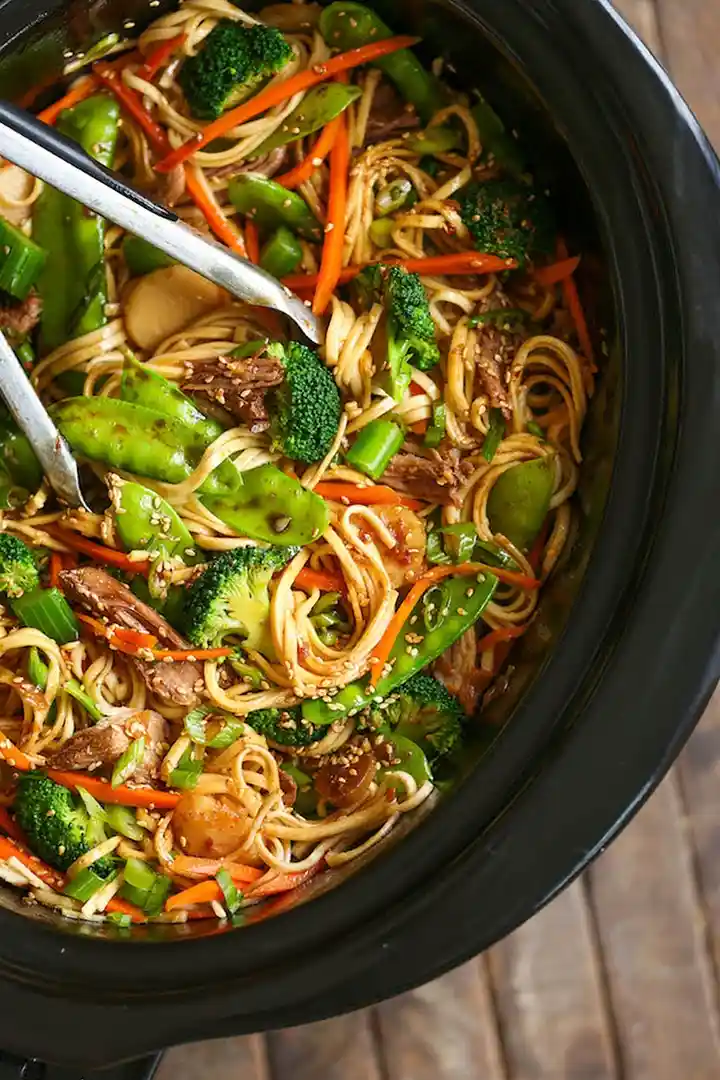
List of ingredients
- 2 pounds boneless beef chuck roast – chosen for its ability to become tender during slow cooking.
- 3 cups broccoli florets – provides a fresh crunch and vibrant color.
- 2 carrots, julienned – adds natural sweetness and a classic texture.
- 2 stalks celery, diced – contributes a subtle savory depth.
- 1 cup snow peas – adds a crisp, snap-like quality to the dish.
- 1 5-ounce can sliced water chestnuts, drained – offers a unique and firm texture.
- 1 pound spaghetti – serves as the filling base for the lo mein.
- 1/3 cup reduced sodium soy sauce – the primary salty and savory base.
- 3 cloves garlic, minced – provides a pungent, aromatic foundation.
- 2 tablespoon brown sugar, packed – balances the saltiness of the soy sauce.
- 1 tablespoons sambal oelek – a fresh chile paste for adjustable spicy heat.
- 1 tablespoon vegetarian mushroom sauce – a savory substitute for oyster sauce.
- 1 tablespoon freshly grated ginger – adds a zesty and fresh flavor profile.
- 1 teaspoon sesame oil – provides a toasted, nutty aroma.
step-by-step instructions
- Line the Slow Cooker: Place a slow cooker liner inside a 5- to 6-quart slow cooker bowl, fitting it snugly against the bottom and sides and pulling the top over the rim to ensure easy cleanup.
- Prepare the Sauce: Whisk together the soy sauce, garlic, brown sugar, sambal oelek, vegetarian mushroom sauce, ginger, and sesame oil directly in the slow cooker pot.
- Slow Cook the Beef: Add the beef chuck roast to the sauce mixture, cover the pot, and cook on low heat for 7-8 hours or on high heat for 3-4 hours.
- Shred the Meat: Carefully remove the beef from the slow cooker and shred it into bite-sized pieces using two forks before returning the meat and its juices to the pot.
- Steam the Vegetables: Stir the broccoli, carrots, celery, snow peas, and water chestnuts into the pot, then cover and cook on high heat for 15-30 minutes until the vegetables are tender.
- Cook the Pasta: Boil the spaghetti according to the package instructions in a separate pot of salted water, then drain well.
- Serve the Dish: Plate the cooked pasta immediately and top it with the beef and vegetable mixture for a fresh, hot meal.
Optimizing Meat Selection and Preparation
Using Beef Chuck Roast for Tenderness
Beef chuck roast is the ideal cut for this recipe because it contains a high amount of connective tissue. During the long, slow cooking process, this collagen breaks down into gelatin, resulting in meat that is incredibly tender. Leaner cuts may become dry or tough when cooked for eight hours.
Trimming Excess Fat
While some fat is necessary for flavor, you should trim any excessively thick layers of hard white fat from the exterior of the roast. This prevents the sauce from becoming overly greasy. Leave a small amount of marbling to ensure the beef stays moist throughout the cooking cycle.
Optional Searing for Depth
For an extra layer of flavor, you can sear the beef in a hot skillet with a bit of oil before placing it in the slow cooker. This creates a brown crust known as the Maillard reaction, which adds a rich, roasted depth to the final sauce. Ensure the meat is seared on all sides for about 2-3 minutes per side.
Vegetable Preparation Techniques
Precision Julienning for Carrots
Cutting the carrots into thin, matchstick-sized strips ensures they cook at the same rate as the other vegetables. If the pieces are too thick, they may remain hard while the broccoli becomes overcooked. Using a julienne peeler is a quick way to achieve consistent thickness.
Sizing the Broccoli Florets
Break the broccoli into small, uniform florets to ensure even heat distribution. Large chunks may not cook through in the short 15-30 minute window at the end. Smaller pieces also allow the savory sauce to coat every surface more effectively.
Dicing Celery for Consistency
Dice the celery into small, even pieces that complement the size of the other aromatic vegetables. This ensures a consistent mouthfeel in every bite. Keeping the pieces small allows the celery to soften slightly while still retaining some structure.
Mastering the Sauce Components
Benefits of Reduced Sodium Soy Sauce
Using a reduced sodium soy sauce allows you to control the salt levels more effectively. Slow cooking concentrates flavors, and standard soy sauce can sometimes become overwhelmingly salty. You can always add a splash more at the end if you prefer a saltier taste.
Fresh Ginger versus Powdered Ginger
Always use freshly grated ginger for this recipe to achieve a bright, zesty flavor. Powdered ginger has a more muted, woody taste that lacks the aromatic punch of the fresh root. Use a microplane or the small holes of a box grater for the best results.
Adjusting the Sambal Oelek Heat
Sambal oelek provides a fresh, vinegary heat that cuts through the richness of the beef. If you prefer a milder dish, start with a teaspoon and taste the sauce before adding more. For those who love spice, adding an extra tablespoon will not overpower the other flavors.
Cooking Equipment Advice
Choosing the Right Slow Cooker Size
A 5- to 6-quart slow cooker is the most appropriate size for this volume of ingredients. If the pot is too small, the sauce may overflow or the meat may not cook evenly. If it is too large, the liquid may evaporate too quickly, leading to a thicker, potentially scorched sauce.
Advantages of Slow Cooker Liners
Liners are highly recommended for recipes with sugary sauces, like this lo mein, which can bake onto the ceramic sides. They make the cleanup process nearly instantaneous by allowing you to simply lift the liner out and discard it. Ensure the liner is fitted snugly to avoid it slipping during the stirring process.
Understanding Temperature Settings
The low setting is generally preferred for beef roast as it allows the meat to tenderize slowly over 7-8 hours. The high setting is faster but can occasionally result in slightly tougher meat if the roast is very lean. Always ensure the lid remains closed to maintain a consistent internal temperature.
Pasta Selection and Cooking
Exploring Different Noodle Types
While spaghetti is a convenient substitute for lo mein noodles, you can also use udon, ramen, or fettuccine. Udon provides a thicker, chewier texture that holds onto the sauce well. Ramen noodles offer a more traditional takeout feel, though they may cook much faster than spaghetti.
The Importance of Al Dente Pasta
Cook your pasta just until it is al dente, meaning it still has a slight bite to it. Since the hot beef and vegetable mixture will be placed on top, the pasta will continue to soften slightly from the residual heat. This prevents the noodles from becoming mushy upon serving.
Preventing Noodle Sticking
After draining the pasta, do not rinse it with cold water, as the starch on the surface helps the sauce adhere to the noodles. Instead, toss the noodles with a tiny bit of sesame oil or olive oil. This keeps them separated and glossy until the toppings are added.
Flavor Adjustments and Variations
Enhancing the Umami Profile
To increase the savory depth of the dish, you can add a teaspoon of mushroom powder or a small amount of tomato paste to the sauce. These ingredients increase the levels of glutamates, which creates a more complex flavor. This is particularly useful if you are using a very lean cut of meat.
Balancing Sweetness and Salt
If the sauce tastes too salty, stir in an extra tablespoon of brown sugar or a teaspoon of honey. Conversely, if the sauce is too sweet, a splash of rice vinegar or a squeeze of lime juice can provide the acidity needed to balance the flavors. Taste the sauce after the meat has cooked to make adjustments.
Adding Fresh Herbal Notes
Adding freshly chopped cilantro or Thai basil at the very end of the cooking process can brighten the dish. These herbs provide a fresh contrast to the heavy, savory sauce. Fold them in just before serving so they do not wilt or lose their vibrant color.
Protein Alternatives
Using Boneless Chicken Thighs
Chicken thighs are an excellent alternative to beef and are naturally tender. If using chicken, reduce the cooking time on low to 4-6 hours or on high to 2-3 hours to avoid overcooking. The savory soy and ginger sauce pairs perfectly with the richness of the chicken.
Incorporating Tofu for a Plant-Based Option
Extra-firm tofu can be used by pressing out the excess water and cutting it into large cubes. Tofu does not require as much cooking time as beef, so you can add it during the last 2 hours of the slow cooking process. This ensures the tofu absorbs the sauce without falling apart.
Beef Sirloin Tips Alternative
If you prefer a different texture than shredded beef, you can use beef sirloin tips. Cut them into 1-inch cubes and cook them on the high setting for a shorter duration. This results in a chunkier, steak-like consistency rather than a shredded texture.
Storage and Food Safety
Cooling the Mixture Properly
Before refrigerating, allow the beef and vegetable mixture to cool down to room temperature for about 30-60 minutes. Placing scorching hot food directly into the fridge can raise the internal temperature of the appliance, potentially risking other perishables. Stir the mixture occasionally to speed up the cooling process.
Refrigeration and Shelf Life
Store the beef and vegetable mixture in an airtight glass container, separate from the cooked pasta. This prevents the noodles from absorbing all the sauce and becoming soggy. The mixture will stay fresh and safe to eat for 3-4 days in the refrigerator.
Guidelines for Freezing
The meat and sauce mixture freezes exceptionally well for up to three months. Avoid freezing the cooked pasta, as it often becomes grainy or mushy upon thawing. Thaw the beef mixture in the refrigerator overnight before reheating it on the stove.
Reheating for Best Quality
The Stovetop Reheating Method
For the best texture, reheat the beef and vegetable mixture in a skillet over medium heat. Add a tablespoon of water or beef broth to loosen the sauce and prevent it from burning. This method allows you to maintain the integrity of the vegetables while heating the sauce thoroughly.
Microwave Reheating Tips
If using a microwave, place the mixture in a microwave-safe bowl and cover it with a damp paper towel. Heat in 1-minute intervals, stirring in between to ensure even heating. This prevents the edges from drying out and keeps the meat tender.
Maintaining Pasta Texture
To reheat the pasta, quickly rinse it under hot water or steam it for 30 seconds before adding the reheated beef mixture. This refreshes the noodles and prevents them from sticking together. Avoid microwaving pasta for too long, as it can become rubbery.
Serving and Presentation
Using Toasted Sesame Garnish
Sprinkle toasted sesame seeds over the top of the dish just before serving. The seeds add a professional look and a subtle, nutty crunch that complements the sesame oil in the sauce. You can toast them in a dry pan for 2-3 minutes until golden brown.
Incorporating Fresh Green Onions
Thinly sliced green onions provide a sharp, fresh contrast to the savory beef. Use both the white and green parts of the stalk for a variety of flavor and color. Scatter them generously over the meat mixture for a restaurant-style presentation.
Plating for Visual Appeal
Twirl the spaghetti into a neat mound in the center of a wide bowl using a carving fork. Carefully spoon the beef and vegetable mixture over the center, allowing some of the sauce to drape down the sides of the noodles. This creates a visually appealing height and ensures a good sauce-to-pasta ratio.
Troubleshooting Common Issues
Preventing Watery Sauce
If the sauce appears too thin after the beef is cooked, you can thicken it with a cornstarch slurry. Mix one tablespoon of cornstarch with two tablespoons of cold water and stir it into the slow cooker during the final 15 minutes of cooking. This will create a glossy, thick glaze that clings to the ingredients.
Fixing Overcooked Vegetables
If the vegetables become too soft, it is usually because they were left in the pot too long. To avoid this in the future, strictly follow the 15-30 minute window for the final step. If they are already mushy, you can stir in a handful of raw, thinly sliced snap peas at the end to restore some crunch.
Correcting Excessive Saltiness
If the dish turns out too salty, you can add a small amount of unsalted beef broth or water to dilute the sauce. Another effective method is to stir in a teaspoon of apple cider vinegar, which cuts through the salt. Adding more pasta to the dish also helps balance the overall salt concentration.
Frequently Asked Questions
Can I use a pressure cooker for this recipe?
Yes, you can adapt this for a pressure cooker by cooking the beef on high pressure for about 45-60 minutes. After the pressure is released, switch to the saute function to add and soften the vegetables quickly. This significantly reduces the total cooking time.
Is this dish freezer friendly?
The beef and vegetable mixture is very freezer friendly, but the pasta is not. Freeze the mixture in portions in airtight bags and thaw before reheating. Always cook fresh pasta or reheat pre-cooked pasta separately for the best experience.
How do I make this dish spicier?
To increase the heat, you can add red pepper flakes to the initial sauce whisking process. Alternatively, drizzle a bit of sriracha or chili oil over the final plated dish. Increasing the amount of sambal oelek during the cooking phase will also provide a deeper, integrated heat.
Print
Slow Cooker Beef Lo Mein
- Total Time: 8 hours 40 minutes
- Yield: 6 servings 1x
- Diet: General
Description
Skip delivery and try this veggie-packed takeout favorite for a healthy dinnertime meal that is easy to make right in your crockpot!
Ingredients
- 2 pounds boneless beef shoulder
- 3 cups broccoli florets
- 2 carrots, julienned
- 2 stalks celery, diced
- 1 cup snow peas
- 1 5-ounce can sliced water chestnuts, drained
- 1 pound spaghetti
- 1/3 cup reduced sodium soy sauce
- 3 cloves garlic, minced
- 2 tablespoon brown sugar, packed
- 1 tablespoons sambal oelek
- 1 tablespoon vegetarian mushroom sauce
- 1 tablespoon freshly grated ginger
- 1 teaspoon sesame oil
Instructions
- Line: LINE a slow cooker with a Reynolds® Slow Cooker Liner. Open slow cooker liner and place it inside a 5- to 6-quart slow cooker bowl. Fit liner snugly against the bottom and sides of bowl; pull top of liner over rim of bowl.
- Whisk: WHISK together soy sauce, garlic, brown sugar, sambal oelek, vegetarian mushroom sauce, ginger and sesame oil in the slow cooker. Add beef shoulder, then cover and cook on low heat for 7-8 hours or high for 3-4 hours.
- Shred: REMOVE beef shoulder from the slow cooker and shred the meat before returning to the pot with the juices. Stir in broccoli, carrots, celery, snow peas and chestnuts. Cover and cook on high heat for 15-30 minutes, or until vegetables are tender.
- Cook: COOK pasta according to package instructions; drain well.
- Serve: SERVE pasta immediately, topped with beef mixture.
Notes
Reynolds Kitchens Tip: Reynolds® Slow Cooker Liners will save you time in the kitchen with minimal clean-up, giving you more time with your family.
- Prep Time: 10 minutes
- Cook Time: 8 hours 30 minutes
- Category: Dinner
- Method: Slow Cooker
- Cuisine: Asian-inspired
Nutrition
- Serving Size: 1 serving
- Calories: 580 kcal
- Sugar: 9 g
- Sodium: 890 mg
- Fat: 18 g
- Saturated Fat: 7 g
- Unsaturated Fat: 11 g
- Trans Fat: 0 g
- Carbohydrates: 48 g
- Fiber: 6 g
- Protein: 36 g
- Cholesterol: 95 mg