
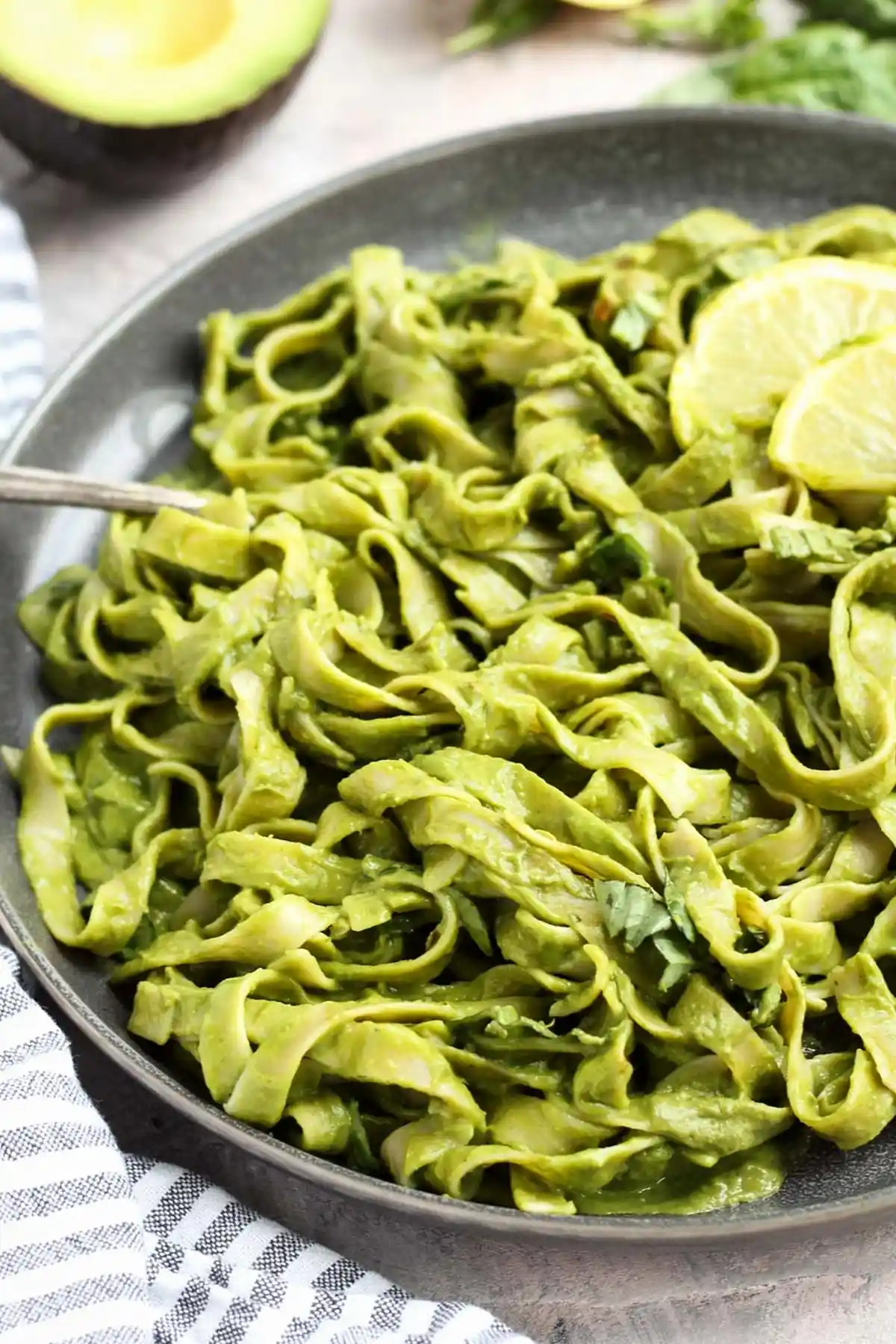
This creamy avocado lemon pesto is a refreshing, nut-free alternative to traditional pesto that takes only minutes to prepare. It serves as a versatile sauce for gluten-free pasta, grilled proteins, or fresh vegetable noodles.
List of ingredients
- 2 Cups Fresh Basil – use packed leaves for maximum flavor.
- 1 Cup Avocado – ensure it is fully ripe for a creamy texture.
- 1 Cup Water – used to adjust the final consistency.
- 1/4 Cup Lemon Juice – increase to 1/3 cup for a stronger citrus profile.
- 1/2 Teaspoon Salt – adjust to taste at the end.
- 1/4 Teaspoon Black Pepper – provides a subtle spicy contrast.
- 1/4 Teaspoon Garlic Powder – adds a consistent savory depth.
step-by-step instructions
- Combine Ingredients: Place the fresh basil, avocado, water, lemon juice, salt, black pepper, and garlic powder into a high-speed blender.
- Process until Smooth: Blend on the high setting until the mixture reaches a smooth, creamy consistency. If the sauce is too thick, add more water one tablespoon at a time until the desired thickness is achieved.
- Serve: Pour the fresh pesto immediately over cooked pasta or steamed vegetables.
Ingredient Selection and Quality
Selecting a Perfectly Ripe Avocado
The success of the pesto’s texture depends entirely on the ripeness of the avocado. A ripe avocado should yield slightly to gentle pressure without feeling mushy. If the avocado is underripe, the pesto will be chunky and lack the signature creaminess.
Fresh Versus Frozen Basil Leaves
Fresh basil provides the most vibrant color and a peppery, sweet aroma. However, frozen basil is a practical alternative and often lasts longer in the kitchen. When using frozen basil, ensure it is thawed slightly or blended thoroughly to avoid icy clumps in the sauce.
Optimal Lemon Juice Methods
Freshly squeezed lemon juice contains active enzymes and a brighter acidity than bottled concentrates. Using a handheld citrus juicer helps extract the maximum amount of juice while filtering out seeds. For a more intense citrus kick, increase the quantity to one-third of a cup.
Choosing the Right Pasta Base
Gluten-Free Tagliatelle and Shapes
When pairing this pesto with gluten-free pasta, tagliatelle or linguine provide a classic look and feel. Shapes with ridges, such as fusilli or penne, are often better for holding onto the creamy avocado sauce. Ensure the pasta is cooked al dente to prevent it from breaking apart when the sauce is mixed in.
Chickpea and Mung Bean Pasta Properties
Chickpea pasta is a nutrient-dense option that provides extra protein and a hearty texture. Mung bean pasta is particularly useful for sauce-heavy dishes because it maintains its structure better than corn-based alternatives. These legume-based pastas are less likely to become soggy when combined with a creamy pesto.
Preparing Vegetable-Based Noodles
A spiralizer is an effective tool for creating vegetable noodles from zucchini, yellow squash, or carrots. For a more substantial meal, try spiralizing sweet potatoes or beets, though these require a brief steam or sauté before adding the sauce. Vegetable noodles should be served immediately to avoid releasing excess water into the pesto.
Serving and Pairing Ideas
Pairing with Grilled Proteins
This pesto works exceptionally well as a topping for grilled chicken breasts or seared steak. The acidity of the lemon cuts through the richness of the meat, providing a balanced flavor profile. For a lighter option, spoon the pesto over grilled salmon or tofu steaks.
Combining with Roasted Vegetables
Tossing the pesto with roasted asparagus, broccoli, or Brussels sprouts creates a flavorful side dish. The warmth of the vegetables slightly softens the pesto, allowing it to coat the produce evenly. Avoid cooking the pesto in a pan, as high heat can alter the flavor of the fresh basil.
Creating a Cold Pesto Pasta Salad
For a summer side dish, mix the pesto with chilled gluten-free pasta, halved cherry tomatoes, and diced cucumbers. This application highlights the refreshing nature of the lemon and avocado. Store the salad in the refrigerator for an hour before serving to allow the flavors to meld.
Storage and Preservation Techniques
Using Airtight Glass Containers
Storing leftovers in glass containers is superior to plastic because glass does not absorb odors or leach chemicals. An airtight seal is crucial to prevent the pesto from absorbing other smells from the refrigerator. This helps maintain the purity of the basil and lemon flavors.
Preventing Avocado Oxidation
Avocados naturally brown when exposed to oxygen due to enzymatic browning. The lemon juice in this recipe acts as a natural antioxidant to slow this process. To further prevent oxidation, press a piece of plastic wrap directly onto the surface of the pesto before sealing the lid.
Maximum Refrigeration Duration
This pesto can be stored in the refrigerator for 5 to 7 days. Because it contains fresh avocado and basil, it does not freeze well and may separate upon thawing. Always check for freshness and a vibrant green color before serving stored pesto.
Optimal Serving Methods
Avoiding Direct Heat
Do not boil or simmer the pesto in a saucepan. High temperatures can cause the avocado to lose its creamy texture and the basil to turn a dull brown color. Instead, toss the pesto with hot pasta or vegetables off the heat to preserve the fresh taste.
Mixing Sauce Per Portion
To avoid the pasta becoming soggy, avoid mixing the entire batch of pesto with all the pasta at once. Store the sauce separately and add a generous dollop to each individual bowl right before eating. This ensures the pasta maintains its structural integrity and the sauce remains creamy.
Troubleshooting Texture and Taste
Achieving the Right Consistency
If the pesto feels too thick or heavy, add water one tablespoon at a time while the blender is running. High-speed blenders are more effective at emulsifying the fats in the avocado with the water. Stop blending as soon as the desired consistency is reached to avoid over-processing.
Adjusting the Tartness
Taste the pesto after the first blend to determine if the acidity is balanced. If the avocado flavor is overpowering, add an extra teaspoon of lemon juice. The lemon should provide a bright lift that complements the creaminess without making the sauce sour.
Fine-Tuning the Salt Balance
Different brands of salt have varying levels of salinity, so start with the recommended amount and taste. If the flavors seem flat, a small pinch of additional salt can enhance the natural savoriness of the garlic and basil. Always taste the final product after adding water, as dilution can affect the salt perception.
Frequently Asked Questions
Can this be made in a food processor?
Yes, a food processor can be used, although it may result in a slightly coarser texture than a high-speed blender. Process the ingredients in short pulses to avoid over-heating the basil, which can happen with some food processor blades.
How do I stop the pesto from turning brown?
The primary way to prevent browning is through the addition of lemon juice and minimizing air exposure. Storing the pesto with a layer of olive oil on top or using a vacuum-sealed container can also extend the vibrant green color.
Which other greens can replace basil?
Fresh spinach or baby kale can be substituted for basil for a different flavor profile. Spinach provides a milder taste, while kale adds an earthier note. When using kale, you may need to add a bit more water to achieve the same smoothness.
Is this recipe compatible with Whole30?
This recipe is naturally compatible with Whole30 guidelines as it uses whole, unprocessed ingredients. Ensure that the garlic powder and salt used are free from added sugars or artificial anti-caking agents to remain strictly compliant.
Print
Creamy Nut-Free Avocado Lemon Pesto
- Total Time: 10 minutes
- Yield: 4 servings 1x
- Diet: Vegan
Description
Craving pesto, but don’t have any nuts?? This Avocado Lemon Pesto is for you! It’s light, refreshing, and full of flavor.
Ingredients
- 2 Cups Fresh Basil
- 1 Cup Avocado
- 1 Cup Water
- 1/4 Cup Lemon Juice
- 1/2 Teaspoon Salt
- 1/4 Teaspoon Black Pepper
- 1/4 Teaspoon Garlic Powder
Instructions
- Step 1: Start by adding all pesto ingredients into a high speed blender.
- Step 2: Blend on high until it becomes a smooth, creamy consistency. (Add more water if needed.)
- Step 3: Pour over pasta or vegetables! Enjoy!
Notes
Leftovers can be stored in an air tight glass container for 5-7 days. I typically don’t mix all of the pesto with my pasta, I mix it in each time I make a bowl! If you leave the pesto on the pasta overnight, it usually gets soggy.
- Prep Time: 10 minutes
- Cook Time: 0 minutes
- Category: Main Course, Side Dish
- Method: Blending
- Cuisine: American, Italian
Nutrition
- Serving Size: 1 serving
- Calories: 67 kcal
- Sugar: 1 g
- Sodium: 297 mg
- Fat: 6 g
- Saturated Fat: 1 g
- Unsaturated Fat: 5 g
- Trans Fat: 0 g
- Carbohydrates: 5 g
- Fiber: 3 g
- Protein: 1 g
- Cholesterol: 0 mg