
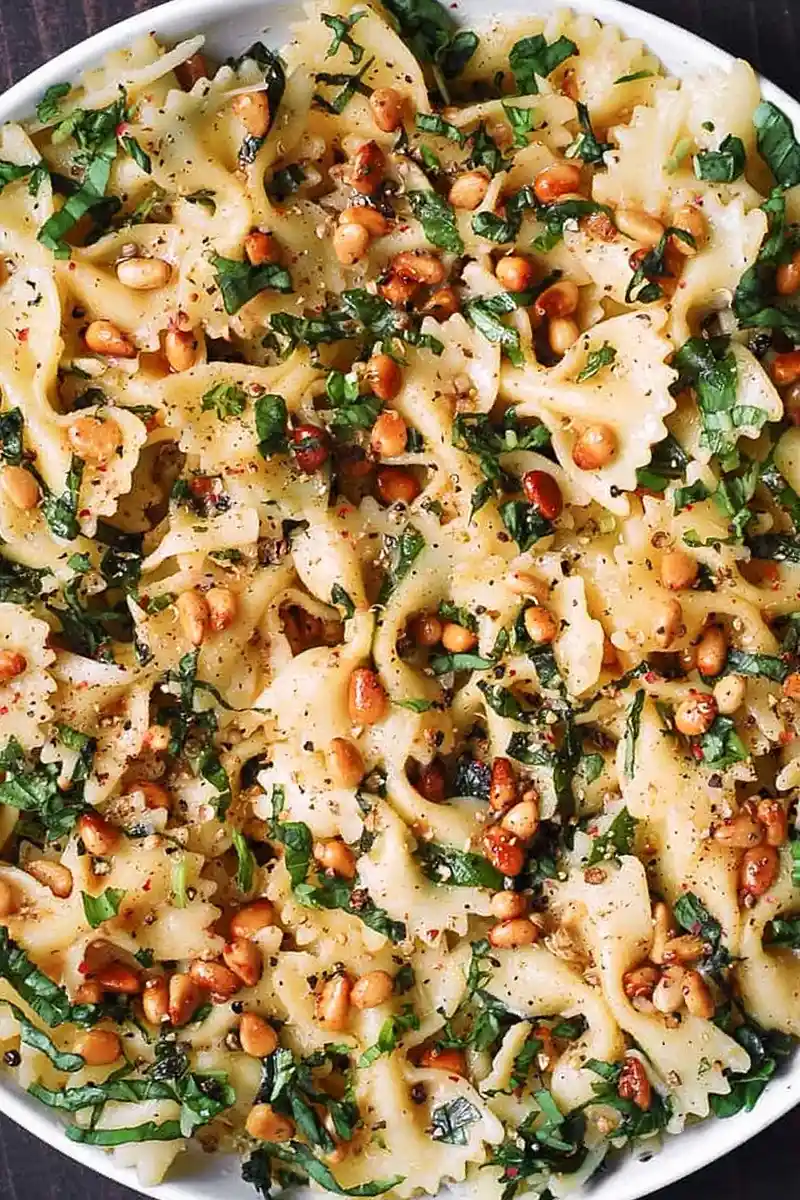
This quick and refreshing pasta dish combines the brightness of lemon with a rich garlic butter sauce and fragrant fresh basil. It is an ideal choice for a fast weeknight dinner that requires minimal ingredients and cleanup.
List of ingredients
- 6 tablespoons salted butter, divided – used to create the sauce base and emulsify the cheese.
- 5 cloves garlic, fresh and minced – provides a bold, savory aromatic foundation.
- 1/2 lemon, preferably Meyer lemon, thinly sliced – used for pan-roasting to release balanced juices.
- 8 oz pasta, such as farfalle or bow-tie – the shape helps hold the butter sauce.
- 1 cup Parmesan cheese, freshly grated – adds a salty, nutty depth to the pasta.
- 2 oz fresh basil, chopped (up to 4 oz depending on taste) – the primary herb for a fresh, peppery flavor.
- 1/2 cup pine nuts, lightly toasted – adds a buttery crunch and nutty aroma.
- Salt and freshly cracked black pepper, to taste – used for final seasoning.
step-by-step instructions
- Sauté Aromatics: Heat a large cast-iron skillet over medium-high heat. Add 2 tablespoons of butter, the thinly sliced lemon, and the minced fresh garlic. Cook for approximately 5 minutes, stirring occasionally, until the lemon slices are browned and the garlic is golden but not burned.
- Finish the Butter Base: Remove the skillet from the heat and stir in 2 more tablespoons of butter until completely melted. Carefully remove the browned lemon slices from the skillet and set them aside.
- Cook the Pasta: Bring a large pot of salted water to a boil. Add the pasta and cook until al dente according to the package instructions, then drain thoroughly.
- Combine Pasta and Sauce: Transfer the hot, drained pasta into the cast-iron skillet containing the garlic butter. Stir well to ensure every piece of pasta is coated.
- Incorporate Cheese: Add the remaining 2 tablespoons of butter and the freshly grated Parmesan cheese. Stir over low-medium heat for a few minutes until the cheese is melted and evenly distributed. Remove from heat and season with salt.
- Fold in Basil: Stir half of the chopped fresh basil into the hot pasta and mix thoroughly.
- Final Garnish: Top the finished dish with the remaining fresh chopped basil, the toasted pine nuts, and a generous amount of freshly cracked black pepper before serving.
Optimal Ingredient Selection
Choosing High-Quality Salted Butter
Since butter is the primary fat source in this sauce, using a high-quality grass-fed or European-style butter can significantly enhance the flavor. These butters often have a higher fat content, which results in a creamier and more velvety emulsion when mixed with the cheese.
Selecting Meyer Lemons for a Sweeter Profile
Meyer lemons are a cross between a regular lemon and a mandarin orange, offering a sweeter and more floral aroma. They are less acidic than standard Eureka or Lisbon lemons, making the sauce taste more balanced and less sharp.
Grating Your Own Parmesan Cheese
Always grate Parmesan from a block rather than using pre-shredded varieties. Pre-shredded cheeses are coated in cellulose or cornstarch to prevent clumping, which can interfere with the melting process and leave the sauce grainy.
Selecting the Best Pasta Shapes
Farfalle, or bow-tie pasta, is recommended because its folds and center pinch capture the butter sauce effectively. If farfalle is unavailable, fusilli or penne are excellent alternatives as their ridges and hollow centers hold onto the garlic and cheese.
Sourcing and Handling Fresh Basil
Use fresh Genovese basil for the most traditional flavor. To keep the leaves from bruising, wash them gently and pat them completely dry before chopping them with a sharp knife to avoid tearing the edges.
Toasting Pine Nuts in the Oven
Preheat your oven to 350 F and toast the pine nuts for about 5 minutes. Watch them closely as their high oil content makes them prone to burning quickly, which can introduce a bitter taste to the dish.
Using Whole Peppercorns for Fresh Flavor
Use a pepper mill to grind whole black peppercorns directly over the pasta. Freshly cracked pepper contains volatile oils that provide a pungent, spicy kick that pre-ground pepper lacks.
Advanced Cooking Techniques
Monitoring Garlic to Prevent Burning
Garlic burns quickly at medium-high heat, which creates a bitter flavor. Stir the garlic frequently and remove the pan from the heat the moment the garlic turns a light golden brown.
Cooking Pasta to the Perfect Al Dente
Remove the pasta from the water 1-2 minutes before the package instructions suggest. This ensures the pasta maintains a firm bite after it is tossed in the skillet and heated further with the cheese.
Creating a Smooth Butter and Cheese Emulsion
Keep the heat on low-medium when adding the Parmesan. Stirring constantly prevents the cheese from separating into clumps and allows it to merge with the butter into a smooth, cohesive sauce.
Adding Basil at the End of Cooking
Basil is a delicate herb that oxidizes and loses its bright green color when exposed to high heat for too long. Folding it in after the pan is removed from the heat preserves both the flavor and the vibrant color.
Hearty Variations and Additions
Incorporating Grilled Chicken for Protein
To turn this into a more filling meal, add sliced grilled chicken breast. Season the chicken with salt, pepper, and a hint of lemon juice before searing it in the same skillet used for the sauce.
Adding Sautéed Shrimp to the Dish
Shrimp pairs exceptionally well with lemon and garlic. Sauté peeled and deveined shrimp in butter until pink, then set them aside and return them to the pan along with the cooked pasta.
Mixing in Fresh Baby Spinach
For added nutrients, stir in two cups of fresh baby spinach just before adding the cheese. The residual heat from the pasta will wilt the spinach quickly without overcooking it.
Using Sun-Dried Tomatoes for Added Depth
Thinly sliced sun-dried tomatoes add a concentrated sweetness and a chewy texture. Stir them in with the pasta to contrast the brightness of the lemon and basil.
Substituting Pine Nuts with Toasted Walnuts
If pine nuts are unavailable or too expensive, toasted walnuts provide a similar earthy flavor. Chop them finely to ensure they distribute evenly across the dish.
Using Sliced Almonds as a Nut Alternative
Slivered almonds offer a lighter crunch than pine nuts. Toast them in a dry pan over medium heat until they are golden brown before using them as a garnish.
Adding Red Pepper Flakes for Spice
If you prefer a spicy kick, add a pinch of crushed red pepper flakes when sautéing the garlic. This infuses the butter with a subtle heat that cuts through the richness of the cheese.
Pairing and Presentation
Pairing with a Fresh Arugula Salad
A peppery arugula salad with a simple lemon-olive oil vinaigrette balances the richness of the butter sauce. Add some shaved Parmesan or extra pine nuts to the salad to tie the flavors together.
Serving with Warm Garlic Bread
Serve the pasta with warm toasted baguette slices topped with garlic butter and parsley. The crunchy bread is perfect for scooping up any remaining lemon garlic sauce from the plate.
Plating the Pasta for Visual Appeal
Use tongs to twirl the pasta into a mound in the center of a shallow bowl. Top with a focused cluster of fresh basil and a sprinkle of pine nuts for a professional, restaurant-style presentation.
Storage and Reheating
Storing Leftovers in Airtight Containers
Place leftover pasta in an airtight glass container and refrigerate for up to 3-4 days. Keep the remaining fresh basil and pine nuts in a separate container to prevent the nuts from softening.
Reheating Pasta Without Drying It Out
Avoid the microwave if possible, as it can make the cheese rubbery. Instead, reheat the pasta in a skillet over low heat with a small splash of water or an extra pat of butter to loosen the sauce.
Preventing Basil from Oxidizing
If storing the pasta with basil already mixed in, accept that the herb will darken over time. To maintain a fresh look, always add a few fresh leaves of basil to the dish after reheating.
Troubleshooting Common Issues
Using Pasta Water to Fix a Greasy Sauce
If the sauce appears too oily or separated, stir in one or two tablespoons of the starchy pasta cooking water. The starch helps bind the fat and water, creating a more emulsified and creamy consistency.
Avoiding Clumping When Adding Cheese
If the cheese clumps, it is usually because the heat was too high. Lower the temperature and add a small amount of pasta water, stirring vigorously to break up the cheese clusters.
Balancing Excessive Lemon Acidity
If the lemon flavor is too overwhelming, stir in an extra tablespoon of butter. The fat in the butter neutralizes the acidity of the lemon, smoothing out the overall flavor profile.
Frequently Asked Questions
Can dried basil replace fresh leaves?
Dried basil has a completely different flavor profile and lacks the brightness of fresh leaves. If you must use dried basil, use only one-third of the amount specified and add it during the garlic sauté phase.
How to store toasted pine nuts long-term?
Store toasted pine nuts in an airtight container in the refrigerator or freezer. Because of their high oil content, they can go rancid quickly if left at room temperature in a warm environment.
Which pans work best beside cast iron?
A stainless steel skillet is a great alternative as it allows for effective browning of the lemon and garlic. Avoid non-stick pans if you want to achieve a deep brown caramelization on the lemon slices.
How to tell when garlic is perfectly browned?
The garlic is ready when it transforms from a raw white color to a light golden tan and becomes fragrant. If it turns dark brown or black, it has burned and should be discarded to avoid bitterness.
Print
Lemon Garlic Butter Basil Pasta with Toasted Pine Nuts
- Total Time: 30 minutes
- Yield: 4 servings 1x
- Diet: Vegetarian
Description
This delicious recipe features all the classic ingredients that you would expect in a Basil Pasta – lots of fresh basil leaves, Parmesan cheese, pine nuts, butter, garlic, and fresh lemon. It’s an easy and quick recipe that requires only 7 ingredients and 30 minutes of your time!
Ingredients
- 6 tablespoons salted butter (divided)
- 5 cloves garlic (fresh, minced)
- 1/2 lemon (thinly sliced)
- 8 oz pasta (farfalle or bow-tie pasta)
- 1 cup Parmesan cheese (freshly grated)
- 2 oz fresh basil
- 1/2 cup pine nuts (lightly toasted)
- salt and pepper (to taste)
Instructions
- Step: Heat a large cast-iron skillet over medium-high heat. Add 2 tablespoons butter, thinly sliced lemon, and minced fresh garlic. Cook for about 5 minutes, stirring a couple of times, until lemon slices brown and release juices and minced garlic is browned but not burned. Remove from heat and add 2 more tablespoons of butter. Stir until it melts. Remove lemon slices from the skillet.
- Step: Bring a large pot of water to boil. Add pasta and cook al dente according to package instructions. Drain pasta.
- Step: Add hot, drained, and cooked pasta to the cast-iron skillet with butter and garlic. Stir everything well.
- Step: Add 2 more tablespoons of butter and grated Parmesan cheese. Stir on low-medium heat for a couple of minutes to spread out the cheese among the pasta and melt it a bit. Remove from heat. Taste and season with salt.
- Step: Add half of the fresh chopped basil to hot pasta and mix everything well.
- Step: When ready to serve, top with the remaining half of fresh chopped basil, toasted pine nuts, and cracked black pepper.
Notes
Use Meyer lemon for a less acidic flavor. Lightly toast pine nuts in a preheated oven at 350 F for 5 minutes. Use freshly cracked black pepper from peppercorns for the best flavor profile.
- Prep Time: 10 minutes
- Cook Time: 20 minutes
- Category: Main Course
- Method: Stovetop
- Cuisine: American, Mediterranean
Nutrition
- Serving Size: 1 serving
- Calories: 589 kcal
- Sugar: 3 g
- Sodium: 556 mg
- Fat: 36 g
- Saturated Fat: 16 g
- Unsaturated Fat: 17 g
- Trans Fat: 1 g
- Carbohydrates: 49 g
- Fiber: 3 g
- Protein: 20 g
- Cholesterol: 62 mg