
This recipe delivers a rich and comforting creamy chicken noodle soup using simple pantry staples. It combines tender chicken breast and egg noodles in a velvety broth for a satisfying meal.
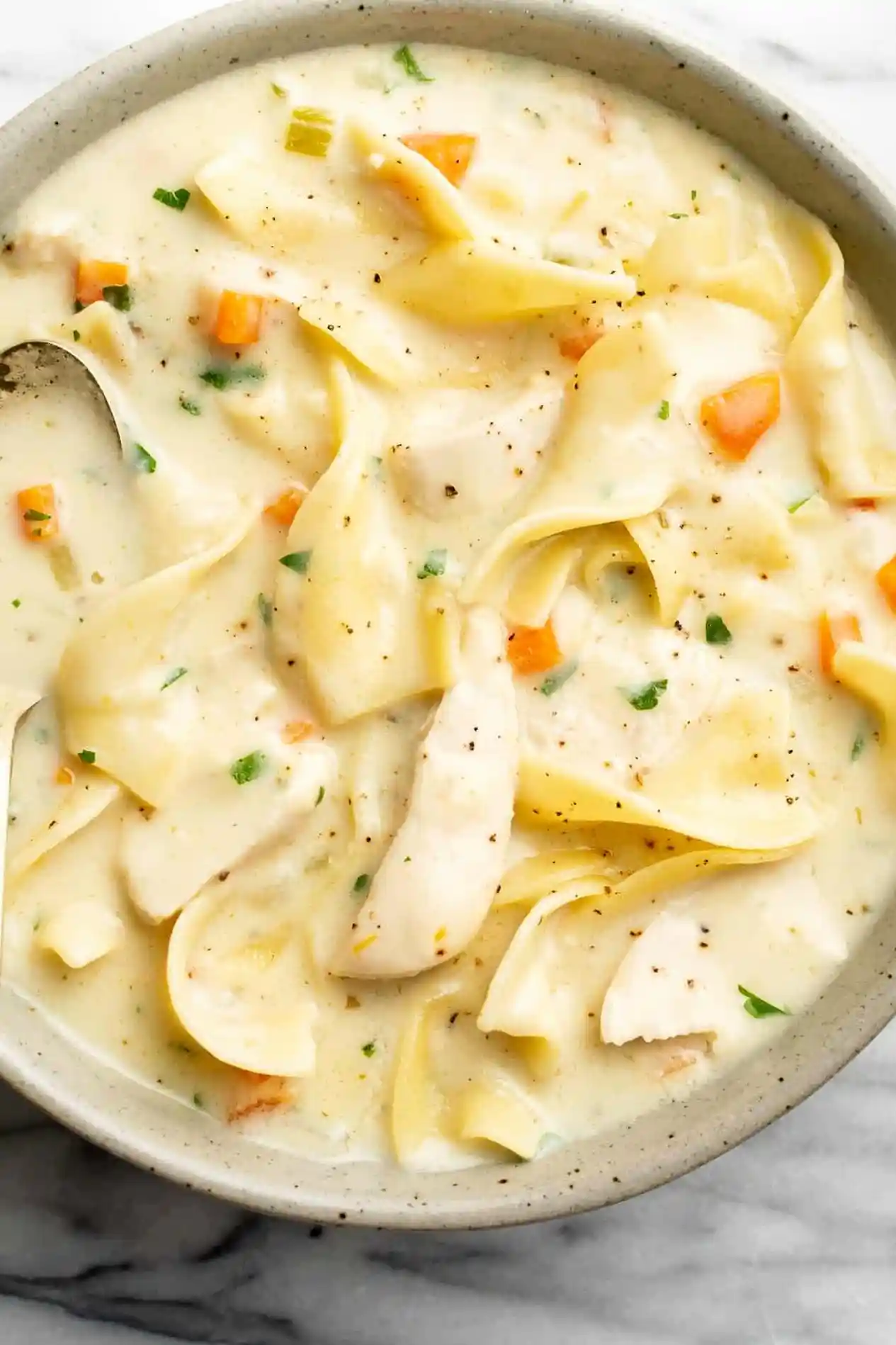
List of ingredients
- 2 sticks celery – chopped finely
- 2 medium carrots – peeled and chopped finely
- 1/2 medium onion – chopped
- 1 tablespoon olive oil – for sautéing
- 1 tablespoon butter – for richness
- 3 cloves garlic – minced
- 1/4 cup flour – used as a thickening agent
- 4 cups chicken broth – savory liquid base
- 1.5 pounds uncooked chicken breasts – boneless and skinless
- 1/4 teaspoon Italian seasoning – dried herb blend
- 1 cup heavy/whipping cream – creates the silky texture
- 2 generous cups uncooked egg noodles – traditional pasta choice
- Salt and pepper – added to taste
- 1 tablespoon chopped fresh parsley – for a bright finish
step-by-step instructions
- Sauté Vegetables: Heat butter and olive oil in a large soup pot over medium-high heat. Add the celery, carrots, and onion, cooking for 5-7 minutes until softened.
- Add Aromatics: Stir in the minced garlic and cook for approximately 30 seconds until fragrant.
- Thicken the Base: Stir in the flour and cook for about one minute to remove the raw flour taste.
- Build the Broth: Pour in the chicken broth and stir until the flour has completely dissolved. Add the chicken breasts, Italian seasoning, and heavy cream. Increase heat to high and bring the soup to a slight boil, then cover the pot with the lid slightly open.
- Simmer: Reduce the heat to low and let the soup simmer gently for 10 minutes.
- Cook Noodles: Stir in the uncooked egg noodles. Cover the pot again with the lid slightly open and cook for 8-10 minutes, stirring halfway through to prevent the noodles from sticking to the bottom.
- Final Preparation: Remove the cooked chicken breasts from the pot and cut them into bite-sized pieces. Return the chicken to the soup, season with salt and pepper to taste, and stir in the fresh parsley before serving.
Professional Cooking Tips
Use a Heavy-Bottomed Pot for Even Heat
A cast iron Dutch oven or a heavy stainless steel pot is ideal for this recipe. These materials distribute heat evenly, preventing the cream from scorching on the bottom during the simmering process. It also helps maintain a consistent temperature when adding the noodles.
Ensure Chicken Reaches 165°F with a Thermometer
To avoid overcooking the chicken breasts, use an instant-read meat thermometer. The chicken is safe and most juicy when it reaches an internal temperature of 165°F. Removing them exactly at this point prevents the meat from becoming rubbery.
Cook the Flour to Remove Raw Taste
Allowing the flour to cook for a full minute after stirring it into the vegetables is critical. This process, known as creating a roux, eliminates the raw flour flavor and ensures a smooth consistency. It also helps the flour bond better with the fats in the butter and oil.
Sauté Vegetables Until Softened
Do not rush the initial sautéing of the carrots, celery, and onion. Cooking them for the full 5-7 minutes allows the natural sugars to release and the vegetables to soften. This creates a deeper flavor base for the entire soup.
Control the Boil to Prevent Separation
When bringing the soup to a boil, keep the lid slightly ajar to let steam escape. This prevents the liquid from boiling over and helps regulate the temperature. Once it reaches a slight boil, dropping the heat immediately prevents the heavy cream from separating.
Ingredient Substitutions and Variations
Swap Chicken Breasts for Boneless Thighs
If you prefer a richer flavor and more tender meat, use boneless skinless chicken thighs instead of breasts. Thighs have a higher fat content, making them more forgiving if they simmer slightly longer. They remain juicy and tender even after being reheated.
Utilize Pre-Cooked Rotisserie Chicken
For a faster meal, you can use shredded rotisserie chicken. Since the meat is already cooked, do not add it during the simmering phase. Instead, stir the shredded chicken into the soup about 5 minutes before serving just to heat it through.
Experiment with Different Pasta Shapes
While egg noodles are traditional, you can use other small pasta shapes like ditalini, rotini, or shells. Ensure the pasta you choose has a similar cooking time to egg noodles. If using a denser pasta, you may need to increase the simmering time by a few minutes.
Add Fresh Thyme or Rosemary for Depth
If you have fresh herbs on hand, they can enhance the Italian seasoning. A sprig of fresh thyme or finely chopped rosemary adds an earthy quality that pairs perfectly with poultry. Add these during the sautéing stage for maximum flavor extraction.
Alternative Cream Options
Heavy cream is recommended for stability and richness. If you must use a substitute, ensure it has a high fat content to avoid curdling. Lower-fat alternatives like half-and-half may separate when exposed to the heat of the boiling broth.
Serving Suggestions
Pair with Warm Crusty Bread
A toasted slice of sourdough or a warm French baguette is the perfect accompaniment to this soup. The crusty texture provides a contrast to the creamy broth. Dipping the bread into the soup allows you to enjoy every drop of the savory liquid.
Top with Garlic Parmesan Croutons
For added texture, top each bowl with homemade garlic Parmesan croutons. Toss cubed bread with melted butter, garlic powder, and grated Parmesan cheese before baking. These add a salty, crunchy element that complements the soft noodles.
Serve with a Crisp Side Salad
Balance the richness of the cream and butter with a fresh garden salad. Use a zesty vinaigrette or a light ranch dressing to cut through the density of the soup. This creates a more balanced and complete meal.
Garnish with Extra Fresh Herbs
While parsley is included in the recipe, adding a sprinkle of fresh chives or green onions on top provides a mild onion flavor. This fresh garnish adds a pop of color and a bright scent to the steaming bowls of soup.
Storage and Reheating Advice
Store in Airtight Containers in the Fridge
Place leftover soup in airtight glass or BPA-free plastic containers. Keep the soup refrigerated for no more than 3 to 4 days. Ensure the soup has cooled slightly before sealing the lid to prevent excessive condensation.
Add Extra Liquid When Reheating
Egg noodles continue to absorb liquid even after the soup has cooled. When reheating, you will likely find the soup has thickened significantly. Stir in a splash of additional chicken broth or a tablespoon of cream to restore the original consistency.
Avoid Freezing Cream-Based Soups
Freezing is not recommended for this particular recipe. The heavy cream can separate and grain during the thawing process, ruining the velvety texture. Additionally, the noodles often become mushy and lose their structure after being frozen and thawed.
Reheat Slowly on the Stovetop
For the best results, reheat the soup in a saucepan over low to medium heat. Avoid using a microwave on high power, as this can cause the cream to bubble and separate. Stir gently and frequently until the soup is heated through.
Troubleshooting and FAQ
How do I prevent the cream from curdling?
Curdling usually happens when cream is added to a liquid that is too acidic or when it is boiled too aggressively for too long. To prevent this, ensure you are using heavy cream and keep the soup at a gentle simmer rather than a rolling boil after the cream is incorporated.
What can I do if the soup is too thin?
If the broth is not thick enough for your preference, you can create a small additional slurry of cornstarch and water. Stir a teaspoon of cornstarch into a tablespoon of cold water, then stir it into the simmering soup and cook for another two minutes.
Can I use a different type of broth?
You can use low-sodium chicken broth if you prefer to control the salt content more precisely. If you choose a vegetable broth, the soup will still be delicious, though it will lack the specific depth provided by chicken-based stock.
How do I keep the noodles from getting mushy?
The key is to cook the noodles just until they are al dente. Since they will continue to cook in the hot broth even after you turn off the heat, removing the pot from the burner a minute early prevents them from overcooking.
Why is my soup too salty?
Saltiness often comes from the store-bought chicken broth. To fix this, you can add a small amount of unsalted cream or a splash of water. In some cases, adding a squeeze of fresh lemon juice can balance the saltiness with acidity.
Can I make this recipe without butter?
Yes, you can replace the tablespoon of butter with an additional tablespoon of olive oil. While the butter adds a specific richness and flavor, olive oil is a healthy alternative that still allows the vegetables to sauté properly.
What if I don’t have Italian seasoning?
You can make a substitute by mixing dried oregano, dried basil, and a pinch of dried thyme. If you only have a single herb, dried oregano is the best choice to maintain the general flavor profile of the soup.
How do I handle the chicken if I don’t have tongs?
If you do not have cooking tongs, use a slotted spoon to carefully lift the chicken breasts out of the broth. This ensures that you remove the meat without taking too much of the liquid with it, making the cutting process cleaner.
Print
Creamy Chicken Noodle Soup
- Total Time: 50 minutes
- Yield: 6 servings 1x
- Diet: General
Description
This wholesome creamy chicken noodle soup is simple, warming comfort food! It has egg noodles, tender chicken, and an irresistible broth made with real cream.
Ingredients
- 2 sticks celery (chopped finely)
- 2 medium carrots (peeled & chopped finely)
- 1/2 medium onion (chopped)
- 1 tablespoon olive oil
- 1 tablespoon butter
- 3 cloves garlic (minced)
- 1/4 cup flour
- 4 cups chicken broth
- 1.5 pounds uncooked chicken breasts (boneless skinless)
- 1/4 teaspoon Italian seasoning
- 1 cup heavy/whipping cream
- 2 generous cups uncooked egg noodles
- Salt & pepper (to taste)
- 1 tablespoon chopped fresh parsley
Instructions
- Step: Sauté the celery, carrots, and onion with the butter & oil in a large soup pot over medium-high heat for 5-7 minutes.
- Step: Stir in the garlic and cook for about 30 seconds.
- Step: Stir in the flour and cook for about a minute.
- Step: Pour in the chicken broth and stir until the flour has dissolved. Add in the chicken, Italian seasoning, and cream. Increase the heat to high and bring the soup to a slight boil. Cover the pot with the lid slightly open.
- Step: Reduce the heat so it’s simmering gently. Let it cook for 10 minutes.
- Step: Stir in the noodles and cover the pot again (lid slightly open) for a further 8-10 minutes. I like to stir it halfway just to ensure the noodles aren’t sticking.
- Step: Take the chicken out of the pot and cut it up, then add it back in again and season the soup with salt & pepper to taste, and stir in the fresh parsley. Serve immediately.
Notes
This soup feeds 4-6 depending on portion size. It is best eaten right away as noodles soak up the broth. When reheating, add a splash more chicken broth or cream. Chicken is safe to eat when it reaches an internal temperature of 165F.
- Prep Time: 10 minutes
- Cook Time: 40 minutes
- Category: Soup
- Method: Simmering
- Cuisine: American
Nutrition
- Serving Size: 1 serving
- Calories: 396 kcal
- Sugar: 2 g
- Sodium: 765 mg
- Fat: 23 g
- Saturated Fat: 12 g
- Unsaturated Fat: 11 g
- Trans Fat: 0 g
- Carbohydrates: 19 g
- Fiber: 1 g
- Protein: 28 g
- Cholesterol: 143 mg