
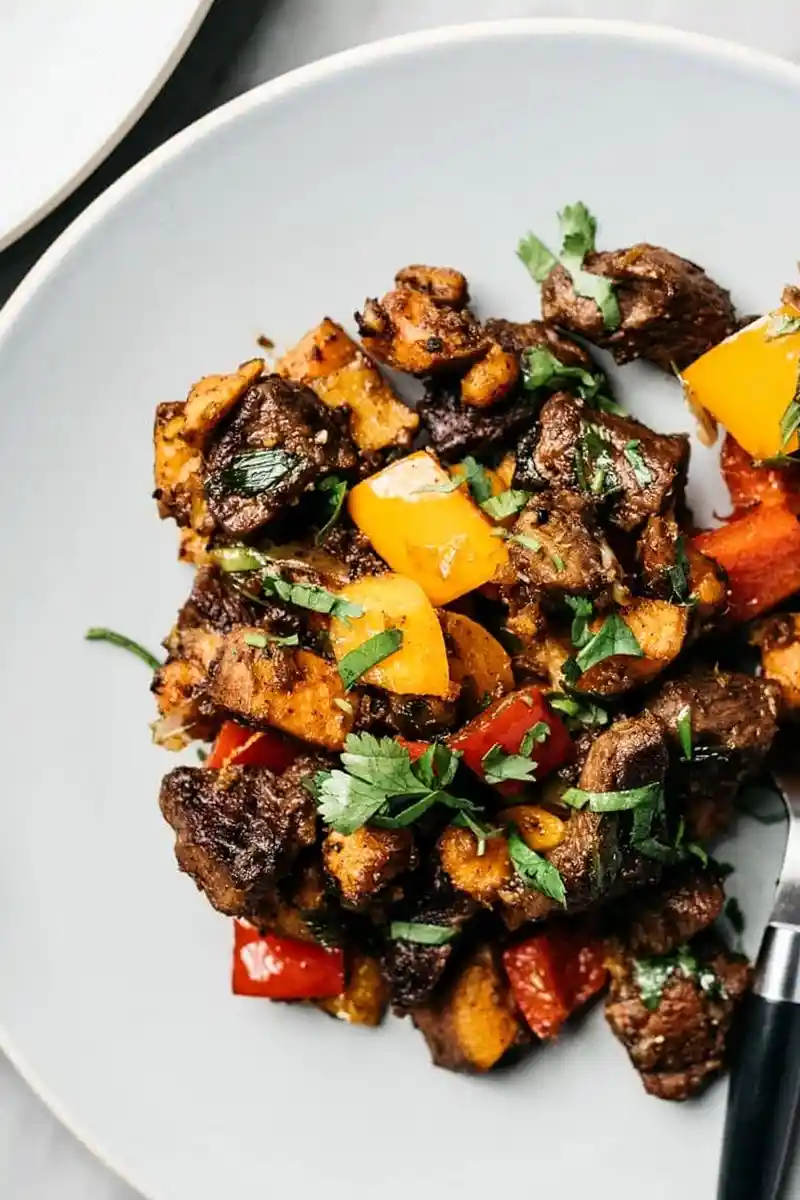
This one-pan meal combines nutrient-dense sweet potatoes and lean steak for a fast, filling dinner. It is naturally gluten-free and dairy-free, making it an excellent choice for clean eating. The entire dish comes together in under 45 minutes.
List of ingredients
- 1 large sweet potato (about 12 ounces) – diced into 1″ pieces
- 1 tsp sea or kosher salt – for seasoning the potatoes
- 1 lb flat iron steak – diced into 1″ pieces
- 3 tbsp olive oil – divided for searing and sautéing
- 2 cloves garlic – minced
- 2 bell peppers – seeded and diced into 1″ pieces
- 4 green onions – thinly sliced
- 2 tbsp coconut aminos – for a savory, soy-free glaze
- 2 tsp cracked black pepper – for bold flavor
- 2 tbsp fresh chopped cilantro – for a fresh finish
step-by-step instructions
- Pre-cook Potatoes: Place the diced sweet potatoes into a microwave safe bowl and sprinkle with 1 teaspoon salt. Cover with a plate and microwave on high for 4-6 minutes, stirring once halfway through. They are ready when a knife pierces them with slight resistance; avoid overcooking to prevent mushiness.
- Sear the Steak: Heat a 12″ skillet over high heat with 2 tablespoons of olive oil until shimmering. Add the steak in a single layer and cook, turning every two minutes, until browned and the center is medium (about 10 minutes). Remove the steak with a slotted spoon and set it aside on a plate.
- Brown the Potatoes: Add the remaining tablespoon of olive oil to the same skillet. Toss in the pre-cooked sweet potatoes and cook, stirring occasionally, until they are browned (about 3-4 minutes).
- Sauté Garlic: Create a well in the center of the pan and add the minced garlic. Sauté for about 1 minute until the garlic is fragrant.
- Cook Vegetables: Add the diced bell peppers and sliced green onions to the pan. Sauté and stir occasionally until the peppers are bite-tender, which usually takes 3-4 minutes.
- Combine and Glaze: Return the steak and its accumulated juices to the pan along with the coconut aminos. Toss all ingredients together and cook for 1-2 minutes until the liquid has evaporated.
- Final Seasoning: Stir in the cracked black pepper and fresh cilantro, then remove the pan from the heat. Serve immediately, adding extra cilantro on top if desired.
Optimal Beef Selection
Benefits of Flat Iron Steak
Flat iron steak is an excellent choice because it is lean yet retains a very tender texture. It sears quickly and maintains its juiciness even when cut into small bites. This cut provides a balance of flavor and tenderness that works well for fast pan-searing.
Using Sirloin for Leaner Results
Sirloin is a highly recommended alternative if you prefer a leaner cut of meat. While slightly firmer than flat iron, it holds its shape well during the cooking process. Ensure you do not overcook sirloin, as it can become tough if cooked past medium.
Ribeye for Richer Flavor
Ribeye contains more marbling, which results in a richer, more buttery flavor. Because it has more fat, you may need to reduce the amount of olive oil used in the pan. It is ideal for those who prefer a more indulgent taste and texture.
Vegetable Preparation and Texture
Mastering the Microwave Pre-cook
Microwaving the sweet potatoes first ensures they are cooked through without burning the outside during the searing phase. This step reduces the overall skillet time and prevents the meat from overcooking while waiting for the potatoes to soften. Always check for slight resistance to ensure they stay firm.
Cutting for Uniform Cooking
Dicing all ingredients into 1-inch pieces is critical for even heat distribution. When the steak, potatoes, and peppers are the same size, they cook at a similar rate. This prevents smaller pieces from burning while larger pieces remain raw.
Sautéing Peppers for Crisp-Tender Texture
Adding the bell peppers toward the end of the process preserves their bright color and structural integrity. Cooking them for only 3-4 minutes ensures they are softened but still have a slight snap. Overcooking them can lead to a soggy consistency that clashes with the seared steak.
Temperature and Searing Techniques
Achieving a Proper Maillard Reaction
High heat is necessary to create a brown, flavorful crust on the steak, known as the Maillard reaction. Ensure the oil is shimmering before adding the meat to prevent sticking. Avoid stirring the steak too frequently; let it sit for two minutes per side to develop a deep sear.
Managing Pan Crowding
Adding too much meat to the skillet at once lowers the pan temperature and causes the steak to steam in its own juices. If you are doubling the recipe, sear the steak in batches. This ensures each piece gets direct contact with the hot metal and oil.
Judging Meat Doneness
For this recipe, a medium doneness is ideal, characterized by a browned exterior and a warm, pink center. Use a meat thermometer to hit an internal temperature of 140-145 degrees Fahrenheit. Removing the meat just before it reaches the target temperature allows for carry-over cooking.
Ingredient Substitutions
Alternatives to Coconut Aminos
If coconut aminos are unavailable, you can use a mixture of beef broth and a small amount of maple syrup to mimic the savory-sweet profile. For those not avoiding soy, a low-sodium soy sauce is a direct replacement. Ensure the substitute is liquid enough to glaze the ingredients quickly.
Choosing the Best Cooking Oil
Olive oil is a standard choice, but avocado oil is superior for high-heat searing due to its higher smoke point. Grapeseed oil is another neutral alternative that prevents the oil from smoking or burning. Avoid using butter for the initial sear as it burns quickly at high temperatures.
Substituting Sweet Potatoes
Butternut squash or carrots can be used as a replacement for sweet potatoes. These vegetables should also be diced into 1-inch cubes and pre-cooked if they are particularly dense. Parsnips offer a similar earthy flavor and firm texture when sautéed.
Flavor Enhancements and Variations
Adding Heat with Chili Peppers
For a spicy version, dice a fresh jalapeño and add it to the pan along with the garlic. Alternatively, stir in a teaspoon of crushed red pepper flakes during the final glazing step. This adds a sharp contrast to the sweetness of the potatoes.
Using Citrus for Brightness
A squeeze of fresh lime juice added at the very end can brighten the heavy flavors of the beef and oil. The acidity cuts through the richness of the steak and enhances the flavor of the cilantro. This is particularly effective if you are using a fattier cut like ribeye.
Boosting Umami Levels
Adding a pinch of mushroom powder or a teaspoon of tomato paste during the garlic sauté can deepen the savory profile. These ingredients enhance the natural beefiness of the steak. Be careful not to add too much, as it can overpower the fresh vegetables.
Storage and Meal Prep
Refrigeration Guidelines
Stored in an airtight container, these steak bites will remain fresh in the refrigerator for up to three days. Allow the meal to cool completely before sealing the lid to prevent excess moisture from building up. This prevents the vegetables from becoming overly soft.
Selecting Storage Containers
Glass containers are preferred for this recipe as they do not absorb odors and are safer for reheating. Dividing the meal into individual portions helps with portion control and makes reheating more efficient. Ensure the containers are BPA-free if using plastic.
Freezing Considerations
This dish is not recommended for long-term freezing due to the texture of the sweet potatoes. Potatoes often become grainy or watery after being frozen and thawed. If you must freeze it, be aware that the texture will change significantly.
Reheating Instructions
The Pan-Searing Method
To maintain the best texture, reheat the steak bites in a hot skillet over medium heat for 3-4 minutes. Add a tiny splash of water or oil to prevent sticking. This method restores the crispness of the potatoes and the sear on the steak.
Quick Microwave Reheating
Heat the portions in a microwave for one minute, then stir and heat in 30-second intervals. This prevents the steak from becoming rubbery due to uneven heating. Covering the dish with a damp paper towel helps retain moisture.
Oven Reheating for Batches
For larger quantities, spread the mixture on a baking sheet and heat at 350 degrees Fahrenheit for 10-12 minutes. This method provides more even heating than a microwave. Toss the ingredients halfway through to ensure everything is warmed thoroughly.
Troubleshooting Common Issues
Preventing Mushy Potatoes
If your potatoes turn out mushy, you likely overcooked them in the microwave or the skillet. Reduce the microwave time by one minute and ensure you are using a high-heat sear in the pan. Using a larger dice can also help the potatoes maintain their structure.
Fixing Tough or Overcooked Meat
Tough meat usually results from overcooking or using a cut with too much connective tissue. To prevent this, use a meat thermometer and remove the steak as soon as it hits medium. Slicing the meat against the grain before dicing can also improve tenderness.
Managing Excess Oil in the Pan
If the dish appears too greasy, you can carefully spoon out excess fat before adding the coconut aminos. Alternatively, pat the finished dish with a clean paper towel before serving. Using a non-stick skillet can also reduce the amount of oil needed.
Frequently Asked Questions
Can I use a different cut of beef?
Yes, sirloin, ribeye, or New York strip are all excellent alternatives. The key is to choose a cut that sears well and is relatively tender. Avoid very tough cuts like chuck, which require slow cooking rather than quick searing.
How do I keep the steak tender?
The most important factor is controlling the cooking time and temperature. Pat the meat dry before searing to ensure a quick crust, and remove it from the heat while the center is still slightly pink. Letting the meat rest briefly before combining it with the vegetables also helps.
Is this recipe suitable for meal prep?
Yes, this recipe is ideal for meal prep because the flavors meld together over time. The vegetables hold up well in the fridge for several days. Just be mindful of the reheating method to ensure the steak doesn’t overcook further.
Print
Searing Steak Bites with Sweet Potatoes and Bell Peppers
- Total Time: 45 minutes
- Yield: 4 servings 1x
- Diet: Whole30, Paleo
Description
This recipe for Whole30 steak bites is packed with tons of flavor and huge pops of vitamins thanks to colorful sweet potatoes and bell peppers. It’s an easy, approachable weeknight dinner recipe that’s ready in under 45 minutes.
Ingredients
- 1 large sweet potato (about 12 ounces), diced into 1″ pieces
- 1 tsp sea or kosher salt
- 1 lb flat iron steak, diced into 1” pieces
- 3 tbsp olive oil, divided
- 2 cloves garlic, minced
- 2 bell peppers, seeded and diced into 1” pieces
- 4 green onions, thinly sliced
- 2 tbsp coconut aminos
- 2 tsp cracked black pepper
- 2 tbsp fresh chopped cilantro
Instructions
- Step: Place the diced sweet potatoes into a microwave safe bowl, then sprinkle with 1 teaspoon salt. Cover with a plate and microwave on high until just barely tender, 4-6 minutes. Stir once halfway through. The potatoes are ready when you can piece one with the tip of a knife and meet just a bit of resistance. Take care not to overcook at this stage or they’ll turn out mushy later.
- Step: Heat a 12” skillet over high heat. Add 2 tablespoons olive oil and heat until shimmering. Add the steak in a single layer. Cook, turning every two minutes, until the pieces are browned and the center is medium, about 10 minutes. Remove the steak from the skillet using a slotted spoon and set aside onto a plate.
- Step: Add the third tablespoon olive oil to the skillet. Add the sweet potatoes, toss to coat in the fat and cook until browned, stirring occasionally, until browned, 3-4 minutes.
- Step: Make a well in the center of the pan and add the garlic. Sautee, stirring occasionally, until fragrant, about 1 minute.
- Step: Add the bell pepper and scallions and toss with the potatoes. Sautee, stirring occasionally, until the peppers are bite tender, 3-4 minutes.
- Step: Add the steak and juices back to the pan along with the coconut aminos. Toss all ingredients and cook an additional 1- 2 minutes until the liquid has evaporated.
- Step: Add the pepper and cilantro, toss, and remove from heat. Portion onto plates, top with additional fresh cilantro if desired, and serve immediately.
Notes
Flat iron steak pan sears well and retains a tender texture; sirloin is also an excellent substitute.
- Prep Time: 15 minutes
- Cook Time: 30 minutes
- Category: Dinner
- Method: Sautéing
- Cuisine: American
Nutrition
- Serving Size: 1 serving
- Calories: 460 kcal
- Sugar: 8 g
- Sodium: 650 mg
- Fat: 30 g
- Saturated Fat: 10 g
- Unsaturated Fat: 20 g
- Trans Fat: 0 g
- Carbohydrates: 25 g
- Fiber: 6 g
- Protein: 22 g
- Cholesterol: 81 mg