
This creamy lemon pasta is a budget-friendly meal that can be prepared in just 10 minutes. It uses simple plant-based ingredients to create a tangy and rich sauce that works well for quick weeknight dinners. This recipe is family-friendly and easy to scale for larger groups.
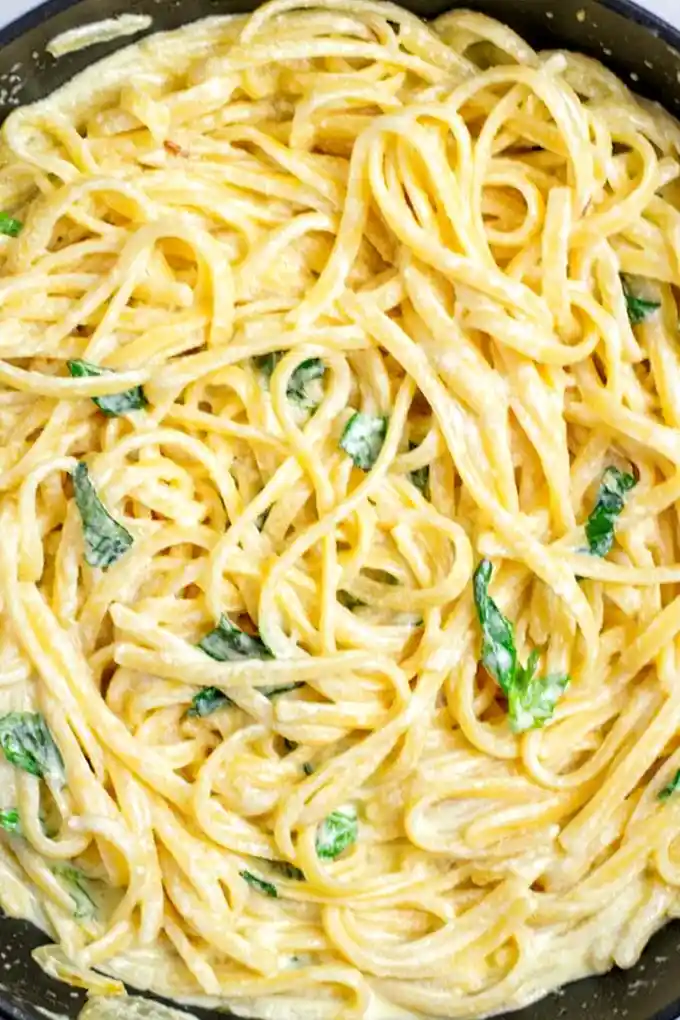
List of ingredients
- 4 cups pasta, cooked (use gf, if required) – use long shapes like spaghetti or linguine for best results.
- 1/4 cup olive oil – provides the base for sautéing and adds richness.
- 2 lemons, juiced – ensures a bright and tangy flavor profile.
- 2 teaspoon lemon zest – adds concentrated citrus aroma.
- 1 cup coconut milk full fat – creates the creamy texture without dairy.
- 3 cloves garlic, roughly chopped – provides a savory aromatic depth.
- Vegan Parmesan – adds a salty, cheesy finish to the sauce.
- salt, pepper to taste – used for final seasoning adjustments.
step-by-step instructions
- Sauté Garlic: In a skillet or casserole, heat olive oil. Add sliced garlic and fry for 1 minute over medium heat.
- Add Citrus: Remove the skillet from the heat and stir in the lemon juice and zest to prevent the juice from evaporating too quickly.
- Incorporate Cream: Stir in the coconut milk, then return the skillet to medium heat for another minute to blend the flavors.
- Season Sauce: Stir the vegan parmesan into the sauce until well combined. Add salt and pepper according to your taste.
- Combine Pasta: Add the cooked pasta to the lemon sauce and cook for 4 more minutes, allowing the noodles to absorb the sauce.
- Serve: Transfer the pasta to plates or bowls and serve immediately.
Advanced Pasta Preparation Techniques
Boiling Pasta Al Dente for Better Texture
Cook your pasta for one to two minutes less than the package instructions suggest. This ensures the noodles maintain a firm bite after they are simmered in the lemon sauce for an additional four minutes. Overcooked pasta can become mushy and break apart during the final mixing stage.
Salting the Boiling Water Correctly
Add a generous amount of salt to the water before adding the pasta. Salting the water is the only opportunity to season the interior of the pasta noodle itself. This prevents the final dish from tasting flat, regardless of how well the sauce is seasoned.
Using Gluten-Free Pasta Alternatives
If using gluten-free pasta, choose a brown rice or corn-based variety to maintain structural integrity. Be cautious with chickpea pasta, as it can release more starch and may require an extra splash of water to keep the sauce creamy. Always rinse gluten-free pasta briefly if it feels excessively gummy after boiling.
Preventing Pasta from Sticking
Once the pasta is drained, do not let it sit in the colander for too long. If you are not adding it to the sauce immediately, toss it with a small amount of olive oil. This prevents the noodles from clumping together before they hit the pan.
Customizing the Lemon Sauce Flavor
Incorporating Fresh Green Herbs
Add finely chopped fresh parsley or basil during the final minute of cooking. These herbs provide a color contrast and a fresh, peppery note that complements the acidity of the lemon. Avoid cooking the herbs for too long, as high heat can diminish their bright flavor.
Adding Sautéed Vegetables for Nutrition
Toss in a handful of baby spinach or frozen peas during the last two minutes of the sauce simmering process. For firmer vegetables like asparagus or broccoli, sauté them in the olive oil before adding the garlic. This ensures all components are cooked through without overcooking the pasta.
Adjusting the Citrus Intensity
If the sauce feels too tart, add an extra teaspoon of lemon zest while reducing the amount of juice. Zest provides the essential oil aroma without the sharp acidity of the juice. Conversely, if the dish is too creamy, add an extra squeeze of fresh lemon at the very end.
Using Different Vegan Cheese Options
While vegan parmesan is recommended, you can use a nutritional yeast-based crumble for a nut-free alternative. A small amount of vegan cream cheese can also be stirred in for an even thicker, heavier consistency. Ensure the cheese is stirred in thoroughly to avoid clumps in the sauce.
Sauce Consistency and Texture Management
Utilizing Starchy Pasta Water for Emulsion
Reserve about half a cup of the starchy water used to boil the pasta. If the coconut milk sauce becomes too thick or separates, stir in a tablespoon of this water. The starch acts as an emulsifier, helping the oil and coconut milk bind into a smooth glaze.
Managing Full-Fat Coconut Milk Consistency
Shake the coconut milk can well before measuring to ensure the fat and liquid are properly integrated. If the coconut milk has separated into a thick cream and clear liquid, whisk it in a separate bowl first. This prevents the sauce from having inconsistent patches of richness.
Ensuring Vegan Parmesan Melts Smoothly
Add the vegan parmesan slowly while stirring constantly over medium heat. Some plant-based cheeses require a bit of heat to incorporate fully into a liquid sauce. Constant stirring prevents the cheese from clumping in one area of the skillet.
Controlling the Reduction Process
Keep the heat at a steady medium to avoid boiling the sauce too vigorously. Over-boiling can cause the coconut milk to break or the lemon juice to lose its fresh brightness. A gentle simmer is sufficient to thicken the sauce to the desired consistency.
Storage and Preservation Guidelines
Refrigerating Leftovers Safely
Allow the lemon pasta to cool to room temperature before transferring it to an airtight glass container. This prevents steam from trapping moisture inside, which can make the pasta soggy. Refrigerated leftovers will remain fresh for approximately 7 days.
Freezing Pasta for Long-Term Storage
Freeze the pasta in individual portions using freezer-safe bags or airtight containers. Only freeze pasta that was cooked al dente, as overcooked noodles will disintegrate upon thawing. Properly frozen lemon pasta can be stored for up to 4 months.
Thawing Frozen Pasta Properly
Move the frozen pasta to the refrigerator 24 hours before you plan to eat it. Thawing slowly prevents the sauce from separating and preserves the texture of the noodles. Avoid thawing at room temperature to maintain food safety standards.
Managing Sauce Separation During Storage
It is normal for the coconut milk and olive oil to separate slightly during refrigeration. Do not discard the liquid; it will reintegrate once the pasta is reheated. Stirring the pasta thoroughly during the reheating process will restore the creamy texture.
Reheating Strategies for Best Results
Stovetop Reheating for Optimal Creaminess
Place the leftovers in a skillet over low to medium heat. Add a splash of water or a teaspoon of olive oil to loosen the sauce. Stir gently until the pasta is heated through and the sauce becomes glossy again.
Oven Warming for Larger Batches
Preheat the oven to 170°F and place the pasta in an oven-safe dish. Cover the dish tightly with foil to prevent the pasta from drying out. Warm slowly until the center is hot, which usually takes about 15 to 20 minutes.
Microwave Quick Heating Tips
Place the pasta in a microwave-safe dish and sprinkle a small amount of water over the top. Cover the dish with a damp paper towel or a lid to trap steam. Heat in 30-second intervals, stirring in between to ensure even heat distribution.
Restoring Flavor After Reheating
Reheating can sometimes dull the brightness of the lemon. Add a fresh squeeze of lemon juice or a pinch of extra zest after reheating to wake up the flavors. A crack of fresh black pepper also helps refresh the taste profile.
Serving and Presentation Ideas
Pairing with Plant-Based Protein Additions
Serve this pasta alongside grilled tofu cubes or seasoned chickpeas for added protein. Sautéed tempeh strips also pair well with the citrusy notes of the sauce. These additions turn the side dish into a hearty main course.
Complementary Side Dishes
A crisp garden salad with a light vinaigrette balances the richness of the coconut milk. Steamed broccoli or roasted Brussels sprouts provide a bitter contrast that works well with the tangy lemon. Garlic bread made with olive oil and herbs is also a classic accompaniment.
Garnish Suggestions for Visual Appeal
Top the pasta with a sprinkle of fresh chopped parsley or a few thin slices of raw lemon. A dusting of extra vegan parmesan adds a professional touch. For a pop of color, add a few halved cherry tomatoes on top.
Selecting the Right Serving Vessel
Use wide, shallow bowls to allow the pasta to spread, which prevents the sauce from pooling at the bottom. Warm the bowls slightly before serving to keep the creamy sauce from thickening too quickly. This ensures the meal stays at an ideal temperature longer.
Common Troubleshooting Solutions
Fixing a Sauce That Is Too Tart
If the lemon juice makes the sauce overly acidic, stir in a tiny pinch of sugar or maple syrup. This neutralizes the sharp edges of the citrus without making the dish sweet. Alternatively, adding more coconut milk can mellow out the intensity.
Correcting a Sauce That Is Too Thick
If the sauce becomes a thick paste, add reserved pasta water or a tablespoon of unsweetened almond milk. Stir on low heat until the desired consistency is reached. This thins the sauce while maintaining the creamy mouthfeel.
Addressing a Bland Flavor Profile
Increase the amount of salt or add a dash of nutritional yeast for a more savory, umami flavor. If the lemon flavor has faded, stir in more zest rather than juice to avoid making it too sour. Freshly ground black pepper can also add necessary depth.
Preventing Garlic from Burning
Ensure the oil is hot but not smoking before adding the garlic. Stir the garlic constantly and remove it from the heat the moment it becomes fragrant and translucent. Burnt garlic becomes bitter and can ruin the delicate flavor of the lemon sauce.
Frequently Asked Questions
Can I use low-fat coconut milk?
Yes, you can use low-fat coconut milk, but the sauce will be thinner and less rich. You may need to simmer the sauce for a few extra minutes or add a bit more vegan parmesan to achieve a creamy consistency.
Which pasta shape works best for this sauce?
Long, flat noodles like linguine or fettuccine are ideal because they provide a large surface area for the sauce to cling to. However, short shapes like penne or fusilli also work well, especially if you add vegetables to the dish.
How do I prevent the garlic from burning?
Keep the heat at a medium setting and do not leave the pan unattended. Use roughly chopped garlic rather than minced garlic, as smaller pieces burn much faster. Remove the pan from the heat immediately after one minute of frying.
Can I substitute the olive oil with another fat?
You can use vegan butter or a neutral oil like avocado oil. Vegan butter will add a richer, saltier taste, while avocado oil will keep the flavor neutral, allowing the lemon and garlic to stand out more.
Print
Creamy Vegan Lemon Pasta
- Total Time: 10 minutes
- Yield: 2 servings 1x
- Diet: Vegan
Description
This Lemon Pasta is budget friendly, creamy, tangy and ready in just 10 minutes. So easy to make with simple ingredients, you wouldn’t believe it is vegan and you can do this with so little effort.
Ingredients
- 4 cups pasta, cooked
- 1/4 cup olive oil
- 2 lemons, juiced
- 2 teaspoon lemon zest
- 1 cup coconut milk full fat
- 3 cloves garlic, roughly chopped
- Vegan Parmesan
- salt, pepper to taste
Instructions
- Step: In a skillet or casserole, heat olive oil. Add sliced garlic and fry for 1 minute. Remove from heat and stir in the lemon juice and zest. Repeat with the coconut milk, then bring to a cook again at medium heat for another minute.
- Step: Give the vegan parmesan to the sauce and stir well. Season with salt and pepper.
- Step: Finally add cooked pasta to the lemon sauce and cook for 4 minutes more. Serve on plates or in bowls.
Notes
Store leftovers in an airtight container for up to 7 days. Can be frozen for up to 4 months. Reserve some starchy pasta water to thin the sauce if needed. Variations include adding basil, parsley, chives, peas, spinach, broccoli, or asparagus.
- Prep Time: 2 minutes
- Cook Time: 8 minutes
- Category: Main Course
- Method: Stovetop
- Cuisine: Mediterranean
Nutrition
- Serving Size: 2 cups
- Calories: 540 kcal
- Sugar: 1.2 g
- Sodium: 197 mg
- Fat: 15.9 g
- Saturated Fat: 1.3 g
- Unsaturated Fat: 9.8 g
- Trans Fat: 0 g
- Carbohydrates: 63 g
- Fiber: 5.3 g
- Protein: 13 g
- Cholesterol: 0 mg