
Create a savory and satisfying meal in your own kitchen with this quick fried rice recipe. This dish delivers the bold flavors of a Chinese restaurant in just 20 minutes using simple pantry ingredients.
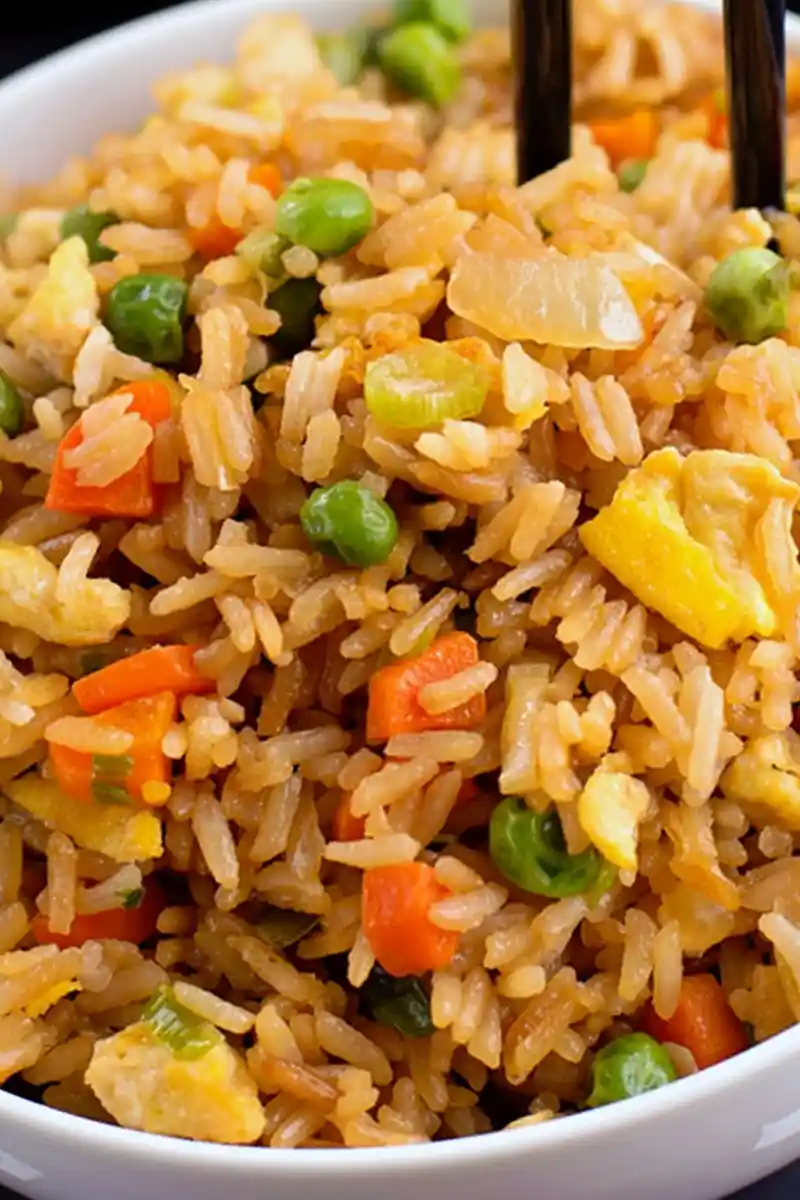
List of ingredients
- 3 Tbsp butter (divided) – used for sautéing and richness.
- 3 eggs (lightly beaten) – provides protein and texture.
- 1 large carrot (peeled and cubed) – adds color and sweetness.
- 1 small white onion (chopped) – provides a savory base.
- 3 cloves garlic (minced) – adds aromatic flavor.
- 4-5 cups rice (preferably long-grain rice like jasmine or basmati, cooked and chilled) – ensures grains stay separate.
- 1 cup frozen peas – adds a pop of color and freshness.
- 4 green onions (thinly sliced) – used for garnish and mild onion flavor.
- 1/4 cup soy sauce (plus more to taste) – provides the primary salty and savory seasoning.
- 2 tsp sesame oil – adds a toasted, nutty aroma.
- 3 tsp oyster sauce – adds depth and a slight sweetness.
- salt and pepper – to taste.
step-by-step instructions
- Prepare the Pan: Preheat a large skillet or wok to medium heat. Nonstick skillets are recommended for easier cleanup and rice release.
- Cook the Eggs: Add 1 tablespoon of butter to the pan. Once melted, pour in the lightly beaten eggs and let them cook for 30-40 seconds until set, then scramble them.
- Set Eggs Aside: Once the eggs are fully cooked, remove them from the pan and set them aside on a plate.
- Sauté Aromatics: Add the remaining butter to the pan. When hot, add the cubed carrots and chopped onion, cooking until they become tender.
- Add Garlic: Stir in the minced garlic and cook until fragrant, being careful not to let the garlic brown or burn.
- Fry the Rice: Turn the heat up slightly. Add the cold rice and frozen peas to the pan.
- Brown the Grains: Cook the mixture for about 3-4 minutes, allowing the rice to sizzle and brown slightly.
- Combine Ingredients: Stir in the cooked eggs, sliced green onions, soy sauce, sesame oil, and oyster sauce.
- Final Heat: Cook for a few more minutes until the entire mixture is thoroughly heated through.
- Season and Serve: Season with salt and pepper to taste and serve immediately while piping hot.
Optimizing Your Rice for Frying
The Importance of Using Cold Rice
Using chilled, day-old rice is the most critical factor for achieving a restaurant-style texture. Freshly cooked rice contains too much moisture, which often leads to a mushy or clumped consistency when fried. Chilling the rice allows the grains to dry out and firm up, ensuring they remain separate and toast properly in the pan.
Selecting the Right Grain Variety
Long-grain rice varieties, such as jasmine or basmati, are ideal for fried rice because they are naturally less sticky than short-grain options. These grains maintain their individual structure during the frying process, preventing the dish from becoming a dense mass. If you prefer a firmer bite, basmati is an excellent choice for its distinct grain separation.
Quick-Chill Method for Fresh Rice
If you do not have day-old rice, you can accelerate the drying process by spreading freshly cooked rice on a large baking sheet. Place the sheet in the freezer for 20 to 30 minutes to quickly reduce the surface moisture. Once the grains feel firm and cold, they are ready to be added to the skillet for frying.
Essential Frying Techniques
Maintaining High Pan Temperatures
To get the characteristic caramelized effect found in professional kitchens, you must use high heat during the rice-frying stage. This high temperature allows the rice to sizzle and brown quickly rather than steaming in its own moisture. Stir frequently to ensure an even toast across all grains while preventing any single area from burning.
Preventing Pan Overcrowding
Filling the pan too full can lower the temperature of the cooking surface, causing the rice to steam instead of fry. If you are doubling the recipe, it is better to cook the rice in batches. This ensures there is enough room for the rice to move and interact with the hot oil and butter, resulting in a crispier texture.
The Proper Sequence for Adding Eggs
Cooking the eggs first and removing them from the pan prevents them from overcooking while the vegetables soften. If eggs are left in the pan throughout the entire process, they can become rubbery and lose their delicate texture. Adding them back at the very end ensures they stay tender and are evenly distributed throughout the rice.
Protein and Vegetable Variations
Adding Sautéed Chicken Breast
To turn this side dish into a main course, add diced chicken breast to the mix. Sauté the chicken pieces in butter until they are fully cooked through before adding the vegetables and rice. This adds a lean protein boost and enhances the overall heartiness of the meal.
Integrating Fresh Shrimp
For a seafood variation, sauté well-seasoned shrimp until they turn pink and opaque. Remove the shrimp from the pan and set them aside, then proceed with the standard recipe. Fold the cooked shrimp back into the rice at the same time you add the soy sauce and sesame oil.
Creating a Seafood Medley
You can enhance the dish by combining shrimp, crab meat, and squid for a luxurious maritime flavor. Sauté each seafood component separately to ensure they are cooked to the correct temperature. Add the seafood back into the rice during the final minutes of cooking to preserve the delicate textures.
Using Marinated Beef Strips
Hearty strips of marinated beef make an excellent addition to fried rice. Sear the beef over high heat until browned and caramelized, then remove it from the skillet. Incorporate the beef back into the mixture along with the cooked eggs for a robust, filling meal.
Preparing a Vegan Version
To make this recipe vegan, replace the eggs with firm, diced tofu and swap the butter for a plant-based butter substitute. You can also increase the amount of vegetables by adding corn, broccoli, or snap peas. Ensure you use a vegan-friendly soy sauce or tamari to maintain the flavor profile.
Creating a Hawaiian Style Rice
For a tropical twist, omit the carrots and peas and replace them with diced ham, red bell pepper, and pineapple chunks. The sweetness of the pineapple provides a bright contrast to the savory soy sauce. This version works exceptionally well when served with a side of grilled pineapple.
Incorporating Spicy Kimchi
Adding chopped kimchi introduces a tangy, fermented flavor and a spicy kick to the rice. For extra depth, stir in a tablespoon of gochujang, which is a Korean chili paste. This variation transforms the dish into a bold, zesty meal that pairs well with a fried egg on top.
Adding Thai Basil and Fish Sauce
Stir in fresh Thai basil leaves and a splash of fish sauce for an aromatic, Southeast Asian inspired flavor. The basil provides a peppery, anise-like note that complements the richness of the sesame oil. Optionally, add sliced bird’s eye chilies if you prefer a more intense heat.
Adapting Japanese Yakimeshi Flavors
Create a Japanese-style fried rice by adding diced bell peppers and a small amount of vegetable broth to add moisture and depth. You can also stir in a pinch of dashi stock powder to enhance the umami profile. This version is typically simpler and focuses on the clean flavors of the rice and vegetables.
Customizing Heat and Spice
Using Sriracha for Heat
Adding a few teaspoons of sriracha or your favorite hot sauce is a quick way to add heat. Since the sauce is liquid, it blends seamlessly with the soy sauce and oyster sauce. Start with a small amount and taste as you go to avoid overpowering the other ingredients.
Incorporating Fresh Hot Chilies
For a more pungent heat, chop fresh jalapenos, serranos, or bird’s eye chilies. Sauté these chilies along with the onions and carrots to infuse the butter with spice. This method distributes the heat more evenly throughout the entire dish than adding a sauce at the end.
Adding Red Pepper Flakes
Red pepper flakes provide a subtle, lingering heat without changing the moisture content of the rice. Sprinkle them in during the final stage of frying, just before adding the sauces. This adds a slight peppery zest that complements the savory oyster sauce.
Utilizing Spicy Sesame Oil
Replacing regular sesame oil with a spicy sesame oil infusion adds a layer of warmth to the dish. This oil provides both the toasted nuttiness of sesame and a mild chili heat. It is a great way to add flavor without altering the texture of the rice.
Using Chili Garlic Sauce
Chili garlic sauce adds both heat and an extra punch of garlic flavor. Stir this sauce in at the same time as the soy sauce for a bold, savory result. It is particularly effective when using a higher ratio of vegetables in the recipe.
Storage and Preservation
Storing Rice in the Refrigerator
Fried rice can be stored in an airtight container or zip-top bags in the refrigerator for 5 to 7 days. Keeping it sealed prevents the rice from drying out further and protects it from absorbing other smells in the fridge. Label the container with the date to ensure freshness.
Freezing Rice for Long-Term Use
This dish freezes exceptionally well and can be kept for up to 6 months. Let the rice cool completely before portioning it into freezer-safe bags. Squeeze out as much air as possible to prevent freezer burn and preserve the flavor of the aromatics.
Reheating Methods
Reheating in the Microwave
When using a microwave, place the rice in a microwave-safe bowl and add 1 to 2 tablespoons of water. Cover the bowl with a lid or damp paper towel to create steam, which prevents the rice from becoming hard. Heat in short bursts, stirring halfway through to ensure even warming.
Reheating on the Stovetop
For the best texture, reheat the rice in a skillet over medium heat with a small amount of oil. Thaw frozen rice completely before adding it to the pan. Stir occasionally for about 5 minutes until the rice is heated through and regains its slightly crisp exterior.
Common Fried Rice Questions
Why is my fried rice mushy?
Mushiness is usually caused by using freshly cooked rice that hasn’t had time to dry out. The excess moisture prevents the grains from frying and causes them to stick together. Always use chilled, day-old rice or use the quick-freeze method to ensure a firm texture.
Can I use brown rice?
Yes, you can use brown rice, although the texture will be chewier and the cooking time may vary slightly. Brown rice has a nuttier flavor that pairs well with the soy and sesame oils. Ensure the brown rice is also chilled overnight before frying.
What is the best pan for this recipe?
A wok is traditional because its shape allows for high-heat tossing and even distribution of ingredients. However, a large nonstick skillet is an excellent alternative for home cooks, as it prevents the rice from sticking and makes the scrambling process much easier.
Print
Easy Homemade Restaurant-Style Fried Rice
- Total Time: 20 minutes
- Yield: 6 servings 1x
- Diet: General
Description
Skip the delivery! Our 20-minute Better Than Takeout Fried Rice brings the sizzle of restaurant-style flavors right to your kitchen table.
Ingredients
- 3 Tbsp butter (divided)
- 3 eggs (lightly beaten)
- 1 large carrot (peeled and cubed)
- 1 small white onion (chopped)
- 3 cloves garlic (minced)
- 4–5 cups rice (preferably long-grain rice (jasmine or basmati) cooked and chilled)
- 1 cup frozen peas
- 4 green onions (thinly sliced)
- 1/4 cup soy sauce (plus more to taste)
- 2 tsp sesame oil
- 3 tsp oyster sauce
- salt and pepper
Instructions
- Step 1: Preheat a large skillet or wok to medium heat.
- Step 2: Add 1 tbsp. of butter to the pan.
- Step 3: Once the butter has melted, pour the lightly beaten eggs. Let them cook for about 30-40 seconds or until set, then scramble.
- Step 4: Once the eggs are fully cooked, remove them and set them aside.
- Step 5: Add the remaining butter to the pan. When it’s hot, add the carrot and onion, and cook until tender.
- Step 6: Next, add the garlic and cook until fragrant, taking care not to brown. Turn the heat up slightly and add the cold rice and peas.
- Step 7: Then, cook the mixture for about 3-4 minutes (it will sizzle and should brown a bit).
- Step 8: Add the eggs, green onions, soy sauce, sesame oil, and oyster sauce.
- Step 9: Cook for a few more minutes or until the mixture is hot.
- Step 10: Season with salt and pepper, and serve immediately.
Notes
The key to making crisp and flavorful fried rice at home is chilling the rice before using it, ideally overnight. Use long-grain rice like jasmine or basmati to prevent clumping.
- Prep Time: 8 minutes
- Cook Time: 12 minutes
- Category: Side Dish
- Method: Stir-frying
- Cuisine: Chinese
Nutrition
- Serving Size: 1 serving
- Calories: 585 kcal
- Sugar: 3 g
- Sodium: 716 mg
- Fat: 10 g
- Saturated Fat: 5 g
- Unsaturated Fat: 4 g
- Trans Fat: 0.2 g
- Carbohydrates: 106 g
- Fiber: 4 g
- Protein: 14 g
- Cholesterol: 97 mg