
Prepare a restaurant-quality Pad Thai in just 30 minutes using fresh ingredients and a homemade sauce. This stir-fry balances sweet, tangy, and salty flavors for a satisfying meal.
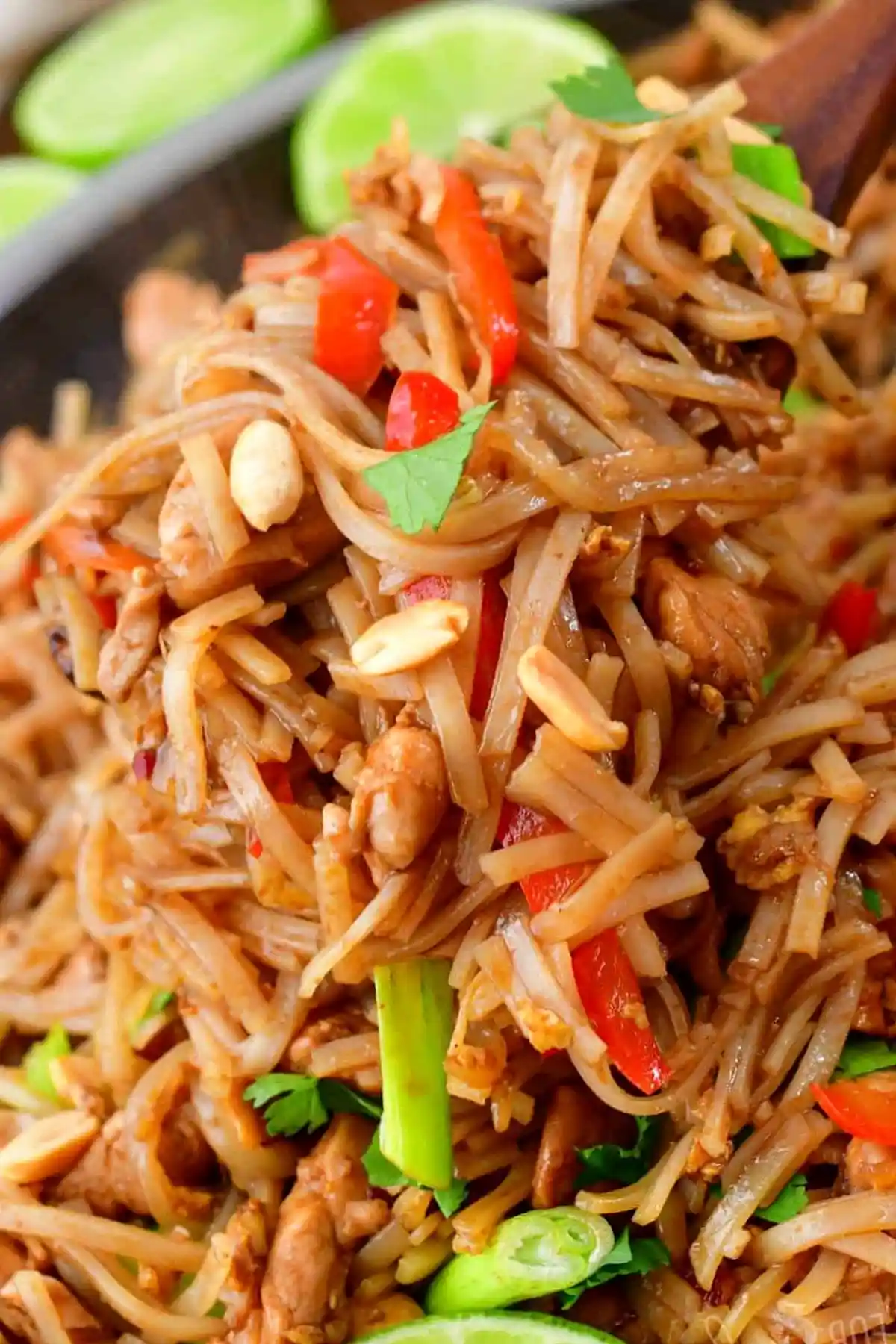
List of ingredients
- 14 oz rice noodles – the base of the dish.
- 2 tbsp peanut oil – for sautéing the chicken.
- 1.5 lbs chicken thigh meat, boneless skinless – provides juicy protein.
- 2 tbsp peanut oil – for cooking the vegetables.
- 1 large red bell pepper – adds color and sweetness.
- 6 oz bean sprouts – adds a light crunch.
- 4 large cloves of garlic – minced for aromatic flavor.
- 1/2 tsp red pepper flakes – for a mild heat.
- 1/4 cup chopped green onion – used for flavor and garnish.
- 2 eggs – whisked and scrambled into the noodles.
- 1/4 cup tamarind paste – the essential tangy element.
- 1/4 cup fish sauce – adds deep salty umami.
- 3 tbsp low sodium soy sauce – use gluten-free tamari if needed.
- 2 tbsp lime juice – provides fresh acidity.
- 1/4 cup brown sugar – balances the tartness of tamarind.
- 1/2 tsp minced dried chili peppers – optional, depending on heat preference.
- 1/2 cup crushed peanuts – for a nutty texture.
- 2-3 lime wedges – for final squeezing of juice.
- 2 tbsp minced fresh cilantro – for a bright herbal finish.
step-by-step instructions
- Prepare the noodles: Cook the rice noodles according to the package instructions, but under-cook them slightly so they remain firm. Drain the water and set them aside.
- Organize the ingredients: Soak bean sprouts in cold water, then shake off excess moisture. Slice the bell pepper, mince the garlic, and chop the green onions. Dice the chicken and whisk the eggs in a small bowl.
- Mix the sauce: Combine the tamarind paste, fish sauce, soy sauce, lime juice, brown sugar, and optional dried chili peppers in a bowl. Whisk until the sugar is dissolved and set aside.
- Sauté the chicken: Preheat a large pan over medium-high heat with 2 tbsp of peanut oil. Cook the diced chicken thigh meat until just done, then remove it from the pan and set aside.
- Cook the vegetables: Add another 2 tbsp of oil to the pan and sauté the red bell pepper until it begins to soften. Stir in the minced garlic, red pepper flakes, and bean sprouts, cooking for a few minutes.
- Scramble the eggs: Push the sautéed vegetables to the sides of the pan. Pour the whisked eggs into the center, let them set slightly, and then scramble them before mixing with the vegetables.
- Combine and finish: Return the cooked chicken to the pan and add the under-cooked rice noodles. Pour the prepared sauce over everything and toss well to combine.
- Final touches: Stir in the chopped green onions and cook for a couple more minutes. Sprinkle with crushed peanuts and cilantro, then squeeze fresh lime juice over the top before serving.
Essential Sauce Component Details
The Role of Tamarind Paste in Flavor Balance
Tamarind paste is a pulp derived from the tamarind fruit and is the most critical ingredient for an authentic taste. It provides a unique sour and tangy profile that cannot be replicated by vinegar or citrus alone. Ensure you use a paste or puree for easier mixing, as concentrates require dilution with boiling water first.
Enhancing Savory Notes with Fish Sauce
Fish sauce provides the salty, umami backbone of the dish. While it has a strong aroma on its own, it mellows out significantly once cooked and combined with the other sauce elements. It creates a complex saltiness that complements the sugar and tamarind perfectly.
Achieving the Right Sweetness with Brown Sugar
Brown sugar is used to balance the intense acidity of the lime and tamarind. It helps the sauce glaze the noodles and chicken, creating a rich texture. Adjust the amount slightly if you prefer a more savory dish over a sweet one.
Alternative Protein and Vegetable Choices
Integrating Shrimp Instead of Chicken
If you prefer shrimp, sear them over medium-high heat until they are opaque on one side. Flip and cook just until they are cooked through, then remove them from the pan immediately. Shrimp cook much faster than chicken and should be added back to the pan at the very end to avoid a rubbery texture.
Preparing Tofu for a Meatless Option
Extra-firm tofu is a traditional choice for this dish. Press the tofu to remove excess water, cut it into small cubes, and fry it in peanut oil until the edges are golden brown. Follow the same process as the chicken, removing the tofu from the pan before sautéing the vegetables.
Adding Texture with Extra Vegetables
While bell peppers and sprouts are standard, you can add shredded carrots or sliced cabbage for additional crunch. Broccoli florets or sliced mushrooms also work well if you want a heartier meal. Sauté these hearty vegetables before adding the garlic and sprouts to ensure they are cooked through.
Professional Stir Fry Techniques
Preventing Rice Noodles from Overcooking
Rice noodles can easily become mushy if boiled for too long. Cooking them slightly under the package instructions ensures they maintain a firm bite after they simmer in the sauce. If they seem too sticky after draining, a light rinse with cold water can help.
Managing Pan Space for Eggs
Pushing the vegetables to the edges of the pan creates a dedicated space for the eggs to cook without becoming over-mixed. This allows the eggs to form distinct curds, which provides a better textural contrast in the final dish. Scramble them quickly to prevent them from browning too much.
Ensuring Even Sautéing of Chicken
Using chicken thighs instead of breasts ensures the meat remains juicy even under high heat. Cut the meat into uniform, small pieces so that they sear quickly and evenly. Remove the meat once it is just done to prevent it from drying out while the vegetables cook.
Presentation and Garnishing Tips
The Impact of Fresh Lime Juice
Squeezing fresh lime juice over the dish just before serving brightens all the other flavors. The acidity cuts through the richness of the peanut oil and the sweetness of the sugar. Always use fresh lime rather than bottled juice for the best aromatic result.
Adding Crunch with Roasted Peanuts
Crushed peanuts provide a necessary textural contrast to the soft noodles and tender chicken. For the best flavor, lightly toast the peanuts in a dry pan before crushing them. This releases the natural oils and enhances the nuttiness of the garnish.
Using Fresh Cilantro for Aroma
Fresh cilantro adds a bright, herbal note that finishes the dish. Mince the leaves finely and sprinkle them over the noodles at the very end. If you find cilantro tastes like soap, you can omit it without affecting the core flavor of the recipe.
Proper Storage and Reheating Methods
Storing Leftovers in Airtight Containers
Place any remaining Pad Thai in an airtight container and store it in the refrigerator for up to three days. Because rice noodles absorb moisture over time, the dish may seem dry when cold. Keep the lime wedges separate until you are ready to serve again.
Rehydrating Noodles with Chicken Broth
The best way to reheat this dish is in a pan over medium heat with a small amount of oil. Drizzle two to three tablespoons of chicken broth over the noodles to reintroduce moisture. Toss gently until the noodles are tender and heated through, then add a fresh squeeze of lime.
Solving Common Cooking Problems
Correcting a Sauce That Is Too Tart
If the tamarind or lime makes the dish too sour, stir in an extra teaspoon of brown sugar. The sweetness will neutralize the acidity and bring the flavor profile back into balance. Add the sugar in small increments and taste after each addition.
Reducing Saltiness in the Final Dish
If the fish sauce or soy sauce makes the dish too salty, add a splash of water or a bit more lime juice. You can also add extra bean sprouts or steamed vegetables to dilute the concentration of salt. Avoid adding more salt or soy sauce if the flavor is already pungent.
Maintaining Crisp Bean Sprouts
To prevent bean sprouts from becoming limp, add them toward the end of the vegetable sauté process. They only need a few minutes of heat to be warmed through while retaining their snap. Overcooking them will cause them to release water and soften too much.
Frequently Asked Questions
Can the Pad Thai sauce be prepared ahead of time?
Yes, you can whisk all the sauce ingredients together several hours or even a day in advance. Store the sauce in a sealed jar in the refrigerator. Shake it well before adding it to the pan to ensure the brown sugar is fully integrated.
Where can I purchase authentic tamarind paste?
Tamarind paste is commonly found in the Asian food aisle of most large grocery stores or at specialized Asian markets. It is typically sold in small jars as a thick concentrate or a puree. Look for brands that list tamarind as the primary ingredient without excessive additives.
What is the best alternative for soy sauce?
For a gluten-free version, tamari or coconut aminos are the best substitutes for soy sauce. Tamari provides a flavor very similar to traditional soy sauce, while coconut aminos are slightly sweeter and less salty. Adjust the fish sauce amount if using coconut aminos to maintain the salt balance.
Print
Authentic Chicken Pad Thai Stir Fry
- Total Time: 35 minutes
- Yield: 4 servings 1x
- Diet: General
Description
Pad Thai is a delicious rice noodle dish you can make at home in about 30 minutes. It’s made with chicken, rice noodles, vegetables, eggs, peanut, cilantro, and irresistible homemade Pad Thai sauce.
Ingredients
- 14 oz rice noodles
- 2 tbsp peanut oil
- 1.5 lbs boneless skinless chicken thigh meat
- 2 tbsp peanut oil
- 1 large red bell pepper
- 6 oz bean sprouts
- 4 large cloves of garlic
- 1/2 tsp red pepper flakes
- 1/4 cup chopped green onion
- 2 eggs
- 1/4 cup tamarind paste
- 1/4 cup fish sauce
- 3 tbsp low sodium soy sauce
- 2 tbsp lime juice
- 1/4 cup brown sugar
- 1/2 tsp minced dried chili peppers (optional)
- 1/2 cup crushed peanuts
- 2–3 wedges of limes (lime juice only)
- 2 tbsp minced fresh cilantro
Instructions
- Rice Noodles: Cook rice noodles according to the package instruction but under-cook them slightly. Drain off water and set aside.
- Prep Vegetables: Place bean sprouts in a bowl of cold water to soak. Take bean sprout of the water and shake off excess water before adding it to the pan. Slice bell pepper, smash and mince garlic, and dice green onions.
- Prep Protein: Dice chicken and set aside.
- Prep Eggs: Whisk eggs in a bowl and set aside.
- Prep Sauce: Combine all ingredients for the sauce, whisk, and set aside.
- Cook Chicken: Preheat a large pan over medium-high heat. Add 2 tbsp. of peanut oil and saute diced chicken thigh meat in the pan until just done. Take the chicken out of the pan and set aside.
- Sauté Vegetables: Add a little more oil to the pan and saute bell peppers until they start to soften. Add garlic, red pepper flakes, and bean sprouts. Stir and saute for just a couple of minutes and move veggies to the sides of the pan.
- Cook Eggs: Pour whisked eggs into the center of the pan. Let them cook a little and then scramble and mix with vegetables.
- Combine: Add chicken back in and add cooked rice noodles to the pan.
- Finish: Pour in the sauce mixture and toss everything together to combine. Stir in green onions and cook for a couple more minutes.
- Garnish: Sprinkle crushes peanuts, cilantro, and squeeze a couple of lime wedges over the noodles. Mix and serve!
Notes
For a gluten-free version, substitute soy sauce with gluten-free soy sauce, tamari, or coconut aminos. To reheat, use a pan with a little oil and a couple of tablespoons of chicken broth to reinvigorate the noodles.
- Prep Time: 15 minutes
- Cook Time: 20 minutes
- Category: Main Course
- Method: Stir-fry
- Cuisine: Thai
Nutrition
- Serving Size: 1 serving
- Calories: 938 kcal
- Sugar: 22 g
- Sodium: 2276 mg
- Fat: 33 g
- Saturated Fat: 6 g
- Unsaturated Fat: 27 g
- Trans Fat: 0 g
- Carbohydrates: 113 g
- Fiber: 6 g
- Protein: 48 g
- Cholesterol: 243 mg