
This quick 20-minute stir-fry combines the richness of butter and parmesan with the savory depth of soy and garlic. It is a versatile dish that works perfectly as a main course or a flavorful side.
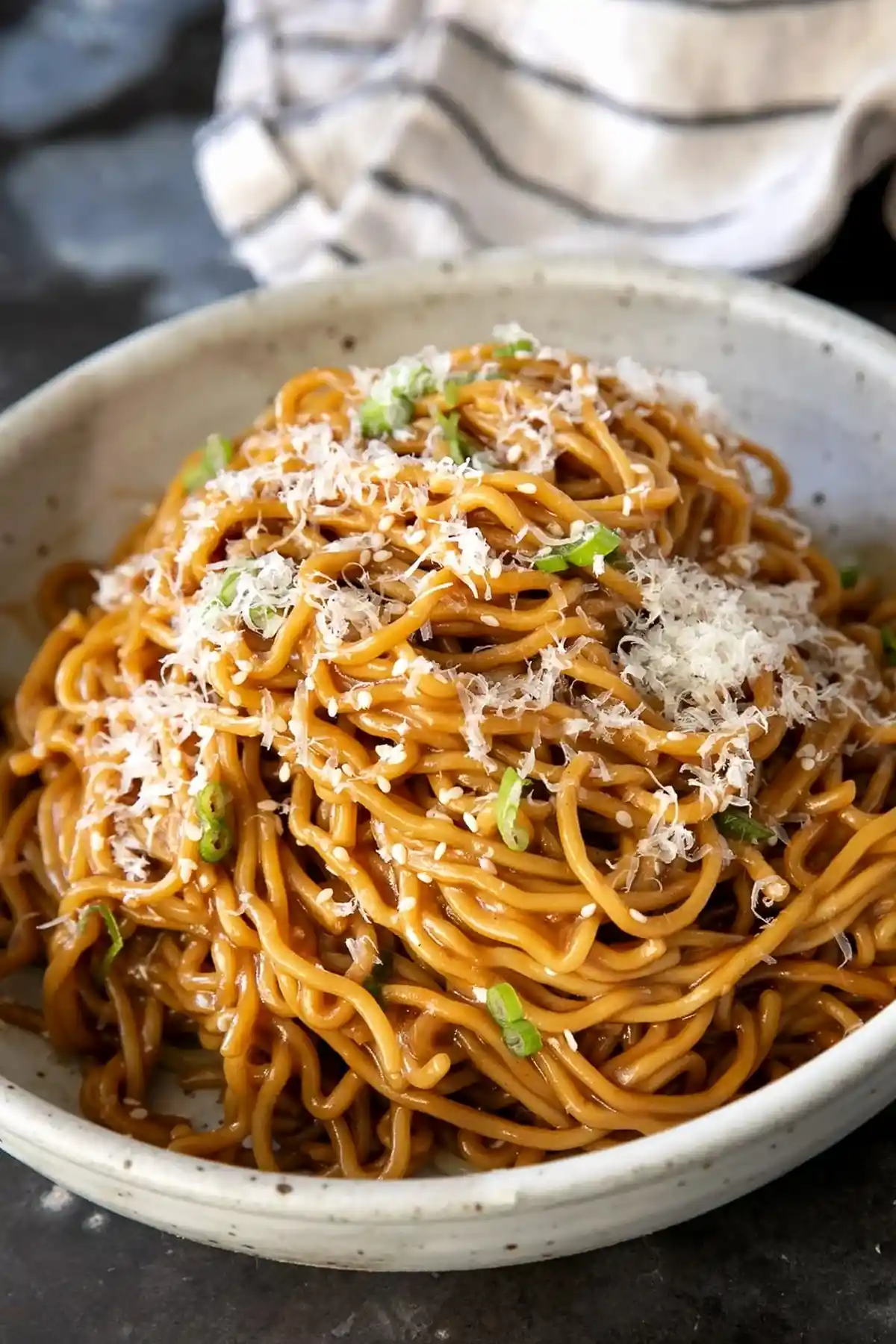
List of ingredients
- 8-10 ounces Asian style noodles – such as soba, udon, or spaghetti.
- 2 tablespoon oyster sauce – provides a thick, savory base.
- 2 tablespoon soy sauce – adds saltiness and depth.
- 1 tablespoon dark soy sauce (optional) – used primarily for a deeper brown color.
- 2 tablespoon fish sauce – adds a punch of umami.
- 2 teaspoon Worcestershire sauce – contributes a tangy, complex flavor.
- 1/4 teaspoon sesame oil – adds a toasted, nutty aroma.
- 1 tablespoon brown sugar – balances the salt with a hint of sweetness.
- 1/4 teaspoon white pepper – provides a subtle, earthy heat.
- 4 tablespoon unsalted butter – creates a rich, creamy emulsion.
- 6 cloves fresh garlic, minced – the primary aromatic for the dish.
- 1/3 cup Parmesan cheese, grated – adds a salty, nutty finish.
- 1/4 cup green onions – sliced for freshness and color.
- 1/2 teaspoon red chili flakes (optional) – for a touch of spice.
- sesame seeds (optional) – used as a garnish for texture.
step-by-step instructions
- Cook the noodles: Boil the noodles or pasta until al dente according to the package instructions. Before draining, reserve 1 cup of the boiling noodle water, then strain the noodles and rinse them with cold water to stop the cooking process.
- Prepare the sauce: In a small mixing bowl, combine the oyster sauce, soy sauce, dark soy sauce, fish sauce, Worcestershire sauce, sesame oil, brown sugar, and white pepper. Whisk until the sugar is dissolved and set the mixture aside.
- Sauté the garlic: Melt the unsalted butter in a large skillet over medium heat. Add the minced garlic and cook for 30 to 60 seconds until fragrant and lightly golden, ensuring it does not burn.
- Simmer the sauce: Pour the prepared sauce mixture into the skillet with the garlic butter. Stir well to combine all ingredients and bring the sauce to a gentle simmer.
- Combine noodles and sauce: Add the cooked and rinsed noodles to the simmering sauce. Gently toss the noodles using tongs to ensure every strand is evenly coated. Remove the skillet from the heat.
- Adjust consistency: To thicken the sauce, stir in small amounts of the reserved noodle water until you reach your preferred consistency. If the sauce is too thick, add a small amount of water, vegetable broth, or chicken broth.
- Final additions: Sprinkle the grated parmesan cheese, sliced green onions, and optional red chili flakes over the noodles. Mix gently one last time to incorporate the cheese.
- Serve: Plate the noodles immediately while hot for the best flavor and texture.
Selecting the Best Noodle Types
Using Soba Noodles for an Earthy Taste
Soba noodles, made from buckwheat, offer a nutty flavor and a slightly grainier texture. They pair exceptionally well with the soy and sesame elements of this recipe. Ensure you rinse soba noodles thoroughly under cold water to remove excess starch.
Substituting Spaghetti for Traditional Pasta
Standard dried spaghetti is an excellent substitute if Asian noodles are unavailable. The durum wheat provides a firm, al dente bite that holds up well against the heavy butter sauce. Cook spaghetti slightly under the package directions to prevent them from becoming soggy during the toss.
Choosing Rice Noodles for a Lighter Texture
Thin rice noodles are a great option for those seeking a gluten-free alternative or a lighter feel. Because rice noodles absorb liquid quickly, you may need to increase the amount of reserved noodle water used at the end. Be careful not to overcook them, as they can break easily.
Using Udon for a Chewier Bite
Udon noodles are thick and chewy, which makes them ideal for absorbing the rich garlic butter sauce. Because of their thickness, they provide a more filling meal. Ensure the sauce is simmering well before adding udon to ensure the heat penetrates the center of the noodle.
Customizing the Flavor Profile
Reducing the Sodium Content
This recipe is naturally high in salt due to the combination of soy, fish, and oyster sauces. To lower the sodium, use low-sodium soy sauce and reduce the amount of fish sauce by half. You can replace the missing saltiness with a squeeze of fresh lime juice for brightness.
Increasing the Spicy Kick
While red chili flakes are optional, you can increase the heat by adding sriracha or gochujang to the sauce mixture. For a fresh heat, stir in finely diced fresh Thai bird’s eye chilies during the garlic sauté step. This distributes the spice evenly throughout the butter.
Replacing Fish Sauce for Different Diets
If you prefer to avoid fish sauce, you can substitute it with an equal amount of mushroom-based vegetarian stir-fry sauce. A pinch of extra salt and a teaspoon of light soy sauce can also mimic the savory depth. Avoid using plain salt alone, as it lacks the umami complexity.
Using Dark Soy Sauce for Visual Appeal
Dark soy sauce is less salty than light soy sauce but provides a deep, mahogany color. Adding a tablespoon creates a professional, restaurant-style look. If you do not have dark soy sauce, a small amount of molasses or extra brown sugar can provide a similar color.
Protein Pairing Suggestions
Searing Garlic Shrimp
Shrimp cooks quickly and complements the garlic butter flavor perfectly. Sauté peeled and deveined shrimp in a separate pan with a bit of oil and garlic until pink. Toss the shrimp into the noodles at the very end to keep them tender.
Preparing Crispy Tofu Cubes
Extra-firm tofu pressed and cut into small cubes provides a great plant-based protein option. Pan-fry the tofu in oil until all sides are golden brown and crispy. Fold the tofu into the noodles just before serving to maintain the crunch.
Incorporating Grilled Chicken Breast
Thinly sliced chicken breast seasoned with salt and pepper is a hearty addition. Grill or pan-sear the chicken until fully cooked through and slightly charred. Slice the meat against the grain and lay it on top of the plated noodles.
Topping with a Jammy Fried Egg
A fried egg with a runny yolk adds a rich, creamy element to the dish. Fry the egg in butter or oil until the edges are crispy but the yolk remains liquid. Place the egg on top of the serving and break the yolk over the noodles.
Adding Fresh Vegetables
Steaming Baby Bok Choy
Baby bok choy provides a fresh, crisp contrast to the rich butter sauce. Steam the bok choy for 3-5 minutes or sauté it quickly in the same pan before starting the sauce. Place the greens alongside the noodles for a balanced plate.
Stir-Frying Fresh Broccoli
Broccoli florets add texture and a nutritional boost to the meal. Blanch the broccoli in the noodle boiling water for 2 minutes before draining the pasta. This ensures the broccoli is tender but still retains a bright green color.
Mixing in Shredded Carrots and Cabbage
For a more colorful stir-fry, add shredded carrots and sliced green cabbage. Sauté these vegetables after the garlic but before adding the sauce to allow them to soften. This adds a subtle sweetness and more volume to the dish.
Integrating Sliced Bell Peppers
Red and yellow bell peppers provide a pop of color and a sweet, peppery flavor. Slice them into thin strips and stir-fry them quickly over high heat. Mix them into the noodles during the final toss for a fresh crunch.
Storage and Reheating Guidelines
Refrigerating Leftover Noodles
Store leftover garlic noodles in an airtight container in the refrigerator for up to 3 days. Note that the noodles will absorb much of the sauce as they cool, causing them to clump together. Ensure the container is fully sealed to prevent the noodles from drying out.
Reviving Sauce During Reheating
When reheating, the sauce often becomes too thick or disappears into the pasta. Add 2-3 tablespoons of water, vegetable broth, or chicken broth before heating. This restores the emulsion and makes the noodles slippery and saucy again.
Microwave Reheating Method
Place the noodles in a microwave-safe bowl and add a splash of liquid. Cover the bowl with a damp paper towel to trap steam, which prevents the noodles from hardening. Heat in 30-second intervals, stirring in between, until warmed through.
Stovetop Reheating Method
For the best texture, reheat the noodles in a skillet over medium-low heat. Add a small knob of butter and a splash of broth to the pan. Toss gently until the noodles are heated and the sauce is glossy and fluid.
Cooking Troubleshooting
Preventing Garlic from Burning
Garlic burns quickly over medium heat, which can make the entire dish taste bitter. To prevent this, keep the heat consistent and stir the garlic constantly. If the garlic turns dark brown, it is best to start over to avoid a burnt flavor.
Correcting a Sauce That Is Too Thick
If the sauce clings too tightly to the noodles or looks dry, add the reserved noodle water one tablespoon at a time. The starch in the water helps the sauce emulsify and coat the noodles smoothly. Avoid adding too much water at once, or the sauce will become watery.
Fixing an Overly Salty Sauce
If the final dish tastes too salty, you can balance the flavor with an acid or a sweetener. Add a teaspoon of rice vinegar, a squeeze of lime, or a pinch more brown sugar. This neutralizes the saltiness without diluting the overall flavor.
Avoiding Mushy Noodles
Overcooking noodles during the boiling phase leads to a mushy texture that falls apart in the pan. Always cook your pasta 1-2 minutes less than the package suggests. The noodles will finish cooking slightly as they simmer in the garlic butter sauce.
Frequently Asked Questions
Can I use salted butter instead of unsalted?
Yes, you can use salted butter, but you should reduce the amount of soy sauce or fish sauce slightly to compensate for the extra salt. Taste the sauce before adding the final garnish to ensure the balance is correct.
Which parmesan cheese is best for this recipe?
Finely grated Parmesan or Pecorino Romano works best as they melt quickly into the sauce. Avoid using pre-shredded cheese with cellulose coatings, as it may not emulsify as smoothly into the butter sauce.
Can I make this recipe vegan?
To make this vegan, replace the butter with a plant-based butter substitute and the parmesan with nutritional yeast. Use a vegan-friendly oyster sauce (made from mushrooms) and a vegan fish sauce or extra soy sauce.
Why do I need to rinse the noodles?
Rinsing the noodles with cold water removes excess surface starch and stops the cooking process. This prevents the noodles from sticking together and keeps them from overcooking while you prepare the sauce.
What is the best way to mince the garlic?
Using a garlic press provides a very fine mince that releases more oils for a stronger flavor. Alternatively, you can mince the garlic by hand with a sharp knife and then crush it with the side of the blade into a paste.
Print
Savory Asian Garlic Noodles
- Total Time: 20 minutes
- Yield: 4 servings 1x
- Diet: General
Description
Asian Garlic Noodles is a quick and easy 20-minute noodle stir-fry that’s made using your favorite noodles in a delicious sauce made with garlic, butter, soy sauce, and parmesan cheese. Perfect for anyone who loves garlic!
Ingredients
- 8–10 ounces Asian style noodles
- 2 tablespoon oyster sauce
- 2 tablespoon soy sauce
- 1 tablespoon dark soy sauce (optional)
- 2 tablespoon fish sauce
- 2 teaspoon Worcestershire sauce
- ¼ teaspoon sesame oil
- 1 tablespoon brown sugar
- ¼ teaspoon white pepper
- 4 tablespoon unsalted butter
- 6 cloves fresh garlic (minced)
- ⅓ cup microbial-rennet Parmesan cheese (grated)
- ¼ cup green onions
- 1/2 teaspoon red chili flakes (optional)
- sesame seeds (to garnish (optional))
Instructions
- Step: Cook noodles or pasta to al dente according to package instructions (cooking time will vary). When the noodles are soft, reserve 1 cup of the boiling noodle water and strain. Rinse the pasta with cold water. Set aside.
- Step: Combine the oyster sauce, soy sauce, dark soy sauce, fish sauce, Worcestershire sauce, sesame oil, brown sugar, and white pepper in a small bowl. Whisk to combine and set aside.
- Step: Melt the butter in a large skillet over medium heat. Add the garlic and cook until fragrant – approximately 30-60 seconds. Add the prepared sauce to the garlic butter and mix well to combine. Bring to a gentle simmer.
- Step: Add the cooked noodles to the simmering sauce. Gently toss to combine. Remove from heat.
- Step: To thicken the sauce, add some of the reserved noodle water until desired consistency is reached. If the sauce becomes too thick, add some water, vegetable broth, or chicken broth, as needed.
- Step: Sprinkle with the grated parmesan cheese, green onions, and red chili flakes. Gently mix to combine.
- Step: Best served immediately.
Notes
Soba noodles are recommended, but any noodle or pasta including spaghetti works. Serve with proteins like shrimp, tofu, chicken, or fried eggs. Store leftovers in the refrigerator for 2-3 days; add water or broth when reheating to loosen the sauce. This is a high-sodium recipe; adjust soy sauce or garlic for a milder taste.
- Prep Time: 10 minutes
- Cook Time: 10 minutes
- Category: Dinner
- Method: Stir-fry
- Cuisine: Asian-American Fusion
Nutrition
- Serving Size: 1 serving
- Calories: 369 kcal
- Sugar: 4 g
- Sodium: 2156 mg
- Fat: 14 g
- Saturated Fat: 9 g
- Unsaturated Fat: 5 g
- Trans Fat: 1 g
- Carbohydrates: 51 g
- Fiber: 1 g
- Protein: 13 g
- Cholesterol: 36 mg