
This method produces tender, flavor-packed chicken breasts without the need for breading or time-consuming brining. It is a fast, high-protein option perfect for healthy meal prep or a quick weeknight dinner.
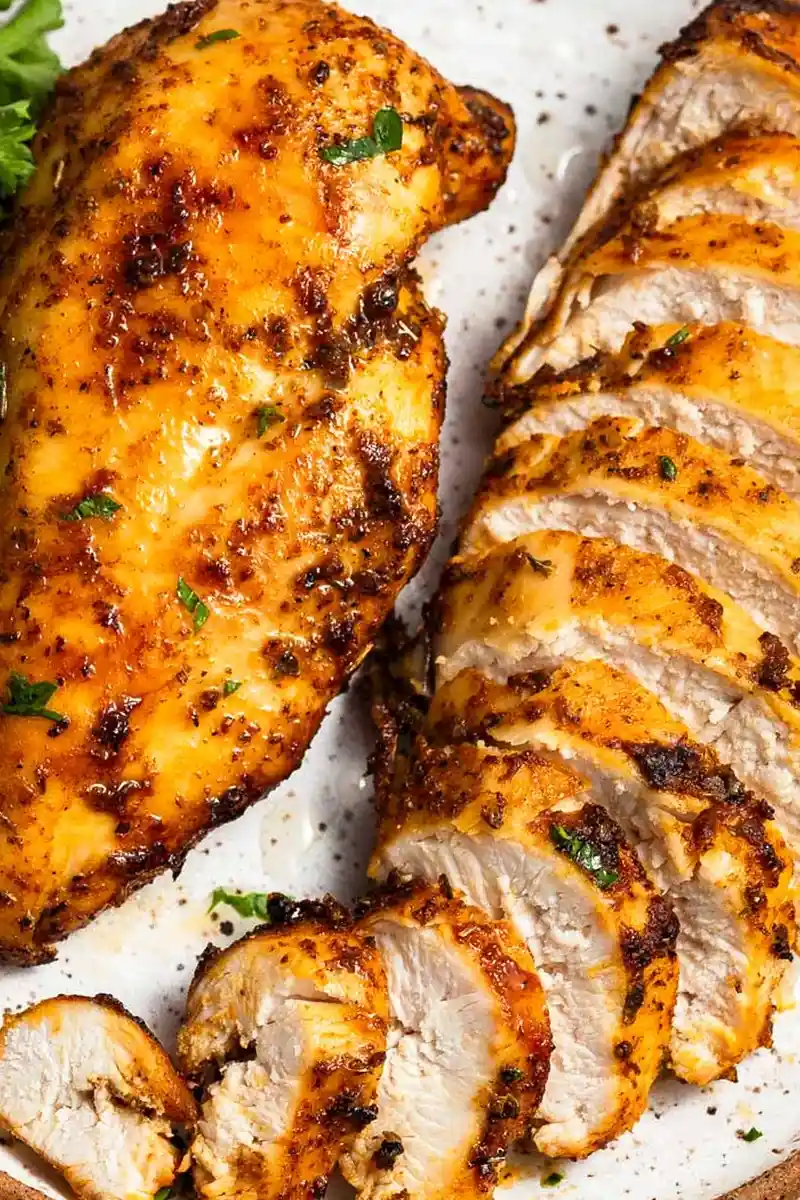
List of ingredients
- 2 chicken breasts (8 to 9oz each) – boneless and skinless for even cooking.
- 1 tbsp Olive oil – helps the spices adhere and prevents sticking.
- ½ tsp salt – enhances the natural flavors of the meat.
- ¾ tsp black pepper – adds a subtle spicy bite.
- 1 tsp garlic powder – provides a deep, savory aromatic base.
- 1 tsp paprika – adds color and a mild sweetness.
- 1 tsp Italian seasoning – a blend of herbs for a classic flavor profile.
- 1 tbsp lemon juice – tenderizes the meat and adds brightness.
step-by-step instructions
- Prepare the meat: Pat the chicken breasts dry with paper towels to ensure the marinade sticks better.
- Tenderize: Pierce the chicken with a fork on both sides to allow seasonings to penetrate deeper.
- Mix marinade: In a small bowl, whisk together the olive oil, salt, pepper, paprika, garlic powder, Italian seasoning, and lemon juice.
- Coat chicken: Rub the marinade thoroughly over the chicken breasts and let them sit for 5 minutes.
- Preheat: Set the air fryer to 380F and preheat for 5 minutes for a consistent cooking surface.
- Initial cook: Place the chicken breasts in the basket and cook for 10 minutes.
- Flip and finish: Flip the chicken and cook for another 10 minutes, or until the internal temperature reaches 165F.
- Rest: Remove from the air fryer and let the chicken rest for 5 minutes before slicing to keep the juices inside.
Pro Techniques for Maximum Tenderness
The Benefit of Piercing the Meat
Using a fork to prick the chicken creates small channels that allow the oil and seasonings to enter the thickest parts of the breast. This replaces the need for a long brine by speeding up the flavor infusion process. It also helps the heat penetrate the center of the meat more efficiently.
Allowing Proper Resting Time
Resting the chicken for five minutes after cooking is critical for moisture retention. During the cooking process, juices are pushed toward the center of the meat; resting allows them to redistribute. Slicing too early causes the juices to run out, leaving the meat dry.
Monitoring Internal Temperature
Using an instant-read meat thermometer is the only way to guarantee the chicken is safe but not overcooked. Pull the chicken when it hits 165F exactly. Even a few extra minutes in the air fryer can turn a juicy breast into a tough, dry piece of meat.
Flavor Profiles and Ingredient Swaps
Selecting High-Smoke Point Oils
While olive oil works well, avocado oil or vegetable oil are excellent alternatives due to their higher smoke points. This prevents the oil from burning or smoking at 380F. Choose an oil with a neutral flavor to let the spices stand out.
Adding a Spicy Kick
If you prefer more heat, replace half of the paprika with chili powder or add a pinch of cayenne pepper. Sriracha or hot sauce can also be whisked into the marinade for a more pungent flavor. These additions complement the acidity of the lemon juice well.
Customizing the Herb Blend
Italian seasoning is versatile, but you can substitute it with dried oregano and thyme for a more earthy taste. Freshly chopped parsley added after cooking provides a bright, fresh contrast to the roasted flavors. For a different regional profile, try using smoked paprika and cumin.
Using Different Acidic Components
Lemon juice is used here to break down muscle fibers and add tang. You can substitute this with apple cider vinegar or a small amount of white wine vinegar for a sharper acidity. These liquids help the spices penetrate the meat more effectively during the short marinating period.
Air Fryer Operation and Timing
The Importance of Preheating
Preheating the air fryer ensures that the chicken begins searing the moment it hits the basket. This creates a better exterior crust and reduces the total cooking time. Without preheating, the meat may steam rather than roast, affecting the final texture.
Avoiding Basket Overcrowding
Air fryers rely on the rapid circulation of hot air to cook food evenly. If the basket is too full, the air cannot flow around the chicken, leading to uneven cooking and pale spots. Cook in batches if you are preparing more than three large breasts.
Handling Frozen Chicken Breasts
You can cook chicken breasts from frozen, though thawing is preferred for the best texture. If cooking from frozen, increase the total cooking time by approximately 5 minutes. Always use a thermometer to ensure the center has reached 165F regardless of the starting temperature.
Adjusting for Extra Large Cuts
Chicken breasts vary significantly in size; very thick breasts may require an additional 1 to 2 minutes per side. Instead of increasing the temperature, which can burn the outside, extend the time slightly. Check the thickest part of the meat to determine doneness.
Storage and Freshness Guidelines
Short-Term Refrigeration
Store leftover cooked chicken in an airtight container in the refrigerator for 3 to 4 days. To prevent the meat from drying out during storage, you can store it with a small amount of chicken broth in the container. Keep it in the coldest part of the fridge.
Long-Term Freezer Storage
For longer storage, place the cooled chicken in a heavy-duty zip-lock bag, removing as much air as possible. Frozen cooked chicken remains high-quality for up to 3 months. Label the bag with the date to track freshness.
Optimal Reheating Techniques
To reheat, use the air fryer at 350F for 3 to 5 minutes to regain some of the exterior crispness. If using a microwave, cover the chicken with a damp paper towel and heat in short bursts. This prevents the microwave from stripping the moisture out of the meat.
Serving Suggestions and Pairings
Fresh Vegetable Sides
Pair these chicken breasts with air-fried asparagus, roasted broccoli, or a crisp garden salad. The acidity of the lemon in the chicken complements the natural bitterness of green vegetables. Steam some snap peas for a lighter, crunchier side option.
Grain and Starch Pairings
Serve the chicken over a bed of fluffy quinoa, brown rice, or mashed cauliflower for a low-carb option. Roasted sweet potatoes or a side of wild rice also work well to soak up any remaining marinade. For a heartier meal, serve alongside garlic mashed potatoes.
Complementary Sauce Ideas
While the chicken is flavorful on its own, a drizzle of honey mustard or a dollop of pesto adds a gourmet touch. A simple garlic butter sauce melted over the sliced breast enhances the richness. For a lighter option, serve with a side of fresh tzatziki.
Common Cooking Challenges
Fixing Dry Chicken
If the chicken comes out dry, it is likely due to overcooking or a lack of resting. To salvage it, slice the meat thinly and toss it with a bit of olive oil or a light sauce. In the future, reduce the cooking time by one minute and check the temperature earlier.
Managing Smoke in the Air Fryer
Excess oil can sometimes drip into the bottom of the air fryer and cause smoke. To prevent this, ensure you are only using the measured amount of oil. If smoking occurs, you can place a piece of parchment paper with holes under the chicken or a tablespoon of water in the bottom pan.
Achieving Even Browning
Uneven browning usually happens when the chicken is not patted dry or the basket is overcrowded. Ensure the surface of the meat is completely dry before applying the marinade. Flipping the chicken halfway through is essential for a uniform golden-brown color on both sides.
Frequently Asked Questions
Can I cook raw chicken in the air fryer?
Yes, cooking raw chicken in the air fryer is completely safe and efficient. The high-velocity hot air cooks the meat quickly and thoroughly. Always ensure the internal temperature reaches 165F to eliminate any risk of foodborne illness.
Is brining necessary for this recipe?
Brining is not necessary because the piercing method and the acidic marinade provide similar results in much less time. Pricking the meat allows the salt and lemon juice to penetrate the fibers quickly. This makes the recipe much more practical for busy schedules.
How long should chicken breasts cook?
Typically, chicken breasts cook for 20 minutes total at 380F, split into two 10-minute intervals. However, this can vary based on the thickness of the breast and the specific air fryer model. Always rely on a meat thermometer rather than a timer for the final call.
Can I use chicken tenders instead?
Yes, chicken tenders can be used with the same marinade and temperature. Since tenders are smaller, they will cook much faster, usually in 8 to 12 minutes total. Check them frequently to avoid overcooking their leaner structure.
Print
Juicy Air Fryer Chicken Breasts Without Breading
- Total Time: 25 minutes
- Yield: 2 servings 1x
- Diet: General
Description
This Air Fryer Chicken Breast With No Breading is so juicy, tender and full of flavor. This perfectly seasoned, delicious chicken breast is so easy, versatile and your whole family will love it!
Ingredients
- 2 chicken breasts (8 to 9oz each)
- 1 tbsp Olive oil
- ½ tsp salt
- ¾ tsp black pepper
- 1 tsp garlic powder
- 1 tsp paprika
- 1 tsp Italian seasoning
- 1 tbsp lemon juice
Instructions
- Step: Pat the chicken breasts dry with paper towels.
- Step: Pierce the chicken with a fork on both sides.
- Step: In a small bowl, whisk together oil, salt, pepper, paprika, garlic powder, Italian seasoning and lemon juice.
- Step: Coat the chicken with the marinade and leave for 5 minutes.
- Step: Preheat the Air fryer at 380F for 5 minutes. Place chicken breasts in the Air fryer and cook for 10 minutes. Flip chicken and cook for another 10 minutes or until internal temperature is 165F.
- Step: Remove the chicken breasts from Air fryer and let chicken rest for 5 minutes before slicing.
Notes
Store leftover chicken in the fridge, covered, for 3 to 4 days. Freeze in a zip lock bag in the freezer for 3 months. Reheat in the microwave or in the Air fryer.
- Prep Time: 5 minutes
- Cook Time: 20 minutes
- Category: Dinner
- Method: Air Frying
- Cuisine: American
Nutrition
- Serving Size: 1 chicken breast
- Calories: 280 kcal
- Sugar: 1 g
- Sodium: 500 mg
- Fat: 12.4 g
- Saturated Fat: 2.5 g
- Unsaturated Fat: 9.9 g
- Trans Fat: 0 g
- Carbohydrates: 2.9 g
- Fiber: 1 g
- Protein: 38 g
- Cholesterol: 95 mg