
This efficient one-pan meal combines smoky barbecue flavors with melted cheese and tender chicken. It is designed for busy weeknights to reduce preparation time and cleanup by cooking the pasta directly in the sauce.
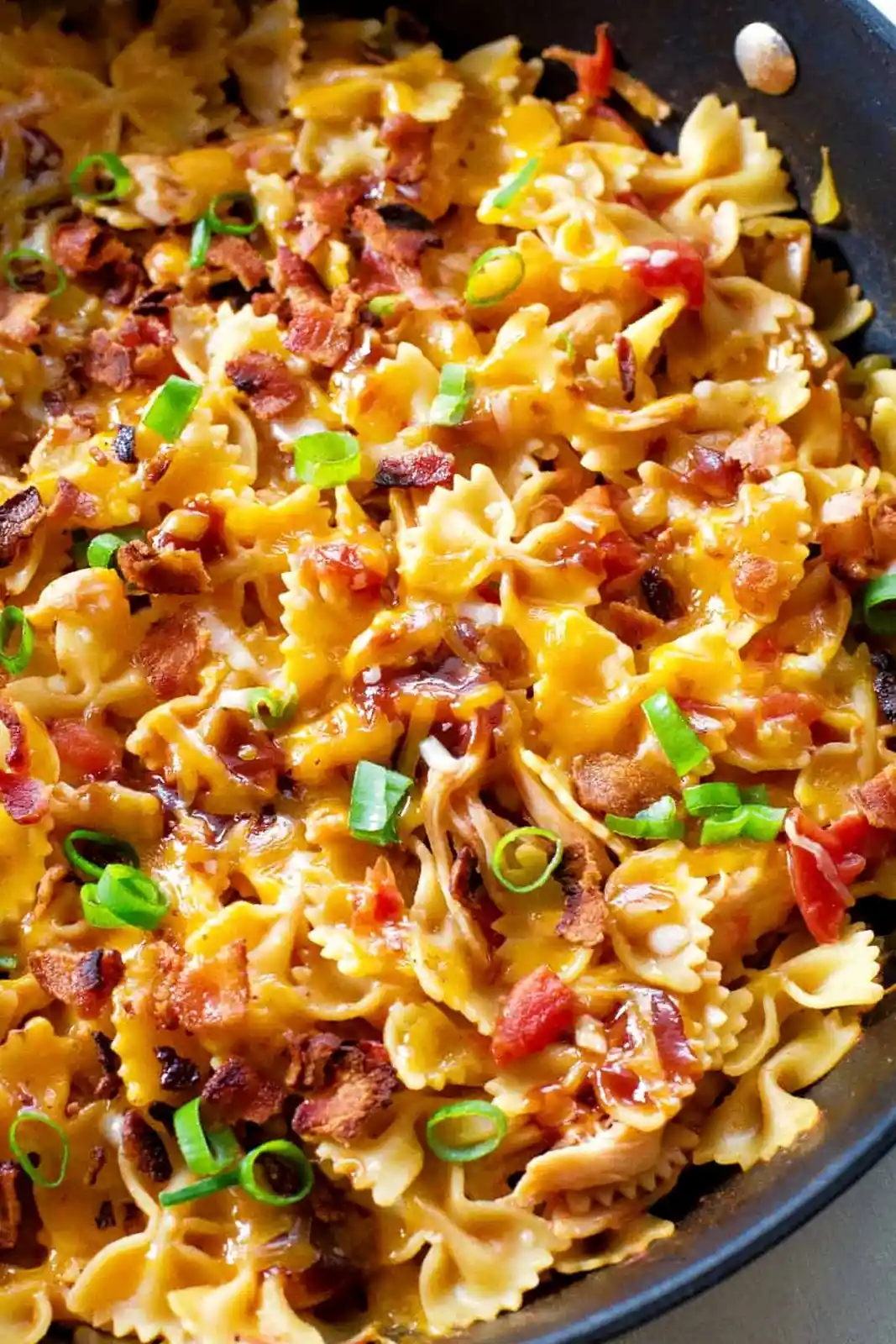
List of ingredients
- 12 ounces bowtie pasta (or other small pasta) – provides the main structure of the dish.
- 1 (14.5 ounce) can diced tomatoes with green chiles, undrained – adds acidity and mild heat.
- 2 1/2 cups chicken broth – used to boil and cook the pasta.
- 2 cups shredded rotisserie chicken – adds quick, pre-cooked protein.
- 1/2 cup barbecue sauce – gives the dish its signature smoky and sweet profile.
- 1 cup shredded Monterey Jack or cheddar cheese – creates a creamy, melted topping.
- 4 strips turkey bacon, cooked and crumbled – adds a salty, smoky crunch.
- 2 tablespoons sliced green onions – used as a fresh, crisp garnish.
step-by-step instructions
- Boil and Simmer: In a 12-inch skillet, combine the bowtie pasta, undrained diced tomatoes with green chiles, and chicken broth. Bring the mixture to a boil over medium-high heat.
- Cook the Pasta: Cover the pan with a lid and reduce the heat to a simmer. Cook for 10 to 15 minutes, stirring occasionally to ensure the pasta remains submerged and does not stick.
- Incorporate Chicken: Once the pasta is tender, remove the lid. Stir in the shredded rotisserie chicken and cook for a few minutes until the chicken is heated through and the excess liquid has evaporated.
- Add Sauce and Cheese: Stir in the barbecue sauce until evenly distributed. Sprinkle the shredded cheese over the top and cover with the lid until the cheese is completely melted.
- Final Garnish: Sprinkle the cooked and crumbled turkey bacon and sliced green onions over the melted cheese. Serve immediately.
Optimizing Your Pasta Selection
Using Bowtie Pasta for Sauce Adherence
Bowtie pasta, also known as farfalle, is ideal for this recipe because its shape and folds trap the barbecue sauce. The thickness of the center provides a nice chew that resists overcooking during the simmering process.
Alternative Small Pasta Shapes
If bowtie pasta is unavailable, penne, fusilli, or rotini are excellent substitutes. These shapes have ridges or spirals that hold onto the cheese and tomato mixture effectively.
Avoiding Large Pasta Shapes
Avoid using large shells or wide noodles, as they may not cook evenly in a shallow skillet. Small to medium shapes ensure that the liquid is distributed evenly across all pieces of pasta.
Selecting the Right Barbecue Sauce
Hickory Smoked Sauce for Depth
A hickory-flavored barbecue sauce adds a deep, woody smokiness that mimics traditional grilled chicken. This is the best choice for replicating a restaurant-style flavor profile.
Honey BBQ for a Sweeter Profile
Honey-based barbecue sauces introduce a floral sweetness that balances the acidity of the diced tomatoes. This version is often preferred by those who enjoy a sweeter contrast to the salty turkey bacon.
Spicy Barbecue Sauce for Extra Heat
For those who prefer more heat, a spicy or chipotle-infused barbecue sauce can be used. This complements the green chiles already present in the canned tomatoes.
Cheese Varieties for Melting
Monterey Jack for Creaminess
Monterey Jack is highly recommended due to its superior melting capabilities and mild flavor. It creates a smooth, gooey layer that integrates well with the barbecue sauce.
Sharp Cheddar for Bold Flavor
Sharp cheddar provides a more pungent and salty taste than Monterey Jack. While it melts well, it may not be as creamy, offering a more distinct cheese flavor in every bite.
Colby Jack for a Balanced Blend
Colby Jack offers a middle ground between the creaminess of Monterey Jack and the tang of cheddar. It is a versatile option that appeals to most palates.
Vegetable Additions for Nutrition
Adding Diced Bell Peppers
Diced red or green bell peppers can be added at the beginning of the simmering process. They add a slight crunch and a boost of Vitamin C without altering the sauce consistency.
Incorporating Corn Kernels
Frozen or canned corn kernels pair naturally with barbecue flavors and chicken. Stir them in alongside the rotisserie chicken for added texture and sweetness.
Adding Fresh Spinach
Fresh baby spinach can be stirred in during the final two minutes of cooking. The residual heat will wilt the leaves quickly, adding color and nutrients to the dish.
Using Sliced Jalapeños for Heat
For an additional spicy kick, add sliced fresh jalapeños before covering the pan for the cheese to melt. This provides a fresh, sharp heat that cuts through the richness of the cheese.
Technical Cooking Tips
Preventing Pasta from Sticking
Stirring every few minutes is critical when cooking pasta in a skillet. This prevents the starch from settling and sticking to the bottom of the pan, which could cause scorching.
Managing Liquid Evaporation
If the liquid evaporates too quickly before the pasta is tender, add an extra 1/4 cup of chicken broth. Ensure there is always enough liquid to keep the pasta submerged.
Achieving the Right Sauce Consistency
The liquid should be reduced until it forms a thick glaze before adding the barbecue sauce. If the mixture is too watery, simmer without the lid for an additional two minutes.
Selecting the Correct Skillet
Use a 12-inch skillet with high sides to prevent the liquid from bubbling over. A non-stick surface is preferred for easier cleanup and to prevent cheese from sticking to the edges.
Storage and Preservation
Refrigerator Storage Guidelines
Store leftovers in an airtight glass or plastic container in the refrigerator. This dish stays fresh for up to three to four days when kept at a constant cold temperature.
Preventing Pasta Dryness during Storage
Pasta tends to absorb liquid as it sits in the fridge. To prevent the dish from becoming too dry, store it with a small amount of extra broth or water.
Freezing Instructions
While this dish can be frozen, the texture of the pasta may change upon thawing. If freezing, store in a freezer-safe container for up to two months and thaw in the fridge overnight.
Reheating Methods
Microwave Reheating Technique
Heat portions in the microwave on medium power to avoid overheating the cheese. Add a teaspoon of water or broth to the pasta to restore the creamy consistency of the sauce.
Stovetop Reheating Process
Place the leftovers in a small pan over low heat. Add a splash of chicken broth and stir gently until the cheese melts and the pasta is heated through.
Oven Reheating for Texture
Transfer the pasta to an oven-safe dish and cover with foil. Heat at 325 degrees Fahrenheit until hot, which helps maintain the consistency of the melted cheese topping.
Make-Ahead Strategies
Pre-Prepping Ingredients
You can shred the rotisserie chicken and slice the green onions up to two days in advance. Store them in separate airtight containers to save time during the actual cooking process.
Partial Cooking Method
You can simmer the pasta and tomatoes but stop before adding the chicken and cheese. When ready to eat, simply add the remaining ingredients and heat through on the stove.
Pre-Mixing the Sauce
Combine the barbecue sauce and a small amount of broth in a jar before starting. This ensures the sauce is perfectly blended before it hits the hot pasta.
Troubleshooting Common Issues
What to do if the pasta is too mushy?
Mushy pasta usually results from overcooking or stirring too vigorously, which releases too much starch. Reduce the simmering time by one or two minutes in future batches.
How to fix a sauce that is too thin?
If the sauce remains watery after adding the chicken, simmer the mixture uncovered for a few more minutes. You can also stir in a tablespoon of cornstarch slurry to thicken it quickly.
What if the cheese is not melting?
Ensure the lid is tightly sealed to trap the steam. If the cheese remains solid, increase the heat slightly for one minute or use a kitchen torch for a quick melt.
Why is the chicken drying out?
Rotisserie chicken is already cooked, so adding it too early can lead to toughness. Always stir it in at the end just long enough to heat it through.
Frequently Asked Questions
Can I use a different protein instead of chicken?
Yes, shredded turkey or cooked shrimp can be used as alternatives. If using shrimp, add them at the very end to prevent overcooking.
Is it possible to make this recipe dairy-free?
You can replace the Monterey Jack or cheddar with a plant-based cheese alternative. Ensure the substitute has a similar melting point to maintain the texture.
Can I use dried herbs to enhance the flavor?
Adding a pinch of dried oregano or smoked paprika to the broth can enhance the depth of the dish. Stir these in at the beginning of the simmering process.
Do I need to drain the tomatoes?
No, the liquid from the canned tomatoes is essential for the sauce. It provides acidity and helps cook the pasta effectively.
Print
Quick One-Pot Monterey Chicken Pasta
- Total Time: 20 minutes
- Yield: 6 servings 1x
- Diet: General
Description
One-Pan Monterey Chicken Pasta is a quick weeknight dinner inspired by the Monterey Chicken at Chili’s restaurant! Chicken, pasta, BBQ sauce, cheese, and turkey bacon make this pasta the ultimate comfort food and all in one-pan.
Ingredients
- 12 ounces bowtie pasta (or other small pasta)
- 1 (14.5 ounce) can diced tomatoes with green chiles undrained
- 2 1/2 cups chicken broth
- 2 cups shredded rotisserie chicken
- 1/2 cup barbecue sauce
- 1 cup shredded Monterey Jack or cheddar cheese
- 4 strips turkey bacon, cooked and crumbled
- 2 tablespoons sliced green onions
Instructions
- Step: In a 12-inch skillet, add the pasta, tomatoes, and chicken broth. Bring mixture to a boil. Cover and reduce to a simmer. Cook pasta for 10-15 minutes, stirring every once in a while to make sure all parts of the pasta are covered and cooking.
- Step: Once pasta is tender, remove lid, stir in the chicken, and heat for a couple of minutes until heated through and excess liquid is evaporated.
- Step: Stir in BBQ sauce. Sprinkle with cheese and cover with lid until cheese is melted. Sprinkle with turkey bacon and green onions. Serve immediately!
Notes
Use a skillet with a lip to ensure there is plenty of room for mixing.
- Prep Time: 5 minutes
- Cook Time: 15 minutes
- Category: Main Course
- Method: Stovetop
- Cuisine: American
Nutrition
- Serving Size: 1 serving
- Calories: 394 kcal
- Sugar: 12 g
- Sodium: 950 mg
- Fat: 11 g
- Saturated Fat: 4 g
- Unsaturated Fat: 7 g
- Trans Fat: 0 g
- Carbohydrates: 45 g
- Fiber: 4 g
- Protein: 21 g
- Cholesterol: 75 mg