
This decadent pasta dish combines the savory depth of caramelized onions with the nutty richness of browned butter. It creates a velvety sauce that coats every strand of linguine for a gourmet meal. Serve it with a crisp salad to balance the indulgent flavors.
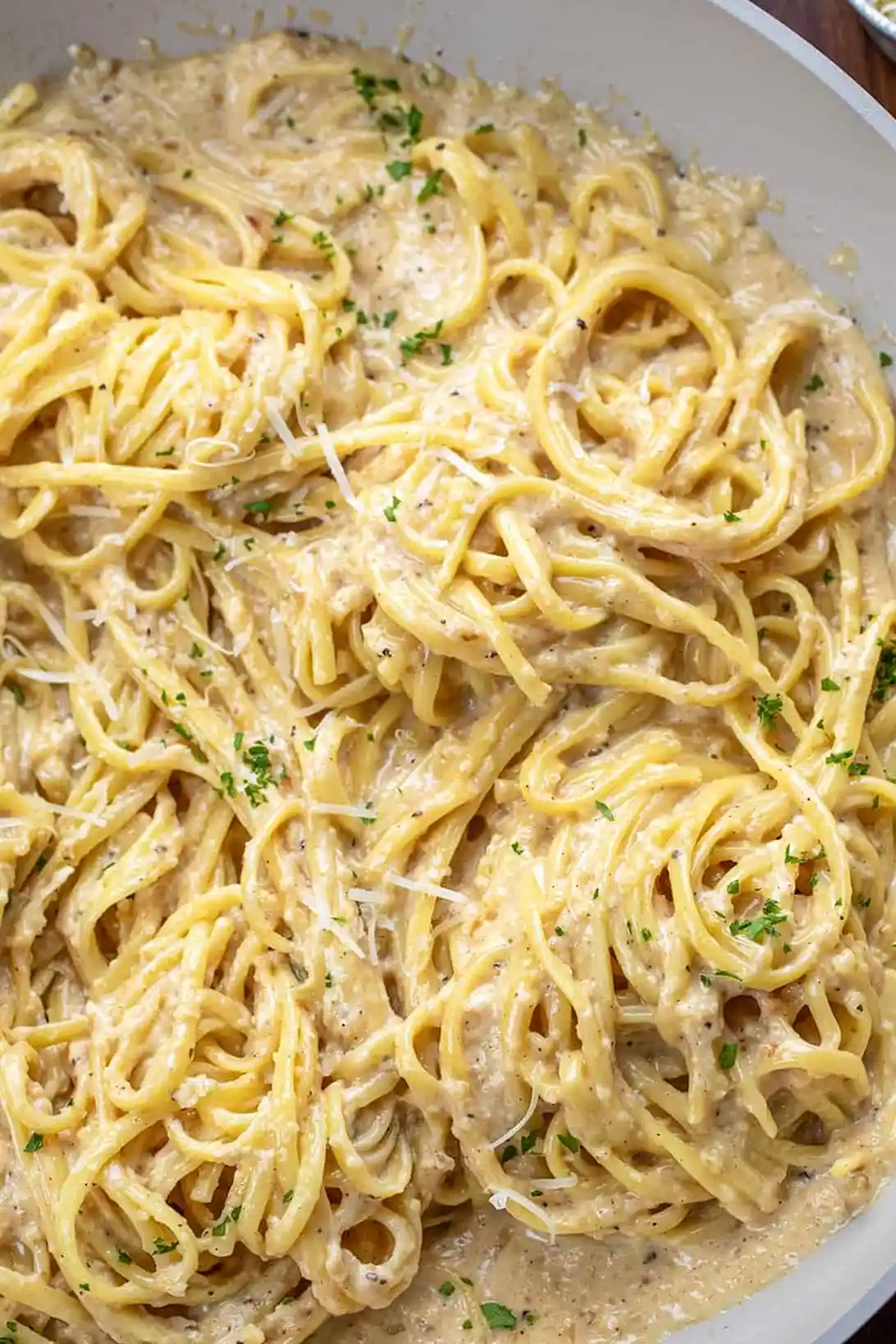
List of ingredients
- 1/4 cup (57 g) unsalted butter – used for caramelizing the onions.
- 2 large yellow onions, thinly sliced into half-moon shapes – provides the essential sweet and savory base.
- 1/4 teaspoon kosher salt – for seasoning the onions.
- 1/4 teaspoon black pepper – for seasoning the onions.
- 1/2 cup (113 g) unsalted butter, room temperature – used to create the brown butter sauce.
- 8 ounces linguine – the base pasta for the dish.
- 1 cup (238 g) heavy whipping cream – adds creaminess and body to the sauce.
- 1 cup (100 g) parmesan cheese, grated – adds saltiness and helps thicken the sauce.
- 1/2 teaspoon kosher salt – for seasoning the final sauce.
- 1/4 teaspoon black pepper – for seasoning the final sauce.
- Fresh parsley, chopped – used for a fresh color and taste garnish.
step-by-step instructions
- Caramelize the Onions: Melt 1/4 cup of butter in a large non-stick skillet over medium-high heat. Add the sliced onions and sauté for 25-30 minutes, stirring occasionally, until they are very tender and have a deep caramel color. Season with salt and pepper, then transfer the onions to a plate.
- Brown the Butter: In the same skillet over medium-high heat, melt the remaining 1/2 cup of butter. Stir and scrape the pan constantly. As soon as the butter turns a chestnut brown color and emits a nutty aroma, remove the pan from the heat immediately to prevent burning.
- Cook the Pasta: Bring a large pot of salted water to a boil. Add the linguine and cook until al dente, typically taking 8-10 minutes. Reserve 1 cup of the starchy pasta water before draining the noodles.
- Blend the Base: Place the caramelized onions, the browned butter, and 1/2 cup of the reserved pasta water into a high-powered food processor or blender. Blend until the mixture is completely smooth and well combined.
- Prepare the Cream Sauce: Return the original skillet to medium heat. Add the blended onion mixture, heavy whipping cream, and grated parmesan cheese. Cook and stir until the cheese has melted and the sauce is heated through.
- Combine and Serve: Toss the cooked pasta into the skillet until the noodles are evenly coated in the sauce. If the sauce is too thick, stir in a bit more of the reserved pasta water. Garnish with additional parmesan and chopped parsley before serving hot.
Ingredient Selection and Alternatives
Choosing the Best Onions
Yellow onions are recommended because they have a balanced sugar and sulfur content, making them ideal for caramelization. You can substitute them with sweet onions like Vidalia for a milder taste or red onions for a slightly sharper profile.
Selecting the Right Pasta Shape
Linguine is preferred because its flat, narrow shape provides a large surface area for the creamy sauce to cling to. However, fettuccine or pappardelle also work well for this recipe. Avoid very small shapes like macaroni, as they do not hold the sauce as effectively.
Creamy Substitutes
Heavy whipping cream provides the most stable and velvety texture. If you need a lighter option, you can use half-and-half or whole milk. Be aware that thinner liquids may result in a less thick sauce and might require more parmesan to achieve the desired consistency.
Parmesan Cheese Varieties
Using freshly grated Parmigiano-Reggiano offers the most intense, nutty flavor and melts smoothly into the sauce. Pre-shredded cheeses often contain anti-clumping agents that can prevent the sauce from becoming perfectly smooth.
Customizing Your Pasta Dish
Adding Sautéed Vegetables
Mushrooms are a natural pairing for French onion flavors and can be sautéed before adding the onions. Spinach, asparagus, or cherry tomatoes can also be stirred in at the end to add color and nutrition to the meal.
Incorporating Protein Options
Grilled chicken breasts or sautéed shrimp can be added to turn this into a heartier main course. For a different texture, try adding cooked Italian sausage or crumbled plant-based sausage alternatives.
Fresh Herb Enhancements
While parsley is the standard garnish, fresh thyme or sage pairs exceptionally well with browned butter. Add these herbs during the butter-browning process to infuse the fat with more complex aromatic notes.
Expert Cooking Techniques
Perfecting the Caramelization Process
The key to deep flavor is patience and temperature control. Avoid rushing the onions on high heat, which leads to burning rather than caramelizing. Stirring occasionally allows the natural sugars to break down and brown evenly.
Preventing Burnt Brown Butter
Brown butter, or beurre noisette, can go from toasted to burnt in seconds. Keep the butter moving constantly with a whisk or spatula. Remove it from the heat the moment the milk solids turn golden brown.
Utilizing Reserved Pasta Water
Pasta water is rich in starch, which acts as an emulsifier between the fats in the butter and the liquid in the cream. Adding it to the blender and the final sauce ensures a cohesive, glossy texture that doesn’t separate.
Achieving a Smooth Sauce Texture
Using a high-powered blender or an immersion blender is crucial for this specific recipe. Blending the onions into the butter creates a concentrated flavor base that integrates seamlessly with the cream and cheese.
Serving and Pairing Suggestions
Balancing with Fresh Salads
A wedge salad with a light vinaigrette or a simple garden salad provides a necessary acidic contrast to the richness of the sauce. Use bitter greens like arugula or radicchio to cut through the creaminess of the parmesan.
Accompanying Breads
Warm, crusty bread is perfect for soaking up any remaining sauce on the plate. A toasted baguette, ciabatta, or homemade garlic knots complement the nutty notes of the browned butter.
Choosing Roasted Side Vegetables
Roasted carrots, Brussels sprouts, or asparagus add an earthy sweetness and textural variety. Toss them in olive oil and salt, then roast at 400°F until caramelized to match the flavor profile of the pasta.
Storage and Preservation
Refrigeration Guidelines
Store leftover pasta in an airtight container in the refrigerator for up to 3-4 days. Ensure the pasta is cooled slightly before sealing the container to prevent excessive condensation from making the noodles mushy.
Best Reheating Methods
The best way to reheat this dish is in a skillet over low heat. Add a splash of water, milk, or heavy cream to loosen the sauce, as the pasta will absorb moisture while sitting in the fridge.
Freezing Instructions
You can freeze the pasta in a freezer-safe container for 1-2 months. Thaw the container in the refrigerator overnight before reheating on the stovetop to maintain the cream sauce’s emulsion.
Troubleshooting Common Issues
Solving Sauce Thickness
If the sauce appears too thick or clumps, stir in reserved pasta water one tablespoon at a time. The starch in the water helps thin the sauce while maintaining its creamy consistency.
Correcting Burnt Butter
If the butter solids turn black and smell acrid, the butter is burnt and cannot be fixed. It is better to discard the burnt butter and start the browning process again to avoid ruining the entire dish.
Fixing Onions That Won’t Brown
If the onions are steaming rather than browning, the pan temperature may be too low or the pan may be overcrowded. Increase the heat slightly and ensure you are using a wide skillet to allow moisture to evaporate.
Preventing Sauce Separation
Separation usually happens if the heat is too high during the final mixing stage. Keep the skillet on medium to low heat and stir constantly while incorporating the cheese to keep the emulsion stable.
Frequently Asked Questions
Can I use red onions instead?
Yes, you can use red onions, though they will provide a different color and a slightly sweeter, more pungent taste. Yellow onions remain the standard for a classic French onion flavor profile.
Is there a way to make this faster?
The caramelization of onions is the most time-consuming part and cannot be safely skipped. To speed it up slightly, you can add a pinch of baking soda, which accelerates the breakdown of the onion cell walls.
Can I use a different cheese?
Gruyere is the traditional cheese used in French onion soup and works excellently here. You can use a mix of parmesan and Gruyere for a more authentic soup-inspired flavor.
How do I stop the butter from burning?
Use a light-colored pan so you can clearly see the color change of the butter solids. Once the butter begins to foam and brown, move it off the hot burner immediately to stop the cooking process.
Print
French Onion and Browned Butter Pasta
- Total Time: 40 minutes
- Yield: 4 servings 1x
- Diet: General
Description
French Onion and Browned Butter Pasta is a rich and indulgent dish that combines the deep flavors of caramelized onions and nutty browned butter with creamy pasta. Pair the flavorful pasta with some vegetables or a side salad for a delicious meal!
Ingredients
- 1/4 cup unsalted butter
- 2 large yellow onions, thinly sliced into half-moon shapes
- 1/4 teaspoon kosher salt
- 1/4 teaspoon black pepper
- 1/2 cup unsalted butter, room temperature
- 8 ounces linguine
- 1 cup heavy whipping cream
- 1 cup parmesan cheese, grated
- 1/2 teaspoon kosher salt
- 1/4 teaspoon black pepper
- parsley, chopped for garnish
Instructions
- Onions: In a large non-stick skillet over medium-high heat, melt butter. Once melted, add onions and saute for 25-30 minutes. Stir occasionally until the onions are very tender and caramel color. Season with salt and pepper. Transfer the onions to a plate.
- Browned Butter: In the same skillet over medium-high heat, melt the butter. Constantly stir and scrape the pan as you go. As soon as the butter turns chestnut brown and smells nutty, remove the pan from the heat, and set aside to cool slightly.
- Pasta: Bring a large pot of salted water to a boil. Add pasta and cook until al dente (about 8-10 minutes). Reserve 1 cup of pasta water and drain the rest.
- Blending: Add the caramelized onions, browned butter, and 1/2 cup of pasta water to the bowl of a high-powered food processor (or high-powered blender). Blend until well combined.
- Sauce: To the original skillet over medium heat, add the blended onion mixture, heavy cream, and parmesan. Cook until the cheese is melted and the sauce is heated through.
- Tossing: Add the cooked pasta to the skillet and toss until the noodles are evenly coated with the creamy sauce. If the sauce appears too thick, add a bit more of the reserved pasta water to reach your desired consistency.
- Serving: Serve hot, garnished with additional grated parmesan cheese and parsley.
Notes
Reserve 1 cup of pasta water before draining to adjust sauce consistency. For a lighter option, half-and-half can be used instead of heavy cream.
- Prep Time: 10 minutes
- Cook Time: 30 minutes
- Category: Dinner
- Method: Stovetop
- Cuisine: French-inspired
Nutrition
- Serving Size: 1 serving
- Calories: 832 kcal
- Sugar: 12 g
- Sodium: 1150 mg
- Fat: 64 g
- Saturated Fat: 36 g
- Unsaturated Fat: 26 g
- Trans Fat: 2 g
- Carbohydrates: 54 g
- Fiber: 5 g
- Protein: 21 g
- Cholesterol: 215 mg