
This quick and nutritious pasta dish combines the richness of avocados with a creamy sauce. It is a practical option for a healthy weeknight meal that comes together in under 30 minutes.
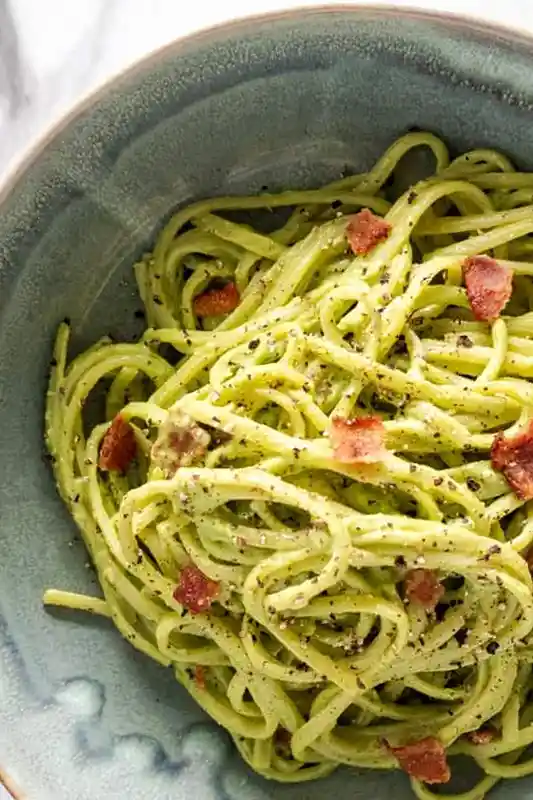
List of ingredients
- 1 lb Linguini Noodles – the base of the dish.
- 2 Avocados (pit removed and peeled) – provides the creamy texture and healthy fats.
- 2 Egg Yolks – adds richness and helps thicken the sauce.
- 2 large leaves of Kale – adds nutrients and a subtle earthy flavor.
- 3-4 cloves Garlic – for aromatic depth.
- 1/4 cup Extra Virgin Olive Oil – helps emulsify the sauce.
- 1 1/2 Tablespoons Lemon Juice – prevents oxidation and adds acidity.
- 1 teaspoon Kosher Salt – enhances overall flavor.
- 1/2 teaspoon Paprika – provides a mild sweetness and color.
- Pinch Cayenne – adds a subtle heat.
- 1 cup Pasta Water (reserved) – essential for adjusting sauce consistency.
- 4-5 slices Smoked plant-based bacon (cooked and crumbled) – adds a salty, smoky element.
- 1/3 cup Parmesan cheese (shredded) – adds a salty, nutty finish.
step-by-step instructions
- Boil Pasta: Bring a large pot of water to a boil and add a generous amount of salt. Cook the linguini noodles until they reach an al dente texture.
- Prepare the Base: While the pasta is boiling, place the avocados, egg yolks, kale leaves, garlic cloves, extra virgin olive oil, lemon juice, salt, paprika, and cayenne into a blender or food processor. Blend until the mixture is completely smooth.
- Save Pasta Water: Before draining the noodles, carefully reserve one cup of the hot pasta water.
- Emulsify the Sauce: Set the blender or food processor to a low speed. Slowly pour in the reserved hot pasta water while blending until the sauce is smooth and integrated.
- Combine: Pour the prepared avocado sauce over the warm, drained linguini noodles. Stir thoroughly to ensure every strand is coated.
- Final Additions: Fold in the crumbled smoked plant-based bacon and shredded parmesan cheese. Stir briefly to combine and serve the dish immediately.
Optimizing Your Sauce Texture
Achieving a Perfectly Smooth Blend
Use a high-speed blender to ensure the kale and garlic are completely pulverized. If you see small green flecks, continue blending on high for another 30 seconds. A food processor also works, but you may need to scrape the sides more frequently.
Tempering the Egg Yolks
Adding the hot pasta water slowly while the blender is running is a technique called tempering. This process gently cooks the egg yolks without scrambling them. It creates a stable emulsion that prevents the sauce from separating when it hits the pasta.
Selecting the Right Avocado
Use avocados that are ripe but not overripe to avoid any brown spots or bitter flavors. A ripe avocado should give slightly when pressed gently near the stem. Avoid avocados with deep bruises, as these will affect the final color of the sauce.
Maintaining the Bright Green Color
The lemon juice in the recipe acts as an antioxidant to keep the sauce vibrant green. To further prevent browning, combine the sauce with the pasta immediately after blending. Avoid letting the sauce sit for long periods before serving.
Ingredient Substitutions and Swaps
Alternative Leafy Greens
If you do not have kale, baby spinach is an excellent alternative that blends easily. Arugula can be used for a more peppery taste, though it may slightly alter the color. Swiss chard is another nutrient-dense option that works well in this sauce.
Different Pasta Shapes
While linguini is traditional, spaghetti or fettuccine are great alternatives for this creamy sauce. For a heartier bite, try penne or fusilli, which trap the sauce in their ridges. Whole grain or chickpea pasta can be used for added fiber and protein.
Dairy-Free Cheese Options
To make this dish vegan or dairy-free, replace the parmesan with nutritional yeast for a similar nutty flavor. Cashew-based parmesan alternatives also work well for maintaining the salty profile. Ensure the replacement is finely grated to integrate into the sauce.
Egg-Free Thickening Agents
For those avoiding eggs, replace the yolks with two tablespoons of soaked raw cashews. Blend the cashews with the other ingredients until completely smooth. This maintains the creaminess and provides a similar thickening effect.
Acidic Replacements for Lemon
If lemon juice is unavailable, fresh lime juice provides a similar acidic balance. A small amount of apple cider vinegar can also work, though it has a different flavor profile. Avoid using white vinegar as it may be too harsh for the avocado.
Alternative Oil Choices
Extra virgin olive oil is recommended for its flavor, but avocado oil is a neutral alternative. Grapeseed oil can also be used if you prefer a sauce with less distinct oil taste. Avoid using butter as it may change the emulsification process in the blender.
Flavor Variations and Enhancements
Adding a Citrus Twist
For a brighter, more summery flavor, add a teaspoon of lemon zest to the blender. This intensifies the citrus notes without adding too much extra liquid. Orange zest can also be used for a sweeter, more complex aroma.
Increasing the Heat Level
If you prefer a spicier dish, increase the cayenne pepper to a quarter teaspoon. You can also stir in crushed red pepper flakes at the end for a more direct heat. Adding a teaspoon of sriracha to the blender provides a creamy, spicy depth.
Incorporating Roasted Vegetables
Stir in roasted cherry tomatoes or sautéed asparagus for added texture and flavor. Roasted red peppers can be blended directly into the sauce for a colorful twist. Sautéed mushrooms add an earthy, savory component that pairs well with the avocado.
Adding Fresh Herbs
Stir in chopped fresh basil or parsley just before serving to add a layer of freshness. Chives or green onions provide a mild onion flavor that complements the garlic. Fresh cilantro is another option if you want a more zesty, Latin-inspired profile.
Creamy Nut Additions
Adding a tablespoon of tahini or almond butter to the blender increases the richness of the sauce. This adds a subtle nuttiness that balances the acidity of the lemon juice. Ensure the nut butter is smooth and well-integrated.
Adding a Sweet Element
A tiny pinch of sugar or a drop of honey can balance the bitterness of the kale. This is optional but can help create a more rounded flavor profile. Be careful not to add too much, as the dish should remain savory.
Serving and Presentation Advice
Complementary Side Dishes
Serve this pasta with a side of toasted garlic bread to soak up any extra sauce. A light arugula salad with a balsamic glaze provides a refreshing contrast to the rich pasta. Roasted broccoli or sautéed zucchini also make healthy accompaniments.
Garnishing for Visual Appeal
Top the finished dish with an extra sprinkle of parmesan cheese and a pinch of black pepper. Freshly chopped parsley or a few slices of fresh avocado can add a professional touch. A drizzle of high-quality olive oil over the top enhances the sheen.
Plating for Best Texture
Use a carving fork or tongs to twirl the pasta into a neat mound in the center of the plate. This keeps the pasta warm and ensures the sauce stays concentrated. Serve in warmed bowls to prevent the sauce from thickening too quickly.
Temperature Management
Ensure the pasta is served immediately while the noodles are hot. The heat from the pasta helps maintain the fluidity of the avocado sauce. If the dish cools down too much, the sauce may become overly thick.
Storage and Reheating Guidelines
Proper Refrigeration Methods
Store leftover pasta in an airtight container to minimize exposure to air. This helps slow down the oxidation process of the avocado. Press a piece of plastic wrap directly onto the surface of the pasta before sealing the lid.
Preventing Oxidation in Leftovers
If you are storing the sauce separately, add an extra teaspoon of lemon juice to the mixture. The citric acid helps preserve the green color for a longer period. Store the sauce in a glass jar with as little headspace as possible.
Reheating for Optimal Consistency
Reheat the pasta on a stovetop over low heat with a splash of water or milk. Avoid using a microwave on high power, as this can cause the egg yolks to overcook and the sauce to break. Stir gently to avoid mashing the noodles.
Freezing Considerations
This recipe is not recommended for freezing because the avocado and egg yolks change texture. Upon thawing, the sauce may separate or become grainy. It is best enjoyed fresh or stored in the refrigerator for a short time.
Preparation and Meal Planning
Advance Sauce Preparation
You can blend the sauce ingredients (except the pasta water) up to four hours in advance. Keep the sauce chilled in a sealed container with lemon juice on top. Add the hot pasta water and blend just before tossing with the noodles.
Batch Cooking Strategies
To double the recipe, ensure your blender has enough capacity to handle the volume. If not, blend the sauce in two separate batches to ensure a smooth consistency. Use a larger pot for the pasta to prevent the noodles from sticking together.
Mise en Place for Speed
Prep all ingredients before you start boiling the water. Have your avocados peeled, garlic minced, and cheese shredded and ready. This prevents the pasta from overcooking while you are still blending the sauce.
Timing the Pasta Boil
Start the blender as soon as the pasta is halfway through its cooking time. This ensures the sauce is ready the moment the noodles are al dente. Coordination is key to keeping the dish warm and creamy.
Troubleshooting Common Issues
Fixing a Sauce That Is Too Thick
If the sauce feels too heavy or sticky, stir in an additional tablespoon of pasta water. Add the water one tablespoon at a time until the desired consistency is reached. This thins the sauce without diluting the flavor too much.
Preventing Sauce Separation
Separation usually occurs if the sauce is overheated or if the pasta water was added too quickly. If this happens, whisk in a small amount of warm water vigorously. Ensure the blender is running on a low setting during the emulsification phase.
Balancing Overpowering Garlic
If the garlic flavor is too strong, add a small amount of extra parmesan cheese. The saltiness and fat in the cheese help neutralize the pungent garlic notes. You can also add a touch more lemon juice to brighten the profile.
Managing Bitter Kale Taste
If the kale tastes too bitter, ensure you are using baby kale or removing the tough center stems. Blending the kale longer can also help integrate the flavor more smoothly. Adding a pinch of salt can help mask the bitterness.
Correcting Under-Seasoned Sauce
Taste the sauce before adding it to the pasta. If it lacks depth, add a small pinch of salt or an extra dash of paprika. Remember that the parmesan and bacon also add salt, so adjust carefully.
Frequently Asked Questions
Can I use frozen avocados?
Yes, you can use frozen avocado chunks, but ensure they are fully thawed before blending. Thawed avocados may have a slightly different texture, so you might need a bit more pasta water to smooth out the sauce.
Does this pasta freeze well?
No, this pasta does not freeze well because the avocado-based sauce separates and changes color. For the best quality, prepare this dish fresh or store it in the fridge for no more than two days.
Why is my sauce turning brown?
Avocados oxidize when exposed to oxygen, which causes them to turn brown. This is why lemon juice is used; however, it will still happen over time. To minimize this, serve the dish immediately after mixing.
Can I omit the egg yolks?
Yes, you can omit the yolks, but the sauce will be less creamy and less stable. If you remove them, consider adding a tablespoon of Greek yogurt or cashew cream to maintain the thickness.
What is the best type of pasta for this?
Linguini and spaghetti are ideal because their shape allows the creamy sauce to coat them evenly. However, any long-strand pasta will work well for this specific carbonara style.
Is this recipe suitable for a quick lunch?
Absolutely, as it takes only 30 minutes from start to finish. It provides a balance of healthy fats and carbohydrates that keep you full throughout the afternoon.
Print
Creamy Avocado Pasta Carbonara
- Total Time: 30 minutes
- Yield: 6 servings 1x
- Diet: General
Description
A quick, unique, extra creamy and healthy pasta that is perfect for summer and everyone is sure to love!
Ingredients
- 1 lb Linguini Noodles
- 2 Avocados (pit removed and peeled)
- 2 Egg Yolks
- 2 large leaves of Kale
- 3–4 cloves Garlic
- ¼ cup Extra Virgin Olive Oil
- 1 ½ Tablespoons Lemon Juice
- 1 teaspoon Kosher Salt
- ½ teaspoon Paprika
- Pinch Cayenne
- 1 cup Pasta Water (reserved)
- 4–5 slices smoked plant-based bacon (cooked and crumbled)
- ⅓ cup Parmesan cheese (shredded)
Instructions
- Step: Bring a large pot of water to a boil, salt generously and boil pasta until al dente. (make sure to reserve 1 cup of the pasta water after the pasta has cooked)
- Step: While the pasta is cooking, in a blender or food processor combine the avocados, egg yolks, kale leaves, garlic cloves, extra virgin olive oil, lemon juice, salt, paprika, cayenne and blend until smooth.
- Step: With the reserved pasta water, turn the blender or food processor on low and slowly add the hot pasta water. Mix until smooth.
- Step: Pour the avocado sauce over the cooked linguine noodles and stir to fully combine.
- Step: Add the crumbled plant-based bacon and parmesan cheese. Stir to combine and serve immediately.
Notes
Adding the hot pasta water slowly to the blender or food processor cooks the egg yolks. Make sure that the linguini noodles are still very warm when adding the pasta sauce, this will ensure that the egg yolks are cooked.
- Prep Time: 10 minutes
- Cook Time: 20 minutes
- Category: Main Course
- Method: Blending
- Cuisine: American
Nutrition
- Serving Size: 1 serving
- Calories: 538 kcal
- Sugar: 3 g
- Sodium: 583 mg
- Fat: 25 g
- Saturated Fat: 5 g
- Unsaturated Fat: 18 g
- Trans Fat: 0.01 g
- Carbohydrates: 64 g
- Fiber: 7 g
- Protein: 16 g
- Cholesterol: 74 mg