
This easy meal combines pasta, ground beef, and savory sauce in a single pot for minimal cleanup. It is an ideal solution for busy weeknights when you need a hearty dinner quickly.
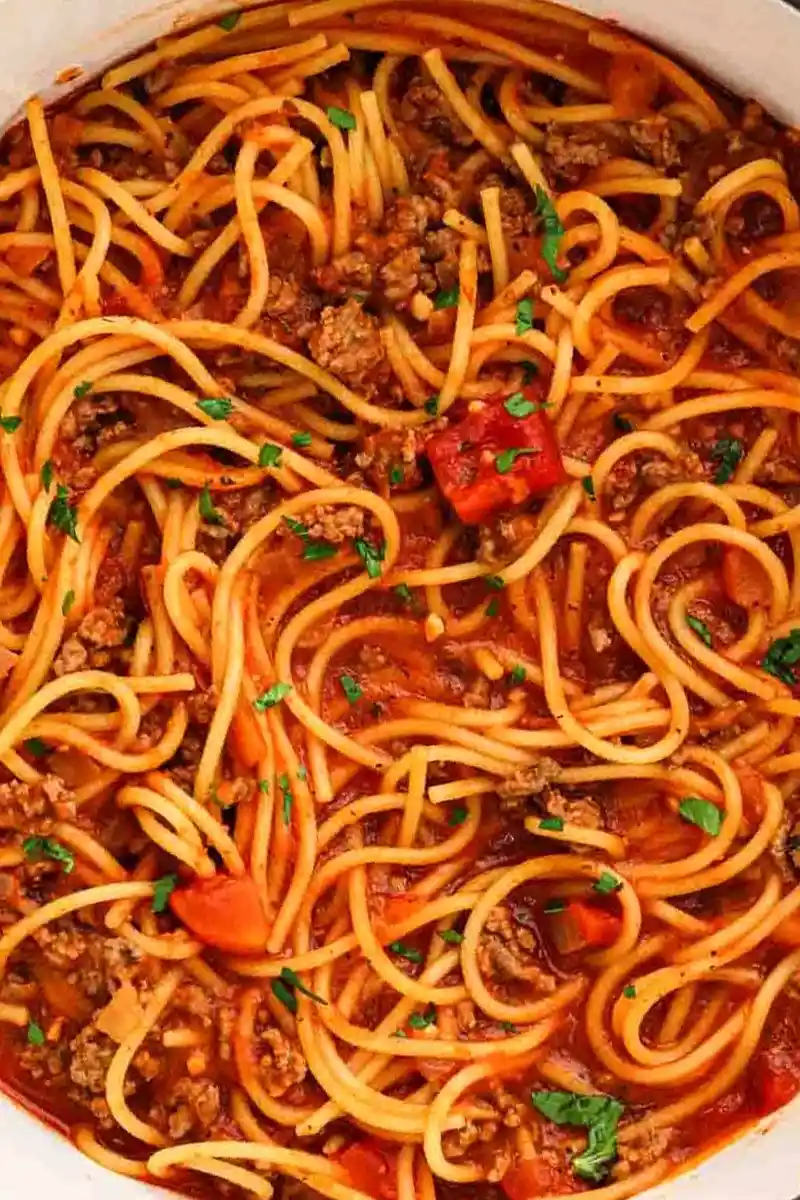
List of ingredients
- 1 lb ground beef – lean beef is recommended.
- 1/2 onion – finely chopped.
- 1 Tbsp Minced Garlic – adds aromatic flavor.
- 2 jars Marinara Sauce (24 oz each) – use your favorite brand.
- 1 tsp Oregano – dried Italian oregano.
- 1 tsp Salt – adjust to taste.
- 1 tsp Pepper – freshly ground.
- 3 cups chicken broth – provides the cooking liquid for the pasta.
- 12 oz Spaghetti Noodles – broken in half.
- 1/2 cup Parmesan Cheese – optional for topping.
step-by-step instructions
- Brown the Meat: In a large pot, brown 1 pound ground beef with 1/2 chopped onion over medium heat. Drain any excess grease from the pot.
- Sauté Garlic: Add 1 tablespoon minced garlic and cook for 1–2 minutes until fragrant.
- Simmer the Sauce: Stir in 2 jars (24 oz each) marinara sauce, 1 teaspoon oregano, 1 teaspoon salt, 1 teaspoon pepper, and 3 cups chicken broth. Bring to a simmer and cook uncovered for about 10 minutes.
- Cook the Pasta: Break 12 oz spaghetti noodles in half and stir them into the sauce. Simmer for 12–15 minutes, stirring frequently to prevent the noodles from sticking.
- Finish the Noodles: Check the pasta for tenderness and cook an additional 1–2 minutes until al dente.
- Serve: Serve topped with 1/2 cup Parmesan cheese if desired and enjoy!
Optimizing the Cooking Process
Choose a Wide Pot for Even Distribution
Using a large stock pot or a wide Dutch oven ensures that the ground beef browns evenly. A wider base prevents the meat from steaming in its own juices and allows more surface area for the pasta to submerge.
Manage the Heat During the Simmer Phase
Keep the heat at a steady simmer rather than a rolling boil. This prevents the sauce from evaporating too quickly, which could leave the pasta undercooked or the sauce too thick.
Prevent Pasta Clumping with Regular Stirring
Stir the spaghetti every few minutes after adding it to the pot. This breaks up any clusters of noodles and ensures that every strand is coated in sauce and liquid for uniform cooking.
Achieve Al Dente Texture
Start tasting the pasta a few minutes before the timer goes off. The noodles are al dente when they are tender but still have a slight firmness in the center.
Ingredient Substitutions and Alternatives
Use Ground Turkey for a Leaner Option
You can replace the ground beef with ground turkey or ground chicken. If using leaner meats, you may need to add a tablespoon of olive oil to the pot to prevent the meat from sticking.
Substitute Beef Sausage for Extra Flavor
For a more complex taste, use beef-based Italian sausage instead of plain ground beef. Ensure the sausage is fully browned and drained before adding the garlic and sauce.
Swap Chicken Broth for Vegetable Broth
Vegetable broth is a great alternative if you prefer a different flavor profile. The ratio remains the same, providing the necessary moisture for the pasta to absorb.
Experiment with Different Pasta Shapes
While spaghetti is traditional, you can use penne, fusilli, or rigatoni. Note that thicker pasta shapes may require an extra 2–5 minutes of simmering time.
Enhancing the Nutritional Value
Add Sliced Mushrooms for Earthiness
Sauté sliced mushrooms along with the onions and beef. This adds a meaty texture and extra nutrients without significantly changing the flavor of the marinara.
Stir in Fresh Spinach at the End
Add two cups of fresh baby spinach during the last two minutes of cooking. The residual heat will wilt the greens, adding vitamins and a pop of color to the dish.
Incorporate Diced Bell Peppers
Finely diced green or red bell peppers can be added during the browning phase. This introduces a mild sweetness and increases the fiber content of the meal.
Use Low-Sodium Broth to Control Salt
Choose a low-sodium version of chicken or vegetable broth. Since the marinara sauce already contains salt, this helps keep the overall sodium levels in check.
Serving and Pairing Suggestions
Pair with a Fresh Garden Salad
A simple salad with mixed greens, cucumbers, and a light vinaigrette balances the richness of the beef and cheese. This provides a crisp contrast to the soft texture of the pasta.
Serve with Garlic Toast
Toasted baguette slices topped with garlic butter and herbs are a classic accompaniment. The crunch of the toast complements the silky consistency of the one-pot sauce.
Top with Fresh Parsley or Basil
Finely chopped fresh parsley or basil leaves added just before serving enhance the aroma. These herbs bring a freshness that cuts through the heavy tomato base.
Offer Additional Cheese Options
While Parmesan is suggested, you can offer shredded mozzarella or ricotta as toppings. These cheeses add creaminess and a different flavor dimension to the spaghetti.
Storage and Preservation Tips
Use Airtight Containers for Refrigeration
Store leftover spaghetti in a sealed plastic or glass container. This prevents the pasta from drying out and keeps it fresh for 5 to 7 days in the refrigerator.
Allow the Dish to Cool Properly
Let the spaghetti cool slightly before sealing the container. This prevents excessive condensation from forming, which can make the noodles mushy over time.
Freeze for Long-Term Storage
This recipe freezes well for up to three months. Portion the spaghetti into freezer-safe bags or containers and label them with the date of preparation.
Thaw Slowly in the Refrigerator
When ready to eat frozen spaghetti, move it to the fridge overnight. This gradual thawing process helps maintain the integrity of the pasta and sauce.
Effective Reheating Methods
Add Liquid to Loosen the Sauce
Pasta continues to absorb liquid as it sits in the fridge. Stir in a splash of beef or chicken broth before reheating to restore the original sauce consistency.
Reheat on the Stovetop for Best Results
Place the leftovers in a pan over medium-low heat. Stir frequently and add small amounts of water or broth until the dish is heated through and creamy.
Use the Microwave for Quick Heating
Heat the spaghetti in a microwave-safe dish, covering it with a damp paper towel. Heat in 1-minute intervals, stirring in between, to ensure even warming.
Avoid Overheating the Pasta
Stop heating as soon as the sauce begins to bubble. Overheating can lead to the pasta becoming overly soft or the sauce separating.
Common Troubleshooting Guide
Fixing a Sauce That is Too Thin
If the sauce is too watery after the pasta is cooked, simmer the pot uncovered for another 3–5 minutes. This allows more liquid to evaporate and thicken the sauce.
Addressing Overcooked Pasta
If the noodles become too soft, reduce the simmering time in future batches. Ensure you are testing the pasta frequently during the final stage of cooking.
Correcting Overly Salty Sauce
If the dish tastes too salty, stir in a small amount of unsalted tomato puree or a splash of water. This dilutes the salt concentration without ruining the flavor.
Handling Meat that Won’t Brown
If the beef is steaming instead of browning, you may have too much meat in the pot. Brown the beef in two separate batches and then combine them before adding the vegetables.
Frequently Asked Questions
Can I make this recipe without meat?
Yes, you can omit the ground beef entirely. Sauté the onions in olive oil and add a can of drained chickpeas or white beans for a plant-based protein alternative.
Do I have to break the spaghetti noodles?
Breaking the noodles in half makes it much easier to stir them into the sauce and ensures they are fully submerged. This prevents the ends from remaining uncooked.
Can I use a different type of pasta sauce?
Any standard marinara or tomato-based pasta sauce will work. If using a sauce with a very strong flavor, you may want to adjust the amount of added oregano.
Is it possible to make this in a slow cooker?
This specific method is designed for the stovetop. For a slow cooker version, you would need to adjust the liquid ratios and add the pasta much later in the process.
Why is my pasta sticking to the bottom of the pot?
This usually happens if the heat is too high or if you aren’t stirring enough. Ensure the sauce is simmering and stir regularly to keep the noodles moving.
Print
Simple One Pot Beefy Spaghetti
- Total Time: 25 minutes
- Yield: 6 servings 1x
- Diet: General
Description
One Pot Spaghetti recipe is a delicious lazy day spaghetti recipe. One pot pasta recipes are so simple and easy. Learn how to make one pot spaghetti and get dinner on the table fast!
Ingredients
- 1 lb ground beef
- 1/2 onion (chopped)
- 1 Tbsp Minced Garlic
- 2 jars (24 oz each) Marinara Sauce
- 1 tsp Oregano
- 1 tsp Salt
- 1 tsp Pepper
- 3 cups chicken broth
- 12 oz Spaghetti Noodles
- 1/2 cup Parmesan Cheese
Instructions
- Step 1: In a large pot, brown 1 pound ground beef with ½ chopped onion over medium heat. Drain any excess grease.
- Step 2: Add 1 tablespoon minced garlic and cook for 1–2 minutes until fragrant.
- Step 3: Stir in 2 jars (24 oz each) marinara sauce, 1 teaspoon oregano, 1 teaspoon salt, 1 teaspoon pepper, and 3 cups chicken broth. Bring to a simmer and cook uncovered for about 10 minutes.
- Step 4: Break 12 oz spaghetti noodles in half and stir them into the sauce. Simmer for 12–15 minutes, stirring frequently to prevent sticking.
- Step 5: Check the pasta for tenderness and cook an additional 1–2 minutes until al dente.
- Step 6: Serve topped with ½ cup Parmesan cheese if desired and enjoy!
Notes
You can use homemade marinara sauce instead of store bought. Refrigerate leftovers in an airtight container for up to 5-7 days; add more broth when reheating to thin out the sauce.
- Prep Time: 5 minutes
- Cook Time: 20 minutes
- Category: Main Course
- Method: Stovetop
- Cuisine: Italian
Nutrition
- Serving Size: 1 serving
- Calories: 448 kcal
- Sugar: 2 g
- Sodium: 1008 mg
- Fat: 18 g
- Saturated Fat: 7 g
- Unsaturated Fat: 10 g
- Trans Fat: 1 g
- Carbohydrates: 45 g
- Fiber: 2 g
- Protein: 24 g
- Cholesterol: 59 mg